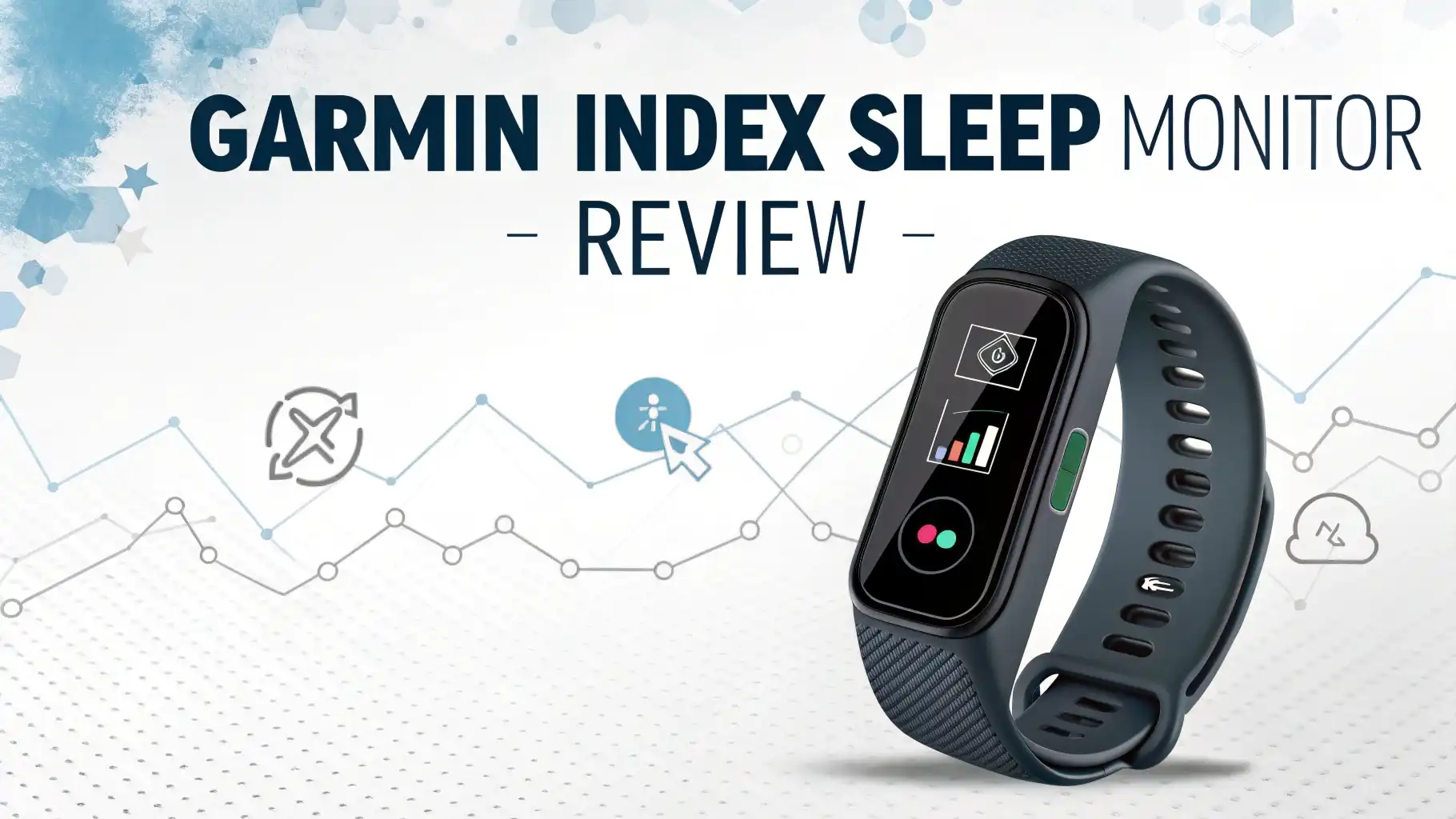
Garmin Index Sleep Monitor Review 2026: Your Complete Guide
Getting a good night’s sleep feels impossible sometimes. You wake up tired even after eight hours in bed. Your partner complains about your snoring.
You wonder why you feel exhausted every single morning. The Garmin Index Sleep Monitor promises to solve these mysteries and help you understand your sleep patterns better than ever before.
This small device sits quietly beside your bed and tracks everything that happens while you sleep. It monitors your breathing, your heart rate, and your movement throughout the night.
Key Takeaways:
- Contactless monitoring technology means you never wear anything to bed, making it perfect for people who hate wrist-worn trackers or find them uncomfortable during sleep
- Comprehensive sleep stage tracking shows you exactly how much time you spend in light sleep, deep sleep, and REM sleep each night
- Breathing pattern analysis detects potential sleep apnea events and alerts you to irregular breathing that might require medical attention
- Seamless Garmin ecosystem integration works perfectly with your Garmin watch, allowing both devices to share data and provide more accurate insights
- Personalized sleep coaching gives you actionable advice based on your specific sleep patterns and helps you make meaningful improvements
- Long-term trend tracking shows how your sleep changes over weeks and months, helping you identify patterns you might otherwise miss

Last update on 2026-07-15 / Affiliate links / Images from Amazon Product Advertising API Some of the links on this website are affiliate links, which means that at no additional cost to you, I earn a commission if you click through and make a purchase. I only recommend products and services that I believe will add value to my readers. Thank you for your support!
What Makes the Garmin Index Sleep Monitor Different
The Garmin Index Sleep Monitor stands apart from other sleep tracking devices in several important ways.
Most sleep trackers require you to wear something on your wrist or finger throughout the night. This monitor sits on your nightstand instead. You simply place it beside your bed and let it work its magic.
The device uses ballistocardiography technology to measure your heart and breathing rates. It detects the tiny movements your body makes with each heartbeat and breath. These movements are invisible to the human eye but perfectly clear to the sensitive sensors inside the monitor.
Your sleep data syncs automatically with the Garmin Connect app every morning. You wake up and check your phone to see detailed information about your night.
The app shows colorful charts and graphs that make understanding your sleep patterns incredibly easy. You see exactly when you fell asleep, how many times you woke up, and how much time you spent in each sleep stage.
How Sleep Stage Tracking Works
Sleep stage tracking represents one of the most valuable features of this monitor. Your body cycles through different sleep stages throughout the night. Each stage serves a specific purpose in helping your body and mind recover from the day.
Light sleep makes up the largest portion of your night. During this stage, your body begins to relax and your heart rate slows down. Light sleep helps you transition between wakefulness and deeper sleep stages. You can wake up relatively easily during light sleep.
Deep sleep provides the most restorative benefits for your body. Your muscles relax completely, your breathing becomes very regular, and your body performs important repair work.
Getting enough deep sleep helps you feel physically refreshed in the morning. The Garmin Index Sleep Monitor tracks exactly how much deep sleep you get each night.
REM sleep (Rapid Eye Movement sleep) is when most of your dreaming occurs. Your brain becomes very active during REM sleep even though your body remains still. This stage plays a crucial role in memory consolidation and emotional processing. Adults typically need about 90 to 120 minutes of REM sleep each night.
Top 3 Alternatives for Garmin Index Sleep Monitor

Last update on 2026-07-12 / Affiliate links / Images from Amazon Product Advertising API Some of the links on this website are affiliate links, which means that at no additional cost to you, I earn a commission if you click through and make a purchase. I only recommend products and services that I believe will add value to my readers. Thank you for your support!

Last update on 2026-07-12 / Affiliate links / Images from Amazon Product Advertising API Some of the links on this website are affiliate links, which means that at no additional cost to you, I earn a commission if you click through and make a purchase. I only recommend products and services that I believe will add value to my readers. Thank you for your support!

Last update on 2026-07-12 / Affiliate links / Images from Amazon Product Advertising API Some of the links on this website are affiliate links, which means that at no additional cost to you, I earn a commission if you click through and make a purchase. I only recommend products and services that I believe will add value to my readers. Thank you for your support!
Breathing Pattern Analysis and Sleep Apnea Detection
Breathing pattern analysis provides critical health insights that go beyond basic sleep tracking. The Garmin Index Sleep Monitor continuously monitors your breathing throughout the night. It detects irregular breathing patterns that might indicate sleep apnea or other respiratory issues.
Sleep apnea affects millions of people worldwide. This condition causes your breathing to stop and start repeatedly during sleep. Many people have sleep apnea without knowing it. The constant interruptions prevent you from getting restful sleep and can lead to serious health problems over time.
The monitor identifies potential apnea events and records them in your sleep report. You see how many times your breathing became irregular and when these events occurred.
This information proves invaluable when discussing sleep concerns with your doctor. Medical professionals can use your sleep data to determine whether you need a formal sleep study.
Beyond detecting apnea, the monitor tracks your overall breathing rate. You can see how your breathing changes throughout different sleep stages. Some people breathe faster during REM sleep, while others maintain a steady rate all night. Understanding your personal breathing patterns helps you recognize abnormalities when they occur.
Setting Up Your Garmin Index Sleep Monitor
No products found.
Setting up the Garmin Index Sleep Monitor takes less than ten minutes. You remove the device from its box and plug it into a power outlet near your bed. The monitor needs to stay plugged in at all times because it runs continuously throughout the night.
Next, you download the Garmin Connect app on your smartphone. The app walks you through the pairing process step by step. You select your new sleep monitor from a list of available devices and follow the on-screen instructions. The monitor connects to your home WiFi network so it can upload your sleep data automatically.
Placement matters significantly for accurate tracking. You position the monitor on your nightstand approximately 18 to 24 inches from your pillow. The device should sit at roughly the same height as your mattress. If you sleep with a partner, you need to place the monitor on your side of the bed for the most accurate results.
The first night serves as a calibration period. The monitor learns your baseline movements and establishes your normal patterns. Your data from this first night might not be completely accurate, but subsequent nights improve dramatically. Most users see highly accurate results starting from the second or third night.
Integration with the Garmin Ecosystem
The Garmin Index Sleep Monitor works best when combined with other Garmin devices. If you already own a Garmin smartwatch or fitness tracker, the sleep monitor enhances your existing data. Both devices share information and provide a more complete picture of your health.
Your Garmin watch tracks your activity, stress levels, and heart rate throughout the day. The sleep monitor adds detailed nighttime data to this information. The Garmin Connect app combines everything into comprehensive health reports. You see how your daytime activities affect your sleep quality and vice versa.
The Body Battery feature becomes more accurate when you use multiple Garmin devices together. Body Battery estimates your energy levels based on sleep quality, stress, and activity.
The sleep monitor provides more precise sleep data, which improves Body Battery calculations significantly. You get better predictions about when you have energy for workouts and when you need rest.
Your sleep data appears on your Garmin watch face when you wake up. You glance at your wrist and immediately see your sleep score and stage breakdown. This quick morning summary helps you plan your day according to how well you slept.
Understanding Your Sleep Score
The sleep score simplifies complex sleep data into one easy-to-understand number. Your score ranges from 0 to 100, with higher numbers indicating better sleep quality. Most people score between 60 and 85 on average nights.
Multiple factors contribute to your sleep score calculation. Total sleep time represents the most obvious component. Adults generally need seven to nine hours of sleep, and falling within this range improves your score. Getting significantly less or more than your target amount lowers your score.
Sleep stage distribution affects your score substantially. The algorithm checks whether you got appropriate amounts of light, deep, and REM sleep. Balanced sleep architecture leads to higher scores, while spending too much or too little time in any particular stage reduces your score.
Disturbances throughout the night also impact your score. Each time you wake up or toss and turn excessively, your score decreases slightly. Brief awakenings are normal, but frequent disturbances prevent truly restorative sleep. The monitor tracks these disruptions and factors them into your overall score.
Practical Sleep Insights and Recommendations
The Garmin Index Sleep Monitor doesn’t just collect data. It provides actionable recommendations based on your specific sleep patterns. Every morning, you receive personalized sleep coaching through the Garmin Connect app.
These recommendations address various aspects of sleep hygiene. The app might suggest adjusting your bedroom temperature if your sleep data shows excessive movement during the night.
It could recommend limiting screen time before bed if you consistently take a long time to fall asleep. Each suggestion targets specific issues identified in your sleep reports.
The monitor also tracks how external factors affect your sleep. You can log caffeine consumption, alcohol intake, exercise timing, and stress levels throughout the day.
The app correlates these factors with your sleep quality and shows you which habits help or hurt your rest. You might discover that afternoon coffee destroys your deep sleep or that evening walks improve your sleep score.
Weekly sleep reports summarize your patterns and progress. You see your average sleep score for the week, total sleep time, and stage distribution.
Comparing Contactless vs Wearable Sleep Trackers
Choosing between contactless and wearable sleep trackers depends on your personal preferences and needs. Wearable devices like smartwatches and fitness bands sit directly on your wrist throughout the night. They measure your heart rate, movement, and sometimes blood oxygen levels through direct skin contact.
Wearables offer the convenience of tracking sleep anywhere you go. You wear your watch to bed whether you’re home, traveling, or staying with friends. Your sleep data continues uninterrupted regardless of location. The device charges during the day while you wear it.
However, many people find wearables uncomfortable during sleep. The watch band can feel tight or restrictive. Some users develop skin irritation from wearing devices all night. Others simply dislike having anything on their wrist while they try to relax and fall asleep.
Contactless monitors like the Garmin Index eliminate these comfort concerns entirely. You wear nothing to bed and sleep exactly as you normally would. The monitor works silently in the background without interfering with your rest. Most users forget the device is even there after a few nights.
Privacy and Data Security Considerations
Sleep data contains intimate information about your health and habits. The Garmin Index Sleep Monitor collects sensitive details about your breathing patterns, movements, and nightly routines. Understanding how Garmin protects this data helps you make informed decisions about using the device.
Garmin encrypts all sleep data during transmission from your monitor to their servers. The information travels over your home WiFi network using secure protocols that prevent interception. Even if someone accessed your network traffic, they couldn’t read your sleep data without the encryption keys.
Your data gets stored on Garmin’s secure servers with strict access controls. Garmin employees cannot view your personal health information without legitimate business reasons and proper authorization. The company maintains comprehensive privacy policies that explain exactly how they use your data.
You control who sees your sleep information through the Garmin Connect app. Privacy settings let you keep your data completely private or share it with specific people. You might share sleep reports with your doctor or partner while keeping the information hidden from social connections.
Battery Life and Power Management
The Garmin Index Sleep Monitor requires constant power to function properly. Unlike wearable devices with rechargeable batteries, this monitor plugs directly into your wall outlet. You need an available power outlet near your bed to use the device.
The constant power requirement means you never worry about charging the device or running out of battery during the night. The monitor works every single night without interruption. You don’t need to remember to plug it in or check battery levels.
Power consumption remains minimal throughout operation. The device uses approximately 3 to 5 watts during active monitoring. This low power draw adds negligible amounts to your electricity bill. Running the monitor continuously for an entire month costs less than a dollar in most locations.
Some users worry about having another powered device running all night. The monitor generates no noticeable heat during operation. It operates silently without fans or moving parts. You won’t hear any noise from the device while you sleep.
Real User Experiences and Results
Thousands of people use the Garmin Index Sleep Monitor every night. Their experiences provide valuable insights into how the device performs in real-world conditions. User reviews consistently praise the comfort and convenience of contactless monitoring.
Many users report discovering sleep issues they didn’t know existed. One common discovery involves insufficient deep sleep. People who thought they slept well learn they spend too much time in light sleep stages. This revelation motivates them to improve their sleep hygiene and see real results.
Couples appreciate the individual tracking capabilities. Each person can have their own monitor on their respective nightstand.
Both partners receive personalized sleep reports without interference from the other person’s movements. This individual tracking proves more accurate than shared bed sensors that try to distinguish between two sleepers.
Some users initially struggle with monitor placement. Finding the optimal position on your nightstand might require experimentation. The device needs clear line-of-sight to your torso for best results. Users who take time to find the perfect spot report significantly better accuracy.
The sleep coaching recommendations receive mixed feedback. Some users find the suggestions helpful and actionable. Others feel the advice seems generic rather than truly personalized.
Price and Value Comparison
The Garmin Index Sleep Monitor retails for approximately $149 in 2026. This price positions it in the mid-range category for dedicated sleep tracking devices. Cheaper options exist but typically offer fewer features or lower accuracy.
Comparing the value requires considering what you get for your investment. The monitor provides professional-grade sleep analysis without requiring monthly subscription fees. Many competing devices charge ongoing fees for advanced features or detailed reports. Garmin includes all features with your one-time purchase price.
The device should last several years with proper care. Garmin builds quality products with good longevity.
Most users keep their monitors for three to five years before upgrading to newer models. This lifespan makes the per-night cost quite reasonable compared to wearable trackers that need battery replacements or full device upgrades more frequently.
Alternative sleep tracking methods cost more in the long run. Professional sleep studies cost hundreds or thousands of dollars. Even basic home sleep apnea tests run $150 to $300 for a single night of monitoring. The Garmin monitor provides continuous tracking for years at the cost of a single sleep study.
Frequently Asked Questions
Can the Garmin Index Sleep Monitor track two people in the same bed?
No, each monitor tracks only one person. The device needs to focus on movements from a single individual for accurate results. If you share a bed with a partner, you need two separate monitors. Each person places their monitor on their respective nightstand. The monitors sync to different user profiles in the Garmin Connect app.
Does the monitor work with adjustable beds or non-standard sleeping arrangements?
Yes, the monitor works with most bed types including adjustable beds, waterbeds, and futons. The key requirement involves placing the device close enough to detect your movements. Adjustable beds actually work quite well because the monitor can sit at any angle alongside you. Some users report needing minor placement adjustments when changing bed positions.
How accurate is the sleep apnea detection compared to medical equipment?
The Garmin Index Sleep Monitor provides screening-level detection rather than diagnostic accuracy. It identifies potential breathing irregularities that might indicate sleep apnea. Medical sleep studies use more comprehensive equipment and remain the gold standard for diagnosis. Think of the monitor as an early warning system that alerts you to potential issues worth discussing with your doctor.
Can I use the monitor while traveling or do I need to leave it at home?
You can definitely travel with the monitor. The device weighs about one pound and fits easily in luggage. You need WiFi access at your destination for data syncing. Setup takes just a few minutes in hotel rooms or guest bedrooms. Many users pack their monitors for trips longer than a few days.
What happens if my cat or dog jumps on the bed during the night?
Pet movements might cause minor disturbances in your sleep data. The monitor detects increased movement but usually distinguishes between your movements and external disturbances. Brief interruptions from pets rarely affect overall sleep scores significantly. Persistent problems with pet interference can sometimes be solved by adjusting monitor placement or keeping pets off the bed during sleep tracking periods.
Does the monitor emit any radiation or electromagnetic fields that could be harmful?
The monitor emits very low levels of electromagnetic radiation similar to other WiFi-enabled devices. The radiation levels fall well below all safety standards and pose no health risks. The device sits at least 18 inches from your body during use, which further minimizes any exposure. Thousands of users sleep safely beside their monitors every night without health concerns.
How long does it take to see meaningful insights from the sleep data?
Most users see interesting patterns after about one week of consistent tracking. The monitor needs several nights to establish your baseline and identify trends. Meaningful insights typically emerge after two to three weeks when you have enough data to spot correlations between daytime activities and sleep quality. Long-term trends become visible after several months of continuous use.
Can I turn off certain features if I only want basic sleep tracking?
Yes, the Garmin Connect app lets you customize which features run on your monitor. You can disable breathing analysis, detailed movement tracking, or other advanced features. Turning off features doesn’t significantly improve accuracy or performance. Most users keep all features enabled to get the full benefit of their monitor.

Hello everyone my name is Alenya and i am a gadget discovering Enthusiast 🐻🐻