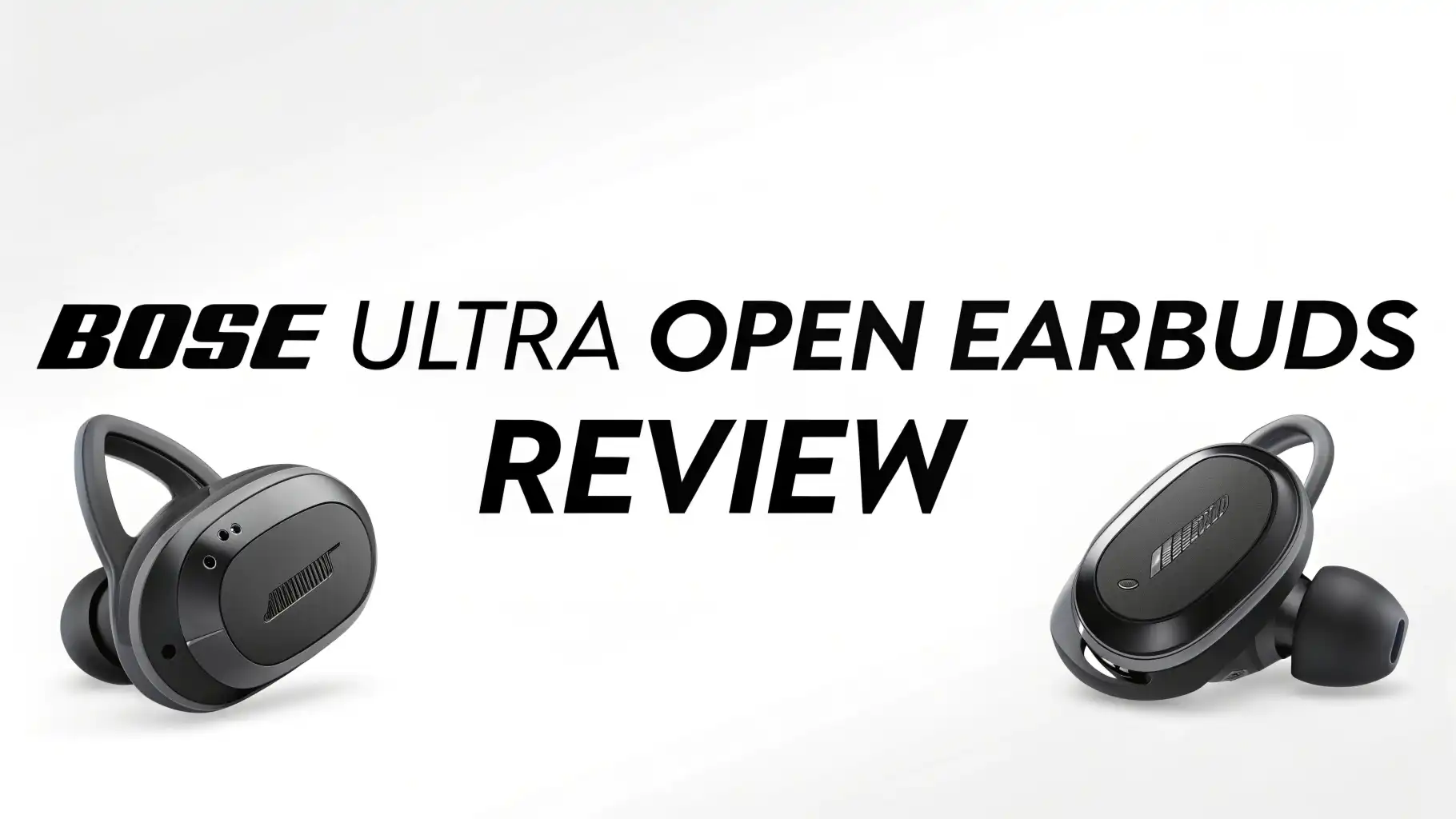
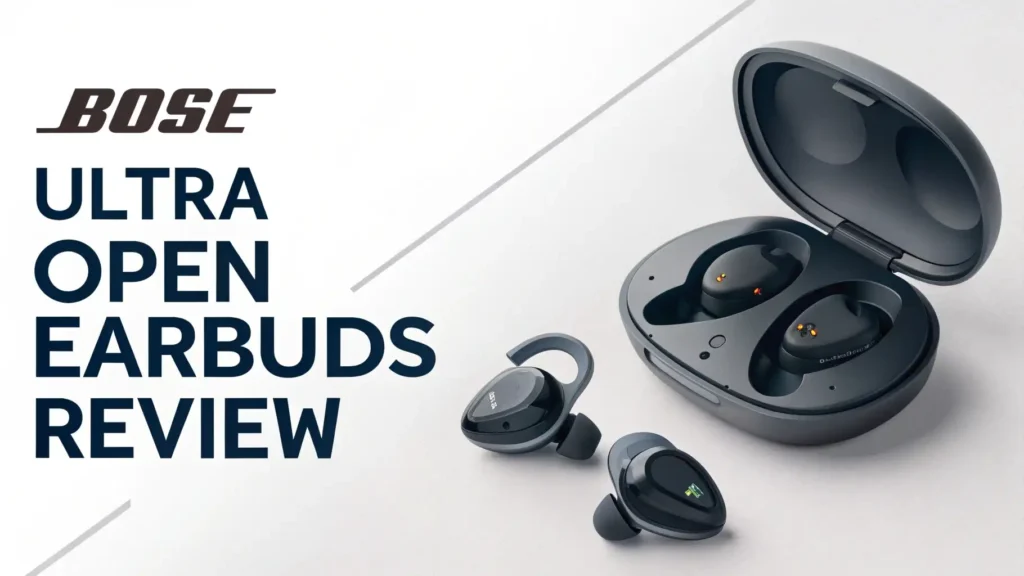
Bose Ultra Open Earbuds Review: Worth the Price Tag?
Picture this. You’re jogging through your neighborhood on a sunny morning. Your favorite playlist pumps through your ears. But here’s the twist – you can still hear birds chirping, cars approaching, and your neighbor greeting you.
Welcome to the world of Bose Ultra Open Earbuds. These aren’t your typical earbuds. They don’t plug your ears. They don’t block the world out. Instead, they sit gently on your ears like audio jewelry while delivering premium sound.
I’ve spent weeks testing these innovative earbuds. I’ve worn them during workouts, work calls, grocery runs, and lazy Sunday afternoons. Now I’m ready to share everything you need to know before buying them in 2026.
In A Nutshell:
- Price Point: These earbuds cost around $299, positioning them in the premium category alongside Apple and Sony flagships.
- Design Philosophy: The clip-on style keeps your ear canals completely open, making them perfect for safety-conscious users who need environmental awareness.
- Sound Quality: Bose delivers surprisingly rich audio despite the open design, though bass response can’t match traditional in-ear models.
- Battery Performance: You get roughly 7.5 hours per charge with the case providing an additional 19.5 hours of playtime.
- Best Use Cases: Ideal for runners, cyclists, office workers, and anyone who wants music without isolation from their surroundings.
- Comfort Champion: The lightweight design makes these earbuds disappear on your ears during extended wear sessions.


Last update on 2026-07-15 / Affiliate links / Images from Amazon Product Advertising API Some of the links on this website are affiliate links, which means that at no additional cost to you, I earn a commission if you click through and make a purchase. I only recommend products and services that I believe will add value to my readers. Thank you for your support!
What Makes Bose Ultra Open Earbuds Different
Traditional earbuds shove tips into your ear canals. They create a seal. They block outside noise. The Bose Ultra Open Earbuds throw that playbook out the window.
These earbuds clip onto the outer edge of your ears. They rest there like tiny speakers aimed at your ear canals. Your ears stay completely open. Air flows freely. You maintain full awareness of your environment.
This open-ear design serves a specific purpose. Safety comes first. Runners hear approaching vehicles. Cyclists catch warning shouts. Parents monitor their kids while enjoying podcasts. Office workers stay alert to colleagues without removing their earbuds.
The design looks futuristic too. The earbuds curve elegantly around your ear’s outer ridge. They come in black or white finishes. The premium build quality shows in every detail. Smooth plastics meet precisely engineered hinges. Nothing feels cheap or flimsy.
Top 3 Alternatives for Bose Ultra Open Earbuds
![Samsung Galaxy Buds 3 Pro AI True Wireless Bluetooth Earbuds, Noise Cancelling, Sound Optimization, Redesigned Comfort Fit, Silver [US Version, Amazon Exclusive, 2Yr Warranty]](https://devicediscoveries.blog/wp-content/plugins/aawp/public/image.php?url=YUhSMGNITTZMeTl0TG0xbFpHbGhMV0Z0WVhwdmJpNWpiMjB2YVcxaFoyVnpMMGt2TkRGc1NucFFjMUpJYWt3dVgxTk1NVFl3WHk1cWNHYz18MTc4NTIyNTUxMg=)
Last update on 2026-07-24 / Affiliate links / Images from Amazon Product Advertising API Some of the links on this website are affiliate links, which means that at no additional cost to you, I earn a commission if you click through and make a purchase. I only recommend products and services that I believe will add value to my readers. Thank you for your support!

Last update on 2026-07-19 / Affiliate links / Images from Amazon Product Advertising API Some of the links on this website are affiliate links, which means that at no additional cost to you, I earn a commission if you click through and make a purchase. I only recommend products and services that I believe will add value to my readers. Thank you for your support!

Last update on 2026-07-03 / Affiliate links / Images from Amazon Product Advertising API Some of the links on this website are affiliate links, which means that at no additional cost to you, I earn a commission if you click through and make a purchase. I only recommend products and services that I believe will add value to my readers. Thank you for your support!
Sound Quality Performance Deep Dive
Here’s the million-dollar question. Can open earbuds actually sound good?
The answer surprises most people. Yes, they sound impressive. But with important caveats.
Bose engineered these earbuds with OpenAudio technology. Tiny speakers fire sound directly into your ear canals while minimizing leakage. The result feels almost magical. Music appears inside your head despite nothing blocking your ears.
The midrange clarity shines brightest. Vocals sound crisp and detailed. Podcasts come through perfectly clear. Acoustic instruments display beautiful texture and nuance. I could distinguish individual guitar strings on unplugged tracks.
High frequencies sparkle without harshness. Cymbals shimmer. Hi-hats cut through mixes cleanly. The treble never sounds shrill or fatiguing even at higher volumes.
Bass response represents the biggest compromise. Physics simply limits open designs. You won’t get skull-rattling low end. Electronic music loses some impact. Hip-hop tracks feel lighter than with sealed earbuds.
Comfort and Fit Experience
Comfort makes or breaks earbuds. Nobody wants ear pain after thirty minutes.
The Bose Ultra Open Earbuds excel here. The clip-on design distributes pressure across a larger area than traditional earbuds. No single pressure point digs into your ear cartilage.
The flexible silicone band provides just enough grip. The earbuds stay secure during head movements and light exercise. I jumped, ran, and shook my head vigorously. They never budged.
Putting them on takes practice initially. You grip the earbud body and position the clip behind your ear’s outer ridge. A satisfying click confirms proper placement. After a few days, the motion becomes automatic.
Taking them off proves equally simple. Squeeze gently and lift away. The whole process takes two seconds per ear.
Glasses wearers face potential challenges. The earbuds occupy similar real estate as eyeglass temples. I wear glasses daily and found a comfortable arrangement. But thicker frames might create minor conflicts.
Battery Life and Charging Details
Battery performance directly impacts daily usability.
Bose rates these earbuds at 7.5 hours of continuous playback. My real-world testing confirmed this estimate. I typically got between seven and eight hours depending on volume levels.
The charging case holds enough power for 2.5 additional full charges. Total battery life reaches approximately 27 hours before needing wall power. This matches or exceeds most competitors.
The case itself feels compact and pocketable. Smooth matte plastic resists fingerprints. A USB-C port on the bottom handles charging duties. No wireless charging option exists, which disappoints at this price point.
Charging speed impresses. The earbuds reach full charge in about two hours. The case takes slightly longer at 3 hours from empty.
A quick charge feature provides emergency power. Ten minutes of charging delivers roughly two hours of playback. This saved me multiple times when I forgot to charge overnight.
Controls and User Interface
Physical controls beat touch controls every time. Fight me.
The Bose Ultra Open Earbuds feature a single button on each earbud. Real physical buttons that click when pressed. No accidental touches. No confusion about tap locations.
The right earbud button handles playback controls. One press pauses or plays. Two presses skip forward. Three presses skip backward. Simple and intuitive.
The left earbud button manages volume. Press and hold to adjust volume up or down. You set the direction in the Bose app.
The button placement makes sense. Your finger naturally finds it when reaching for the earbud. The tactile click confirms each press. I never missed a button press during testing.
Call controls work through the right button. One press answers incoming calls. Press again to end calls. Press and hold rejects calls. Voice assistant activation requires a longer press and hold.
The Bose Music app unlocks additional customization. You can reprogram button functions to some degree. Customize the long-press action on either earbud. Options include voice assistant, volume control, or cycling through listening modes.
Call Quality and Microphone Performance
Video calls dominate modern work life. Microphone quality matters more than ever.
The Bose Ultra Open Earbuds pack multiple microphones into each earbud. These microphones handle voice pickup and noise reduction during calls.
My call quality testing involved Zoom meetings, phone calls, and voice messages. The results impressed me consistently.
My voice sounded clear and natural to people on the other end. Nobody complained about muffled audio or asked me to repeat myself. Several colleagues commented that I sounded better than usual.
Background noise rejection works well in moderate conditions. Light office chatter fades into the background. Keyboard typing gets mostly filtered out. Your voice stays prominent.
Windy conditions present challenges. Strong wind creates noticeable noise despite Bose’s wind-reduction algorithms. This affects all open earbuds though. The exposed microphones can’t escape physics.
Active Features and Technology
Modern earbuds pack surprising technology into tiny packages.
The Bose Ultra Open Earbuds include Immersive Audio mode. This feature adds spatial audio effects to compatible content. Music and movies gain width and depth. Sounds position themselves in three-dimensional space around your head.
The immersive mode works with any content, not just specially mixed tracks. Bose’s processing adds the spatial effect in real-time. Results vary by source material. Some songs transform dramatically. Others show subtle improvement.
I enjoyed the immersive mode for movies and cinematic music. Electronic and orchestral tracks particularly benefited. The expanded soundstage created engaging listening experiences.
But I often disabled it for podcasts and simple recordings. The spatial processing sometimes made voices sound distant or echoey. Pure stereo mode served better for spoken content.
The earbuds support Bluetooth 5.3 with strong connectivity. I experienced zero dropouts during testing. The connection remained rock solid up to 30 feet from my phone. Walls and obstacles barely affected performance.
Water Resistance and Durability
Electronics and water traditionally don’t mix. Modern earbuds blur those lines.
The Bose Ultra Open Earbuds carry an IPX4 water resistance rating. This protects against splashing water from any direction. Sweat poses no threat. Light rain won’t damage them.
But IPX4 doesn’t mean waterproof. Don’t submerge these earbuds. Don’t shower with them. Don’t swim with them. They’ll survive workout sweat and unexpected drizzles, nothing more.
I deliberately tested them during sweaty gym sessions and humid summer runs. Zero issues emerged. The earbuds shrugged off moisture without performance degradation.
The charging case carries no water resistance rating. Keep it dry. Don’t toss it in wet gym bags or leave it in the rain.
Build quality feels premium throughout. The plastics feel dense and well-molded. No creaking or flexing. The clip mechanism operates smoothly through hundreds of cycles. I see no reason these won’t last years with reasonable care.
Who Should Buy These Earbuds
Not every product suits every person. The Bose Ultra Open Earbuds serve specific users exceptionally well.
Active people top the list. Runners absolutely need environmental awareness for safety. These earbuds deliver music without blocking traffic sounds. Cyclists benefit equally. Hikers appreciate hearing nature while enjoying podcasts.
Office workers find them perfect for hybrid work environments. You hear colleagues approaching your desk. You catch your name in conversations. You maintain social awareness while staying focused on tasks. Nobody feels ignored when you wear these.
Parents love the situational awareness. You monitor kids playing while listening to audiobooks. You hear requests for help. You stay present while enjoying personal audio time.
People with ear sensitivity find relief. No ear canal pressure. No pain after extended wear. No feeling of fullness or isolation. Your ears breathe freely all day.
Comparison With Competition
The open-ear earbud category expanded significantly in 2026. Several strong alternatives compete with Bose.
Shokz OpenFit earbuds cost less at around $180. They use similar clip-on designs. Sound quality trails Bose noticeably. But the price difference appeals to budget-conscious buyers. Comfort matches Bose fairly well.
Sony LinkBuds take a different approach. They use open ring drivers that sit in your ear canals. More secure fit than Bose during intense exercise. Sound quality compares similarly. But some users find them less comfortable for all-day wear.
JBL Soundgear Sense entered the market recently. They cost about $250. Sound quality sits between Shokz and Bose. Build quality feels slightly cheaper. Battery life edges out Bose by about an hour.
Nothing Ear Open generates buzz with transparent design and aggressive pricing under $150. Sound quality surprises for the price. But build quality and app features lag behind Bose. Good starter option for open-ear curious buyers.
Price and Value Proposition
Money talks. The Bose Ultra Open Earbuds retail for $299 in 2026.
That price puts them squarely in premium territory. You can buy excellent traditional earbuds for less. The AirPods Pro cost similarly. The Sony WF-1000XM5 match the price. Both offer noise cancellation and arguably better pure sound quality.
So what justifies the Bose price? You’re paying for the unique open-ear experience. The specific benefits of environmental awareness. The all-day comfort without ear canal pressure.
Compare them to other open-ear earbuds instead. Against that competition, the Bose pricing makes more sense. They cost more than budget options but deliver meaningfully better sound and build quality.
Value depends entirely on your priorities. If you need open-ear awareness, these earbuds deliver excellent value. The sound quality, comfort, and features justify the premium over cheaper alternatives.
If you don’t specifically need the open design, traditional earbuds provide better pure audio value. You’ll get better bass, better isolation, and noise cancellation for similar money.
Long-Term Ownership Considerations
Think beyond the honeymoon period. How will these earbuds age?
Software support looks promising based on Bose’s history. The company provides firmware updates for years after release. My three-year-old Bose headphones still receive occasional updates.
Battery degradation will eventually occur. All lithium batteries lose capacity over time. Expect noticeable decline after two years of daily charging. By year three, you might see 60-70 percent of original battery life.
Physical wear depends on your handling. The clip mechanism represents the most vulnerable component. Treat it gently. Don’t force it onto your ears. Don’t toss the earbuds carelessly into bags.
Replacement parts availability remains unclear. Bose doesn’t sell replacement earbuds individually yet. If you lose one earbud, you might need to buy an entire new set. Third-party options don’t exist for this unique design.
Resale value holds reasonably well for Bose products. Expect to recover 40-50 percent of purchase price after one year in good condition. Premium brands maintain value better than budget alternatives.
Final Verdict and Recommendation
After extensive testing, I understand exactly who these earbuds serve.
The Bose Ultra Open Earbuds deliver on their core promise. They provide quality audio while maintaining complete environmental awareness. The comfort exceeds all traditional earbuds. The build quality justifies the premium price.
Sound quality impresses despite the open design. You won’t mistake them for studio monitors. But they sound considerably better than expected. Most users will find the audio quality perfectly satisfying for daily use.
The compromises feel acceptable for the target audience. Less bass than sealed earbuds? Sure, but safety and awareness matter more to runners and cyclists. Higher price than some competitors? Yes, but the overall refinement shows where your money went.
I recommend these earbuds enthusiastically for active people, safety-conscious users, and anyone who values all-day comfort over maximum isolation. They excel in their specific niche.
I don’t recommend them if you primarily listen in noisy environments, demand maximum bass response, or want active noise cancellation. Different tools for different jobs.
The Bose Ultra Open Earbuds represent the best version of what open-ear earbuds can be in 2026. They won’t replace traditional earbuds for everyone. But for their intended audience, they’re nearly perfect.
Frequently Asked Questions
Can You Sleep With Bose Ultra Open Earbuds?
Technically yes, but I wouldn’t recommend it. The clip-on design might press uncomfortably against pillows. Side sleepers will definitely find them awkward. Back sleepers might manage, but the earbuds could dislodge during sleep movements. Traditional earbuds or sleep-specific headphones work better for nighttime use.
Do Bose Ultra Open Earbuds Fall Off Easily During Exercise?
No, they stay surprisingly secure during moderate exercise. Walking, jogging, and gym workouts pose no problems. The clip mechanism grips firmly enough to handle head movements and sweat. Extremely intense activities like burpees or sprinting might challenge them occasionally. But for typical workouts, they stay put reliably.
Can Other People Hear Your Music With These Earbuds?
At normal listening volumes, sound leakage stays minimal. People need to be very close to hear anything. But crank the volume high and nearby people will definitely hear your music. This applies to all open-ear earbuds. Keep volume reasonable in quiet spaces like libraries or offices.
How Do These Compare to Bone Conduction Headphones?
Both keep your ears open, but the technologies differ completely. Bone conduction vibrates your skull bones. Some people find this uncomfortable. The Bose earbuds use traditional speakers aimed at your ear canals. Sound quality from the Bose earbuds exceeds bone conduction significantly. Bass response particularly improves with the Bose design. Comfort feels more natural with Bose too.
Do Bose Ultra Open Earbuds Work for Phone Calls?
Yes, they work excellently for calls in quiet to moderate environments. The microphones pick up your voice clearly. Background noise rejection handles office sounds and light outdoor noise well. Wind creates problems like all earbuds. Strong wind overwhelms the microphones. But indoor calls sound professional and clear.
Can You Wear These Earbuds With Glasses Comfortably?
Yes, with minor adjustments. Both earbuds and glasses share real estate around your ears. Thin glasses frames cause no issues. Thicker frames require some positioning awareness. I wear glasses daily and found a comfortable arrangement within two days. Your mileage may vary based on frame size and ear shape. Try them on with your glasses before buying if possible.
What Happens If You Lose One Earbud?
Unfortunately, Bose doesn’t currently sell individual replacement earbuds. If you lose one, you’ll need to contact Bose support. They might offer replacements under warranty for defects. But lost earbuds typically require purchasing an entire new set. This represents a significant weakness compared to brands offering individual earbud sales. Take extra care not to lose them.

Hello everyone my name is Alenya and i am a gadget discovering Enthusiast 🐻🐻