Nikon Coolpix L310 Digital Camera Review 2026: Worth Buying?
Are you looking for a budget superzoom camera that can deliver decent photos without breaking the bank?
The Nikon Coolpix L310 has been a popular choice for casual photographers since its release in 2012. It packs a 14.1 megapixel CCD sensor and a powerful 21x optical zoom lens into an affordable, easy to use body.
But here’s the big question. Does this camera still hold up in 2026? With so many newer options on the market, you might wonder if the L310 can still compete.
Key Takeaways:
- The Nikon Coolpix L310 features a 14.1 megapixel CCD sensor paired with a 21x optical zoom NIKKOR glass lens. This gives you a 35mm equivalent focal range of 25mm to 525mm, which is great for shooting distant subjects like birds or sports events.
- The camera runs on 4 AA batteries instead of a proprietary rechargeable pack. This is a big plus for travelers and casual users because you can find replacement batteries almost anywhere in the world.
- Video recording tops out at 720p HD at 30 frames per second. This is acceptable for basic video clips, but it falls short of modern 1080p and 4K standards. If video is your priority, you may want to look elsewhere.
- The 3 inch LCD screen with 230,000 dots serves as your primary viewfinder since there is no electronic or optical viewfinder. The screen is bright enough for indoor use but can struggle under direct sunlight.
- Sensor shift Vibration Reduction (VR) helps reduce camera shake during handheld shooting. This is especially useful at longer zoom lengths where even small movements cause blurry photos.
- The camera originally retailed for around $180 to $200 and can now be found used for significantly less. As a budget entry point to photography, it still offers solid value for the price in 2026.

Last update on 2026-09-19 / Affiliate links / Images from Amazon Product Advertising API Some of the links on this website are affiliate links, which means that at no additional cost to you, I earn a commission if you click through and make a purchase. I only recommend products and services that I believe will add value to my readers. Thank you for your support!
Nikon Coolpix L310 Overview and First Impressions
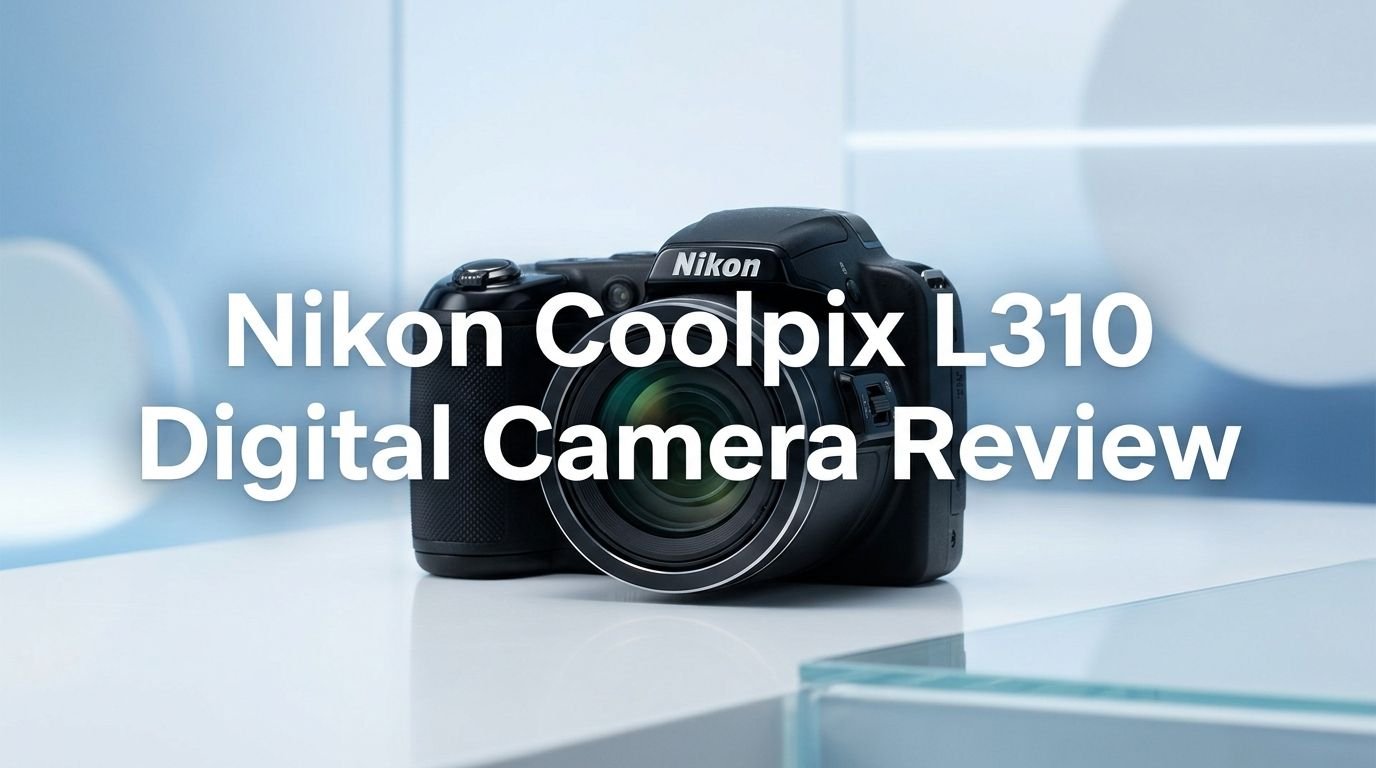
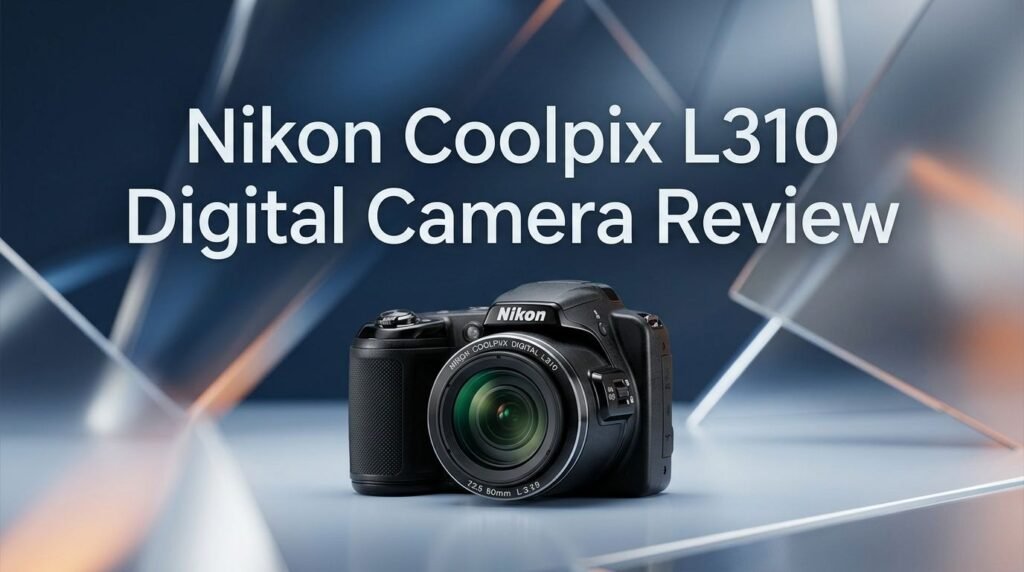
The Nikon Coolpix L310 sits in the bridge camera category. It bridges the gap between a simple point and shoot and a full DSLR camera. The body has a DSLR style grip that feels comfortable in your hands.
The camera weighs approximately 436 grams with batteries. This makes it light enough for all day carrying. You won’t feel fatigued after a long day of shooting at the park or a tourist destination.
The front of the camera features the large 21x zoom lens barrel. It extends significantly at full zoom but retracts cleanly into the body when powered off. The build quality uses mostly plastic construction. It feels sturdy enough for everyday use but won’t survive a serious drop.
First impressions are positive for the price point. The camera looks more expensive than it actually is. The black matte finish gives it a professional appearance that many budget cameras lack.
21x Optical Zoom Lens Performance
The standout feature of the Nikon Coolpix L310 is its 21x optical zoom NIKKOR glass lens. This lens covers an impressive range from 25mm wide angle to 525mm telephoto. That is a lot of zoom power packed into a compact body.
At the wide angle end, you can capture sweeping landscapes and group photos with ease. The 25mm starting point is wider than many competitors from the same era. This means you can fit more into your frame without stepping backward.
At the telephoto end, the 525mm reach lets you photograph birds, wildlife, and sports from a comfortable distance. The zoom is smooth and controlled by a rocker switch around the shutter button. You can also use side zoom buttons for more precise control.
Image sharpness is good at the center of the frame across most zoom ranges. Edge sharpness drops noticeably at full zoom, which is common for superzoom cameras at this price point. Chromatic aberration (color fringing) appears at high contrast edges, especially at longer focal lengths.
The 4x digital zoom extends the reach further, but image quality degrades quickly. We recommend sticking with the optical zoom for the best results.
Image Quality and Sensor Performance
The 14.1 megapixel CCD sensor in the Nikon Coolpix L310 produces images at a maximum resolution of 4320 x 3240 pixels. This is enough resolution for large prints up to about 11 x 14 inches.
In good lighting conditions, the L310 produces vibrant and well saturated colors. Nikon’s color science has always been a strong point. The images look pleasing straight out of the camera with minimal need for editing.
However, the small 1/2.3 inch sensor size limits performance in low light. Noise becomes visible at ISO 400 and above. By ISO 800, images show significant grain and loss of detail. The maximum ISO of 1600 is essentially unusable for most situations.
Dynamic range is limited compared to larger sensor cameras. Highlights blow out easily in high contrast scenes. Shadow recovery is minimal when you try to brighten dark areas in post processing.
The camera saves images in JPEG format only. There is no RAW file option. This means you have less flexibility for post processing compared to cameras that support RAW capture.
Video Recording Capabilities
The Nikon Coolpix L310 records video at a maximum resolution of 720p HD (1280 x 720) at 30 frames per second. This was a standard feature for budget cameras in 2012, but it falls behind by 2026 standards.
Video quality is acceptable for casual clips and social media sharing. Colors look natural and autofocus performs reasonably well during recording. The built in microphone captures mono audio at a decent quality level.
One limitation is the lack of full HD 1080p recording. Most smartphones from the past decade can record at 1080p or even 4K. This makes the L310’s video feature feel dated in comparison.
The optical zoom works during video recording. However, you may hear the zoom motor noise in your audio track. This is a common issue with bridge cameras that use motorized zoom lenses.
Vibration Reduction stays active during video capture. This helps keep your footage stable during handheld recording. The stabilization is not as effective as modern systems, but it makes a noticeable difference.
Top 3 Alternatives for Nikon Coolpix L310
If you’re considering the Nikon Coolpix L310 but want something with more modern features, here are three strong alternatives worth exploring.
1. Nikon Coolpix B500 offers 40x optical zoom, 16 megapixels, built in WiFi, Bluetooth, and NFC connectivity. It records full HD 1080p video and runs on AA batteries just like the L310. This is the most direct upgrade from the L310 in Nikon’s lineup.

Last update on 2026-09-19 / Affiliate links / Images from Amazon Product Advertising API Some of the links on this website are affiliate links, which means that at no additional cost to you, I earn a commission if you click through and make a purchase. I only recommend products and services that I believe will add value to my readers. Thank you for your support!
2. Canon PowerShot SX420 IS brings a 42x optical zoom, 20 megapixels, and WiFi connectivity to the table. It features Canon’s Optical Image Stabilizer and records 720p HD video. The SX420 IS is a solid budget competitor with a longer zoom range.

Last update on 2026-09-19 / Affiliate links / Images from Amazon Product Advertising API Some of the links on this website are affiliate links, which means that at no additional cost to you, I earn a commission if you click through and make a purchase. I only recommend products and services that I believe will add value to my readers. Thank you for your support!
3. Panasonic Lumix DC FZ80 is a step up with 60x optical zoom, 18.1 megapixels, and 4K video recording. It features a 20 to 1200mm equivalent lens range, an electronic viewfinder, and touch screen LCD. This is the best option if you want significantly better performance.

Last update on 2026-09-19 / Affiliate links / Images from Amazon Product Advertising API Some of the links on this website are affiliate links, which means that at no additional cost to you, I earn a commission if you click through and make a purchase. I only recommend products and services that I believe will add value to my readers. Thank you for your support!
LCD Screen and Viewfinder Experience
The Nikon Coolpix L310 features a 3 inch TFT LCD screen with 230,000 dot resolution. This screen serves as your only way to compose shots because the camera has no electronic or optical viewfinder.
The screen brightness is adequate for most indoor and overcast outdoor shooting. Colors display accurately on the LCD, which helps you judge your exposure and white balance settings. The anti reflective coating reduces glare to some extent.
However, shooting in bright sunlight is a challenge. The screen washes out easily under direct sun. You’ll need to cup your hand around the screen or find shade to see your composition clearly. This is a common complaint among L310 users.
The screen is not a touchscreen. All navigation happens through physical buttons and the multi selector dial on the back of the camera. The interface is straightforward and responsive. Menu items load quickly with minimal lag.
Screen resolution at 230,000 dots is below average even for cameras from 2012. Images can look sharper on the LCD than they actually are. We recommend zooming in to check focus after taking important shots.
Easy Auto Mode and Shooting Modes
The Nikon Coolpix L310 offers an Easy Auto Mode that makes photography simple for beginners. In this mode, the camera handles all settings automatically. It detects the scene type and adjusts exposure, white balance, and focus accordingly.
Beyond Easy Auto, the camera includes several shooting modes. Scene Auto Selector chooses from multiple scene types automatically. You also get access to 18 individual scene modes including Portrait, Landscape, Night Portrait, Sports, and Party/Indoor.
The camera does not offer full manual exposure control. There is no dedicated aperture priority, shutter priority, or full manual mode. This limits creative control for experienced photographers. You do get exposure compensation of plus or minus 2 stops, which helps in tricky lighting.
Smart Portrait mode detects faces and applies skin softening effects automatically. It can also detect smiles and trigger the shutter when your subject smiles. Blink proof mode takes multiple shots and saves the one where nobody blinked.
Special effects include Soft, Nostalgic Sepia, High contrast Monochrome, High key, Low key, and Selective Color. These in camera effects add creative options without needing a computer for editing.
Battery Life and Power Options
The Nikon Coolpix L310 uses four AA batteries for power. This is one of its most practical features. AA batteries are available in every convenience store, gas station, and market worldwide.
With standard alkaline AA batteries, Nikon rates the camera at approximately 320 shots per charge according to CIPA standards. This is a reasonable number for a day of casual shooting. Real world results may vary depending on how much you use the zoom and LCD.
Lithium AA batteries extend the shot count significantly. You can expect well over 500 shots with a fresh set of lithium batteries. The lighter weight of lithium batteries also reduces the overall camera weight.
Rechargeable NiMH AA batteries work well with the L310. Nikon specifically recommends their own EN MH2 rechargeable batteries. However, any quality NiMH AA batteries from brands like Eneloop or Energizer will work fine.
The battery compartment sits on the bottom of the grip next to the SD card slot. Changing batteries is quick and easy. The compartment door feels secure and does not open accidentally during normal use.
Build Quality and Design
The Nikon Coolpix L310 features a plastic body with a textured rubber grip on the front. The grip is one of the best design elements. It fills your right hand naturally and provides a secure hold on the camera.
The body dimensions measure approximately 105 x 77 x 76mm. This compact size fits easily into a large jacket pocket or a small camera bag. The weight with batteries (about 436 grams) feels balanced and not front heavy despite the large zoom lens.
Button placement is logical and intuitive. The shutter button sits on top with the zoom rocker surrounding it. The power button is nearby. On the back, you find the mode dial, playback button, menu button, multi selector, and dedicated video record button.
The lens barrel extends substantially at full 21x zoom. This is normal for superzoom cameras, but you should avoid pressing on the lens or setting the camera down while the lens is extended.
The tripod socket on the bottom is plastic, not metal. For light tripod use this is fine. However, heavy tripod heads or frequent mounting may wear the socket over time. A quick release plate can help protect it.
Autofocus System and Speed
The Nikon Coolpix L310 uses a contrast detection autofocus system. It works by analyzing contrast in the image to find the sharpest focus point. This method is common in point and shoot and bridge cameras.
In good lighting, the autofocus performs reasonably well. It locks onto subjects within about one second at wide angle. Focus speed slows down at longer zoom lengths. At full 525mm equivalent zoom, expect about 1.5 to 2 seconds for the camera to lock focus.
Face detection autofocus is available and works for up to 12 faces in the frame. This is useful for group photos and portraits. The system reliably detects front facing faces but may struggle with profiles or partially obscured faces.
Low light autofocus is a weak point. The camera hunts for focus in dim conditions and sometimes fails to lock on. There is an AF assist lamp on the front that projects a pattern to help the camera focus in dark environments. Its effective range is limited to about 2 to 3 meters.
The camera offers single AF and continuous AF options. Continuous AF tracks moving subjects but is not fast enough for quick action like sports or running children. Shutter lag is noticeable compared to modern cameras.
Connectivity and Storage Options
The Nikon Coolpix L310 offers basic connectivity options. It has a USB 2.0 port for transferring images to a computer. An AV output port lets you display images on a television.
There is no WiFi, Bluetooth, or NFC on this camera. You cannot transfer photos wirelessly to a smartphone or tablet. Every transfer requires a USB cable or removing the SD card and using a card reader.
The camera uses SD, SDHC, and SDXC memory cards. It also has approximately 90MB of internal storage. This internal memory holds only a handful of full resolution images. We strongly recommend purchasing a separate memory card.
A 16GB or 32GB SDHC card will give you plenty of storage for thousands of photos. The camera writes files at a moderate speed. A faster memory card won’t significantly improve performance because the camera’s write speed is the bottleneck.
There is no HDMI output on the L310. You cannot connect it directly to a modern TV with an HDMI cable. The AV output provides standard definition video output only. This is a limitation if you want to display your photos on a big screen.
Who Should Buy the Nikon Coolpix L310 in 2026?
The Nikon Coolpix L310 appeals to a specific audience in 2026. It is not a camera for everyone. Understanding its strengths and limitations will help you decide if it suits your needs.
Beginners and first time camera users benefit most from the L310. The Easy Auto Mode removes the guesswork from photography. Point the camera, press the shutter, and get a decent photo. The learning curve is practically zero.
Budget conscious photographers who want a dedicated camera separate from their phone should consider the L310. Used prices are very low in 2026. You can often find one for under $50 online. This makes it an affordable entry point.
The L310 is a good camera for kids and young photographers. The sturdy build and simple controls make it suitable for young hands. The AA battery system means no expensive replacement batteries if one gets lost.
However, if you want WiFi connectivity, 4K video, RAW files, or manual exposure controls, this camera is not for you. Modern smartphones outperform the L310 in video quality and low light photography. Photographers who need these features should look at newer alternatives.
Pros and Cons Summary
Last update on 2026-09-19 / Affiliate links / Images from Amazon Product Advertising API Some of the links on this website are affiliate links, which means that at no additional cost to you, I earn a commission if you click through and make a purchase. I only recommend products and services that I believe will add value to my readers. Thank you for your support!
The Nikon Coolpix L310 has clear strengths that keep it relevant as a budget option. The 21x optical zoom lens is powerful and versatile. Image quality in good light is respectable for a camera at this price. The AA battery system adds convenience. The DSLR style grip feels comfortable for extended shooting sessions.
The 3 inch LCD screen provides a good enough preview for composition. The Easy Auto Mode and scene modes make it friendly for beginners. Build quality is solid for the price point. The NIKKOR glass lens delivers sharp images across most of the zoom range.
On the negative side, low light performance is poor. The 1/2.3 inch CCD sensor produces noisy images at higher ISO settings. Video recording at 720p feels outdated. The lack of a viewfinder makes outdoor shooting difficult in bright sunlight.
No WiFi or wireless connectivity is a significant drawback in 2026. You must use a cable or card reader to transfer photos. The absence of RAW file support limits post processing options. No manual exposure modes restrict creative freedom for advanced users.
Autofocus speed is slow by modern standards. The contrast detection system struggles in low light. Shutter lag can cause you to miss fast moving moments. The 230,000 dot screen resolution is low, making it hard to judge focus accurately.
Final Verdict: Is the Nikon Coolpix L310 Worth It in 2026?
The Nikon Coolpix L310 remains a functional budget camera in 2026, but it is not the best choice for most people. Its strengths lie in simplicity, zoom power, and affordability. If you need a basic camera that zooms far and costs little, the L310 delivers.
For serious photography, you should invest in a newer camera. The Nikon Coolpix B500 or Panasonic Lumix FZ80 offer dramatically better features for a modest price increase. These cameras provide better sensors, longer zoom ranges, WiFi connectivity, and superior video capabilities.
The L310 earns its place as a backup camera, a travel beater, or a first camera for a child. It handles well, looks good, and takes acceptable photos in daylight. Just keep your expectations realistic and understand its limitations.
Our rating: 3 out of 5 stars. The Nikon Coolpix L310 did everything right for its time. In 2026, it shows its age in many areas, but the core experience of pointing and shooting still works.
Frequently Asked Questions
Is the Nikon Coolpix L310 still a good camera in 2026?
The Nikon Coolpix L310 is still a functional camera for basic photography in good lighting conditions. It takes acceptable photos in daylight and offers impressive 21x zoom. However, it falls behind modern smartphones and newer cameras in video quality, low light performance, and connectivity features. It works best as a budget option or a starter camera for kids.
What type of batteries does the Nikon Coolpix L310 use?
The Nikon Coolpix L310 uses four AA batteries. It accepts alkaline, lithium, NiMH rechargeable, and Oxyride AA batteries. Nikon recommends their EN MH2 rechargeable batteries, but standard NiMH rechargeable batteries from brands like Eneloop work perfectly. Alkaline batteries provide about 320 shots per set.
Can the Nikon Coolpix L310 record video?
Yes, the Nikon Coolpix L310 records video at 720p HD resolution (1280 x 720 pixels) at 30 frames per second. It captures mono audio through its built in microphone. The optical zoom works during video recording. However, it does not support full HD 1080p or 4K video recording.
Does the Nikon Coolpix L310 have WiFi or Bluetooth?
No, the Nikon Coolpix L310 does not have WiFi, Bluetooth, or NFC. You need to use the included USB cable or remove the SD memory card to transfer photos to a computer or other device. If wireless connectivity is important to you, consider the Nikon Coolpix B500 or a similar newer model.
What memory card does the Nikon Coolpix L310 use?
The Nikon Coolpix L310 uses SD, SDHC, and SDXC memory cards. A 16GB or 32GB card provides ample storage for thousands of photos. The camera also has about 90MB of internal memory. We recommend always using an external memory card for reliable storage.
How much does the Nikon Coolpix L310 cost in 2026?
The Nikon Coolpix L310 was discontinued years ago. In 2026, you can find used units on platforms like Amazon, eBay, and local marketplaces. Prices typically range from $30 to $80 depending on condition and included accessories. It originally retailed for around $180 to $200 when new.

Hello everyone my name is Alenya and i am a gadget discovering Enthusiast 🐻🐻