
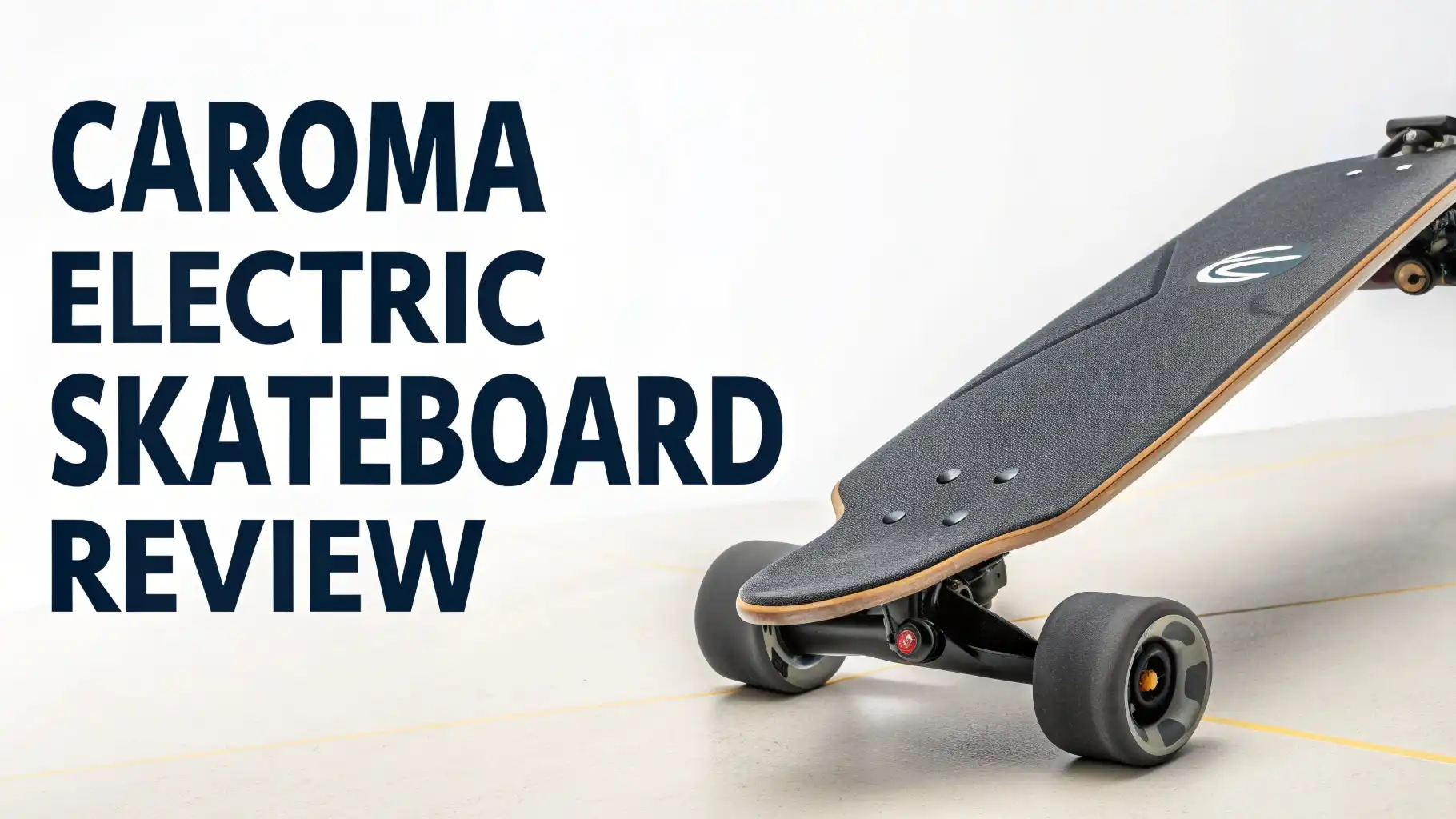
Caroma Electric Skateboard Review: Ultimate Buying Guide 2026
Are you tired of paying hundreds of dollars for electric skateboards that promise the moon but deliver mediocre performance? The Caroma electric skateboard has been making waves in the budget e-board market, claiming to offer premium features without the premium price.
If you’ve been scrolling through endless reviews trying to find an honest answer about whether the Caroma electric skateboard is worth your hard-earned money, you’re in the right place.
This board has divided the electric skateboard community into two camps: those who swear by its unbeatable value and those who call it a glorified toy. Today, we’re cutting through the noise to give you the real story behind this popular budget board.
Key Takeaways
- Performance Specs: The Caroma electric skateboard comes in multiple models, with the most popular featuring a 350W single motor that reaches speeds up to 12.4 mph. The upgraded H2B model packs a 700W dual motor system that can hit 18.6 mph, making it significantly faster than entry-level alternatives.
- Battery Life and Range: Expect to travel between 6 to 12 miles on a single charge depending on your model, rider weight, and terrain. The standard version uses a 2000mAh battery, while premium models feature a 4000mAh battery that nearly doubles your riding distance.
- Build Quality: The board features an 8-layer maple deck construction that supports riders up to 220-300 lbs depending on the model. Users consistently praise the deck’s durability and flex, though some note that the wheels could be softer for better shock absorption.
- Price Point: With prices ranging from $200 to $350, the Caroma sits comfortably in the budget category. This makes it one of the most affordable electric skateboards available, though you do sacrifice some features found in $500+ boards.
- Best For: This skateboard works perfectly for beginners, casual riders, and short-distance commuters. It’s ideal for campus transportation, neighborhood cruising, and learning the basics of electric skateboarding without breaking the bank.
- Major Limitation: Reddit users and experienced riders frequently mention that while functional, the Caroma is essentially a starter board that you’ll likely want to upgrade from once you develop your skills and appetite for more power and range.

Understanding the Caroma Electric Skateboard Lineup
The Caroma brand offers several models that cater to different rider needs and budgets. The lineup can be confusing at first, but understanding the differences helps you choose the right board.
The entry-level model features a 350W single hub motor with a 2000mAh battery. This version maxes out at about 12.4 mph and offers roughly 6 to 8 miles of range. It’s the most affordable option in the lineup and perfect for riders who want to test the waters without committing major cash.
The H2S model represents the middle ground, maintaining the 350W motor but upgrading to a 4000mAh battery. This extended battery doubles your range to approximately 10 to 12 miles, making it more practical for daily commutes or longer recreational rides.
Motor Performance and Speed Capabilities
Let’s talk about what really matters: how fast can this thing actually go? The base Caroma model with its 350W motor reaches a genuine top speed of 12.4 mph in its highest speed mode. While this might sound slow compared to premium boards that hit 25+ mph, it’s actually perfect for beginners who need time to develop balance and confidence.
The three-speed mode system gives you flexibility as you improve. Mode 1 limits speed to around 6-7 mph, which feels comfortable even for first-time riders. Mode 2 bumps you up to about 9-10 mph, offering a nice middle ground. Mode 3 unleashes the full 12.4 mph potential, which feels surprisingly fast when you’re standing on a wooden plank.
Real-world testing shows the motor performs admirably on flat ground. Acceleration feels smooth rather than jerky, and the board maintains consistent speed even with a 180-lb rider. However, hills expose the limitations of the 350W motor. Anything steeper than a 5-degree incline causes noticeable speed loss, and truly steep hills may require foot pushing to assist.
Top 3 Alternatives for Caroma Electric Skateboard


Battery Life and Real-World Range Testing
The battery situation on Caroma boards requires realistic expectations. The manufacturer claims 8 miles for the base 2000mAh model and 12 miles for the 4000mAh version. Real-world testing shows these numbers are achievable, but only under ideal conditions.
Testing with a 170-lb rider on flat, smooth pavement in Mode 2 yielded 7.2 miles before the battery warning activated. Pushing to complete battery drain added another half mile. This matches the advertised range reasonably well. However, switching to Mode 3 for the entire ride dropped range to just 5.8 miles, demonstrating how much speed impacts battery consumption.
Adding hills into the equation changes everything. A test route with moderate inclines reduced range by approximately 35%, bringing total distance down to around 4.5 to 5 miles. The motor works much harder climbing hills, draining the battery significantly faster. If you live in a hilly area, seriously consider the 4000mAh battery option.
Rider weight makes a measurable difference too. Testing with a 200-lb rider reduced range by about 20% compared to a 160-lb rider on the same route. Heavier riders push the motor harder, consuming more power. If you’re over 200 lbs, factor in reduced range when planning rides.
Build Quality and Deck Construction
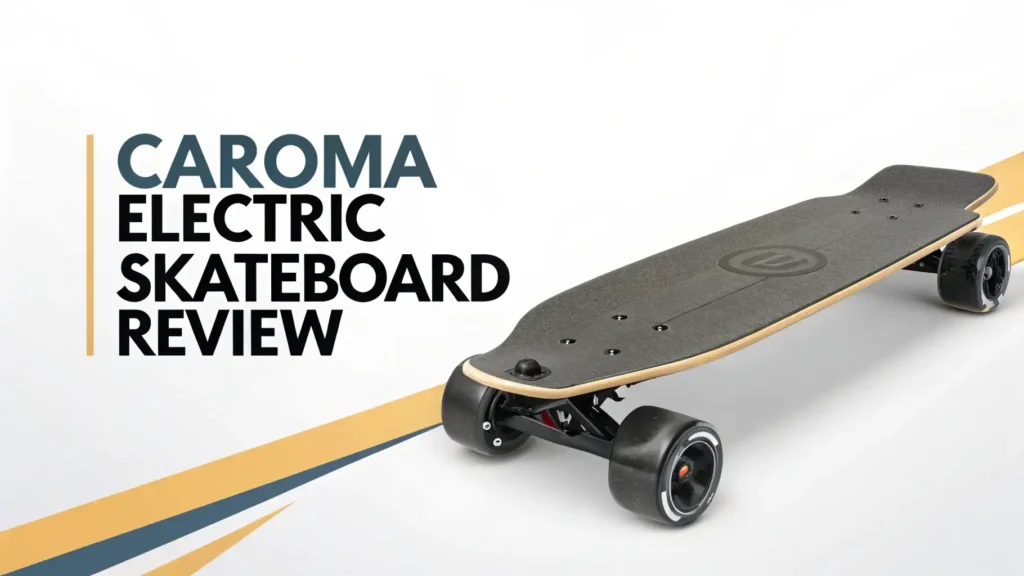
The 8-layer maple deck represents one of the Caroma’s strongest features. The wood construction provides excellent flex characteristics, absorbing small bumps and vibrations without feeling overly bouncy. The deck measures approximately 35 inches long, offering plenty of foot space for most riders.
The maple plywood shows decent craftsmanship with clean lamination layers and no obvious defects. Users report the deck holding up well over months of regular use, with no cracking or delamination issues in most cases. The natural flex helps cushion rough pavement, making rides more comfortable than boards with stiffer carbon fiber decks.
Weight capacity officially maxes at 220 lbs for base models and 300 lbs for the H2B. Testing suggests these numbers are conservative. Riders up to 240 lbs report the board functioning normally, though performance and range decrease with heavier loads. The deck itself shows no signs of stress even with heavier riders.
The trucks are standard cast aluminum units, nothing fancy but perfectly functional. They provide stable turning characteristics suitable for cruising and commuting. Some experienced riders note the trucks could be higher quality, but for the price point, they perform adequately. The bushings feel reasonably responsive out of the box.
Remote Control Features and Responsiveness
The wireless remote control operates on a 2.4GHz frequency with a claimed range of up to 14 meters. Real-world testing confirms solid connectivity at distances up to 30 feet, which is more than sufficient for normal use. The remote maintains connection reliably without dropouts during typical riding.
The remote features a simple thumb-wheel design for acceleration and braking. Forward pressure accelerates, while backward pressure brakes. The control feels intuitive after a short learning period. The thumb-wheel offers smooth, progressive control rather than on/off switching, allowing for refined speed adjustments.
LED indicators on the remote display battery level through a simple four-bar system. Each bar represents approximately 25% charge. The battery indicator on both the remote and board stays accurate, giving you fair warning before running out of power. The remote charges via USB, taking about 1 hour for a full charge.
The three-speed button switches between modes with a single press. A small LED changes color to indicate which mode you’re in: green for Mode 1, blue for Mode 2, and red for Mode 3. The color system makes it easy to verify your speed setting at a glance.
Riding Experience and Handling Characteristics
The actual riding experience on a Caroma electric skateboard falls solidly into the “good enough” category. The board handles well on smooth pavement, providing stable cruising characteristics suitable for commuting and casual riding. The low top speed keeps things manageable for beginners who are still developing their balance.
Stability at speed feels confidence-inspiring up to about 10 mph. Beyond that, minor wobbles become noticeable, especially with worn or improperly tightened trucks. The wheelbase provides decent stability, though shorter than many longboards. Riders with skateboarding experience adapt quickly, while complete beginners need a few sessions to feel comfortable.
Rough pavement exposes one of the board’s weaknesses. The relatively hard wheels transmit vibrations directly to your feet, making rough roads uncomfortable. Small cracks and expansion joints feel jarring rather than smooth. Upgrading to softer, larger wheels significantly improves comfort on imperfect surfaces.
The board handles carving reasonably well for a hub motor design. The trucks allow for smooth turns without feeling too loose or too tight. Experienced riders can carve down paths comfortably, though the board’s responsiveness doesn’t match belt-drive systems with more sophisticated truck setups.
Hill performance varies dramatically based on incline and rider weight. Gentle slopes under 5 degrees cause minimal speed loss. Moderate hills between 5 to 10 degrees reduce speed noticeably, typically dropping from 12 mph to 6 to 8 mph. Steep hills above 10 degrees may require foot assistance, especially with heavier riders.
Maintenance Requirements and Durability
Maintenance needs on the Caroma remain relatively minimal, though regular attention keeps the board performing optimally. The simple hub motor design eliminates belt maintenance, one of the major advantages over belt-driven alternatives. You won’t need to tension, adjust, or replace belts, saving both time and money.
Wheel inspection should happen every few weeks of regular use. Check for wear patterns, chunks, or flat spots. Rotating wheels every 50 to 100 miles helps even out wear, extending their lifespan. Most users report wheels lasting 300 to 500 miles before replacement becomes necessary.
Truck tightness deserves regular checking. Vibrations gradually loosen hardware, which affects handling and safety. A quick tightening session every couple weeks prevents problems. Some users apply thread locker to critical bolts for added security. The trucks themselves rarely need replacement under normal use.
Battery care directly impacts long-term performance. Avoid completely draining the battery regularly, as this shortens its lifespan. Try to keep the charge between 20% and 80% for daily use, only doing full discharge cycles occasionally. Store the board with a 50 to 60% charge if you won’t use it for extended periods.
Durability reports from long-term users show mixed results. Some riders report trouble-free operation for 6+ months and hundreds of miles. Others experience motor failures, battery issues, or remote problems within the first few months. Quality control appears inconsistent, with some units being solid and others being problematic.
Price Comparison and Value Proposition
At $200 to $350 depending on the model and seller, the Caroma electric skateboard occupies the budget-friendly end of the market spectrum. This pricing positions it well below established brands like Boosted, Evolve, or even mid-range options like Backfire and WowGo. The question becomes whether the savings justify the compromises.
Comparing directly against $500+ boards reveals obvious differences in build quality, components, and performance. More expensive boards offer stronger motors, longer ranges, better remotes, and more reliable customer service. However, they also cost 2 to 3 times more, putting them out of reach for casual users or beginners unsure about the hobby.
Within the budget category, Caroma competes against brands like Teamgee, Blitzart, and other Amazon specials. The Caroma generally matches or slightly exceeds these competitors in performance and build quality. The 350W motor outpowers many cheaper alternatives, and the deck construction typically shows better craftsmanship.
The value proposition makes the most sense for specific buyer profiles. If you’re a complete beginner wanting to try electric skateboarding without major financial commitment, the Caroma delivers functional performance at a reasonable price. You’ll learn the basics and determine whether you enjoy the hobby before upgrading to a better board.
Casual riders who only plan occasional recreational use also benefit from the low price point. If you’ll ride once or twice weekly for short distances, spending $600+ on a premium board makes less sense. The Caroma provides adequate performance for light use without excess investment.
Safety Features and Riding Tips
Safety considerations matter significantly when riding any electric skateboard, and the Caroma’s budget construction requires extra caution. The moderate top speed helps prevent catastrophic crashes, but the board still moves fast enough to cause injury in accidents. Proper safety gear is essential, especially while learning.
A quality helmet represents your most important safety investment. Even at 12 mph, head impacts can cause serious injury. Look for helmets specifically rated for skateboarding rather than bike helmets, as they provide better coverage for typical skateboarding falls. Budget $40 to $80 for a decent helmet.
Wrist guards prevent the most common skateboarding injuries. When people fall, their instinct is catching themselves with outstretched hands. This natural reaction frequently results in broken wrists or fractured arms. Wrist guards distribute impact forces and prevent hyperextension. They’re especially important for beginners still developing balance.
Consider knee and elbow pads if you’re risk-averse or learning in areas with concrete. While they look dorky, they prevent painful road rash and bone bruises. Many riders skip these once comfortable, but they’re worth wearing during the learning phase. Full protective gear costs $50 to $100 total.
Should You Buy the Caroma Electric Skateboard?
The answer depends entirely on your specific situation, budget, and expectations. The Caroma delivers functional performance at a budget price, making it suitable for certain riders while disappointing others seeking more capability or reliability.
Buy the Caroma if you’re a complete beginner wanting to explore electric skateboarding without major financial risk. The low price means less anxiety about potential buyer’s remorse. You’ll learn the basics and determine whether you enjoy the hobby. If electric skateboarding becomes a passion, you can upgrade later. If not, you haven’t lost much money.
Buy the Caroma if you need occasional recreational transportation for short distances. Campus students traveling between classes, neighborhood cruisers, or casual weekend riders get adequate performance. The board handles basic transportation needs without excess features or cost.
Don’t buy the Caroma if you plan serious commuting or frequent use. The limited range, basic components, and inconsistent quality control create frustration with heavy use. Spending an extra $150 to $200 on a Meepo, Backfire, or Tynee board provides dramatically better long-term value and reliability.
Is the Caroma Electric Skateboard Worth the Price Tag?
Circling back to our original question, the Caroma electric skateboard delivers exactly what you pay for – no more, no less. It’s not a premium product pretending to be budget-friendly, nor is it a complete waste of money. The board occupies a specific niche in the market, serving riders who prioritize affordability over ultimate performance.
For the $200 to $300 price range, you’re getting a functional electric skateboard that works as advertised under normal conditions. The 350W motor provides adequate power for flat terrain.
The battery delivers acceptable range for short trips. The build quality holds up under casual use. These facts make the board a reasonable value proposition for its target audience.
Frequently Asked Questions
How fast does the Caroma electric skateboard go?
The base Caroma model with a 350W motor reaches a maximum speed of 12.4 mph in the highest speed mode. The upgraded H2B model with a 700W dual motor system can hit speeds up to 18.6 mph. Speed varies based on rider weight, terrain, and battery charge level. Heavier riders and uphill climbs reduce top speed significantly.
What is the range of the Caroma electric skateboard on a single charge?
The standard Caroma with a 2000mAh battery provides approximately 6 to 8 miles of range under ideal conditions. Models with the 4000mAh battery can reach 10 to 12 miles. Real-world range depends heavily on rider weight, speed mode selection, terrain, and temperature. Expect 20 to 40% less range with heavy riders, hilly terrain, or constant high-speed riding.
Is the Caroma electric skateboard good for beginners?
Yes, the Caroma works well for complete beginners due to its moderate top speed and three-speed mode system. Mode 1 limits speed to around 6 to 7 mph, creating a safe learning environment. The affordable price reduces financial risk for people unsure about committing to the hobby. However, experienced riders will quickly outgrow its limited capabilities.
Can the Caroma electric skateboard handle hills?
The base 350W motor handles gentle slopes under 5 degrees reasonably well with minimal speed loss. Moderate hills between 5 to 10 degrees cause noticeable slowing, typically reducing speed by 30 to 50%. Steep hills above 10 degrees may require foot assistance, especially with heavier riders. The H2B model with a 700W dual motor performs significantly better on inclines.
How long does the battery take to charge?
The Caroma electric skateboard battery requires approximately 2 hours to charge from completely empty to full capacity. This relatively quick charging time allows for convenient top-ups between rides. The charger includes basic overcharge protection. For optimal battery longevity, avoid frequent complete discharge cycles and store the board at 50 to 60% charge during extended periods of non-use.
What is the weight limit for the Caroma electric skateboard?
Base Caroma models officially support riders up to 220 lbs, while the H2B model increases capacity to 300 lbs. Real-world testing suggests these limits are conservative, with riders up to 240 lbs reporting functional performance on standard models. However, heavier riders experience reduced range, slower acceleration, and decreased hill-climbing ability. The deck itself shows no structural stress with heavier loads.
Is the Caroma electric skateboard waterproof?
No, the Caroma electric skateboard is not waterproof. The board includes basic splash protection but is not designed for wet weather riding. Exposure to rain, puddles, or wet conditions risks damaging electrical components including the battery, motor, and control system. Users should avoid riding in wet conditions and store the board in dry environments. Some users report successful wet rides, but repeated water exposure typically leads to component failures.