FiiO E17 USB DAC Headphone Amplifier Review 2026
If you have been searching for a portable DAC and headphone amplifier that punches above its price, you have likely come across the FiiO E17 Alpen.
This device earned a loyal following years ago. It promised clear audio, solid build quality, and real portability in one small package. But does it still hold up in 2026?
The FiiO E17 uses a Wolfson WM8740 DAC chip. It supports USB and S/PDIF inputs. It packs an OLED display and a rechargeable battery. Many audio fans still swear by its warm, musical sound signature. Others wonder if newer products have left it behind.
Key Takeaways:
- The FiiO E17 Alpen uses a Wolfson WM8740 DAC chip that delivers a warm, full bodied sound signature with good detail retrieval. This chip was also used in higher priced DACs like the Cambridge DacMagic, which speaks to its audio quality.
- Battery life sits at around 15 hours on a single charge from its 1500mAh lithium ion battery. This is a reduction from its predecessor (the FiiO E7), but still enough for several days of moderate use without recharging.
- The OLED display is a standout feature that shows volume, input source, EQ settings, and battery status. This level of visual feedback is rare on portable DAC amps, especially at this price point.
- It supports USB input up to 24 bit/96 kHz and S/PDIF input up to 24 bit/192 kHz, giving you flexibility to connect to computers, CD players, and other digital sources with high resolution audio.
- Built in bass and treble adjustments let you fine tune your sound without relying on software EQ. This feature gives you direct control over your listening experience on the go.
- The aluminum body feels solid and premium despite the budget price. It pairs with the FiiO E09K desktop dock for a complete home and portable audio solution.

FiiO E17 USB DAC Headphone Amplifier Overview
The FiiO E17 Alpen is a portable USB DAC and headphone amplifier. FiiO released it as a direct upgrade to the popular E7 model. The device combines a digital to analog converter and a headphone amplifier in one compact unit.
It accepts audio signals through USB, coaxial S/PDIF, and a 3.5mm analog input. The USB connection handles files up to 24 bit/96 kHz. The S/PDIF input pushes that ceiling to 24 bit/192 kHz. This makes the E17 flexible enough for laptops, desktop computers, and external CD transports.
The E17 uses a Wolfson WM8740 DAC chip. This chip has a strong reputation in the audio world. Companies like Cambridge Audio used the same chip in their mid range products. The result is clean, accurate digital to analog conversion.
FiiO built the E17 inside a milled aluminum enclosure. It feels solid in the hand. The weight stays manageable for pocket carry. A 1500mAh rechargeable battery powers the unit for about 15 hours of continuous use. This means you can take your upgraded audio everywhere you go.
Build Quality and Design
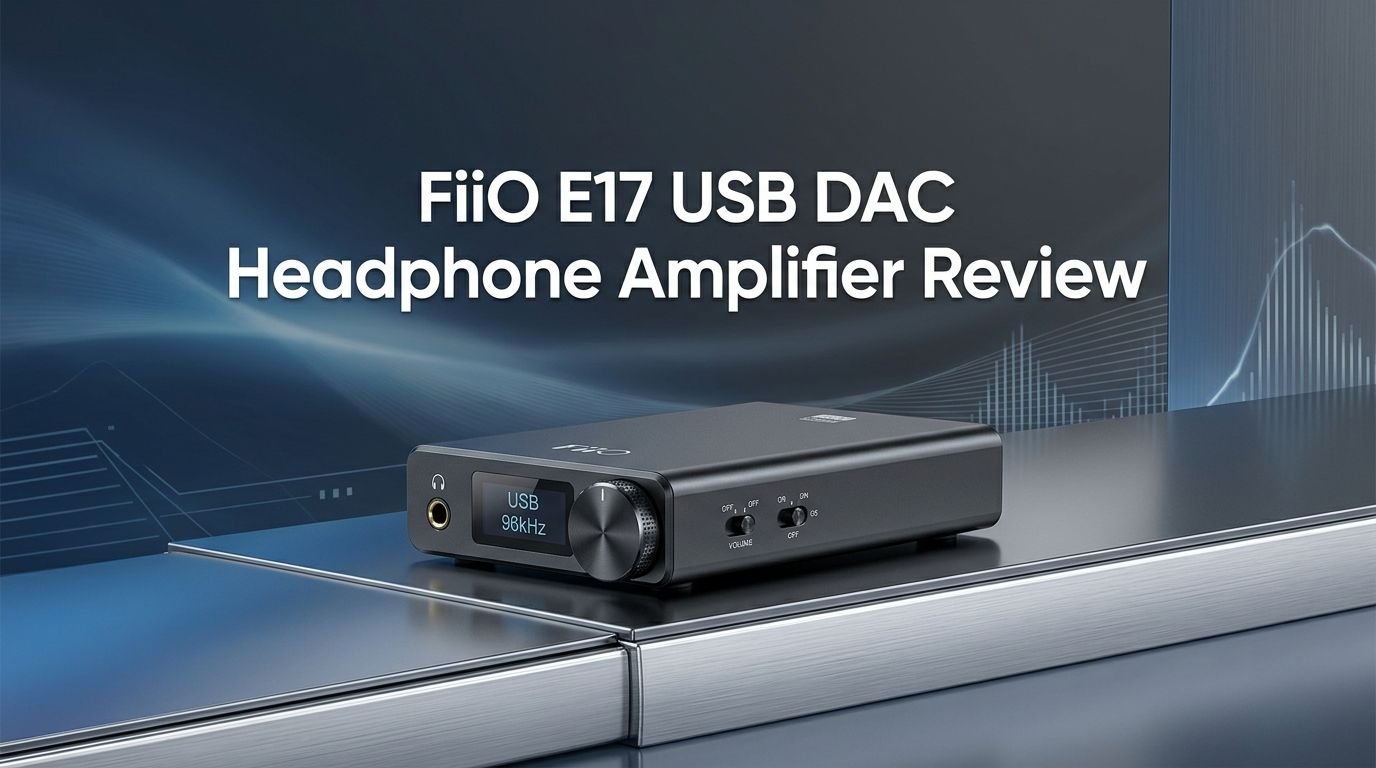
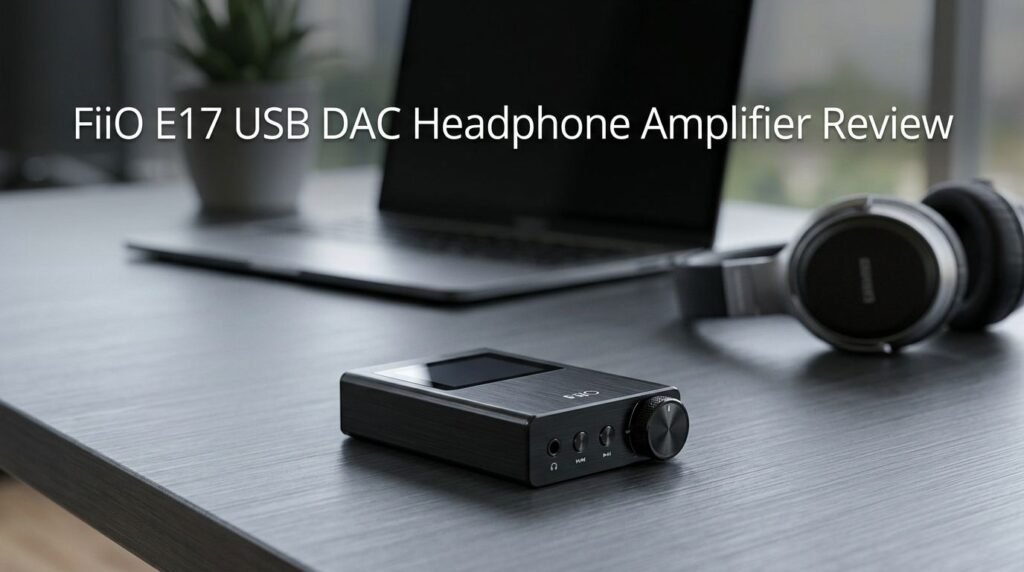
The FiiO E17 has a slim, rectangular shape. It measures roughly 96.5 x 55.5 x 15.2mm. The entire chassis is milled from aluminum. This gives the device a cool, metallic feel that inspires confidence.
The front face features the OLED display screen and four navigation buttons. These buttons let you scroll through menus, adjust volume, and change EQ settings. They respond quickly and feel tactile under your fingers.
On the top edge, you will find the 3.5mm headphone output jack. The bottom edge holds the mini USB port, a FiiO dock connector, and a 3.5mm auxiliary input. A hold switch on the side prevents accidental button presses in your pocket.
The overall design is clean and functional. FiiO did not add unnecessary decorations. Everything serves a purpose. The brushed aluminum finish resists fingerprints well and looks professional in any setting. The build quality easily matches devices that cost twice the price.
OLED Display and User Interface
One of the best features of the FiiO E17 is its dual color OLED display. This small screen sits on the front panel. It shows you all the information you need at a glance.
The display indicates current volume level, input source, EQ settings, sample rate, and battery status. You never have to guess what mode you are in. The screen is bright enough to read in daylight. It also dims well in dark environments.
Navigation happens through four buttons below the screen. Two buttons handle menu scrolling. The other two control volume and selection. The menu system is simple. You can reach any setting within a few button presses.
Sound Quality and Performance
The Wolfson WM8740 DAC chip sits at the heart of the FiiO E17’s sound. This chip delivers a warm, musical presentation. The sound signature leans slightly toward the full bodied side. This makes long listening sessions comfortable.
Bass response is solid and well controlled. The low end has good weight without bleeding into the midrange. Kick drums sound punchy. Bass guitars have proper texture. The built in bass boost adds even more low end power if you want it.
Midrange reproduction is one of the E17’s strengths. Vocals sound clear and present. Acoustic instruments have a natural tone. The mids are neither recessed nor overly forward. They sit in a balanced position within the sound stage.
Treble is smooth and extended. High frequencies do not sound harsh or sibilant. Cymbals shimmer without becoming fatiguing. The treble adjustment lets you add sparkle if your headphones sound too dark.
Top 3 Alternatives for FiiO E17 USB DAC Headphone Amplifier
If the FiiO E17 does not match your needs, these three modern alternatives offer excellent performance and value.

The FiiO KA17 is a modern dongle DAC and amp from the same brand. It uses dual ES9069Q DAC chips and THX AAA 78 amplification. It supports both 3.5mm and 4.4mm balanced output. This tiny device delivers desktop grade sound from your phone or laptop.

The FiiO BTR7 adds Bluetooth connectivity to the portable DAC amp formula. It supports LDAC, aptX HD, and other high resolution codecs. It works as both a wireless receiver and a wired USB DAC. The built in battery lasts about 7 hours.

The iFi Hip DAC 3 is a premium portable DAC and headphone amplifier. It offers balanced 4.4mm output, USB C connectivity, and excellent sound quality. The iFi brand is well respected for its audio products. This device competes with units costing much more.
DAC Chip and Digital Performance
The Wolfson WM8740 is a well known DAC chip. It has appeared in many respected audio products over the years. Inside the FiiO E17, it converts digital signals into analog audio with low distortion and good dynamic range.
Over USB, the E17 accepts signals up to 24 bit/96 kHz. This covers most high resolution music files you will encounter. CD quality audio at 16 bit/44.1 kHz sounds excellent through this setup. Higher resolution files at 24/96 reveal additional detail and space.
The S/PDIF coaxial input pushes resolution support to 24 bit/192 kHz. This input accepts signals from external transports, gaming consoles, and other digital sources. The coaxial connection often delivers a cleaner signal than USB in many setups.
The E17 handles bit perfect audio when used as a USB DAC with a computer. It bypasses your computer’s built in audio processing. This means the music reaches your headphones without unwanted modification. The result is a purer, more accurate reproduction of your recordings.
Amplifier Section and Power Output
The headphone amplifier inside the FiiO E17 delivers more than 250mW into 16 ohm headphones. This is enough power for most portable and full size headphones. It can drive popular models like the Sennheiser HD 598 and Audio Technica ATH M50x with ease.
For higher impedance headphones at 300 ohms, the output drops to about 20mW. This is sufficient for casual listening with headphones like the Sennheiser HD 600. However, very demanding planar magnetic headphones may need more power.
The E17 offers two gain settings. The low gain setting works well with sensitive in ear monitors and low impedance headphones. The high gain setting adds extra voltage swing for harder to drive headphones. Switching between them is easy through the menu system.
Left and right channel balance control is another useful feature. If one of your ears is more sensitive than the other, you can adjust the balance. This is a rare feature on portable amplifiers. It shows FiiO’s attention to practical user needs.
The amplifier circuit is clean and transparent. It does not add noticeable coloration to the sound. What goes in comes out with faithful accuracy. The amp section works in harmony with the WM8740 DAC to deliver a cohesive, high quality listening experience.
Bass and Treble EQ Adjustments
The FiiO E17 includes built in bass and treble equalizer controls. These adjustments happen in the analog domain. They let you shape the sound to match your personal preference or headphone characteristics.
Bass adjustment ranges from 0 to +6 in 2dB steps. You can add a gentle bass boost or a more significant low end lift. The bass boost sounds clean and does not introduce distortion. It works well with bass light headphones that need a little extra warmth.
Treble adjustment also ranges from 0 to +6 in 2dB steps. Adding treble brightens the sound and reveals more high frequency detail. This is useful with dark sounding headphones. A small treble boost can open up the sound without making it harsh.
The important thing is that these EQ adjustments are entirely optional. You can leave them at zero for a flat, uncolored output. Many listeners prefer the E17’s natural sound signature without any boost applied. The flexibility to adjust is just a bonus.
Connectivity and Input Options
The FiiO E17 gives you three input options. This level of connectivity is unusual for a portable DAC amp. Most competitors at this price offer only USB or a single input.
The mini USB port serves double duty. It transfers digital audio from your computer and charges the battery simultaneously. The USB DAC function works with Windows, Mac, and Linux. No special drivers are needed for Mac and Linux. Windows may require a simple driver installation.
The coaxial S/PDIF input uses a 3.5mm jack with an adapter. It accepts digital signals from CD players, game consoles, TVs, and other devices with coaxial output. This input supports the highest resolution at 24 bit/192 kHz.
The 3.5mm auxiliary input accepts analog signals. You can use this to connect a phone, tablet, or any device with a headphone output. In this mode, the E17 works purely as a headphone amplifier. The DAC section is bypassed.
Battery Life and Charging
The FiiO E17 contains a 1500mAh lithium ion battery. FiiO rates the battery life at approximately 15 hours of continuous use. Real world results match this claim closely for most users.
Charging happens through the mini USB port. A full charge takes about 3.5 hours. You can charge from any USB power source. A laptop, desktop computer, wall adapter, or portable power bank all work fine.
The 15 hour battery life is shorter than the FiiO E7’s 40 hour rating. This reduction comes from the improved DAC chip and stronger amplifier. The trade off is better sound quality for less battery endurance. Most users find 15 hours more than adequate for daily use.
Using the hold switch extends battery life further. It turns off the OLED display, which consumes power. During long listening sessions, locking the screen saves noticeable battery. This is a simple but effective power saving measure.
The E17 can also run on USB power while connected to a computer. In this mode, the battery is not drained. It charges while you listen. This makes the E17 an excellent desktop companion. You get unlimited listening time at your desk and portable freedom on the go.
FiiO E17 vs FiiO E7: What Changed?
The FiiO E17 replaced the popular FiiO E7. Several upgrades make the E17 a clear improvement over its predecessor.
The DAC chip changed from a Wolfson WM8740 in a different implementation. The E17’s implementation delivers a wider soundstage and fuller midrange. The E7 sounded thinner in comparison. The E17’s mids are less congested and more natural.
Resolution support increased significantly. The E7 maxed out at 16 bit/48 kHz over USB. The E17 handles 24 bit/96 kHz over USB and 24 bit/192 kHz over S/PDIF. This was a major leap in digital capability.
The coaxial S/PDIF input is entirely new. The E7 did not have this connection. Adding S/PDIF opened up the E17 to more source devices and higher resolution audio streams.
The OLED display replaced the E7’s simpler screen. It shows more information in a clearer format. Navigation is easier and more intuitive on the E17.
The main downside is battery life. The E7 lasted up to 40 hours on a charge. The E17 drops to 15 hours. This is noticeable for heavy travelers. However, most users agree that the sound quality improvements justify the battery trade off.
Who Should Buy the FiiO E17 in 2026?
The FiiO E17 remains a good entry point for people new to portable DACs and headphone amplifiers. Its price has dropped significantly since launch. You can often find it at bargain prices on the used market.
Budget conscious listeners will appreciate the E17’s performance to price ratio. It sounds better than most built in laptop and phone audio. The improvement is immediately noticeable with decent headphones.
Collectors and vintage audio enthusiasts may want the E17 for its place in portable audio history. It was one of the first truly popular portable DAC amps. It helped introduce many listeners to high quality portable audio.
Desktop users who pair the E17 with the FiiO E09K dock get a surprisingly capable desktop setup. The E17 serves as the DAC while the E09K provides more amplifier power. This combination can drive large headphones with authority.
However, if you want the latest features like USB C, Bluetooth, balanced output, or MQA support, you should look at newer alternatives. The FiiO KA17, FiiO BTR7, or iFi Hip DAC 3 offer modern connectivity and updated DAC technology. The E17 does not support these newer standards.
Casual listeners who want a simple, effective upgrade from their phone or laptop audio will still enjoy the FiiO E17. It delivers a real and audible improvement that does not require technical expertise to appreciate.
Pros and Cons of the FiiO E17
The FiiO E17 has clear strengths. Its warm, musical sound quality remains enjoyable in 2026. The Wolfson WM8740 DAC chip produces a full, engaging presentation. The built in EQ controls add useful flexibility.
The OLED display sets the E17 apart from many modern budget DAC amps. It provides visual feedback that most competitors still lack. The aluminum build quality is excellent for the price. The device feels like a premium product.
Multiple input options give you flexibility. USB, S/PDIF, and analog inputs cover most connection scenarios. The dock connector compatibility with the E09K adds desktop functionality.
On the downside, the mini USB connector is outdated. USB C has become the standard. Finding mini USB cables may become inconvenient over time. The lack of balanced output limits pairing with modern balanced headphones.
There is no Bluetooth connectivity. You need a physical cable for every connection. The 15 hour battery life is adequate but not exceptional compared to simpler devices with longer endurance.
Final Verdict: Is the FiiO E17 Worth It in 2026?
The FiiO E17 Alpen earned its reputation for good reason. It delivers warm, detailed sound from a compact, well built package. The Wolfson WM8740 DAC chip still sounds musical and engaging. The built in EQ, OLED display, and multiple inputs make it a versatile tool.
For listeners who want a budget friendly audio upgrade and do not need the latest wireless or balanced features, the E17 remains a smart choice. It improves laptop and phone audio in a clear, audible way. Its simplicity is actually an advantage for people who just want better sound without complexity.
If you need modern connectivity, Bluetooth, USB C, or balanced output, look at the alternatives we listed above. The FiiO KA17, FiiO BTR7, and iFi Hip DAC 3 all offer updated technology while keeping the portable form factor.
Frequently Asked Questions
Does the FiiO E17 work with modern computers?
Yes, the FiiO E17 works with Windows, Mac, and Linux computers through its mini USB connection. Mac and Linux usually recognize it automatically. Windows may need a basic driver installation. The device functions as a standard USB audio device.
Can the FiiO E17 drive high impedance headphones?
The E17 delivers about 20mW into 300 ohm headphones. This is enough for moderate listening volumes with headphones like the Sennheiser HD 600 or HD 650. Very power hungry planar magnetic headphones may need a stronger amplifier for best results.
Is the FiiO E17 better than a laptop’s built in audio?
In most cases, yes. The E17’s dedicated Wolfson WM8740 DAC chip and clean amplifier section provide a noticeable improvement over typical laptop audio. You will hear better detail, wider soundstage, and lower background noise.
Does the FiiO E17 support Bluetooth?
No. The FiiO E17 is a wired device only. It connects through USB, coaxial S/PDIF, or a 3.5mm analog cable. If you want Bluetooth, consider the FiiO BTR7 as an alternative.
Can I use the FiiO E17 with a smartphone?
The E17 connects to smartphones through the 3.5mm auxiliary input. In this mode, it works as a headphone amplifier only. The DAC function is not active through the analog input. Some Android phones may support USB audio with an OTG adapter, but compatibility varies.
What headphones pair well with the FiiO E17?
The E17 pairs best with headphones rated between 16 and 150 ohms. Popular matches include the Audio Technica ATH M50x, Beyerdynamic DT 770 Pro (80 ohm), Sennheiser HD 598, and various in ear monitors. It handles sensitive IEMs without hiss thanks to its low noise floor.