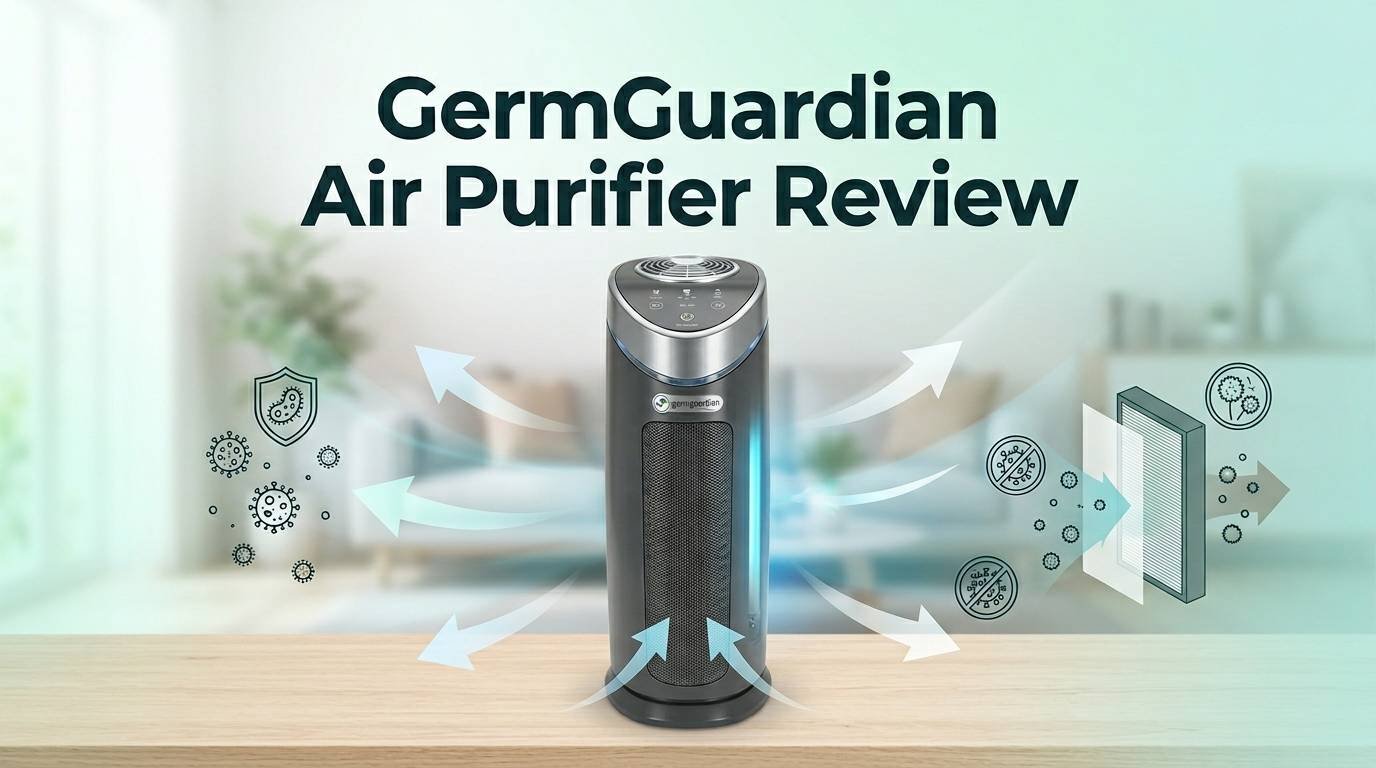
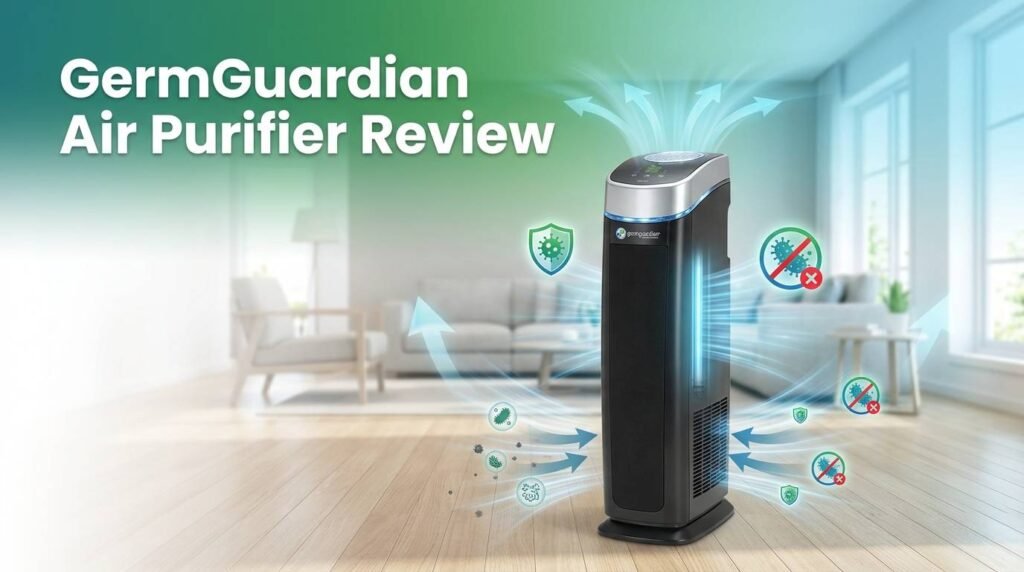
GermGuardian Air Purifier Review 2026: Worth the Hype?
If you breathe indoors, you need to know about GermGuardian air purifiers. These devices have become increasingly popular among people who care about air quality in their homes and offices.
Many families struggle with allergies, pet dander, dust, and odors that seem impossible to eliminate. GermGuardian offers real solutions to these common air quality problems.
In this complete review for 2026, we examine the best models, features, benefits, and everything you need to make a smart purchasing decision.
Key Takeaways
- GermGuardian air purifiers deliver powerful air cleaning with advanced filtration technology. The brand offers multiple models designed for different room sizes and budgets.
- Their True HEPA filters capture 99.97% of particles as small as 0.1 microns, which includes dust, pollen, pet dander, and smoke.
- The combination of HEPA filtration with UV-C light technology creates a complete cleaning system that reduces airborne germs, bacteria, mold spores, and viruses.
- These purifiers operate at reasonably quiet noise levels, with most models producing between 40 to 55 decibels on various fan speeds.
- GermGuardian models provide excellent value for the price, offering more features than many competing brands in the same price range.
- The filters last between 6 to 12 months depending on usage and air quality conditions. Many customers report noticeable improvements in allergy symptoms, better sleep quality, and fewer odors throughout their homes within the first week of use.
- Installation and maintenance are simple enough for anyone to handle without professional help, and replacement filters are readily available online and in stores.

GermGuardian AC4825: The Most Popular 22-Inch Tower Model
The GermGuardian AC4825 stands out as the best-selling model in the company’s lineup for good reason. This 22-inch tower model combines practical design with powerful air cleaning capabilities.
The unit covers rooms up to 743 square feet, making it suitable for most living rooms, large bedrooms, and home offices. The AC4825 works by pulling air through a three-layer filtration system that captures virtually everything floating in your air.
The first layer consists of a carbon pre-filter that catches larger particles and absorbs odors from pets, cooking, and smoke. The second layer features the True HEPA Pure filter that captures microscopic particles.
The third layer includes an optional UV-C light that reduces germs and bacteria. This three-stage approach means you get cleaner air faster than single-stage purifiers.
The device runs at three different speeds, and customers frequently mention that the lowest speed is quiet enough to use at night without disrupting sleep.
GermGuardian AC5250PT: The Premium Large Room Option

When you need to clean large spaces, the GermGuardian AC5250PT rises to the challenge. This 28-inch tower model handles rooms up to 915 square feet, making it perfect for open floor plans and large family rooms.
The AC5250PT features all the technology found in the AC4825 but with increased power and capacity. This five-in-one system includes a carbon pre-filter, HEPA filter, UV-C light, activated oxygen, and an odor reduction feature.
The larger filter size means better air circulation and longer filter life compared to smaller models. Many customers choose the AC5250PT for homes with pets because the enhanced filtration specifically handles pet-related allergens more effectively.
The unit produces 99.97% removal of particles down to 0.1 microns. The increased motor power keeps noise levels reasonable even at maximum speed, typically reaching 55 decibels at high settings.
The AC5250PT includes a pet-specific HEPA filter that targets dander and hair more effectively than standard filters. If you share your home with cats or dogs, this feature justifies the additional cost.
Top 3 Alternatives for GermGuardian Air Purifier Models


How GermGuardian HEPA Filtration Works
GermGuardian air purifiers use True HEPA filters rather than cheaper HEPA-type alternatives found in some competitors.
True HEPA filters meet strict government standards and must capture 99.97% of particles 0.3 microns or larger. This certification means the filter truly protects your health, not just marketing hype. The filter uses fiberglass fibers arranged in a dense pattern that traps particles as they pass through.
The carbon pre-filter layer deserves special attention because it handles specific problems that pure HEPA filtration cannot address. Carbon effectively removes chemical odors, volatile organic compounds, and smoke.
If you live near traffic, cook with strong spices, or have smokers in your household, the carbon layer makes a noticeable difference. Many customers report that their homes smell fresher within hours of starting the purifier. The combination of carbon and HEPA technologies ensures comprehensive air cleaning rather than incomplete solutions.
Understanding UV-C Light Technology
The UV-C light in GermGuardian purifiers deserves detailed explanation because many customers do not fully understand this feature.
UV-C light kills germs by damaging their DNA structure, preventing reproduction and spreading. This technology works on bacteria, viruses, mold spores, and other microorganisms. Unlike chemical sanitizers, UV-C leaves no residue and poses no toxicity risk when properly shielded inside the unit.
GermGuardian’s UV-C technology specifically targets thin-walled microorganisms that pass through the filtration system. While the HEPA filter captures most particles, some microscopic germs still slip through. The UV-C light catches these remaining organisms as they pass near the light source.
The combination of physical filtration and UV-C sanitization provides the most comprehensive protection available in home air purifiers. Medical facilities and laboratories use similar UV-C technology because it works effectively.
The UV-C feature becomes especially valuable during cold and flu season. Studies show that certain viruses, including influenza viruses, are vulnerable to UV-C exposure.
Benefits of Using GermGuardian Air Purifier at Home
Air purifier benefits extend far beyond simply making your home smell better. Scientific research increasingly supports the connection between clean air and better health outcomes.
People with allergies report dramatic symptom reduction within days of using GermGuardian purifiers. Sneezing, nasal congestion, and itchy eyes typically improve significantly as airborne allergens are removed from circulation.
Asthma sufferers also experience noticeable relief because air purifiers remove triggers like dust mites, pet dander, pollen, and mold spores. Parents of children with asthma frequently report fewer nighttime coughing episodes and better overall symptom control.
The reduction in respiratory irritants means fewer medications needed and better quality sleep. Better sleep quality improves immune function, mood, and daytime energy levels. You feel the benefits holistically rather than just in your respiratory system.
Pet owners discover that air purifiers solve multiple problems simultaneously. Hair and dander get trapped in filters, reducing the amount of allergens spreading through your home. Odors that seem impossible to eliminate with cleaning alone disappear when a purifier removes their source particles.
Noise Level Performance and Quiet Operation
GermGuardian models operate surprisingly quietly compared to older air purifier designs. The AC4825 produces approximately 40 to 55 decibels depending on fan speed. To put this in perspective, normal conversation ranges from 60 to 70 decibels, and whispered speech measures around 30 decibels.
This means the AC4825 on low speed is quieter than normal conversation but louder than a whisper. Most users report they easily forget the purifier is running once they adjust to it.
The three-speed setting system gives you flexibility in choosing between performance and noise. High speed cleans the air fastest but produces more noise. Medium speed balances cleaning power and quiet operation. Low speed runs with minimal noise suitable for bedrooms and sleeping areas.
Many customers set their purifiers to high speed during the day when other household noise masks the sound, then switch to low speed at night. This strategy maximizes cleaning while maintaining comfortable living conditions.
The AC5250PT and other larger models maintain similarly reasonable noise levels despite having more powerful motors. The larger filters and housing actually help distribute sound more evenly, reducing the perception of noise compared to smaller models.
Coverage Area and Room Size Recommendations
Selecting the correct model for your space is crucial for effective air purification. Each GermGuardian model clearly states its coverage area in square feet.
The AC4825 covers 743 square feet effectively, while the AC5250PT handles 915 square feet. Do not assume that a smaller model works fine in a slightly larger space because underperformance reduces cleaning effectiveness.
Clean Air Delivery Rate (CADR) measures how quickly a purifier removes specific contaminants from air. GermGuardian specifies CADR ratings for dust, smoke, and pollen.
Higher CADR numbers mean faster air cleaning. For rooms at the top of the coverage range, the purifier cleans air completely once per hour. For smaller rooms, air cycles through the filtration system multiple times hourly, providing even cleaner results.
High ceilings, multiple doors, and open floor plans require more powerful models than standard rectangular rooms of the same square footage. A living room with an open kitchen needs stronger purification than an enclosed bedroom of identical size.
Maintenance and Filter Replacement Schedule
GermGuardian purifiers require minimal maintenance once installed. The carbon pre-filter needs replacement or cleaning every 3 to 6 months depending on air quality.
If you have pets or smokers in your home, replace the pre-filter more frequently. Simply slide out the old filter and insert the new one in the same direction. Most users can complete this task in under two minutes without tools.
The True HEPA filter lasts considerably longer than the pre-filter, typically 6 to 12 months between replacements. Your purifier includes a filter replacement indicator that lights up when the filter needs changing.
Follow this indicator rather than guessing about replacement timing. A clogged filter reduces airflow and decreases cleaning effectiveness significantly. Regular filter replacement maintains peak performance and ensures you receive the full benefit of your purifier.
The UV-C light component never requires replacement because it lasts thousands of hours. You will likely replace the purifier before the UV-C light burns out in normal use. The cost of replacement filters remains reasonable compared to some competing brands.
Customer Reviews and Real-World Performance
The overwhelming majority of GermGuardian customers report satisfaction with their purchases. Most users mention noticing improvements in air quality and allergy symptoms within the first week.
Pet owners repeatedly highlight how much the purifier reduces odors and hair accumulation in their homes. Parents report that their children’s colds and respiratory issues decrease in frequency once the purifier operates continuously.
Customers appreciate the straightforward design that requires no app or complicated setup. Simply plug it in, turn it on, and the purifier begins working immediately.
This simplicity appeals to people who want air cleaning without technical complexity. The quiet operation means customers forget the device is running, which is actually a positive quality. Background noise from the purifier becomes invisible to your awareness.
Some customers mention that the AC4825 seems a bit plain or utilitarian in appearance compared to designer-style purifiers.
Price Comparison and Value Assessment
GermGuardian air purifiers offer exceptional value compared to premium brands charging significantly more for similar technology. The AC4825 price typically ranges from $150 to $200, making it accessible for most households.
The AC5250PT costs more at $250 to $350 but still represents solid value for the increased coverage and performance. These prices compare favorably with competitors offering HEPA and UV-C filtration.
The long filter life and reasonable replacement costs keep long-term ownership expenses low. You are not locked into expensive proprietary filters or frequent replacement schedules that drain your budget.
The initial investment pays back quickly through improved health and reduced medical costs for allergy and asthma sufferers. Many customers report the reduction in allergy medication alone justifies the purifier cost within the first year.
Higher-priced models often offer app controls and smart home integration that provide convenience but little actual performance improvement. GermGuardian focuses on excellent core functionality at reasonable prices rather than unnecessary premium features.
Comparing GermGuardian to Competitor Brands
GermGuardian stands out in the crowded air purifier market through balanced focus on performance, price, and simplicity.
Many competitor brands emphasize aesthetics or smart features at the expense of core filtration performance. GermGuardian prioritizes what actually matters: capturing pollutants and germs from your air. This focus explains why it remains consistently popular.
Versus premium brands like Blueair or IQAir, GermGuardian offers similar HEPA filtration at a fraction of the price. You sacrifice some advanced features like WiFi connectivity or sleek Scandinavian design, but you gain substantial cost savings. For buyers wanting excellent air purification without premium pricing, GermGuardian wins the comparison.
Compared to budget brands using HEPA-type filters instead of True HEPA, GermGuardian provides superior performance. The quality difference becomes apparent in real-world filtering of particles and allergens.
Energy Consumption and Operating Costs
GermGuardian air purifiers consume minimal electricity, typically using 50 to 100 watts depending on fan speed. This modest power consumption means running your purifier 24/7 does not significantly impact your electric bills.
For comparison, a typical hair dryer uses 1500 to 2000 watts, making your purifier use a fraction of such devices. The annual electricity cost of running a GermGuardian continuously ranges from $30 to $50 in most areas of the country.
The three-speed setting allows you to adjust power consumption based on your needs. Running on high speed consumes more electricity but cleans air faster.
Low speed operation barely registers on electric meters while providing acceptable air cleaning for light pollutants. Balancing speed settings with your current air quality needs optimizes both performance and energy efficiency.
Setting the timer function lets you run the purifier only during peak pollution times or when you are home. Many users run it continuously in bedrooms while sleeping to ensure clean air throughout the night.
Installation Setup and Getting Started
GermGuardian air purifiers require virtually no installation. Simply unpack the unit, place it in your chosen location, and plug it into a standard electrical outlet.
No tools, no professional help, and no complicated assembly needed. Within minutes of opening the box, your purifier runs and begins cleaning your air. This ease of setup appeals to people without technical skills or those renting apartments.
Choose your location carefully for optimal performance. Place the purifier centrally in the room rather than in corners where air circulation is restricted. Ensure adequate space around the intake vents for unrestricted airflow. Do not block exhaust vents or place the purifier against walls. These simple positioning principles maximize cleaning effectiveness.
Read the instruction manual to understand all features and controls before operation. The manual includes guidance on filter replacement timing and maintenance procedures. Most users find the manual clear and easy to understand even without technical background. GermGuardian provides customer support via phone and email if you have questions during setup.
Special Features of Premium GermGuardian Models
GermGuardian’s advanced models include features absent from basic versions. Digital displays show fan speed settings and filter status clearly. Some models feature sleep mode that reduces noise to minimum levels for overnight operation. Timer functions allow you to set specific run times, conserving energy when you are away.
The activated oxygen feature in premium models provides additional odor elimination and sanitization. This technology works alongside UV-C and HEPA filtration to provide comprehensive air cleaning. Pet owners particularly appreciate activated oxygen because it targets stubborn animal odors at their source.
Smart home compatible models allow app control and monitoring from your smartphone. You can turn the purifier on or off remotely, check filter status, and adjust settings without being in the room.
Best Uses and Recommended Room Placement
GermGuardian air purifiers excel in bedrooms where you spend 8 hours nightly breathing the air. Clean air during sleep promotes better rest and faster allergy symptom improvement.
Many doctors recommend bedroom placement for patients with respiratory issues. Running the purifier continuously while sleeping ensures clean air when you are most vulnerable to breathing problems.
Living rooms and family areas benefit greatly from air purifier placement because multiple people gather there daily. Pet owners especially appreciate purifiers in these spaces where family and pets congregate. The purifier handles hair, dander, and odors that accumulate in high-traffic areas. Operating the purifier during evening hours when the family is home provides maximum benefit.
Troubleshooting Common Issues
If your GermGuardian stops working, check several common issues before calling support. Ensure the power cord is properly connected to a working outlet. Test the outlet with another appliance to confirm it has power. Many apparent equipment failures are simply unplugged devices.
The safety switch prevents operation if the filter assembly is not properly installed or if the back cover is not sealed completely. Ensure all filters are oriented correctly with airflow arrows pointing the right direction. Close the back cover firmly until it clicks securely. Proper assembly is essential for operation.
Reduced airflow indicates a clogged filter that needs replacement. If the replacement indicator light is not on but performance seems weak, inspect the filter visually for excessive debris. Pre-filters can clog faster than expected in high-pollution environments. Replace pre-filters more frequently if airflow seems reduced.
Warranty Coverage and Customer Support
GermGuardian provides warranty coverage on all models for manufacturer defects. The standard warranty covers one year from purchase date. Some retailers offer extended warranty options for additional peace of mind. Register your purchase with GermGuardian to activate full warranty benefits.
Customer support representatives answer questions about operation, maintenance, and troubleshooting. They help identify which model suits your needs if you are considering a purchase. Support is available via phone during business hours and email for non-urgent inquiries. Most questions receive responses within 24 hours.
The company maintains comprehensive FAQs and instructional videos on their website. These resources often answer common questions without requiring personal support contact. Video demonstrations show filter replacement, setup, and feature usage clearly. This self-service support proves helpful for tech-savvy users who prefer independent problem solving.
Frequently Asked Questions
How often should I replace the filters in my GermGuardian air purifier?
Replace the carbon pre-filter every 3 to 6 months depending on air quality and pollutant levels. Replace the True HEPA filter every 6 to 12 months based on the replacement indicator light. Homes with pets or smokers require more frequent replacement of pre-filters. The indicator light tells you precisely when replacement is needed rather than guessing.
Can GermGuardian air purifiers help with asthma symptoms?
Yes, GermGuardian purifiers help manage asthma by removing common triggers like dust mites, pollen, pet dander, and mold spores. Many asthma sufferers report fewer symptoms and reduced medication needs after using air purifiers. Results vary by individual, but the combination of HEPA and UV-C filtration targets major asthma triggers effectively. Consult your doctor about air purifier use as part of asthma management.
Are GermGuardian air purifiers safe for children and pets?
Yes, GermGuardian purifiers are completely safe for children and pets when used as directed. The device contains no harmful chemicals or toxins. The UV-C light is shielded inside the unit and poses no exposure danger. Children and pets can safely be in rooms where the purifier operates. This safety profile makes GermGuardian suitable for family homes.
What is the difference between True HEPA and HEPA-type filters?
True HEPA filters meet strict government standards and capture 99.97% of particles 0.3 microns and larger. HEPA-type filters use similar technology but do not meet official certification requirements, meaning they are less effective. GermGuardian uses certified True HEPA filters, ensuring reliable performance. Budget brands often use HEPA-type filters as a marketing tactic, so verify True HEPA certification when comparing purifiers.
Can I run my GermGuardian air purifier continuously?
Yes, you can safely run GermGuardian purifiers continuously without damage. The device is designed for extended operation. Running it continuously provides maximum air cleaning benefits. Many owners leave purifiers running 24/7 in bedrooms for continuous protection. The low power consumption makes continuous operation economically practical.
Do GermGuardian air purifiers eliminate cooking odors?
Yes, the carbon pre-filter specifically targets cooking odors, smoke, and chemical smells. The HEPA filter then traps particulates that cause odors. The combination effectively removes cooking smell from kitchens and surrounding areas. Some strong cooking smells persist if the purifier is placed far from the kitchen, but running it nearby eliminates most odor problems.
How do I know if the UV-C light is working properly?
The UV-C light produces a faint purple glow visible inside the unit when activated. Look through the intake vents to see the purple light when the UV feature is on. If no light is visible, the UV-C may have burned out or the feature may be off. Check that the UV-C button is activated on your model. In the unlikely event that the light fails, contact customer support for replacement guidance.