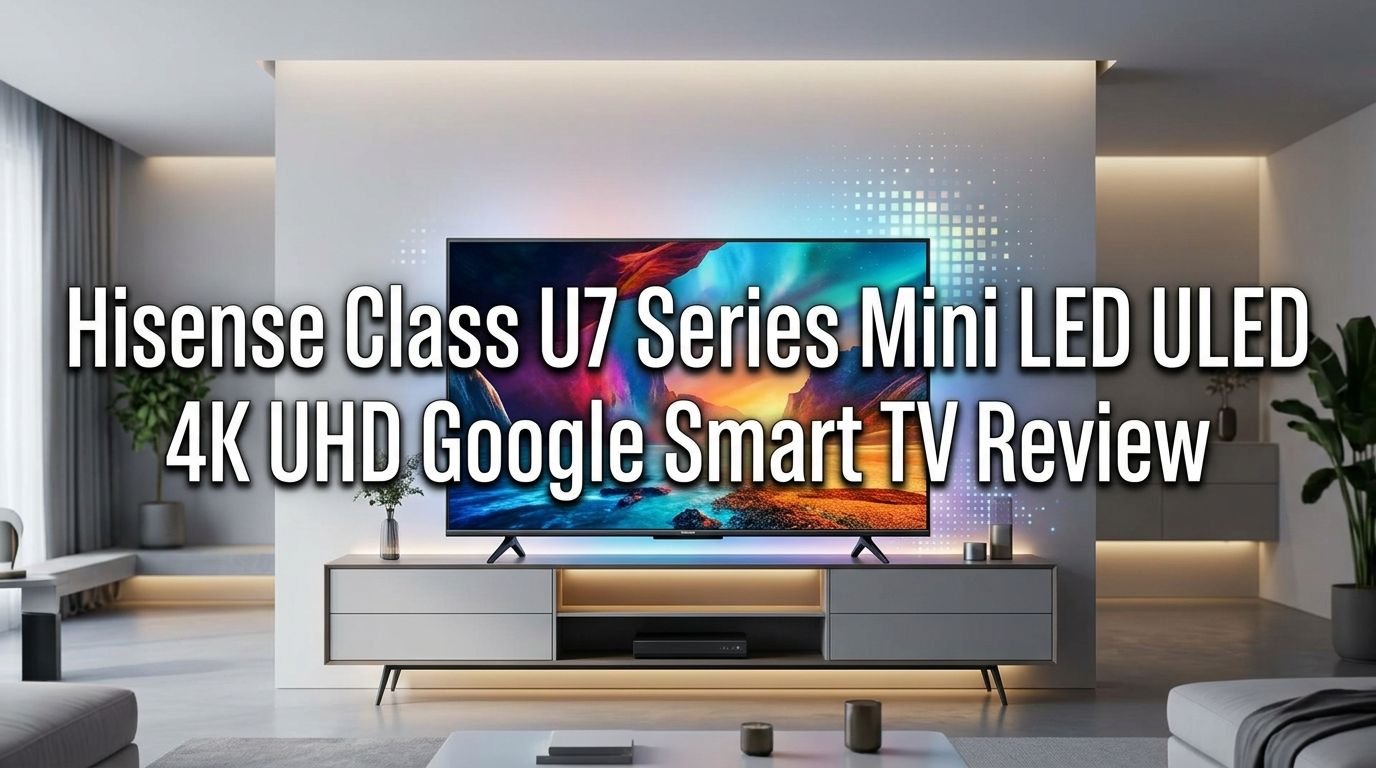
Hisense Class U7 Series Mini LED ULED 4K UHD Google Smart TV Review 2026
Are you looking for a TV that delivers flagship picture quality without the flagship price tag? The Hisense Class U7 Series Mini LED ULED 4K UHD Google Smart TV might be exactly what you need.
This TV has taken the mid range market by storm. It combines Mini LED Pro backlighting, brilliant HDR performance, and top tier gaming features into a package that costs far less than its premium competitors.
Hisense has steadily built a reputation for delivering high performance TVs at budget friendly prices. The U7 Series is their most popular line, and the latest model (the U75QG for 2025) raises the bar even higher.
Key Takeaways:
- The Hisense U7 Series offers stunning Mini LED brightness with up to 3,000 nits peak brightness and up to 3,000 local dimming zones. This makes HDR content look absolutely incredible for a TV in this price range.
- Gaming performance is a standout feature. The TV supports a native 165Hz refresh rate, VRR up to 288Hz at 1080p, and all four HDMI ports carry full HDMI 2.1 bandwidth. Serious gamers will love the low input lag and dedicated Game Mode Pro.
- Google TV provides a smooth smart platform with access to thousands of apps, Google Cast, Apple AirPlay, and built in voice control. Setup is quick and straightforward.
- Picture quality is excellent for the price with rich black levels, vibrant quantum dot colors, and very good screen uniformity. Off axis viewing is the main weakness, and picture processing cannot match premium models.
- Multiple screen sizes are available from 55 inches all the way up to 100 inches and even 116 inches. Prices start well under $1,000, making this one of the best value propositions in the 2025/2026 TV market.
- Sound quality is decent but not exceptional. The built in speakers handle casual viewing fine, but a soundbar or external speaker system is recommended for the best movie and gaming audio experience.

Hisense Class U7 Series Mini LED ULED 4K UHD Google Smart TV Overview
The Hisense U7 Series has become one of the most talked about TVs in recent years. The latest model, known as the U75QG (2025), builds on the success of the U7N (2024) and U7K (2023). Each generation has brought meaningful improvements, and the U75QG is the best version yet.
This TV sits in the mid range tier of the Hisense lineup. It slots below the flagship U8 Series but above the budget U6 Series. That positioning gives it a unique advantage. You get many of the features found in premium TVs at a price that feels very fair.
The 65 inch model (65U75QG) is the most popular size. It weighs just 49 pounds, which makes it remarkably easy to handle. The slim design features a pseudo pedestal stand that looks clean and modern. The bezels are thin, and the overall build quality feels solid for the price.
Hisense uses their proprietary ULED technology here, which combines Mini LED backlighting, quantum dot color enhancement, and advanced image processing. The result is a picture that rivals TVs costing hundreds of dollars more.
Display Quality and Mini LED Performance
The display is the star of the show on the Hisense U7 Series. The Mini LED Pro backlighting system uses thousands of tiny LEDs behind the panel. These LEDs are grouped into up to 3,000 local dimming zones on certain sizes.
This high zone count allows the TV to produce deep blacks right next to bright highlights with minimal blooming. Blooming is the halo effect you sometimes see around bright objects on dark backgrounds. The U7 handles this very well for a TV at its price point.
Peak brightness reaches up to 3,000 nits according to Hisense. Real world measurements from review sites like RTINGS confirm the TV exceeds 2,000 nits in HDR content. That is more than enough brightness for any current streaming or disc based content.
Colors are vivid and accurate thanks to the QLED quantum dot layer. Reds, greens, and blues pop with energy. Nature documentaries and animated films look especially impressive. Skin tones appear natural in most picture modes, though some modes can make them look slightly muted.
The 4K resolution (3840 x 2160) delivers sharp detail on all screen sizes. Upscaling of lower resolution content is good but not perfect. HD streaming content can look a bit soft compared to native 4K material.
HDR Performance and Format Support
HDR is where the Hisense U7 Series truly shines. The TV supports every major HDR format currently available. This includes Dolby Vision, HDR10, HDR10+, and HLG.
Having support for both Dolby Vision and HDR10+ is a big deal. Many TVs at this price only support one or the other. With the U7, you get the best possible HDR experience no matter what streaming service or disc format you use.
Dolby Vision content looks fantastic on this TV. The dynamic metadata adjusts brightness and color scene by scene. Movies on Netflix, Disney+, and Apple TV+ that use Dolby Vision look punchy and immersive.
HDR10+ content from Amazon Prime Video and Samsung TV Plus also benefits from dynamic metadata. The TV processes these formats smoothly and delivers bright, colorful images with strong contrast.
The high peak brightness makes a real difference with HDR. Specular highlights like sunlight reflections, explosions, and bright skies pop off the screen with impressive intensity. Dark scenes maintain detail in the shadows without crushing black levels.
The TV also supports IMAX Enhanced content, which is a nice bonus for movie fans who want the closest experience to a theater screen.
Top 3 Alternatives for Hisense Class U7 Series Mini LED ULED 4K UHD Google Smart TV
If you want to compare your options before making a purchase, here are three strong alternatives to the Hisense U7 Series.


The TCL QM7K is a direct competitor with similar Mini LED technology, 144Hz refresh rate, and HDR support at a comparable price. The Samsung QN85D offers Samsung’s Neo QLED technology with excellent smart features and a polished Tizen interface. The Sony Bravia 7 (K 65XR70) brings superior image processing and Sony’s exclusive PlayStation 5 features, though it costs more than the Hisense.
Each of these alternatives has strengths. The TCL matches the Hisense on value. The Samsung adds a premium feel. The Sony delivers the best image processing of the group. Your choice depends on your priorities and budget.
Gaming Features and Performance
The Hisense U7 Series is marketed as a premium gaming TV, and it delivers on that promise. All four HDMI ports support full HDMI 2.1 bandwidth. This means you can connect multiple gaming consoles or a PC without worrying about port limitations.
The native 165Hz refresh rate is a standout spec. Most competing TVs in this price range cap out at 120Hz or 144Hz. The extra headroom benefits PC gamers who want the smoothest possible experience.
VRR (Variable Refresh Rate) support extends up to 288Hz at 1080p resolution. At 4K, VRR works up to 165Hz. The TV supports AMD FreeSync Premium, making it a great match for PC gaming setups.
The dedicated Game Mode Pro reduces input lag to very low levels. Response feels quick and snappy during fast paced action games. The gaming bar overlay provides quick access to settings like frame rate display, VRR status, and HDR game settings without leaving your game.
Games look gorgeous on this TV. The bright Mini LED backlighting makes HDR game content pop. Open world games with dynamic lighting benefit greatly from the high peak brightness and deep blacks.
Google TV Smart Platform Experience
The Hisense U7 Series runs Google TV as its smart platform. Google TV is one of the best smart TV interfaces available today. It organizes your content across all streaming apps into a clean, easy to navigate home screen.
Setup is simple. You can use the Google TV app on your phone to enter passwords, select apps, and configure settings in minutes. The TV connects to your Google account, which gives you access to your existing subscriptions and preferences.
The app selection is extensive. You get all the major streaming services including Netflix, Disney+, Amazon Prime Video, Apple TV+, Hulu, YouTube TV, HBO Max, and many more. The Google Play Store provides access to thousands of additional apps.
Google Assistant is built in for voice control. You can search for content, control smart home devices, check the weather, and more by pressing the microphone button on the remote. The voice recognition is accurate and responsive.
Google Cast and Apple AirPlay support are both included. This means you can stream content directly from your phone or tablet, regardless of whether you use Android or iOS. It is a convenient feature that many users appreciate.
The remote control is backlit and full featured. It includes dedicated buttons for popular streaming services, a number pad for live TV channels, and easy access to Google Assistant.
Sound Quality and Audio Features
The built in audio system on the Hisense U7 Series is decent for casual viewing. The speakers produce clear dialogue and reasonable volume levels. You will not struggle to hear conversations or news broadcasts.
The TV supports Dolby Atmos decoding, which adds spatial audio effects when available. Through the built in speakers, the Atmos effect is subtle. You will hear some sense of height and width, but true Atmos immersion requires a compatible soundbar or speaker system.
DTS Virtual:X is also supported, providing a simulated surround sound effect. This works well enough for everyday TV watching. Action scenes and sports broadcasts benefit from the wider soundstage.
Bass response is the weakest area. Like most flat panel TVs, the U7 cannot produce deep, powerful low frequencies. Explosions, musical bass lines, and cinematic rumbles lack the impact you would get from a dedicated subwoofer.
For the best audio experience, Hisense offers a companion soundbar (the AX3100Q) that pairs well with the U7. Alternatively, any quality soundbar with HDMI eARC support will integrate seamlessly. The TV passes through Dolby Atmos and DTS audio signals over eARC without any issues.
If you plan to use this TV for movies, gaming, or music listening, investing in external audio is highly recommended. The built in speakers are fine as a starting point, but they hold back the overall experience.
Design and Build Quality
The Hisense U7 Series features a modern, minimalist design that fits well in most living rooms. The bezels are slim on all four sides. The screen dominates the front of the TV, which creates an immersive viewing experience.
The pseudo pedestal stand is made of plastic with a metallic finish. It looks attractive and keeps the TV stable on most surfaces. The stand depth is about 12 inches, which is compact. However, this leaves limited space for placing a soundbar directly in front.
At just 49 pounds for the 65 inch model, this TV is surprisingly light. One person can handle the setup without much difficulty. The light weight also makes wall mounting easier. A standard VESA mount (300 x 300mm) fits the back panel.
The overall thickness is about 3 inches without the stand. This is not the thinnest TV on the market, but it is reasonable for a Mini LED model with a full array backlight. The back panel is clean with a recessed cable management area.
Build quality is solid for the price. The materials feel durable and well assembled. The panel has a semi gloss finish that handles reflections reasonably well, though it is not as effective as Samsung’s matte screen technology.
The remote control matches the TV’s design with a sleek, compact form factor. The backlit buttons are a welcome touch for watching in dark rooms.
Connectivity and Ports
Connectivity is a major strength of the Hisense U7 Series. The TV offers four HDMI 2.1 ports, which is class leading. Most competitors in this price range provide only one or two HDMI 2.1 ports.
All four ports support 4K at 120Hz (or higher) with full 48Gbps bandwidth. This is important for gamers who own multiple consoles. You can connect a PlayStation 5, Xbox Series X, and a gaming PC without needing to swap cables.
HDMI eARC is available on one of the ports for connecting a soundbar or AV receiver. The eARC connection passes high quality audio formats like Dolby TrueHD and DTS:X without compression.
Additional ports include two USB ports, an optical audio output, an Ethernet port, and an RF input for antenna connections. The TV also supports ATSC 3.0 (NextGen TV), which is a feature many premium TVs have started dropping.
Wireless connectivity includes Wi Fi 6E for fast, stable network connections. Bluetooth 5.2 is available for connecting wireless headphones, keyboards, or game controllers.
AirPlay 2 support allows easy streaming from Apple devices. Google Cast handles streaming from Android phones and Chromebooks. Both work reliably in everyday use.
Screen Sizes and Pricing
The Hisense U7 Series is available in a wide range of screen sizes. This gives buyers plenty of flexibility to match their room size and budget.

The 55 inch model (55U75QG) is the entry point. It offers all the same features as the larger sizes at the most affordable price. This size works well for bedrooms, small apartments, and offices.
The 65 inch model (65U75QG) is the sweet spot for most living rooms. It provides a large enough screen for immersive viewing without overwhelming a typical space. This is the most popular choice among buyers.
The 75 inch model steps up for larger rooms where you want a more cinematic feel. The 85 inch and 100 inch models deliver a true big screen experience. Hisense even offers a massive 116 inch version for those who want a home theater centerpiece.
Pricing varies by size and retailer. The 65 inch model launched at around $799. During sales events like Black Friday, prices drop significantly. The 55 inch model can be found for under $700 at regular pricing and even less during promotions.
Compared to competitors like the Samsung QN85D or Sony Bravia 7, the Hisense U7 offers a significant price advantage. You get comparable or superior features at a fraction of the cost. This value proposition is the U7’s biggest selling point.
Movie and TV Show Viewing Experience
Watching movies on the Hisense U7 Series is a treat. The combination of high brightness, deep blacks, and vibrant colors creates a cinematic feel that was previously reserved for TVs costing much more.
The Filmmaker mode preserves the original creative intent of movies. It disables motion smoothing and maintains accurate color temperatures. This mode is ideal for serious movie watching in a dimmed room.
4K HDR Blu rays look stunning on this TV. Films like Mad Max: Fury Road showcase the TV’s ability to deliver explosive brightness alongside deep shadow detail. The lightning storm sequences in that film are jaw dropping on this display.
Streaming quality is very good for most services. Netflix, Apple TV+, and Amazon Prime Video deliver crisp 4K HDR streams. There were some reported issues with Disney+ at launch, but Hisense has addressed those through firmware updates.
SDR content also benefits from the powerful backlight. Older movies and standard definition broadcasts look punchier and more vibrant than on typical budget TVs. The TV’s upscaling does a reasonable job with lower resolution content.
Sports fans will appreciate the bright, clear picture during daytime events. The high brightness combats glare from room lighting. Fast motion is handled well, especially with the sports picture mode engaged.
Off Axis Viewing and Room Placement
One area where the Hisense U7 Series shows its mid range status is off axis viewing. Colors and contrast degrade noticeably when you view the screen from the side. This is common with VA panel TVs that use LED backlighting.
If you sit directly in front of the TV, you will see the best picture quality. Viewers sitting at angles beyond 30 degrees from center will notice fading colors and reduced contrast. This is an important consideration for wide living rooms or open floor plans.
The semi gloss screen coating handles reflections reasonably well. In moderately bright rooms, the TV maintains good visibility. However, in rooms with direct sunlight hitting the screen, you may notice some reflections.
For the best experience, place the TV in a spot where most viewers sit within a moderate angle from the center. If you have a wide seating arrangement, consider the step up U8 Series or an OLED TV, which offer much better viewing angles.
The TV’s light sensor (Intelligent Settings) adjusts brightness based on room conditions. This feature works well for most situations. However, some users prefer to turn it off and manually set brightness for consistent picture quality.
Wall mounting helps with room placement since it can be angled slightly to optimize the viewing position. The relatively light weight makes wall mounting a practical option for most users.
Comparing the Hisense U7 to the U8 Series
Many buyers wonder whether they should spend more on the Hisense U8 Series instead. The U8 Series is Hisense’s step up model with even higher brightness and a premium anti glare screen.
The U8QG (2025) reaches even higher peak brightness levels than the U7. It also uses a different panel with better off axis viewing in some sizes. The anti glare coating on the U8 is more effective at reducing reflections.
However, the U7 has an interesting advantage. It includes four HDMI 2.1 ports while the U8QG only has three HDMI ports total. For gamers with multiple consoles, this makes the U7 the better choice for connectivity.
The price difference between the two is significant. The U7 saves you hundreds of dollars while delivering 90% of the performance. For most users, the U7 represents the smarter purchase. The U8 makes sense only if you have a very bright room or demand the absolute best picture from a Hisense TV.
Both TVs run Google TV and share similar smart features. The gaming capabilities are nearly identical. The sound quality is comparable. The main differences come down to brightness ceiling, off axis performance, and anti glare technology.
Pros and Cons of the Hisense U7 Series
Every TV has strengths and weaknesses. Here is an honest assessment of what the Hisense U7 Series does well and where it falls short.
The biggest pros include the incredible brightness for the price, the support for all major HDR formats, and the class leading four HDMI 2.1 ports. The 165Hz native refresh rate makes it one of the best gaming TVs in its price bracket. Google TV is smooth and well organized. The lightweight design makes setup and mounting easy.
The picture quality is excellent for everyday use. Colors are vibrant. Blacks are deep. The Mini LED dimming works well with minimal blooming. The TV delivers a near premium experience for a mid range price.
The main cons center around off axis viewing, which degrades noticeably from the side. Picture processing is good but does not match the precision of Sony or Samsung’s premium offerings. The anti glare coating is adequate but not best in class.
Sound quality is another weak point. The built in speakers are acceptable for casual use but lack bass depth and spatial immersion. Most buyers will want to add a soundbar or external speakers.
Some users have reported minor software bugs with certain streaming apps. Hisense has been responsive with firmware updates, but it is worth noting that the software experience is not always as polished as Samsung’s Tizen or LG’s webOS.
Who Should Buy the Hisense U7 Series?
The Hisense U7 Series is ideal for a wide range of buyers. It is especially well suited for gamers who want high refresh rates, low input lag, and full HDMI 2.1 support without paying premium prices.
Sports fans will love the bright, vivid picture that stays clear during fast action. The high brightness combats room glare, making it great for daytime viewing with the lights on.
Movie enthusiasts on a budget will appreciate the strong HDR performance, Dolby Vision support, and deep contrast. While it does not match an OLED for dark room viewing, it comes remarkably close for a fraction of the price.
Families looking for a versatile all around TV will find the U7 checks every box. It handles streaming, gaming, live TV, and casual viewing with ease. The Google TV platform is family friendly and easy to navigate.
This TV is not the best choice for videophiles who demand the absolute best picture processing and off axis viewing. It is also not ideal for very bright rooms with direct sunlight, where the U8 or a Samsung QN90 series would perform better.
Final Verdict: Is the Hisense U7 Series Worth It?
The Hisense Class U7 Series Mini LED ULED 4K UHD Google Smart TV is one of the best value TVs available in 2026. It delivers bright, colorful, and detailed images. It offers gaming features that rival TVs costing twice as much. The Google TV platform is polished and easy to use.
At its price point, there is very little to complain about. The off axis viewing and average built in audio are the most notable weaknesses. Both are common at this price range and are easy to work around with proper room placement and a soundbar.
If you want premium TV performance without the premium price, the Hisense U7 Series earns a strong recommendation. It is a smart purchase for gamers, movie lovers, sports fans, and anyone who wants a great looking TV for their living room.
Frequently Asked Questions
Is the Hisense U7 Series good for gaming?
Yes, the Hisense U7 Series is excellent for gaming. It supports a native 165Hz refresh rate, VRR up to 288Hz at 1080p, and all four HDMI ports have full HDMI 2.1 bandwidth. The dedicated Game Mode Pro provides low input lag for responsive gameplay. It is one of the best gaming TVs in the mid range price bracket.
What is the difference between the Hisense U7 and U8?
The Hisense U8 Series offers higher peak brightness, a better anti glare coating, and improved off axis viewing on some panel types. However, the U7 has four HDMI 2.1 ports compared to only three on the U8. The U7 costs significantly less while delivering very similar overall performance for most users.
Does the Hisense U7 support Dolby Vision and HDR10+?
Yes. The Hisense U7 Series supports Dolby Vision, HDR10, HDR10+, and HLG. This makes it compatible with HDR content from every major streaming service and disc format. It also supports IMAX Enhanced content.
What screen sizes are available for the Hisense U7?
The Hisense U7 Series is available in 55 inch, 65 inch, 75 inch, 85 inch, 100 inch, and 116 inch screen sizes. The 65 inch model is the most popular choice. Pricing starts at well under $1,000 for the smaller sizes.
Does the Hisense U7 have good sound quality?
The built in speakers on the Hisense U7 are adequate for casual TV watching. They produce clear dialogue and reasonable volume. However, they lack deep bass and true surround sound immersion. Adding a soundbar or external speakers is recommended for the best audio experience, especially for movies and gaming.
Is the Hisense U7 worth buying in 2026?
Absolutely. The Hisense U7 Series remains one of the best value TVs on the market in 2026. Its combination of Mini LED brightness, comprehensive HDR support, strong gaming features, and affordable pricing makes it a top choice for budget conscious buyers who refuse to compromise on picture quality.