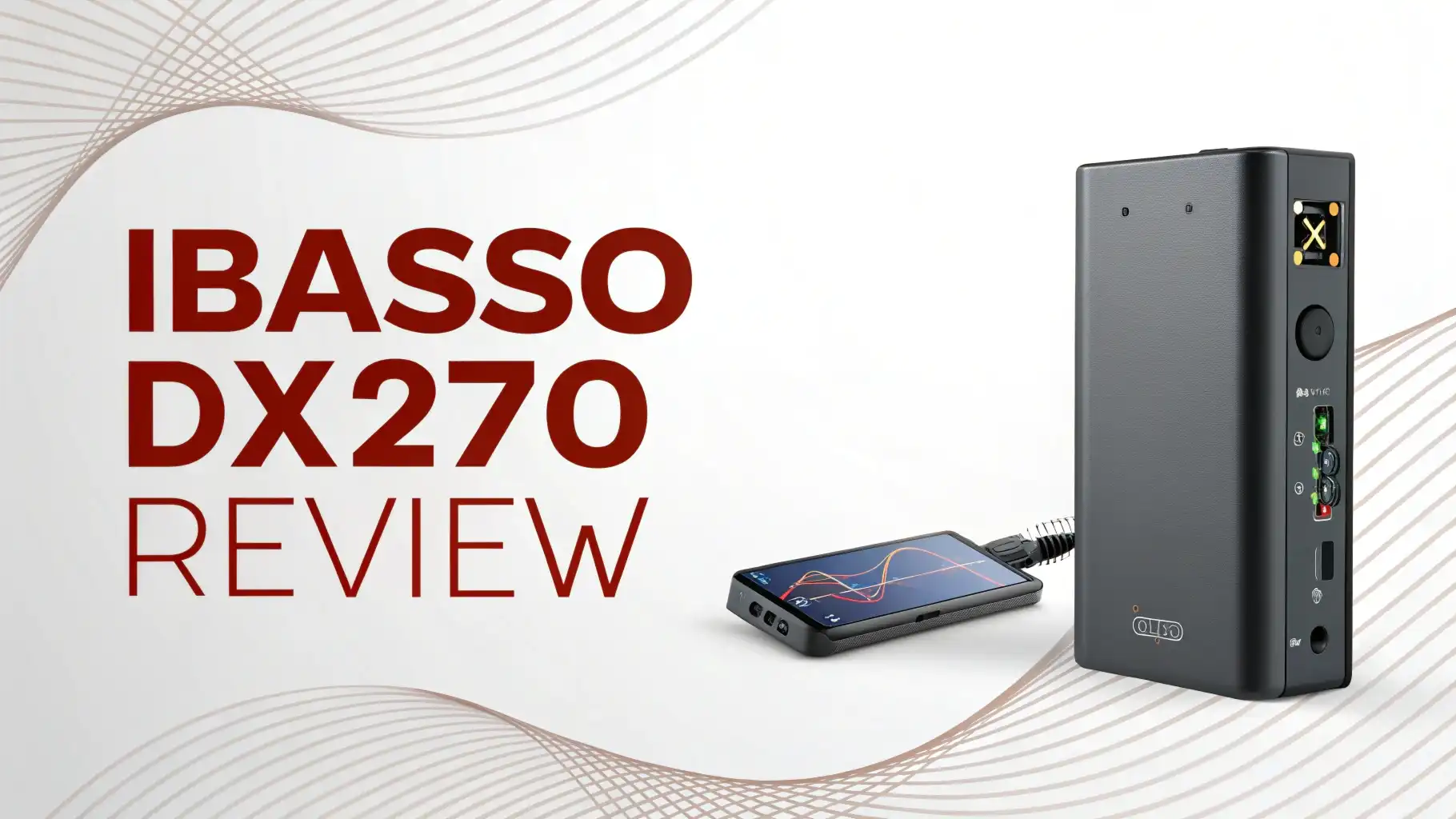
iBasso DX270 Review 2026: Your Ultimate Buying Guide
Hey there, music lovers! Are you ready to discover a game changer in the world of portable audio? The iBasso DX270 just landed, and it’s making serious waves in 2026.
This isn’t just another digital audio player sitting on store shelves. This is a premium device that brings studio-quality sound to your pocket.
Whether you’re a casual listener or a hardcore audiophile, the DX270 promises to transform how you experience your favorite tracks.
Key Takeaways:
- Revolutionary R2R DAC Architecture: The DX270 features a unique 8-channel R2R Ultra DAC with 344 high-precision resistors that delivers warm, natural sound with exceptional detail. This hybrid design combines a 20-bit R2R DAC with a 4-bit string DAC for the best of both worlds.
- Premium Android 13 Experience: Running on Snapdragon 665 processor with 4GB RAM and 128GB storage, this player offers smooth performance for both music playback and everyday tasks. You get access to Google Play Store and streaming apps like Spotify, TIDAL, and Qobuz.
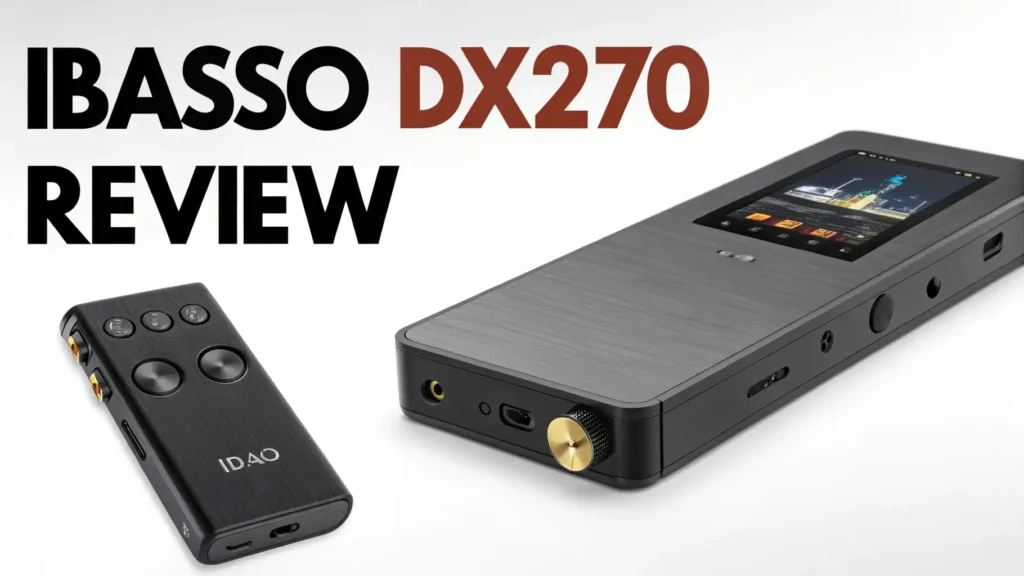
- Exceptional Build Quality: Weighing just 265 grams, the DX270 sports a beautiful aluminum alloy chassis with a 5.5-inch 1080p touchscreen. It’s pocket friendly yet feels incredibly premium in your hands.
- Versatile Connectivity Options: Multiple output options including 3.5mm single-ended, dual 4.4mm balanced outputs, USB-C for DAC mode, and even a 12V DC input for desktop use with Super Gain mode delivering up to 1.5W of power.
- Impressive Battery Life: The 4,400mAh battery provides 8 to 12 hours of continuous playback and up to 36 hours with light use. The MangoOS mode offers even better battery performance when you just need pure music playback.
- Competitive Pricing: At $1,299, the DX270 positions itself as a serious contender in the premium DAP market, offering features and sound quality that rival players costing significantly more.

Unboxing the iBasso DX270: What’s Inside the Premium Package
When you open the iBasso DX270 box, you immediately feel the premium experience. The packaging itself speaks volumes about the quality you’re about to experience. Inside, you’ll find everything you need to get started right away.
The main star is obviously the DX270 player itself, wrapped carefully in protective film. You also get a high-quality leatherette case with velcro closure that protects your investment during travel. The USB-C charging cable is included for fast charging capabilities.
There’s also a 4.4mm burn-in cable that helps break in your new player and headphones. For desktop use, iBasso includes a 12V DC power adapter that unlocks the Super Gain mode.
You’ll also find screen protectors for both the front and back of the unit, which is a thoughtful addition that many competitors skip.
The case is functional and well-made, though some users might prefer a magnetic clasp over velcro. Still, it does an excellent job protecting your device when you’re on the go. The overall unboxing experience feels premium and well thought out, setting the right expectations for the quality of the player itself.
Design and Build Quality: Where Form Meets Function
The iBasso DX270 follows the design language established by iBasso’s recent releases like the DX180 and DX340. The result is a sleek, modern aesthetic with vintage HiFi elements that audiophiles will appreciate. The clean lines carved into the aluminum alloy chassis give it a sophisticated look that stands out from the crowd.
The 5.5-inch touchscreen with 1080p resolution is bright, responsive, and perfect for navigating your music library.
The in-cell capacitive technology makes the screen smooth and pleasant to use. At just 265 grams, this player is remarkably lightweight for its feature set. You can easily slip it into your pocket or bag without feeling weighed down.
The button placement is intuitive, and the overall ergonomics are excellent. The device feels solid in your hands without being too heavy or bulky.
The aluminum construction not only looks premium but also helps with heat dissipation during extended listening sessions. Every detail feels carefully considered, from the rounded edges to the placement of the various ports and outputs.
Top 3 Alternatives for iBasso DX270


Revolutionary R2R DAC Technology: The Heart of Superior Sound
Here’s where the iBasso DX270 truly shines. The proprietary R2R Ultra DAC architecture is what sets this player apart from virtually everything else on the market. This isn’t just marketing hype. The technology behind this design is genuinely innovative.
The DX270 uses a hybrid combination of a 20-bit R2R DAC plus a 4-bit string DAC. This creates a fully balanced 8-channel R2R implementation using FPGA Master control.
What does this mean for you? It means you get the warm, musical presentation that R2R DACs are famous for, combined with the crisp technical detail that typically comes from chip-based DACs.
The system uses 344 high-precision resistors arranged in an 8-channel fully differential discrete design. This eliminates zero-crossing distortion and maintains smooth, accurate sound reproduction across the entire frequency range.
The result is a three-dimensional soundstage with holographic imaging that makes your music come alive. You’ll hear details and nuances in your favorite tracks that you never knew existed.
The bass response is particularly impressive, with strong punch and excellent quality. The treble extends smoothly without harshness, and the midrange is natural and engaging.
This DAC architecture delivers what many reviewers call a “best of both worlds” sound signature that appeals to a wide range of listeners.
Android 13 Performance: Smart Features Without Compromise
The iBasso DX270 runs on a barebones Android 13 installation that’s been optimized for audio performance. The Snapdragon 665 processor with 4GB RAM ensures smooth operation whether you’re browsing your music library or running streaming apps.
Unlike some DAPs that feel sluggish and dated, the DX270 offers smartphone-like responsiveness. App load times are quick, and the touchscreen feels snappy and accurate. While it won’t match the latest flagship phones in raw performance, it handles everything you throw at it with ease.
iBasso has modified Android 13 to bypass the system mixer, preventing SRC from resampling your audio to 48kHz. This means your music stays in its original quality throughout the signal chain.
The player comes with the Mango Player app pre-installed, but you have full access to the Google Play Store for downloading your preferred music players and streaming apps.
The system also includes Aptiode, an independent app store that lets you get apps without connecting to Google services. You can use TIDAL, Qobuz, Spotify, Amazon Music, and virtually any other streaming service you prefer. The player handles all file formats beautifully, including DSD, FLAC, WAV, and everything in between.
MangoOS: Pure Music Mode for Maximum Performance
One of the standout features of the DX270 is MangoOS, iBasso’s proprietary player-only operating system. You can choose to boot into MangoOS instead of Android when you power on the device.
MangoOS strips away everything except essential music playback functions. The result is improved battery life and even better sound quality. If you don’t need the full Android experience and just want to enjoy your music library, MangoOS is the way to go.
The interface is clean and intuitive, focusing entirely on music management and playback. You’ll get faster boot times and more responsive navigation.
Many users report that MangoOS provides a slight but noticeable improvement in sound quality compared to Android mode. This is likely due to reduced system overhead and interference.
The ability to switch between full Android and MangoOS gives you flexibility. Use Android when you need streaming services and apps, then switch to MangoOS for critical listening sessions or when battery life is a priority.
Power Output and Connectivity: Options for Every Setup
The iBasso DX270 offers an impressive array of connectivity options that make it versatile for any audio setup. On the front panel, you’ll find a 3.5mm single-ended output that can be configured for either headphone output or line out through the software.
There are two 4.4mm balanced outputs – one dedicated for headphones and one for line out. This separation ensures optimal performance whether you’re listening directly or connecting to an external amplifier or DAC. The balanced outputs provide excellent power and a clean, black background even with sensitive IEMs.
The USB-C port is multifunctional. It charges the device, but it can also function as a digital output, allowing you to use the DX270 as a digital transport. Flip the mode, and it becomes a digital input, turning the DX270 into a desktop DAC for your computer or other devices. There’s also a miniCoax output for S/PDIF digital connection.
The 12V DC input is a game changer for desktop use. When connected, the DX270 enters “desktop mode” which unlocks Super Gain.
This mode delivers up to 1.5W of power at 32 ohms, giving you enough juice to drive virtually any headphone on the market. Battery mode provides sufficient power for most headphones and excellent performance with IEMs.
Battery Life and Charging: All Day Music Listening
The 4,400mAh battery in the iBasso DX270 delivers impressive endurance. Official specs claim up to 13.5 hours of music playback, but real-world testing shows you’ll get closer to 8 to 12 hours of continuous playback depending on your settings and headphone choice.
With light use and standby time mixed in, you can easily get 24 to 36 hours between charges. This makes the DX270 perfect for long flights, road trips, or daily commutes without worrying about running out of power.
The player supports fast charging through the USB-C port, getting you back to full power quickly when needed. Battery life extends even further when using MangoOS instead of Android, as the stripped-down operating system uses less power.
For desktop use with the 12V DC adapter, you don’t need to worry about battery at all. The player draws power directly from the outlet, and you can even remove the battery module if you’re exclusively using it as a desktop unit.
Storage and File Management: Space for Your Entire Library
The iBasso DX270 comes with 128GB of internal storage right out of the box. This gives you plenty of space for thousands of high-resolution audio files. But if that’s not enough, you can expand storage via microSD card with support for cards up to 2TB in size.
With 2TB of additional storage, you can carry virtually your entire music collection in lossless quality wherever you go. The player supports all major audio formats including DSD, FLAC, WAV, ALAC, APE, and standard formats like MP3 and AAC.
File management is straightforward. You can copy music directly from your PC via USB-C connection, transfer files using the microSD card, or download music directly through streaming apps. The Mango Player app provides excellent library management with options to sort by artist, album, genre, or create custom playlists.
The folder-based browsing is also available if you prefer organizing your music that way. The database indexing is fast, even with large libraries, and album art displays beautifully on the high-resolution screen.
Sound Quality: Where the iBasso DX270 Truly Excels
Let’s talk about what really matters: how does it sound? The iBasso DX270 delivers a sound signature that’s both technically impressive and musically engaging. The R2R DAC architecture creates a presentation that’s warm and natural without sacrificing detail or resolution.
The soundstage is wide and three-dimensional, giving each instrument its own space in the mix. The imaging is precise and holographic, making it easy to pinpoint exactly where each element sits in the stereo field. This level of spatial presentation brings your music to life in a way that feels almost tangible.
The bass response is a highlight. You get strong sub-bass extension with excellent texture and detail. The midbass has good punch without bleeding into the midrange. Bass notes feel tight and controlled, with satisfying impact when the music calls for it.
The midrange is smooth and natural, with excellent timbre accuracy. Vocals sound realistic and engaging, whether it’s the rasp in a blues singer’s voice or the delicate breath of a classical soprano. Instruments have proper weight and body, from the rich warmth of a cello to the bright shimmer of a cymbal.
The treble extends smoothly without harshness or sibilance. There’s plenty of air and sparkle in the high frequencies, but it never becomes fatiguing even during long listening sessions. The overall tonal balance leans slightly warm, which many listeners find more musical and enjoyable than a purely analytical sound.
Comparison with Competitors: How Does It Stack Up?
In the premium DAP market, the iBasso DX270 faces competition from several worthy rivals. Compared to its predecessor, the DX260mk2, the DX270 offers a warmer, more musical sound while maintaining the same level of technical performance.
The DX260mk2 can sound a bit dry and analytical by comparison, while the DX270 adds body and natural timbre.
Against the Cayin N6iii with R202 motherboard, the DX270 takes a middle ground. The Cayin offers a warmer, more traditional R2R sound with impressive soundstage.
The DX270 sounds cleaner and more separated, with better treble extension and stronger definition. If you want “a little warmth” but not full R2R warmth, the DX270 is the sweet spot.
The FiiO M15S is another popular choice in this price range. While both offer Android-based functionality and excellent sound, the DX270’s unique R2R architecture gives it a distinctive character that many prefer. The M15S is slightly more powerful and has a larger screen, but the DX270’s sound quality edges it out for critical listening.
Sony’s WM1AM2 Walkman offers different strengths, with Sony’s legendary sound tuning and build quality. It’s more expensive but offers a different flavor of audiophile sound. The choice between them often comes down to personal preference and ecosystem loyalty.
Who Should Buy the iBasso DX270?
The iBasso DX270 is perfect for serious music listeners who want the best possible portable audio experience. If you’ve invested in high-quality headphones or IEMs, this player will help you hear everything they’re capable of delivering.
Audiophiles who appreciate R2R DAC technology but want something more technically capable than traditional R2R implementations will love the DX270’s unique sound signature. It offers warmth and musicality without sacrificing detail and resolution.
Commuters and travelers who want studio-quality sound on the go will appreciate the compact size, excellent battery life, and comprehensive format support. The ability to carry your entire lossless music library plus streaming options makes it incredibly versatile.
Desktop users looking for a capable DAC and headphone amp will find the 12V desktop mode with Super Gain highly appealing. The multiple output options and USB DAC functionality make it a legitimate alternative to dedicated desktop equipment.
However, if you’re on a tight budget or mainly stream compressed audio from services like YouTube Music, the DX270 might be overkill. Casual listeners who don’t have high-end headphones may not fully appreciate the sound quality improvements it offers.
Frequently Asked Questions
What is the price of the iBasso DX270 in 2026?
The iBasso DX270 is priced at $1,299 in the United States. This positions it in the premium DAP segment, competing with other high-end portable music players. The price reflects the advanced R2R DAC technology, premium build quality, and comprehensive feature set that the device offers.
Does the iBasso DX270 support streaming services?
Yes, the DX270 runs Android 13 with full Google Play Store access. You can install and use all major streaming services including Spotify, TIDAL, Qobuz, Amazon Music, Apple Music, and YouTube Music. The device has WiFi connectivity for streaming and downloading music directly.
How long does the battery last on the iBasso DX270?
The official specification claims 13.5 hours of playback time. In real-world use, you can expect 8 to 12 hours of continuous music playback depending on volume levels and headphone impedance. With light use and standby time, the device can last 24 to 36 hours between charges. MangoOS mode extends battery life even further.
Can I use the iBasso DX270 as a desktop DAC?
Absolutely! The DX270 features a USB DAC mode that allows you to connect it to your computer and use it as an external DAC and headphone amplifier. When connected via the 12V DC adapter, it enters desktop mode with Super Gain that delivers up to 1.5W of power at 32 ohms.
What file formats does the iBasso DX270 support?
The DX270 supports virtually all audio formats including DSD, FLAC, WAV, ALAC, APE, AIFF, and standard formats like MP3 and AAC. It handles high-resolution audio files with ease, including native DSD playback up to DSD256 and PCM files up to 32-bit/384kHz.
Is the iBasso DX270 good for IEMs or full-sized headphones?
The DX270 excels with both IEMs and full-sized headphones. It has a clean black background that works beautifully with sensitive IEMs, and sufficient power output in battery mode for most headphones. Desktop mode with Super Gain provides enough power to drive 90% of headphones on the market, including many planar magnetic models.
How is the iBasso DX270 different from the DX260mk2?
While both players share similar hardware platforms with the Snapdragon 665 processor and Android 13, the main difference is the DAC architecture. The DX270 uses a proprietary 8-channel R2R Ultra DAC that delivers a warmer, more musical sound compared to the more analytical and technical presentation of the DX260mk2. The DX270 also adds the 12V DC input for desktop mode.
Can I expand the storage on the iBasso DX270?
Yes, the DX270 comes with 128GB of internal storage and supports microSD card expansion up to 2TB. This gives you massive storage capacity for your entire music library in lossless quality. You can also use streaming services for unlimited music access without filling up your storage.