OnePlus 10T 5G vs iPhone 14: Which One Is Better?
Choosing between the OnePlus 10T 5G and the iPhone 14 can feel like picking between two very different philosophies. One phone gives you raw Android power with blazing fast charging.
The other delivers the polished Apple ecosystem with class leading software support. Both phones launched in 2022 and have aged well into 2026, making them excellent budget friendly picks today.
This detailed comparison breaks down every major area. You will learn how these two phones stack up in design, display, performance, cameras, battery life, and more.
Key Takeaways:
- The OnePlus 10T 5G packs a larger 6.7 inch AMOLED display with a 120Hz refresh rate, while the iPhone 14 has a smaller but sharp 6.1 inch Super Retina XDR OLED panel at 60Hz. If screen size and smooth scrolling matter to you, the OnePlus has the edge.
- Charging speed is a landslide win for the OnePlus 10T 5G. Its 125W SUPERVOOC fast charging fills the 4,800mAh battery from zero to full in about 20 minutes. The iPhone 14 tops out at 20W wired charging for its 3,279mAh battery.
- The iPhone 14 leads in camera consistency and video quality. Apple’s image processing delivers natural colors and stable 4K Cinematic Mode video. The OnePlus 10T has a higher megapixel main sensor at 50MP but falls short in computational photography.
- Performance goes head to head. The OnePlus 10T uses the Snapdragon 8+ Gen 1 chip, and the iPhone 14 runs on the A15 Bionic. Both handle everyday tasks and gaming with ease, though the A15 often wins in single core benchmarks.
- Software longevity favors the iPhone 14. Apple supports iPhones for five to six years with major iOS updates. OnePlus promised three major Android updates for the 10T, which gives the iPhone a longer usable lifespan.
- The OnePlus 10T 5G launched at $649, while the iPhone 14 started at $799. In 2026, both phones are available at significantly reduced prices, making them great value picks in the used and renewed market.
OnePlus 10T 5G: Overview and First Impressions

The OnePlus 10T 5G arrived in August 2022 as a performance focused smartphone. It was designed to deliver flagship level speed at a price lower than most premium phones. The phone runs on the Qualcomm Snapdragon 8+ Gen 1 processor and comes with up to 16GB of RAM.
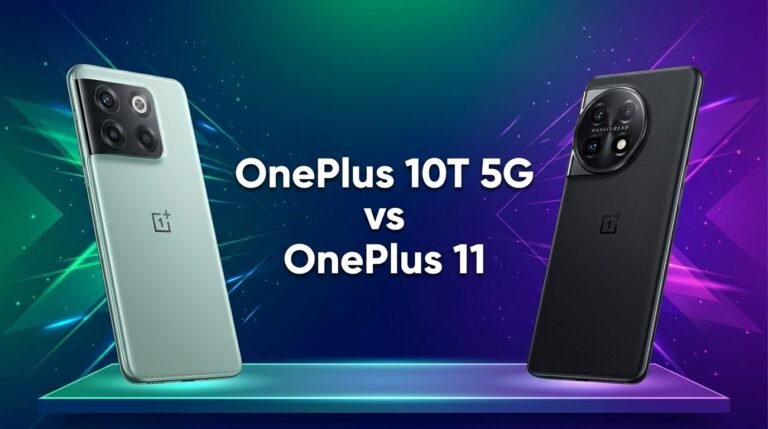
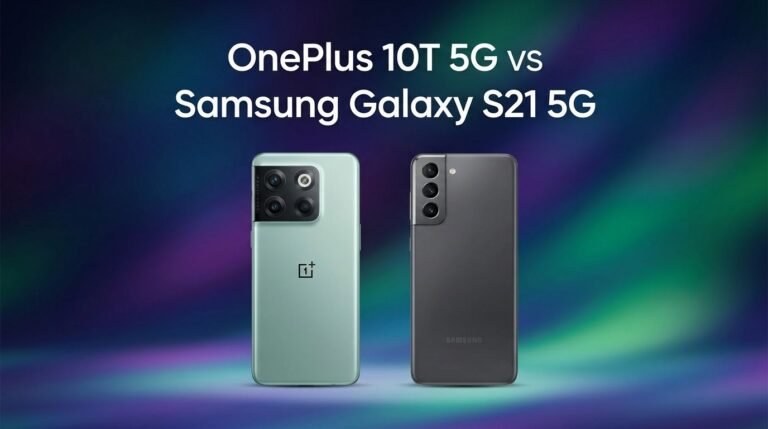
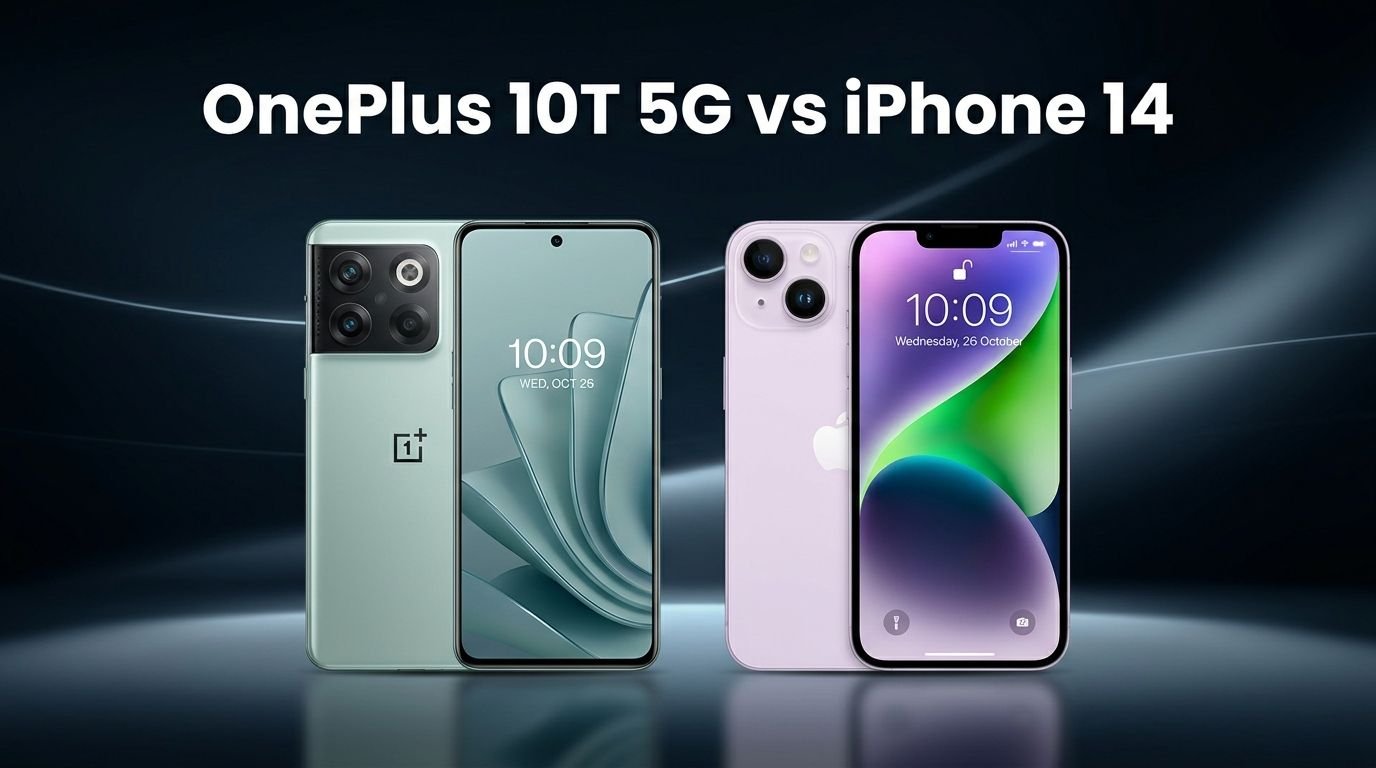
The first thing you notice is its large 6.7 inch display. The screen stretches across the front with slim bezels. The back panel has a flat camera module that sits in the upper left corner. It comes in two colors: Moonstone Black and Jade Green. The build feels solid, though it uses a plastic frame instead of metal.
OnePlus removed the iconic alert slider from the 10T to make room for better antenna lines. This was a controversial decision among longtime fans. However, the phone makes up for it with its 125W SUPERVOOC charging. You can go from zero to 100 percent in roughly 20 minutes. That alone makes it stand out in a crowded market.
Pros:
- Extremely fast 125W wired charging
- Snapdragon 8+ Gen 1 delivers powerful performance
- Large 6.7 inch 120Hz AMOLED display
- Up to 16GB RAM for heavy multitasking
- Affordable compared to other flagships
Cons:
- No alert slider (a OnePlus signature feature removed)
- Plastic frame feels less premium
- No wireless charging support
- Camera quality lags behind competitors
- No official IP rating for water resistance
iPhone 14: Overview and First Impressions

Apple launched the iPhone 14 in September 2022. It carries the A15 Bionic chip with a 5 core GPU, which is the same chip from the iPhone 13 Pro. Apple positioned this phone as a reliable everyday device with strong camera features and excellent software integration.
The design follows Apple’s familiar flat edge style. The 6.1 inch Super Retina XDR display uses OLED technology and looks stunning. The aluminum frame and Ceramic Shield front give it a premium, durable feel. Apple also introduced Emergency SOS via satellite and Crash Detection as standout safety features in this model.
The iPhone 14 comes in five colors: Midnight, Starlight, Blue, Purple, and Red. It supports MagSafe wireless charging up to 15W and standard Qi wireless charging at 7.5W. The phone also has an IP68 water resistance rating, so it can survive submersion in water up to 6 meters for 30 minutes.
Pros:
- Excellent build quality with aluminum frame and Ceramic Shield
- IP68 water and dust resistance
- MagSafe and Qi wireless charging support
- Emergency SOS via satellite is a unique safety feature
- Long software support with iOS updates for years
Cons:
- Still uses the Lightning port (not USB C)
- 60Hz display refresh rate feels outdated
- A15 Bionic chip is recycled from iPhone 13 Pro
- 20W maximum wired charging is slow
- Starts at a higher price than the OnePlus 10T
Display Quality: Size, Refresh Rate, and Brightness
The display is one of the biggest differences between these two phones. The OnePlus 10T 5G has a 6.7 inch FHD+ Fluid AMOLED screen with a resolution of 2412 x 1080 pixels. It supports a 120Hz adaptive refresh rate, which makes scrolling, gaming, and general navigation feel buttery smooth.
The iPhone 14 has a 6.1 inch Super Retina XDR OLED display with a resolution of 2532 x 1170 pixels. It has a higher pixel density than the OnePlus 10T. However, it is locked at 60Hz. This is a notable downside in 2026, as most mid range phones now offer at least 90Hz.
Brightness is another important factor. The iPhone 14 reaches 1,200 nits peak brightness for HDR content and 800 nits typical. The OnePlus 10T hits around 950 nits peak. Both screens perform well outdoors, but the iPhone 14 has a slight advantage in direct sunlight.
Color accuracy goes to the iPhone 14. Apple calibrates its displays for true to life color reproduction. The OnePlus 10T offers vivid and natural color modes, giving users more flexibility to choose their preference. If you want a bigger screen with smooth scrolling, the OnePlus wins. If you value color precision and compactness, the iPhone 14 is the better pick.
Performance and Processing Power
This is a close contest. The OnePlus 10T 5G uses the Qualcomm Snapdragon 8+ Gen 1 chipset. This chip is built on a 4nm process and delivers strong multi core performance. Paired with up to 16GB of LPDDR5 RAM, the phone handles heavy apps, split screen multitasking, and demanding games without any lag.
The iPhone 14 runs on the Apple A15 Bionic chip with a 5 core GPU. Apple’s custom silicon is known for exceptional single core performance. In Geekbench tests, the A15 Bionic scores higher in single core tasks, which affects everyday app speed and responsiveness. The OnePlus 10T edges ahead in multi core scores thanks to its extra RAM.
For gaming, both phones deliver a great experience. The OnePlus 10T includes a HyperBoost Gaming Engine that optimizes frame rates and touch response. Apple’s GPU handles graphically intense games like Genshin Impact smoothly at high settings.
Real world performance feels similar on both devices. Apps open fast, animations are smooth, and neither phone struggles with common tasks. The OnePlus 10T may appeal to power users who run many apps at once. The iPhone 14 will suit those who value optimized, consistent performance across all apps.
Camera Systems Compared
The OnePlus 10T 5G features a triple camera setup. The main sensor is a 50MP Sony IMX766 with optical image stabilization. It also has an 8MP ultrawide lens and a 2MP macro camera. The front camera is 16MP for selfies and video calls.
The iPhone 14 has a dual camera system with a 12MP main sensor and a 12MP ultrawide lens. The front camera is a 12MP TrueDepth sensor with autofocus. Apple introduced Photonic Engine processing in the iPhone 14 to improve low light performance across all cameras.
On paper, the OnePlus 10T wins with more megapixels. In practice, the iPhone 14 takes more consistent photos. Apple’s image processing produces natural skin tones, accurate white balance, and reliable exposure across different lighting conditions. The OnePlus 10T captures sharp daytime photos but can struggle with color consistency in mixed lighting.
Video recording is a clear win for the iPhone 14. It supports 4K Cinematic Mode with depth of field effects and Action Mode for stabilized handheld footage. The OnePlus 10T records 4K at 60fps but lacks these advanced video features. If photography and videography are important to you, the iPhone 14 is the stronger choice.
Battery Life and Charging Speed
Battery capacity is a major advantage for the OnePlus 10T 5G. It packs a 4,800mAh battery, which lasts a full day of heavy use. Most users report getting 6 to 7 hours of screen on time depending on usage habits.
The iPhone 14 has a smaller 3,279mAh battery. Apple’s hardware and software optimization helps it punch above its weight. The phone delivers around 10 to 11 hours of video streaming and roughly 5 to 6 hours of screen on time with regular use. iOS power management keeps background drain low.
The charging story is where the OnePlus 10T dominates. Its 125W SUPERVOOC Endurance Edition charger fills the battery from 1% to 100% in about 20 minutes. The included charger comes in the box. The iPhone 14 maxes out at 20W wired charging and takes over 90 minutes for a full charge. Apple does not include a charger in the box.
The OnePlus 10T does not support wireless charging. The iPhone 14 supports MagSafe at 15W and Qi wireless charging at 7.5W. If you rely on wireless charging pads or MagSafe accessories, the iPhone 14 is your only option here. But if you want the fastest possible wired charging, the OnePlus 10T is unmatched.
Software Experience: OxygenOS vs iOS
The OnePlus 10T 5G launched with OxygenOS 12 based on Android 12. OnePlus promised three major Android updates and four years of security patches. The phone should receive up to Android 15. OxygenOS offers deep customization options including custom icon packs, always on display styles, gesture controls, and more.
The iPhone 14 launched with iOS 16 and continues to receive updates. Apple typically supports iPhones for five to six years, which means the iPhone 14 should run well into 2028 or beyond. iOS offers a clean, consistent, and secure experience. The App Store has strict quality controls, and apps are optimized specifically for Apple hardware.
One key difference is the level of freedom each system provides. Android lets you install apps from outside the Play Store, change default apps easily, and tweak system settings deeply. iOS keeps things more controlled for a smoother and safer experience.
Notification management is better on Android. OxygenOS lets you group, snooze, and customize notifications with more flexibility. iOS has improved its notification system over the years but still feels more rigid. If you love tweaking your phone exactly how you want, the OnePlus 10T gives you that freedom. If you want a seamless experience that just works, the iPhone 14 delivers.
Build Quality and Durability
The iPhone 14 has a clear advantage in build quality. Its aluminum frame and Ceramic Shield front glass make it feel solid and premium. The back is made of glass, which also enables wireless charging. Apple’s IP68 rating means the phone can handle dust and water submersion up to 6 meters.
The OnePlus 10T 5G uses a glass front and plastic frame. The back panel is also glass, which gives it a nice look but can be slippery. The phone does not carry an official IP rating for water or dust resistance. OnePlus has stated the phone has some level of splash resistance, but it is not certified.
In terms of weight, the OnePlus 10T weighs 203 grams, and the iPhone 14 weighs 172 grams. The iPhone 14 feels lighter and easier to use with one hand thanks to its smaller screen. The OnePlus 10T is more suited for two handed use because of its larger footprint.
Drop resistance is another factor. Apple’s Ceramic Shield is rated to be tougher than most smartphone glass. The OnePlus 10T uses Gorilla Glass 5 on the front, which is still good but a step behind. For daily durability and peace of mind, the iPhone 14 is the safer bet.
5G Connectivity and Network Support
Both phones support 5G connectivity, but they handle it differently. The OnePlus 10T 5G supports both sub 6GHz and mmWave 5G bands. It is compatible with major US carriers like T Mobile, AT&T, and Verizon. The Qualcomm Snapdragon X65 modem inside delivers fast download speeds and reliable connections.
The iPhone 14 also supports sub 6GHz and mmWave 5G. Apple uses its own custom modem setup paired with Qualcomm technology. The iPhone 14 is fully compatible with all major US carriers and supports eSIM only in the US version. Apple removed the physical SIM tray starting with the iPhone 14 series in the United States.
The eSIM only approach on the iPhone 14 can be a positive or a negative depending on your needs. It makes switching carriers easy through software. But if you travel frequently and rely on physical SIM cards from local carriers abroad, the OnePlus 10T gives you more flexibility with its dual physical SIM slots.
Wi Fi performance is strong on both devices. The OnePlus 10T supports Wi Fi 6 while the iPhone 14 also supports Wi Fi 6. Bluetooth 5.3 is present on the iPhone 14, and the OnePlus 10T has Bluetooth 5.2. For most users, the connectivity experience will be similar on both phones.
Storage Options and Expandability
The OnePlus 10T 5G comes in two storage configurations. The base model offers 8GB RAM with 128GB storage. The higher tier model provides 16GB RAM with 256GB storage. Neither version supports microSD card expansion. The UFS 3.1 storage ensures fast read and write speeds for app installations and file transfers.
The iPhone 14 starts at 128GB and goes up to 256GB and 512GB. All models come with 6GB of LPDDR4X RAM. Like the OnePlus, there is no microSD expansion option. Apple’s NVMe based storage delivers some of the fastest read and write speeds on any smartphone.
If you need lots of RAM for multitasking, the OnePlus 10T with 16GB is the clear winner. If you need maximum storage space, the iPhone 14’s 512GB option gives you more room for photos, videos, and apps.
Both phones rely on cloud storage for extra space. Apple offers iCloud, and OnePlus users can use Google Drive or other cloud services. The lack of expandable storage on both phones means you should choose your storage tier carefully at the time of purchase.
Pricing and Value for Money
The OnePlus 10T 5G launched at $649 for the 16GB/256GB model and $549 for the 8GB/128GB model in the US. In 2026, you can find renewed and used units for significantly less on Amazon and other retailers. This makes it one of the best value Android phones you can buy today.
The iPhone 14 launched at $799 for the 128GB model. The 256GB and 512GB models cost $899 and $1,099 respectively. Prices have dropped considerably since launch. You can now find renewed iPhone 14 units at very competitive prices, often close to what the OnePlus 10T costs.
The OnePlus 10T offers more hardware for less money. You get a bigger display, faster charging, more RAM, and a higher refresh rate. The iPhone 14 justifies its price with better cameras, longer software support, superior build quality, and access to the Apple ecosystem.
Your definition of value depends on what matters most. For raw specs per dollar, the OnePlus 10T wins. For long term reliability, resale value, and ecosystem integration, the iPhone 14 is the smarter investment.
Which Phone Should You Buy?
The answer depends on your priorities. Choose the OnePlus 10T 5G if you want a large, fast display, blazing charging speeds, and top tier multitasking performance at a lower price. It is a great phone for gamers, power users, and Android enthusiasts who love customizing their experience.
Choose the iPhone 14 if you value a polished camera system, long term software updates, premium build quality, and integration with other Apple devices. The iPhone 14 is ideal for people already in the Apple ecosystem or those who want a phone that will stay updated and functional for many years.
Both phones have aged well into 2026. Neither will feel slow or outdated for everyday tasks. The OnePlus 10T gives you more features for less money. The iPhone 14 gives you a more refined and lasting experience. Think about what your daily phone habits look like, and the right choice will become clear.
Frequently Asked Questions
Is the OnePlus 10T 5G better than the iPhone 14 for gaming?
Both phones handle gaming very well. The OnePlus 10T has a 120Hz display and HyperBoost Gaming Engine, which provide smoother visuals and faster touch response. The iPhone 14’s A15 Bionic chip delivers excellent GPU performance for graphically demanding games. The OnePlus 10T is slightly better for gamers who prefer higher refresh rate gameplay.
Does the iPhone 14 have a better camera than the OnePlus 10T?
Yes, the iPhone 14 produces more consistent and natural looking photos. Apple’s Photonic Engine improves low light photography significantly. The OnePlus 10T has a higher megapixel count at 50MP, but the iPhone 14’s computational photography and video capabilities are stronger overall.
Can the OnePlus 10T 5G charge wirelessly?
No, the OnePlus 10T does not support wireless charging. It relies on its 125W SUPERVOOC wired charging, which is extremely fast. The iPhone 14 supports MagSafe wireless charging at 15W and Qi wireless charging at 7.5W.
Which phone will receive software updates longer?
The iPhone 14 will receive software updates for a longer period. Apple typically supports iPhones for five to six years with major iOS updates. OnePlus committed to three major Android updates and four years of security patches for the 10T.
Is the OnePlus 10T 5G waterproof?
The OnePlus 10T does not have an official IP rating for water resistance. It may survive minor splashes, but it is not certified for submersion. The iPhone 14 has an IP68 rating and can survive being submerged in up to 6 meters of water for 30 minutes.
Which phone offers better value in 2026?
Both phones offer excellent value in 2026 at their current reduced prices. The OnePlus 10T gives you more hardware specs per dollar, including a bigger screen, faster charging, and more RAM. The iPhone 14 offers better long term value through longer software support, higher resale prices, and ecosystem benefits.