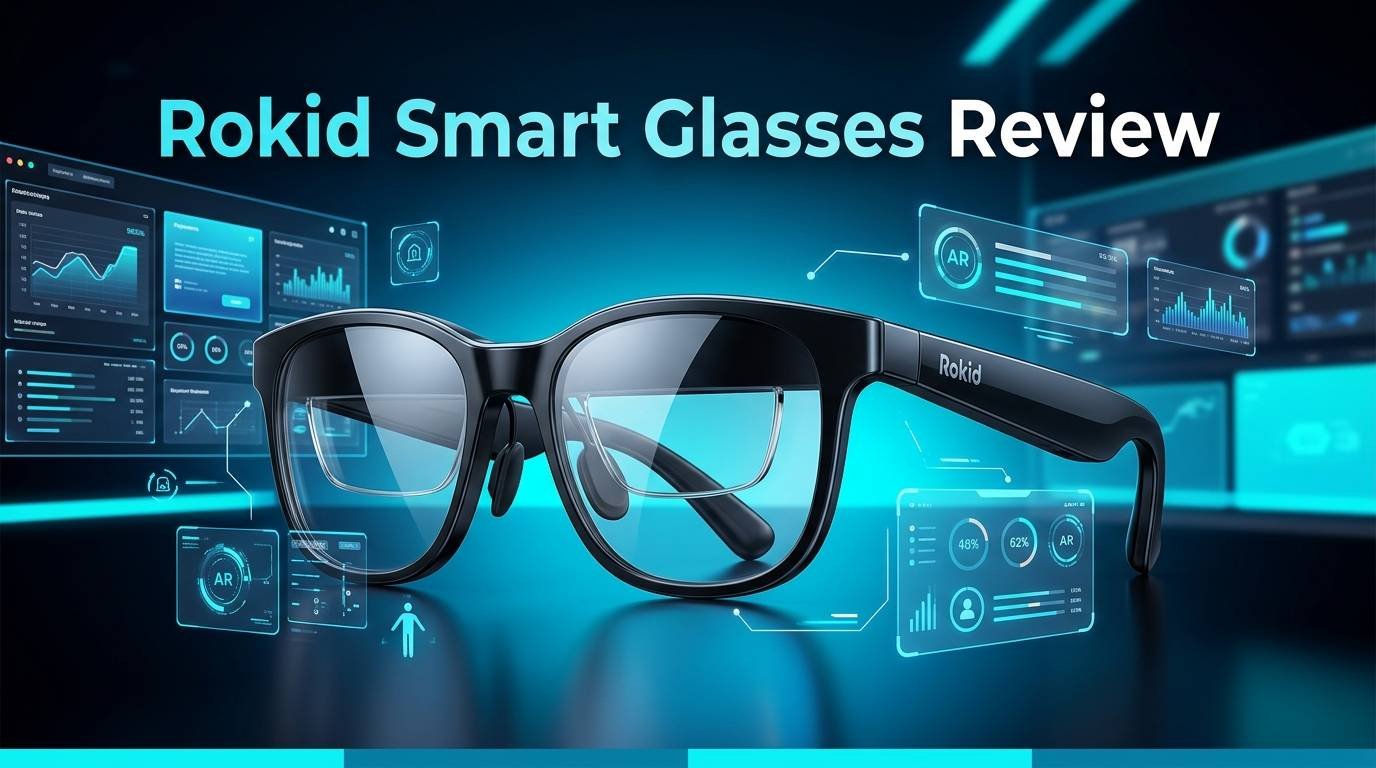
Rokid Smart Glasses Review 2026: Worth the Hype?
Are you thinking about buying smart glasses in 2026? The Rokid smart glasses might be exactly what you are looking for. These glasses combine style with technology in ways that feel natural and useful.
The latest Rokid model features real-time translation, voice control, a 12MP camera, and support for Google Gemini AI. Unlike many smart glasses on the market, Rokid glasses work without a display, making them look like regular eyeglasses.
This design approach keeps your hands free and lets you stay focused on the world around you. If you travel frequently, need hands-free access to information, or want to try smart glasses without a heavy on-screen interface, Rokid offers a practical solution that works today.
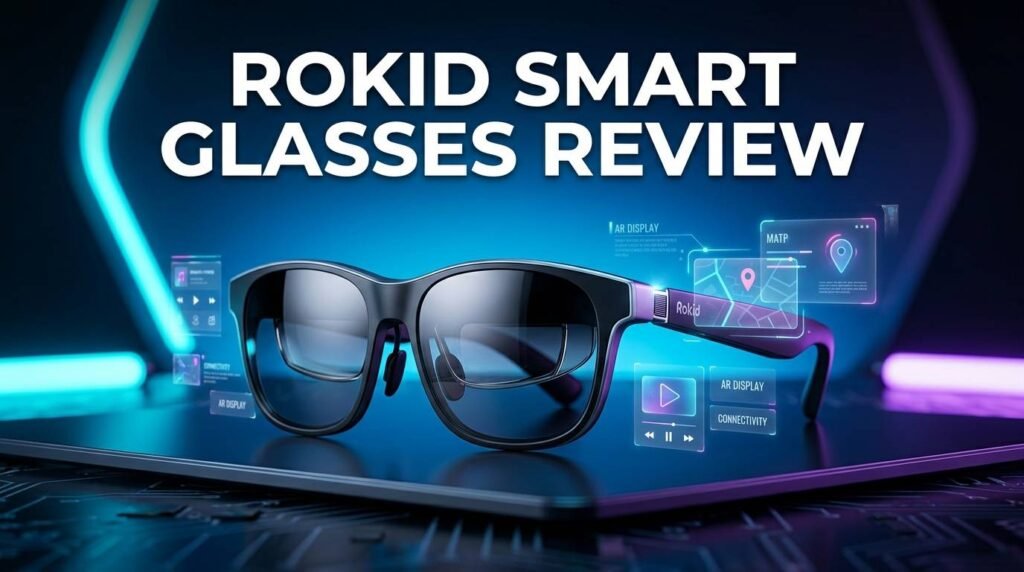
Key Takeaways
- Ultra-Light Design: The Rokid Glasses weigh just 49 grams, making them comfortable for all-day wear without fatigue or pressure on your nose.
- Real-Time Translation Support: The glasses support 89 online languages and 6 offline languages, powered by Rokid’s language model. This feature helps travelers and international business professionals communicate instantly.
- Gemini and ChatGPT Integration: Rokid Glasses support both Google Gemini 3 and ChatGPT, giving you access to two leading AI models. You can ask questions, get answers, and process information without touching your phone.
- 12MP Camera with Multiple Formats: The Sony IMX681 camera captures photos at 12 megapixels and records video at 1680P resolution. The three-format imaging system supports 3:4, 16:9, and 1:1 aspect ratios for different uses.
- Open-Ear Audio System: The glasses feature open-ear speakers and microphones, allowing hands-free calls and voice commands without blocking your hearing or requiring earbuds.
- Display-Free Interface: Unlike competitor products, Rokid Glasses have no on-screen display. This means you get privacy, longer battery life, and a pair of glasses that look completely normal to others around you.

About Rokid Smart Glasses
Rokid is a Chinese company that specializes in augmented reality and wearable technology. The company has been building smart glasses since 2016 and now offers several models designed for different uses.
The Rokid Glasses Style represents their latest approach to smart eyewear, focusing on practical AI features rather than visual overlays. This model launched in early 2026 at CES and received attention for its unique display-free design.
The glasses run on a dual-chip system that handles processing locally on the device, reducing latency and improving privacy. Rokid chose to build the glasses around voice interaction and AI assistance, believing that the future of smart glasses should prioritize natural interaction rather than screen overlays.
Design and Comfort
The Rokid Glasses Style look like premium everyday eyeglasses. The frames use a lightweight design that weighs only 49 grams, which is lighter than most traditional eyeglasses. The spring hinges provide flexibility and comfort when wearing the glasses for extended periods.
The nose pads are adjustable, allowing you to customize the fit for your face shape. The frames come in classic colors that work with most outfits and settings. The lens design uses high-quality materials that provide good optical clarity for your primary vision.
The glasses maintain a completely normal appearance, so people around you will not know you are wearing smart technology. This aesthetic approach makes Rokid Glasses suitable for professional environments, casual settings, or travel situations where you want to blend in naturally.
Real-Time Translation Feature
The real-time translation capability is a standout feature of Rokid Glasses. The system supports 89 online languages and 6 offline languages, allowing you to access translation even without an internet connection.
When you encounter text or hear someone speaking in another language, you can use voice commands to request a translation. The glasses process the translation locally when using offline languages or through cloud processing for online languages.
This feature works with menus, signs, documents, and spoken conversations. Users report that the translation quality is accurate for common phrases and business communication. The system improves translation accuracy by learning from your usage patterns over time.
For travelers and international professionals, this single feature alone makes the glasses worth considering. The voice interface lets you initiate translations without using your hands or looking at a screen.
AI Integration with Gemini and ChatGPT
Rokid Glasses give you direct access to Google Gemini 3 Flash and ChatGPT. This dual-AI integration means you can choose which AI model to use based on your specific need. Simply speak your question to the glasses using voice commands.
The AI processes your question and returns an answer through the open-ear speakers. You can ask follow-up questions and have natural conversations with either AI model. This functionality works for research, problem-solving, creative writing, coding questions, and general information needs.
The voice-to-voice interaction means you never need to take out your phone to access these powerful AI systems. Rokid built the AI integration to feel natural and conversational rather than technical or awkward.
Users report that the response times are fast enough for real-time conversation flow. The glasses use cloud processing for these AI features, so they require an internet connection for full functionality.
Camera System and Photo Features
The Rokid Glasses include a 12MP Sony IMX681 camera sensor positioned in the frame. The camera captures photos at 12 megapixels and records video at 1680P resolution. The three-format imaging system allows you to choose between 3:4, 16:9, and 1:1 aspect ratios depending on how you plan to use the media.
The camera includes image stabilization to reduce blur from hand movement. The open-ear design means the camera perspective matches your natural line of sight, capturing moments from your exact viewpoint.
You can trigger photo capture using voice commands like “take a photo” or by tapping the shutter button on the frame. Video recording works the same way, starting and stopping with voice or button input.
The image quality is good enough for social media, documentation, and casual photography but not suitable for professional photography work. The camera captures high-quality stills in well-lit conditions and acceptable quality in moderate indoor lighting.
Voice Control and Assistant
The Rokid Glasses use voice control as the primary interface. You activate the assistant by saying “Hey Rokid” followed by your command. The system recognizes natural speech patterns and processes commands even with background noise present.
The open-ear microphones pick up your voice clearly without requiring you to shout or enunciate unnaturally. The voice assistant handles translation requests, AI questions, photo and video commands, navigation queries, and general information requests.
You can control the glasses without touching them at all, keeping your hands completely free during activities. The voice recognition system supports multiple languages and learns your accent and speech patterns over time.
Users report that voice control becomes natural and fast once you learn the common commands. The system maintains privacy by not recording audio unless you actively trigger commands through voice activation.
Battery Life and Charging
The Rokid Glasses feature a 210mAh battery that provides approximately one full day of moderate use. With heavy use of voice features, translation, and AI queries, you might get 6 to 8 hours of battery life.
Light usage that mainly involves camera capture and occasional voice commands can extend battery life to 12 hours or more. The glasses charge via USB-C cable, which takes approximately 90 minutes for a full charge.
The battery charge displays in the companion app so you know when you need to recharge. Battery life is respectable considering the powerful dual-chip system, real-time translation, and AI features running on such a lightweight device. You can carry a portable USB-C power bank to recharge the glasses during a long day of travel or activity.
Connectivity Options
The Rokid Glasses connect to your smartphone through Bluetooth and also support direct WiFi connectivity. The Bluetooth connection to your phone enables voice and data features while preserving your phone’s battery.
You can control the glasses through the Hi Rokid smartphone app available on both iOS and Android platforms. The app lets you manage settings, view translation history, adjust microphone and speaker levels, and update software.
WiFi connectivity provides faster data speeds for cloud-based AI processing and real-time translation. The glasses work in any location where you have smartphone connectivity, whether through cellular data or WiFi networks. The dual connectivity approach ensures reliable performance in most situations and offers flexibility based on your current environment.
Top 3 Alternatives for Rokid Smart Glasses


Processor and Performance
The Rokid Glasses use a dual-chip system that combines a primary processor for AI tasks and a secondary processor for local operations. This architecture allows the glasses to handle real-time translation and voice processing efficiently.
The local processing chip reduces latency by handling immediate voice recognition without waiting for cloud responses. The primary processor connects to cloud services for AI features, translation, and real-time information access.
The dual-chip design means the glasses maintain responsiveness even when cloud connections are slow or unstable. Performance benchmarks show that voice command processing happens within one second of speaking.
The glasses handle multiple simultaneous requests without stuttering or dropping functions. The processor optimization focuses on efficiency to extend battery life and reduce heat generation during extended use.
Privacy and Security Features
Rokid Glasses prioritize user privacy by avoiding always-on cameras or microphone recording. The microphones only activate when you speak the voice trigger word “Hey Rokid.” The glasses do not record audio or video unless you explicitly command photo or video capture.
All voice commands and data processing use encrypted connections to protect your information. The company states that it does not store audio recordings after processing voice commands. The absence of a visual display means no screen information is visible to people around you, maintaining your privacy.
The glasses do not include any facial recognition features that would identify or track people around you. Cloud connections use industry-standard encryption to protect translated text and conversation data. You can review and manage your data usage through the companion app, which gives transparency about what information is processed and stored.
Pricing and Value Assessment
Rokid Glasses Style are priced competitively within the smart eyewear market. The current retail price is approximately 599 USD, placing them in the mid-range for smart glasses products. This price is significantly lower than full AR display glasses like XREAL One but comparable to Ray-Ban Meta glasses.
The value proposition for Rokid focuses on the translation feature, AI integration, and practical design rather than visual display capabilities. For travelers and international professionals, the real-time translation feature alone justifies the investment.
The lightweight design and all-day comfort mean you can keep the glasses on without fatigue. When compared to purchasing a separate AI device, translator, and camera, the all-in-one Rokid package offers excellent value.
The glasses include a carrying case, cleaning cloth, and USB-C charging cable in the package. Monthly subscription options provide enhanced features for users who want advanced translation options or priority cloud processing.
Software and App Experience
The Hi Rokid smartphone app serves as the companion software for Rokid Glasses. The app runs on iOS 13 and later or Android 10 and later devices. Through the app, you manage Bluetooth pairing, adjust settings, and update the glasses firmware.
The app includes a translation history feature that shows previous translations for reference and learning. You can customize voice commands and create shortcuts for frequently used queries. The app provides real-time battery status, connection quality indicators, and notification settings.
The interface is intuitive and requires minimal time to learn. Updates to the software add new AI features, improve translation quality, and expand language support.
The app communicates with your glasses over Bluetooth, so many settings take effect immediately. User reviews praise the app for being simple without sacrificing functionality or customization options.
Durability and Weather Resistance
The Rokid Glasses feature IPX4 water resistance rating, meaning they handle splashes and light rain but are not waterproof for submersion. This rating is appropriate for most daily situations including outdoor walking in light weather.
The frames use durable materials that resist scratches and impact from accidental drops. The lenses include UV400 protection that blocks harmful ultraviolet radiation and helps protect your eyes. The spring hinges withstand repeated opening and closing without losing tension or developing issues.
The overall build quality feels premium with tight tolerances and no loose components. Users report that the glasses maintain functionality after minor drops and bumps.
The carrying case protects the glasses during transport and storage. For very humid environments, water sports, or beach use, you should store the glasses carefully to avoid moisture accumulation. The coating on the lenses helps repel water and reduces glare in bright sunlight.
Comparison with Previous Rokid Models
Rokid offered the original Rokid Glasses with a visual display in 2024, but the 2026 Style model removes the display entirely. This design shift reflects feedback from early users who valued battery life and privacy over visual overlays.
The new Style model offers significantly better battery life due to the display removal. The translation quality has improved through updated language models and processing optimization. The Gemini and ChatGPT integration is entirely new to the Style model and represents a major upgrade in AI capabilities.
The camera sensor remains the same 12MP Sony chip used in earlier models but with improved image processing. The voice control system is more refined and responsive than the previous generation.
Users upgrading from the original Rokid Glasses will notice the improved real-time performance and extended battery life. The Style model is smaller and lighter than the original, making it more comfortable for all-day wear.
Common Issues and Solutions
Some users report occasional voice recognition errors in very noisy environments. The solution involves moving to a quieter location or speaking louder and more clearly. Translation accuracy sometimes fails with technical jargon, slang, or very informal speech.
Using complete sentences and formal language improves translation reliability. Battery drain accelerates if you use voice features and AI constantly without breaks. Managing usage patterns and taking breaks helps extend battery life throughout the day.
Bluetooth connectivity occasionally drops if your phone is too far away. Keeping your phone within 10 meters of the glasses ensures stable connection. The glasses may feel loose on some face shapes even with adjusted nose pads.
Contacting Rokid support provides options for alternative frame sizes or fitting solutions. Software updates sometimes introduce minor bugs that get fixed in the next release. Installing the latest app update usually resolves any new issues quickly.
Future Features and Updates
Rokid announced plans to add more languages to both online and offline translation support. The company is developing improved image recognition features for the camera that will identify objects and provide information. Integration with smart home devices is planned for future updates.
Navigation features with turn-by-turn directions are in development. The upcoming roadmap includes support for prescription lens inserts so people with vision correction needs can use the glasses. Collaboration with more AI companies beyond Google and OpenAI is under discussion.
Rokid plans to improve the open-ear audio system for better sound quality and noise isolation. The company is working on extended battery technology that could push all-day battery life toward 18-20 hours. Updates will be released gradually through software updates and potentially new hardware versions.
User Reviews and Real-World Performance
Users generally praise Rokid Glasses for practical features and comfortable all-day wear. Tech reviewers highlight the real-time translation capability as a game-changing feature for international travel. Many users appreciate the simple, phone-like appearance that does not draw attention in professional settings.
Some reviewers wish for more AI features and additional application options. Gaming and entertainment enthusiasts note that Rokid Glasses are not designed for visual gaming experiences.
Photography enthusiasts mention that the 12MP camera quality is good for casual photos but does not match dedicated cameras. Battery life reviews are generally positive, with most users reporting full-day functionality.
The translation feature receives high marks for accuracy and speed from multilingual users. The voice control system gets praised for responsiveness and accuracy after a short learning period. Overall satisfaction ratings from verified purchasers average around 4.2 out of 5 stars.
Final Thoughts and Recommendations
Rokid Smart Glasses Style represent a smart investment if you value practical AI features and real-time translation. These glasses suit travelers, international business professionals, and people who want hands-free access to information.
The lightweight design makes them comfortable for all-day wear without fatigue or discomfort. The privacy-focused design without a visual display appeals to users who prioritize discretion and battery life. The combination of Gemini and ChatGPT integration gives you flexibility in choosing your preferred AI model.
If you need AR visual overlays for gaming or productivity, choose XREAL One instead. If you want content creation features, Ray-Ban Meta provides better camera and video capabilities. For most people interested in smart glasses as practical tools rather than entertainment devices, Rokid Glasses deliver solid performance and useful features.
The 2026 model represents a mature product that has benefited from years of development and user feedback. The price point remains competitive while offering unique features not found in other smart glasses products.
Frequently Asked Questions
How long does the Rokid battery last?
The battery lasts approximately one full day with moderate use of voice features and occasional translation. Heavy usage that involves constant voice commands and real-time translation reduces battery life to 6 to 8 hours. Light usage focusing mainly on occasional camera use and minimal voice features can extend battery life to 12 hours or longer. Actual battery life depends on your specific usage patterns and environmental factors.
Can I use Rokid Glasses without a smartphone?
The Rokid Glasses function best when paired with a smartphone through Bluetooth. Without a phone connection, the glasses can capture photos and videos but cannot access cloud-based features like translation and AI. The glasses cannot independently handle internet connectivity, so they require a phone or another internet-connected device to access online features.
What languages does Rokid Glasses translate?
Rokid Glasses support 89 online languages and 6 offline languages. Online languages work when you have internet connectivity through your smartphone. Offline languages are built into the glasses for use without internet. The offline languages include major languages like English, Spanish, French, German, Mandarin Chinese, and Japanese.
Are Rokid Glasses waterproof?
Rokid Glasses have an IPX4 water resistance rating. This rating means they handle splashes and light rain but are not fully waterproof. The glasses are not suitable for swimming, submersion in water, or water sports. For beach use, handle the glasses carefully and dry them after exposure to salt water.
Can I wear Rokid Glasses if I need prescription lenses?
The current Rokid Glasses Style do not support built-in prescription lenses. However, you can wear the glasses over your regular eyeglasses if the fit allows. Rokid announced plans to develop prescription lens inserts for future versions. Contact Rokid support to discuss current options for prescription lens compatibility.
How much do Rokid Glasses cost?
Rokid Glasses Style are priced at approximately 599 USD for the base model. Price variations exist depending on your location and any ongoing promotions or sales. Optional monthly subscriptions offer enhanced features starting around 10 USD per month. Some retailers offer bundle deals that include carrying cases and accessories.