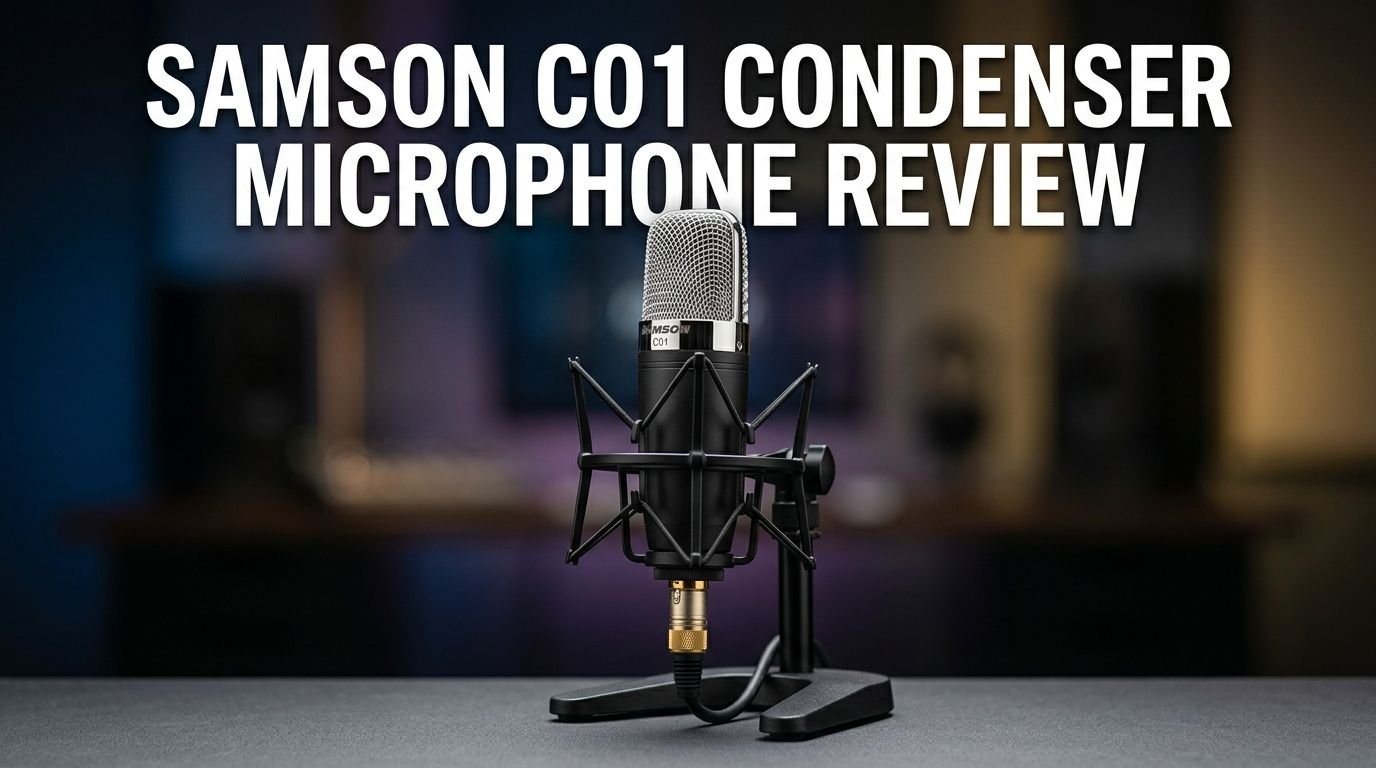
Samson C01 Condenser Microphone Review 2026: Worth It?
Are you looking for a studio condenser microphone that sounds great but does not burn a hole in your wallet? The Samson C01 has been a favorite among budget audio enthusiasts for years.
It promises studio quality sound at a fraction of the cost. But does it still hold up in 2026? In this review, we break down every detail of the Samson C01 condenser microphone.
We cover its sound quality, build, features, pros, cons, and much more. Whether you record podcasts, vocals, instruments, or voiceovers, this review will help you decide if the C01 is right for you.
Key Takeaways:
- The Samson C01 features a large 19mm dual layer diaphragm with a cardioid pickup pattern. This combination produces a smooth, flat frequency response that captures vocals, guitars, and other instruments with impressive clarity and warmth at a budget price.
- Build quality is outstanding for its price range. The mic has a heavy gauge mesh grille, a gold plated XLR connector, and a solid metal body that feels more like a professional studio piece than a budget option. It weighs about 2 lbs, which speaks to its durability.
- The C01 requires 48V phantom power to operate. You will need an audio interface or mixer that supplies phantom power. An LED on the mic body confirms the power connection, so you always know it is active.
- Sound performance is clean and detailed with warm bass and extended highs. However, some users have noticed a slight dip in low frequencies for vocals and minor sibilance at higher volumes. A pop filter is strongly recommended.
- At its current price point (typically under $80), the Samson C01 offers exceptional value for beginners, home studio owners, podcasters, and content creators who need a reliable XLR condenser mic without spending hundreds of dollars.
- The mic comes with a swivel stand mount and a carrying case with foam padding. An optional Samson SP01 Spider Shockmount can be purchased separately for added stability and vibration isolation.

Samson C01 Condenser Microphone Overview
The Samson C01 is a large diaphragm condenser microphone built for studio recording, podcasting, voiceovers, and instrument capture. Samson Technologies has been a respected name in affordable audio equipment for decades. The C01 represents one of their most popular offerings.
This mic uses a 19mm dual layer diaphragm that captures sound with a smooth, flat frequency response. The frequency range spans from 40Hz to 18,000Hz, which covers the full vocal range and most acoustic instruments. Its sensitivity sits at negative 33 dB/Pa, and it handles a maximum SPL of 136 dB.
The cardioid pickup pattern focuses on sound directly in front of the microphone. It rejects noise from the sides and rear. This makes the C01 a solid choice for recording in home studios where background noise can be an issue.
The mic connects through a gold plated XLR output and requires 48V phantom power. A small LED on the body lights up to confirm the power is active. Overall, the C01 packs a lot of features into a microphone that costs less than many dinner dates.
Sound Quality and Performance
The Samson C01 delivers clear, detailed audio that punches above its price class. Vocals sound warm and present. Acoustic guitar recordings capture the natural resonance of the strings and body. Cymbals and percussion instruments shimmer with nice high end detail.
The dual layer diaphragm plays a big role here. Its ultra thin 3 micron thickness allows it to pick up subtle details that cheaper dynamic microphones often miss. You get a noticeable difference in recording clarity compared to a standard USB mic.
That said, the C01 does have some character. Some reviewers note a slight dip in the low frequency range for vocals. This can make certain voice types sound a bit thin or slightly nasal. If you have a deep, bass heavy voice, you may want to test this mic before committing.
Sibilance can also appear on harsh “S” and “T” sounds at closer distances. A quality pop filter and proper mic technique (recording 6 to 8 inches away) will reduce this issue significantly. With minor EQ adjustments in post production, the C01 sounds polished and professional.
For the price, the sound quality is genuinely impressive. Most listeners will not be able to tell the difference between a C01 recording and one made with a mic costing two or three times as much.
Build Quality and Design
One of the first things you notice about the Samson C01 is its weight. At roughly 2 pounds (1 kg), this microphone feels solid and substantial. Many budget microphones feel fragile or plasticky. The C01 does not. It feels like a serious piece of studio gear.
The body is constructed from durable metal with a professional matte finish. The heavy gauge mesh grille protects the sensitive condenser capsule from accidental bumps and plosive air bursts. This grille is sturdy and well attached, adding confidence that the mic can survive daily use.
The gold plated XLR connector on the bottom ensures a reliable, low noise connection. Gold plating resists corrosion over time, which means your signal stays clean even after years of plugging and unplugging cables.
The overall dimensions are 2.125 inches wide by 7 inches tall (54mm x 180mm). This is a standard size for a large diaphragm condenser, so it fits comfortably on most mic stands and boom arms. Samson includes a swivel stand mount in the box for easy setup.
Users who have owned this mic for over a decade report it still works perfectly. That kind of longevity at this price point is rare and worth highlighting.
Top 3 Alternatives for Samson C01 Condenser Microphone
1. Audio Technica AT2020

2. MXL 770 Cardioid Condenser Microphone

3. AKG P120 Condenser Microphone

Setting Up the Samson C01
Setting up the Samson C01 is straightforward. You need three essential pieces of equipment: an XLR cable, an audio interface or mixer with 48V phantom power, and a microphone stand or boom arm.
Start by attaching the included swivel mount to your mic stand. Slide the C01 into the mount and tighten the clip. Connect one end of your XLR cable to the bottom of the mic and the other end to your audio interface.
Turn on phantom power from your interface. The small LED on the C01 will light up to confirm the connection. Give the mic about 10 seconds to stabilize before recording. Open your DAW (digital audio workstation) software, select the C01 as your input source, and you are ready to go.
For best results, position the microphone about 6 to 8 inches from your mouth or sound source. Angle the mic slightly off axis if you experience plosive pops or sibilance. A pop filter placed between your mouth and the mic will further improve vocal recordings.
If you plan to do a lot of vocal recording, consider picking up the Samson SP01 Spider Shockmount separately. It isolates the mic from vibrations transmitted through the stand, giving you cleaner recordings with less rumble.
Who Should Buy This Microphone
The Samson C01 serves several types of users very well. Beginners building their first home studio will appreciate its low price and easy setup. You do not need to be a sound engineer to get good results from this mic.
Podcasters and content creators will find the C01 delivers clear, broadcast ready audio for spoken word. The cardioid pattern does a good job of isolating your voice from room noise, which is important for untreated home recording spaces.
Singer songwriters and musicians can use the C01 to record demo tracks and full productions. It handles vocals, acoustic guitars, and many other instruments with respectable fidelity. The 136 dB max SPL means it can even capture louder sources without distortion.
Voice over artists on a budget will benefit from the smooth frequency response. With some post processing, the C01 can produce professional sounding voice over tracks for YouTube, audiobooks, or commercial projects.
Students and hobbyists who want to experiment with recording will find this mic an ideal entry point. It gives you real condenser microphone quality without the financial risk of an expensive purchase.
Frequency Response Breakdown
The Samson C01 has a frequency response range of 40Hz to 18,000Hz. This range covers most musical instruments and the full human vocal spectrum. Let us break down what this means in practical terms.
The low end starts at 40Hz, which captures the fundamental tones of bass guitars, kick drums, and deep male voices. However, the C01 does not extend as low as some competitors that reach 20Hz. For most recording applications, 40Hz is more than enough.
The mid range is where vocals and most instruments live (roughly 250Hz to 4,000Hz). The C01 delivers a smooth, relatively flat response through this range. There are no harsh peaks or extreme dips that color the sound in unwanted ways. This neutrality makes the mic versatile across different recording scenarios.
The high end extends to 18,000Hz, capturing the brightness and air of vocals, cymbals, and string instruments. Some higher priced microphones reach 20,000Hz, but the difference between 18kHz and 20kHz is minimal for most listeners and recording purposes.
The overall frequency curve is gentle and forgiving. It does not add a lot of artificial brightness or warmth. What you record is close to what you hear in real life. This flat character makes the C01 easy to work with in post production, because you can shape the sound with EQ rather than fight against an opinionated microphone.
Phantom Power and Connectivity
As a condenser microphone, the Samson C01 requires 48V phantom power to operate. This is standard for all true condenser mics. You cannot plug this mic directly into a computer or smartphone without an interface.
Your audio interface, mixer, or preamp must supply phantom power through the XLR connection. Popular budget interfaces like the Focusrite Scarlett 2i2, PreSonus AudioBox, and Universal Audio Volt 2 all provide 48V phantom power and pair well with the C01.
The gold plated XLR connector on the C01 ensures a strong, reliable connection. Gold plating prevents oxidation and maintains signal integrity over time. This small detail makes a real difference for long term reliability.
An LED indicator on the mic body lights up when phantom power is active. This is a helpful feature that many budget mics lack. You always know at a glance whether your mic is receiving power.
One important note: do not connect or disconnect the XLR cable while phantom power is engaged. This can create a loud pop that may damage speakers or headphones. Always turn off phantom power first, then connect or disconnect your cable. This protects both your mic and your monitoring equipment.
Samson C01 vs USB Microphones
Many beginners wonder whether to buy an XLR condenser like the Samson C01 or a USB microphone. Both have their place, but the C01 has clear advantages for anyone serious about audio quality.
USB microphones are convenient. You plug them directly into your computer and start recording. No interface needed. However, USB mics have built in analog to digital converters that are often lower quality than standalone audio interfaces.
The Samson C01, paired with a decent audio interface, will produce noticeably better recordings than most USB mics in the same price range. The separate interface gives you more control over gain, allows you to use multiple microphones, and provides better preamp quality.
The C01 also gives you room to upgrade. If you buy a better interface down the road, your C01 will sound even better without needing a new microphone. With a USB mic, you are stuck with the built in converter forever.
USB mics win on portability and simplicity. If you record on the go or just need a quick setup for video calls, a USB mic might be more practical. But for dedicated home studio recording, the XLR route with the Samson C01 delivers superior results and future flexibility.
Accessories You Need with the Samson C01
The Samson C01 comes with a swivel stand mount and a padded carrying case. But to get the best performance, you will want a few additional accessories.
A pop filter is essential for vocal recording. It reduces plosive sounds (hard “P” and “B” sounds) that can cause distortion. You can find quality pop filters for under $15. This small investment makes a noticeable difference in recording quality.
A boom arm or sturdy mic stand gives you flexible positioning. The included swivel mount works with standard 5/8 inch threaded stands. A boom arm lets you position the mic at the perfect angle without a bulky floor stand taking up space.
The Samson SP01 Spider Shockmount is a recommended upgrade. It cradles the mic in elastic bands that absorb vibrations from your desk or floor. This prevents low frequency rumble from footsteps, keyboard typing, or bumps from reaching your recordings.
An XLR cable is required but not included. Choose a cable that is at least 10 feet long for flexibility. Cables from brands like Mogami, Hosa, or Amazon Basics will all work fine.
Finally, acoustic treatment in your recording space will dramatically improve your results. Even basic foam panels or a reflection filter behind the mic can reduce room echo and make your recordings sound more professional.
Pros and Cons of the Samson C01
Every microphone has strengths and weaknesses. Here is an honest look at both sides of the Samson C01.
The pros are substantial. The build quality is exceptional for a budget microphone. The metal body, heavy mesh grille, and gold plated connector give the C01 a premium feel. It is built to last, and many users confirm it survives years of regular use.
Sound quality is another big win. The 19mm diaphragm captures clean, detailed audio that competes with mics at twice the price. Vocals sound warm and natural. Acoustic instruments are reproduced with nice clarity and presence.
The price is arguably the C01’s greatest strength. You get real condenser microphone quality for less than $80. For beginners and budget minded creators, this is hard to beat.
On the con side, the low end response can feel a bit thin for some voice types. Deep, bass heavy voices may not sound as full as they would on a mic with a stronger low frequency presence. This is a minor issue that EQ can often fix.
Sibilance can be noticeable at close recording distances. A pop filter and proper technique minimize this, but it is worth noting. The mic also lacks features like a bass roll off switch or pad, which some competitors in this range offer. These are nice to have but not deal breakers for most users.
Samson C01 for Podcasting
Podcasters have embraced the Samson C01 as a reliable, affordable microphone. Its cardioid pickup pattern focuses on the speaker’s voice and rejects ambient noise from the room. This is important because most podcasters record in home offices or bedrooms that are not acoustically treated.
The smooth frequency response gives spoken word a clear, easy to listen to quality. Podcast listeners spend hours with a host’s voice in their ears. A mic that sounds harsh or tinny will drive listeners away. The C01 avoids these issues with a balanced, natural tone.
Recording at the proper distance (6 to 8 inches) and using a pop filter will give you clean, podcast ready audio straight out of the box. Minimal post processing is needed. A bit of compression and EQ in your editing software will polish the sound to a professional standard.
For podcasters on a tight budget, the C01 paired with a budget audio interface (like the Focusrite Scarlett Solo) gives you a complete recording setup for under $150 total. That is an incredible value for broadcast quality audio.
If you host a multi person podcast, the C01’s XLR connection lets you use multiple mics through a multi input interface or mixer. This gives you individual control over each voice, which USB mics cannot match.
Long Term Durability and Reliability
One of the most impressive aspects of the Samson C01 is its long term durability. This mic was first introduced many years ago, and users who bought it early on report it still works flawlessly. That kind of track record speaks volumes.
The all metal construction resists wear and tear. Unlike plastic bodied microphones that crack or degrade over time, the C01’s metal shell holds up to bumps, drops, and general studio handling. The heavy gauge mesh grille protects the delicate condenser capsule inside.
Samson backs the C01 with a manufacturer’s warranty, giving buyers additional peace of mind. The included carrying case with foam padding protects the mic during storage and transport. If you move between recording locations, this case keeps your investment safe.
The gold plated XLR connector maintains signal quality over many plug and unplug cycles. Cheaper connectors can develop static, crackle, or signal loss after repeated use. Gold plating prevents this degradation.
For anyone who needs a microphone that will serve them for years without replacement, the Samson C01 is a smart long term investment. Its combination of solid construction and reliable performance makes it a microphone you buy once and use for a very long time.
Final Verdict: Should You Buy the Samson C01 in 2026?
The Samson C01 remains one of the best value condenser microphones available in 2026. It delivers clean, detailed sound through a well built, durable body at a price that almost anyone can afford. Few microphones offer this combination of quality and affordability.
If you are a beginner, this mic gives you a professional starting point without the anxiety of a big financial commitment. If you are a podcaster, content creator, or home studio musician, the C01 performs reliably across vocals, instruments, and spoken word.
The minor drawbacks (slight low end thinness, potential sibilance) are easily managed with proper technique and basic EQ. These are not deal breaking flaws. They are typical trade offs at this price level.
The Samson C01 earns a strong recommendation. It has stood the test of time, it sounds great for the money, and it is built to last. If you need a dependable condenser microphone on a budget, the C01 deserves a spot on your shortlist.
Frequently Asked Questions
Does the Samson C01 need an audio interface?
Yes. The Samson C01 is an XLR condenser microphone that requires 48V phantom power. You need an audio interface, mixer, or preamp that provides phantom power through an XLR connection. Budget interfaces like the Focusrite Scarlett Solo or Universal Audio Volt 2 work well with this mic.
Is the Samson C01 good for singing?
The C01 performs well for vocal recording. It captures singing voices with warmth and clarity. For best results, use a pop filter and position the mic 6 to 8 inches from your mouth. A little EQ in post production can help shape the sound to your preference.
Can I use the Samson C01 for gaming or streaming?
You can use the C01 for gaming and streaming if you have an audio interface with phantom power. The cardioid pattern helps reject background noise from keyboards and fans. However, if you want a simpler setup, a USB microphone might be more convenient for gaming.
How does the Samson C01 compare to the Audio Technica AT2020?
Both are popular budget condenser microphones. The AT2020 has a slightly wider frequency range (20Hz to 20,000Hz) and a brighter character. The C01 is often less expensive and has a warmer, more neutral tone. Both deliver excellent value, and the choice depends on your preference for brightness versus warmth.
What accessories does the Samson C01 come with?
The Samson C01 includes a swivel stand mount and a padded carrying case. You will need to purchase an XLR cable, audio interface, and pop filter separately. The optional Samson SP01 Spider Shockmount is also recommended for vibration isolation.
Is the Samson C01 worth buying in 2026?
Absolutely. The Samson C01 continues to deliver solid performance at a budget friendly price. Its durable build, clean sound, and versatile recording capabilities make it a strong choice for anyone entering the world of home recording, podcasting, or content creation.