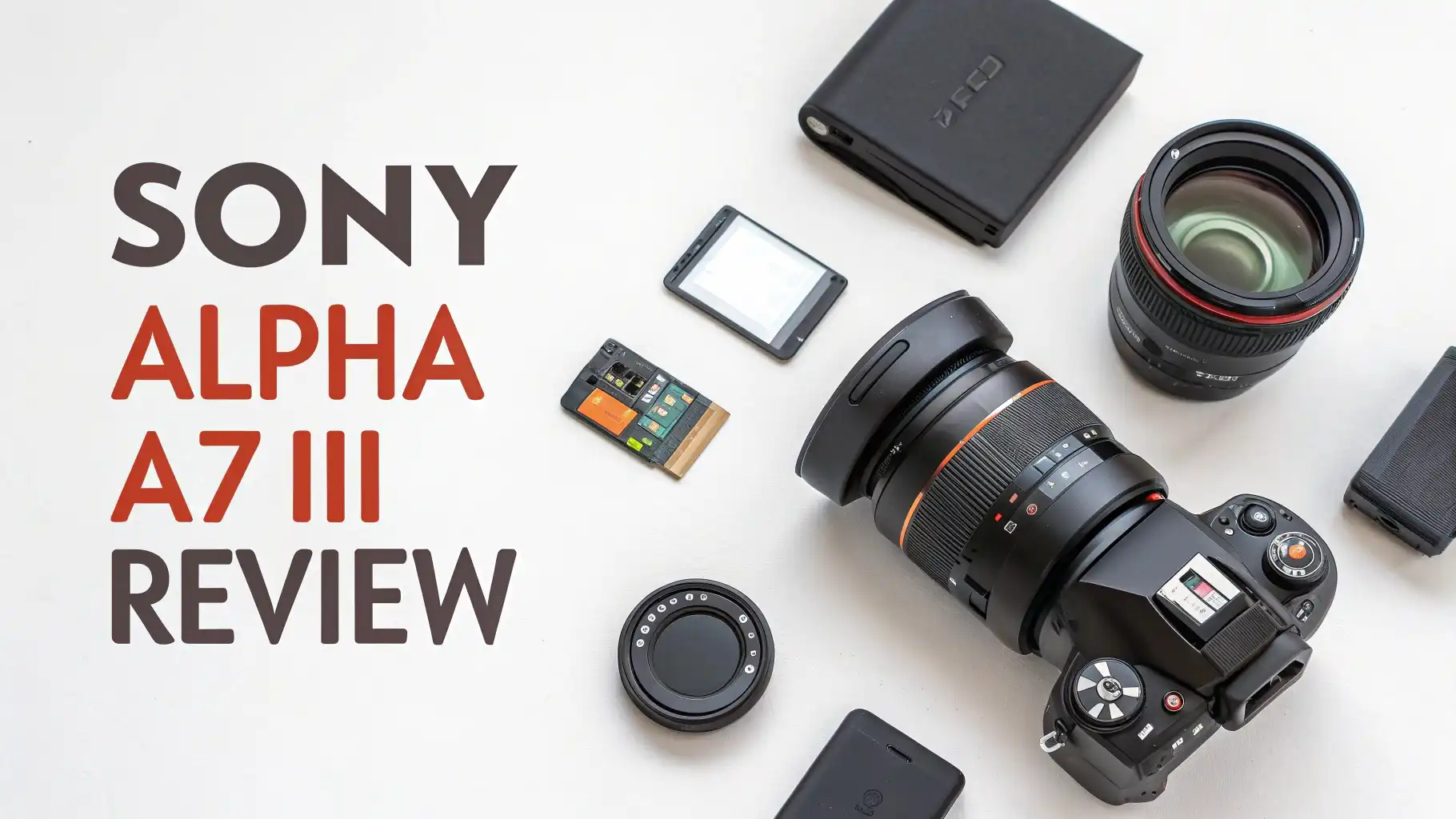
Sony Alpha A7 III Review: Best Full Frame Mirrorless Camera
The Sony Alpha A7 III changed the game when it launched. This full frame mirrorless camera brought professional features to enthusiasts without breaking the bank.
Many photographers still ask if this camera holds up today. The answer is a strong yes. The A7 III continues to deliver stunning images and reliable performance that rivals newer models.
Let me share everything you need to know about this popular camera and why it remains a smart choice.
Key Takeaways
- Outstanding autofocus system with 693 phase detection points covers 93% of the frame for sharp focus tracking.
- 24.2 megapixel full frame sensor produces excellent image quality with impressive dynamic range for both photos and videos.
- Fast continuous shooting at 10fps with autofocus tracking captures action moments without missing a beat.
- Improved battery life delivers up to 710 shots per charge, addressing concerns from earlier Sony models.
- Dual card slots provide backup security and flexible workflow options for professional photographers.
- 4K video recording with full pixel readout and no pixel binning creates professional quality footage.

Understanding the Sony Alpha A7 III
The Sony A7 III sits in the sweet spot of the Alpha series lineup. Sony designed this camera as their entry level full frame option. But entry level does not mean basic. This camera packs features found in much more expensive models. The A7 III uses the same autofocus system as the flagship A9. It borrows the excellent battery from the high resolution A7R III.
Sony combined these premium features with a competitive price point. This approach made the A7 III one of the most popular full frame cameras ever released. The camera works perfectly for photographers moving up from crop sensors. It also satisfies professionals who need a reliable backup body.
The build quality feels solid in your hands. The magnesium alloy construction provides durability without excessive weight. Weather sealing protects against dust and moisture. The improved grip fits comfortably even during long shooting sessions. Sony learned from feedback on earlier models and made thoughtful improvements throughout the design.
Image Quality That Impresses Every Time
The 24.2 megapixel sensor delivers stunning results across all shooting conditions. This resolution strikes an excellent balance. You get enough detail for large prints and heavy cropping. The smaller file sizes compared to 42 megapixel cameras save storage space and processing time. The back illuminated sensor design improves low light performance significantly. The native ISO range extends from 100 to 51200. You can expand this to ISO 50 on the low end and ISO 204800 on the high end.
Images show clean detail with minimal noise even at higher ISO settings. The 15 stop dynamic range gives you incredible flexibility in post processing. You can recover detail from shadows and highlights that looked lost in camera. The color science produces natural and pleasing tones straight out of camera. Skin tones look accurate across different lighting situations. The camera handles difficult lighting scenarios like backlit portraits with ease.
RAW files contain tremendous information for editing. The 14 bit color depth provides smooth gradations and prevents banding. JPEG processing produces files ready for immediate sharing. You can customize picture profiles to match your preferred style. The overall image quality competes with cameras costing thousands more.
Autofocus Performance That Never Quits

The autofocus system stands out as one of the A7 III strongest features. Sony incorporated 693 phase detection points across the sensor. These points cover an impressive 93% of the imaging area. The system also includes 425 contrast detection points for precision. This hybrid autofocus works incredibly fast and accurately. The camera locks onto subjects almost instantly in good light. Performance remains strong even when light levels drop.
Eye autofocus tracks human subjects with remarkable accuracy. The camera finds and follows eyes even when the subject moves around the frame. This feature works brilliantly for portraits and wedding photography. You can focus on composition while the camera handles focus. The tracking autofocus performs admirably for sports and wildlife. Once locked onto a subject, the camera maintains focus through complex movements. The continuous autofocus at 10fps keeps moving subjects sharp frame after frame.
Video autofocus works smoothly without the pulsing or hunting common in older cameras. The system transitions between subjects naturally. Touch focus on the rear screen lets you quickly shift focus points. The customizable autofocus settings allow you to fine tune behavior for different situations. Professional photographers praise the autofocus reliability. The system rarely misses focus on important shots.
Top 3 Alternatives for Sony Alpha A7 III


Shooting Speed and Buffer Performance
The A7 III shoots continuously at 10 frames per second with full autofocus and auto exposure tracking. This speed handles most action photography needs with ease. The buffer depth lets you capture approximately 177 JPEG images or 89 compressed RAW files before slowing down. These numbers exceed what most photographers need in a single burst. The camera processes files quickly and clears the buffer faster than previous models.
You can also shoot at 8fps with live view mode enabled. This mode shows you the actual scene between frames instead of a blackout. The viewfinder refresh rate stays smooth during bursts. The electronic shutter option enables completely silent shooting. This feature proves invaluable for wedding ceremonies and theater performances. The mechanical shutter operates quietly compared to DSLR cameras. The shutter mechanism carries a 500,000 actuation rating for long term reliability.
Video Capabilities for Content Creators
The A7 III records excellent 4K video at up to 30 frames per second. Sony uses full pixel readout without pixel binning. This process oversamples from the entire sensor width. The result delivers sharp 4K footage with minimal moiré and aliasing. The camera uses the XAVC S codec with bitrates up to 100 Mbps. This high bitrate preserves detail and handles color grading better than lower bitrate codecs.
Full HD recording goes up to 120fps for smooth slow motion effects. The 5 axis in body image stabilization helps create smooth handheld footage. You get approximately 5 stops of shake reduction. The tilting rear screen makes low and high angle shots easier to frame. Headphone and microphone jacks provide professional audio monitoring and recording. Zebra patterns and focus peaking assist with exposure and focus during recording.
Picture profiles include multiple options for different looks. The S Log2 and S Log3 profiles maximize dynamic range for color grading. HLG (Hybrid Log Gamma) provides an HDR workflow. The camera outputs clean 4K via HDMI for external recorders. The main limitation for video shooters is the lack of 4K 60fps. The camera also records 8 bit color instead of 10 bit. These limitations matter less for casual video work but affect professional productions.
Battery Life That Actually Lasts

Sony addressed one of their biggest criticisms with the A7 III. The NP FZ100 battery delivers up to 710 shots per charge according to CIPA standards. Real world usage often exceeds this number. The battery capacity more than doubles previous Sony batteries. You can shoot all day without worrying about running out of power. The camera charges via USB C which adds convenience. You can use power banks to recharge in the field.
The battery indicator shows remaining percentage instead of just bars. This accurate readout helps you plan battery changes. Many photographers find one battery sufficient for a full day of shooting. Having spare batteries still makes sense for heavy use days. Third party battery options cost less than Sony batteries. Many third party batteries perform well and work with the camera firmware. The improved battery life removes a major concern from earlier Sony cameras.
Dual Card Slots for Peace of Mind
Professional photographers demanded dual card slots. Sony delivered with the A7 III. The camera includes one SD card slot and one SD/Memory Stick slot. Both slots support UHS II speeds for fast writing. You can configure the slots multiple ways. Overflow mode fills the second card when the first fills up. Backup mode writes the same files to both cards simultaneously. This redundancy protects against card failure during important shoots.
Separate mode lets you save RAW files to one card and JPEG files to the other. You can also designate cards for stills and video separately. The flexibility matches different workflow needs. Wedding and event photographers especially value the backup security. The peace of mind from dual slots justifies the camera choice for many professionals. Card access requires removing the battery. This design choice seems odd but rarely causes problems in practice.
Build Quality and Weather Sealing

The A7 III construction feels professional and durable. The magnesium alloy body provides strength without excessive weight. The camera weighs approximately 650 grams with battery and card. This weight feels substantial but not heavy during all day shooting. The improved grip design accommodates different hand sizes comfortably. The grip depth provides secure handling with larger lenses.
Weather sealing protects against dust and moisture throughout the camera body. The sealing works when you pair the camera with weather sealed lenses. You can shoot confidently in light rain and dusty conditions. The build quality inspires confidence in challenging environments. Button placement feels logical after a brief learning period. The controls provide good tactile feedback. The mode dial includes a lock to prevent accidental changes. The build quality matches or exceeds cameras costing significantly more.
Electronic Viewfinder and LCD Screen
The electronic viewfinder offers 0.78x magnification with approximately 2.36 million dots of resolution. The viewfinder provides a bright and clear view with excellent color accuracy. The refresh rate stays smooth even during camera movement. Eye detection activates the viewfinder automatically when you bring the camera to your eye. The eyepiece provides comfortable viewing with or without glasses. You can adjust the diopter for your vision needs.
The 3 inch tilting LCD screen features approximately 921,000 dots of resolution. The screen tilts up and down but does not articulate fully. This limitation bothers some vloggers and video shooters. The screen works well for high and low angle photography. Touch functionality allows focus point selection and menu navigation. The screen remains visible in bright sunlight. The touch interface feels responsive but not as smooth as modern smartphones. The combination of viewfinder and screen serves most shooting situations effectively.
Customization and Menu System
The Sony menu system earned criticism for complexity. The A7 III continues using Sony familiar menu structure. The system offers tremendous depth but requires time to learn. You can customize nearly every aspect of camera operation. The custom button options let you assign frequently used functions for quick access. The camera remembers up to three complete custom setting groups. You can instantly switch between different shooting scenarios.
The My Menu section lets you create a personalized menu with your most used settings. This feature saves time navigating the full menu structure. The function menu provides quick access to common settings. Sony included helpful guide information throughout the menus. The system feels logical once you spend time with it. Many photographers appreciate the flexibility after the initial learning curve. Firmware updates continue improving menu organization and adding features years after release.
Connectivity and Workflow Options
The A7 III includes built in Wi Fi and Bluetooth for wireless connectivity. The Imaging Edge Mobile app enables remote control from smartphones. You can adjust settings and trigger the shutter remotely. The app transfers images to your phone for quick sharing. The transfer speed works acceptably for individual images. NFC provides quick pairing with compatible Android devices. The USB C port supports fast file transfer to computers.
The camera also charges through the USB C port. You can tether the camera for studio shooting. The micro HDMI port outputs video to external monitors and recorders. The camera supports both NTSC and PAL video standards. The PC sync terminal allows flash triggering without adapters. The headphone and microphone jacks support professional audio monitoring. The connectivity options cover most photographer needs effectively.
Lens Compatibility and System

The A7 III uses the Sony E mount for full frame lenses. Sony offers an extensive selection of native FE lenses. These lenses range from affordable options to professional grade glass. Third party manufacturers produce excellent lenses for the E mount. Sigma Tamron and others offer quality alternatives at lower prices. The short flange distance allows adapting almost any lens with appropriate adapters. Canon Nikon and other DSLR lenses work with electronic adapters.
Many photographers build lens collections gradually. The kit 28 to 70mm lens provides a reasonable starting point. Portrait photographers love the 85mm F1.8 for sharpness and value. The 24 to 105mm F4 makes an excellent all purpose zoom. Wide angle options include the 16 to 35mm F4 for landscapes. The system includes everything from ultra wide to super telephoto lenses. The growing lens ecosystem makes Sony increasingly attractive for system investment.
Is the Sony A7 III Worth Buying in 2026?
The Sony A7 III remains an excellent camera choice despite being several years old. The image quality holds up beautifully against newer models. The autofocus system continues competing with current cameras. The price often drops below the original MSRP especially on the used market. You can find excellent condition used bodies at significant savings. The value proposition stays incredibly strong.
The camera suits many photography styles effectively. Portrait photographers love the eye autofocus and image quality. Wedding photographers trust the dual card slots and battery life. Landscape photographers appreciate the dynamic range and resolution. Sports photographers benefit from the fast autofocus and burst speed. Video shooters get capable 4K recording with excellent stabilization. The versatility makes this camera a smart investment.
Some newer cameras offer incremental improvements. The A7 IV adds higher resolution and better video features. But the A7 IV costs significantly more. The A7 III delivers exceptional results for most photographers. The money saved can go toward better lenses or accessories. Many professionals continue using A7 III bodies alongside newer cameras. The camera simply gets the job done reliably every time.
Frequently Asked Questions
Does the Sony A7 III shoot 4K at 60fps?
No, the Sony A7 III maxes out at 4K 30fps for video recording. You can shoot Full HD at up to 120fps for slow motion. The 4K 30fps limitation bothers some video shooters. Most photography focused users find 4K 30fps perfectly adequate for their needs.
How many megapixels does the Sony A7 III have?
The Sony A7 III features a 24.2 megapixel full frame sensor. This resolution provides an excellent balance between file size and detail. The resolution works great for most photography applications including professional work and large prints.
Is the Sony A7 III good for beginners?
The A7 III works well for beginners willing to learn its features. The camera offers automatic modes for easy shooting. The manual controls provide room to grow as skills develop. The menu complexity might intimidate absolute beginners. Photographers upgrading from crop sensor cameras adapt quickly to the A7 III interface.
What is the battery life of the Sony A7 III?
The NP FZ100 battery delivers approximately 710 shots per CIPA standards. Real world use often exceeds this number. The battery life represents a major improvement over earlier Sony models. Most photographers find one battery sufficient for a full day of casual shooting.
Can the Sony A7 III shoot in low light?
Yes, the A7 III performs excellently in low light conditions. The back illuminated sensor design improves light gathering. The native ISO range extends to 51200 with clean results. The fast autofocus continues working effectively as light levels drop.
Does the Sony A7 III have in body image stabilization?
Yes, the camera includes 5 axis in body image stabilization. The system provides approximately 5 stops of shake reduction. This stabilization works with any lens attached to the camera. The stabilization proves especially helpful for video and handheld shooting.
What memory cards work best with the Sony A7 III?
The camera supports UHS II SD cards for fastest performance. Look for cards rated V60 or V90 for 4K video recording. Both card slots support UHS II speeds. Quality cards from SanDisk Sony and Lexar work reliably in this camera.
How does the Sony A7 III compare to the Canon EOS R6?
Both cameras deliver excellent image quality and performance. The Canon offers better video autofocus and 4K 60fps recording. The Sony costs less and has dual card slots. Lens selection favors Sony currently. Both cameras serve professionals effectively. Choose based on your existing lens investment and specific feature priorities.