Owlet Dream Duo Review 2026: Is It Worth Buying?
Every new parent knows the feeling. You lay your baby down, walk out of the room, and immediately wonder if everything is okay.
The Owlet Dream Duo promises to remove that worry with a combination of wearable health tracking and crystal clear video monitoring. But does it actually deliver on that promise in 2026?
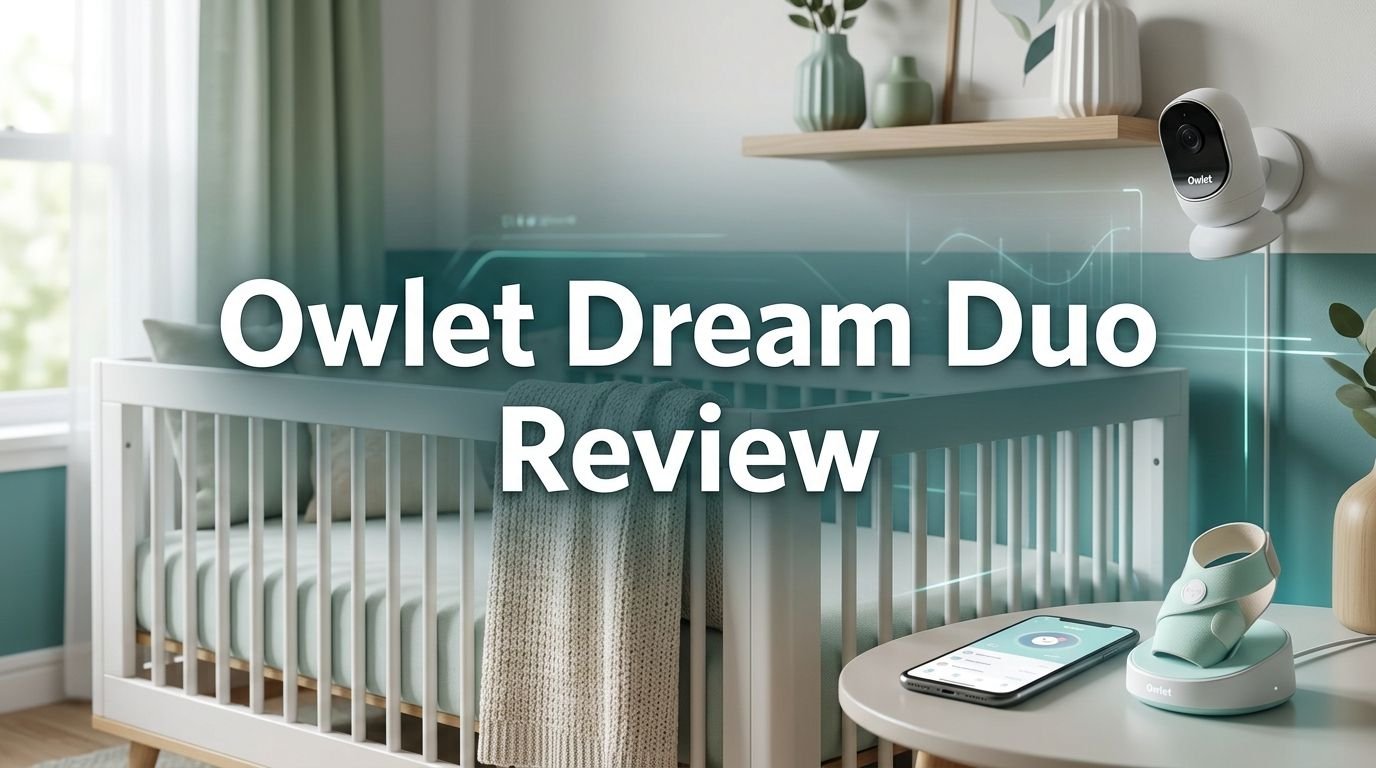
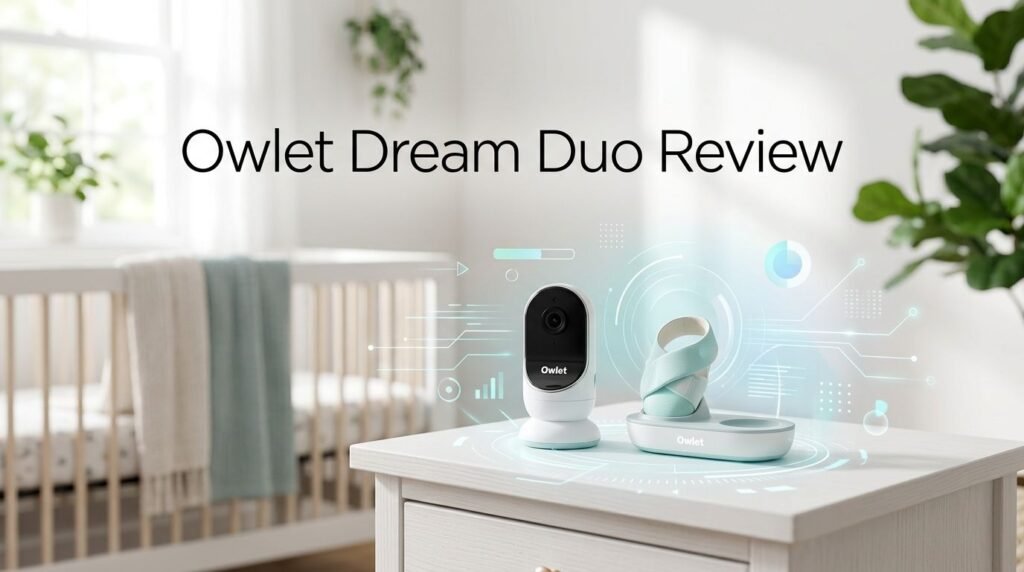
The Owlet Dream Duo (Gen 3) pairs the FDA-cleared Dream Sock with a 2K HD Dream Sight camera. Together, they track your baby’s pulse rate, oxygen levels, sleep patterns, and room conditions.
Key Takeaways
- The Owlet Dream Duo (Gen 3) is Owlet’s most advanced system. It combines the FDA-cleared Dream Sock with the 2K HD Dream Sight camera for a full health and video monitoring experience. No other baby monitor on the market bundles wearable health tracking with this level of video quality in one package.
- FDA clearance sets it apart from most competitors. The Dream Sock is the first of its kind to receive FDA clearance for pulse rate and oxygen level monitoring. This gives parents medical-grade accuracy rather than estimates or approximations.
- The 2K HD camera is a major upgrade. The Dream Sight camera delivers sharp daytime and nighttime video with wide-angle coverage. You can zoom in and still get a clear image of your baby’s face and body position.
- The Owlet Dream App is the control center for everything. You view live video, check health readings, set alerts, and review sleep trends through one app. The app uses 256-bit encryption for data security.
- The price is the biggest hurdle for most families. At $379.99, the Dream Duo costs more than most standalone baby monitors. However, it replaces two separate products (a health tracker and a video monitor), which can justify the cost.
- Battery life and sock fit can be concerns for some parents. The Dream Sock needs regular charging, and some parents report that the sock can shift on very active babies. Proper sizing helps reduce this issue.


Last update on 2026-10-14 / Affiliate links / Images from Amazon Product Advertising API Some of the links on this website are affiliate links, which means that at no additional cost to you, I earn a commission if you click through and make a purchase. I only recommend products and services that I believe will add value to my readers. Thank you for your support!
What Is the Owlet Dream Duo?
The Owlet Dream Duo is a two-part smart baby monitoring system. It includes the Dream Sock and the Dream Sight camera. The Dream Sock wraps around your baby’s foot and tracks pulse rate, blood oxygen levels, and sleep quality. The Dream Sight camera streams 2K HD video with night vision to your smartphone.
Owlet designed this system for parents of healthy infants between 1 and 18 months old weighing 6 to 30 pounds. The sock uses pulse oximetry technology, similar to what hospitals use. It sends real-time health data to the Owlet Dream App on your phone.
The Gen 3 version is the newest release. It improves on the Gen 2 model with a better camera, updated sock design, and a more responsive app. The entire system connects through your home Wi-Fi network. There are no standalone parent units or handheld screens. Everything runs through the app.
This makes it a great fit for tech-savvy parents who already rely on their phones. It may not be ideal for parents who prefer a dedicated monitor screen they can carry around the house.
Owlet Dream Sock: How Does It Work?
The Dream Sock is the standout component of this bundle. It uses pulse oximetry to read your baby’s heart rate and blood oxygen saturation through the skin on their foot. The technology is similar to the clip sensors used in hospitals, but it’s built into a soft, flexible fabric sock.
You slide the sock onto your baby’s foot and secure it with a gentle wrap. The sensor sits on top of the foot. It pairs with a base station that glows green when readings are normal. If pulse rate or oxygen drops below a set threshold, the base station turns red and sends an alert to your phone.
The sock collects data continuously while your baby sleeps. You can review sleep history, oxygen trends, and pulse rate patterns inside the app. This gives you a clear picture of your baby’s sleep health over days and weeks.
One important note: the Dream Sock is FDA-cleared, not FDA-approved. Clearance means the device has been tested and shown to be safe and effective for its stated purpose. It is meant for use with healthy infants. It is not a medical device for diagnosing or treating conditions.
Dream Sight Camera: Video Quality and Features
The Dream Sight camera is the visual half of the Dream Duo system. It records in 2K HD resolution, which is sharper than the 1080p cameras found in most competing monitors. This extra resolution matters most when you zoom in to check on your baby’s position or expression.
Night vision is clear and detailed. The camera uses infrared LEDs to light up the room without disturbing your baby. You get a good view of your baby’s face, chest movement, and overall position even in a completely dark nursery.
The camera also includes a built-in temperature sensor that monitors nursery conditions. You receive alerts if the room gets too hot or too cold. A two-way audio feature lets you talk to your baby or play soothing sounds remotely through the app.
The Dream Sight sits on a flat surface or mounts on a wall. It has a 130-degree wide-angle lens that covers most cribs without needing to pan or tilt. The camera does not have mechanical pan-tilt-zoom, so placement matters. Choose a position that gives you a full view of the crib.
Setting Up the Owlet Dream Duo
Setup takes about 15 to 20 minutes for most parents. You start by downloading the Owlet Dream App on your iOS or Android device. The app walks you through each step with on-screen instructions.
First, you plug in the base station and connect it to your Wi-Fi network. Then you pair the Dream Sock sensor to the base station. The sock charges on the base station, and a full charge takes roughly 90 minutes. A single charge lasts about 16 hours of continuous use.
Next, you set up the Dream Sight camera. You plug it in, connect it to Wi-Fi through the app, and position it near the crib. The app shows you a live preview so you can adjust the angle before locking it in place.
The entire process is straightforward. Most parents report that the app instructions are clear and easy to follow. The most common setup issue involves Wi-Fi signal strength. The camera and base station both need a stable 2.4 GHz Wi-Fi connection. A weak signal can cause video lag or dropped connections.
Top 3 Alternatives for Owlet Dream Duo
If the Owlet Dream Duo doesn’t fit your budget or preferences, these three alternatives offer strong performance at different price points.
Nanit Pro Smart Baby Monitor is one of the most popular Wi-Fi baby monitors available. It tracks breathing motion without a wearable using a special breathing band placed on the crib mattress. The camera records in 1080p HD with excellent night vision. It also offers detailed sleep analytics through its app.

Last update on 2026-10-14 / Affiliate links / Images from Amazon Product Advertising API Some of the links on this website are affiliate links, which means that at no additional cost to you, I earn a commission if you click through and make a purchase. I only recommend products and services that I believe will add value to my readers. Thank you for your support!
Infant Optics DXR-8 PRO is the best option for parents who want a dedicated screen and no Wi-Fi connection. It uses a secure FHSS wireless signal that cannot be hacked. The 5-inch display shows 720p HD video with active noise reduction. This is a simple, reliable choice for families who want privacy.

Last update on 2026-10-14 / Affiliate links / Images from Amazon Product Advertising API Some of the links on this website are affiliate links, which means that at no additional cost to you, I earn a commission if you click through and make a purchase. I only recommend products and services that I believe will add value to my readers. Thank you for your support!
Miku Pro Smart Baby Monitor tracks breathing and sleep without any wearable device. It uses proprietary SensorFusion technology to detect your baby’s breathing patterns through the camera alone. It records in 1080p HD and offers strong encryption. This is a good pick for parents who dislike wearable sensors.

Last update on 2026-09-08 / Affiliate links / Images from Amazon Product Advertising API Some of the links on this website are affiliate links, which means that at no additional cost to you, I earn a commission if you click through and make a purchase. I only recommend products and services that I believe will add value to my readers. Thank you for your support!
The Owlet Dream App Experience
The Owlet Dream App is the hub for the entire Dream Duo system. You use it to view live video, check real-time health data, set notification preferences, and review sleep history. The app is available on both iOS and Android.
The home screen shows a live camera feed with current pulse rate and oxygen readings displayed as overlays. You can tap into detailed views for each metric. The sleep history section shows nightly breakdowns with total sleep time, wakings, and oxygen and pulse trends.
Notifications are customizable. You can set alerts for low oxygen, high or low pulse rate, camera motion, sound detection, and room temperature changes. The app sends push notifications to your phone, and the base station also provides visual and audible alerts.
One standout feature is the Predictive Sleep Technology. It uses your baby’s historical data to estimate sleep patterns and suggest optimal bedtime windows. This is helpful for parents trying to establish a consistent sleep routine.
The app uses 256-bit encryption and requires a secure login. Owlet does not sell user data. The privacy setup is one of the strongest in the baby monitor category.
Battery Life and Charging
Battery life is a practical concern with any wearable baby product. The Dream Sock sensor holds a charge for approximately 16 hours on a single charge. For most families, this covers an entire night plus a long nap.
Charging happens on the base station. You place the sensor on the base, and it takes about 90 minutes to reach a full charge. The base station itself plugs into a wall outlet and stays powered at all times.
The Dream Sight camera does not have a battery. It runs on continuous power through a USB-C cable connected to a wall adapter. This means the camera never dies, but it does need a nearby outlet.
A common parent tip is to charge the sock sensor during the morning while your baby is awake. This way, it’s ready for afternoon naps and the full night ahead. Forgetting to charge the sock is the most reported frustration among parents.
Comfort and Fit of the Dream Sock
The Dream Sock comes in two sizes. Size 1 fits babies from 6 to 12 pounds (roughly newborn to 3 months). Size 2 fits babies from 12 to 30 pounds (roughly 3 to 18 months). The Gen 3 bundle includes both sizes, so you don’t need to buy a replacement as your baby grows.
The sock is made from soft, breathable fabric. It wraps around the baby’s foot with a gentle hook-and-loop closure. The sensor sits on the top of the foot and stays in place during normal sleep movement.
Most parents say their babies adjust to the sock quickly. Some babies kick or fuss during the first few nights, but this usually stops within a week. The material does not cause overheating. Owlet designed the sock with ventilation in mind.
Active sleepers can sometimes shift the sock out of position. If this happens, the app sends an alert that the sock has lost a good reading. Proper sizing and snug placement reduce this problem. Make sure the sensor window sits flat against the skin for the best results.
Accuracy and Reliability of Health Readings
The Dream Sock’s health readings are clinically validated. Owlet conducted studies to earn FDA clearance, and the sock met accuracy standards for pulse oximetry in healthy infants. This puts it ahead of many consumer wellness trackers that lack any clinical validation.
Pulse rate accuracy is strong. The sock consistently reads within a close range of hospital-grade equipment during normal conditions. Oxygen saturation readings are also reliable during stable sleep. However, movement, poor sock placement, and cold feet can affect readings.
False alerts do happen. If the sock shifts during sleep or if your baby’s foot is too cold, the sensor may give a low-confidence reading and trigger a notification. These are not dangerous, but they can wake you up unnecessarily.
The base station’s color-coded glow system adds a layer of quick visual feedback. Green means all readings are normal. Yellow means the sock needs adjustment. Red means a health metric has dropped below the threshold. This simple system lets you check status without opening your phone.
Privacy and Security Features
Smart baby monitors connect to the internet, and that raises valid privacy concerns. Owlet addresses this with several strong security measures.
The Dream Sight camera uses 256-bit TLS/SSL encryption for all video streams. This is the same level of encryption used by banks and financial institutions. No one can intercept your video feed without the encryption key.
The Owlet Dream App requires secure authentication every time you log in. You can enable two-factor authentication for extra protection. Owlet does not sell or share user health data with third parties.
The camera does not store video locally or in the cloud by default. You see a live feed only. If you want to save clips, you need to enable that feature manually. This reduces the risk of stored footage being accessed by unauthorized users.
Compared to many Wi-Fi baby monitors on the market, Owlet’s privacy setup is among the strongest. Parents who worry about camera hacking or data breaches will appreciate the attention to security in this system.
Owlet Dream Duo Gen 2 vs Gen 3
If you’re shopping on a budget, you may find the Gen 2 Dream Duo at a lower price. Here’s how the two generations compare.
The Gen 3 uses the Dream Sight camera with 2K HD resolution. The Gen 2 uses the Owlet Cam 2 with 1080p HD resolution. The Gen 3 camera produces noticeably sharper images, especially during zoom and in low light conditions.
The Gen 3 sock sensor has an updated design with improved skin contact and fewer false alerts. The Gen 2 sock works well but may trigger more repositioning notifications, especially with very small or very active babies.
The app experience is also smoother on Gen 3. Owlet updated the interface with faster loading, better sleep trend charts, and more responsive alerts. Both generations use the same app, but Gen 3 hardware takes full advantage of recent software updates.
Price difference is the main reason to consider Gen 2. The Gen 2 bundle often sells for $50 to $100 less than the Gen 3. If you don’t need 2K video and are comfortable with the older sock design, Gen 2 still delivers solid performance.
Who Should Buy the Owlet Dream Duo?
The Owlet Dream Duo is best suited for first-time parents who want maximum peace of mind. The combination of health tracking and video monitoring covers more ground than any single baby monitor can provide.
Parents of babies with known health concerns may also benefit. While the Dream Sock is cleared for use with healthy infants only, the real-time pulse and oxygen data can provide reassurance between pediatrician visits. Always consult your doctor before relying on any consumer health device.
Tech-forward families who are comfortable using smartphone apps will enjoy the Dream Duo experience. The app is the only way to interact with the system. There is no handheld screen or standalone parent unit.
This product is not ideal for parents on a tight budget. At $379.99, it is one of the most expensive baby monitors available. It is also not the right choice for families with poor Wi-Fi coverage in the nursery area. A weak signal leads to frustrating delays and dropped connections.
Pros and Cons of the Owlet Dream Duo
Pros: The FDA-cleared Dream Sock delivers real health data, not just estimates. The 2K HD camera provides the sharpest video in the baby monitor category. The app is well-designed, responsive, and secure. The base station’s color glow system offers instant visual feedback without checking your phone. Sleep trend analytics help parents build better routines over time.
Cons: The price is high compared to most baby monitors. The system requires a stable Wi-Fi connection and a smartphone. There is no standalone display screen. The sock needs daily charging. Some very active babies can shift the sock during sleep, causing occasional false alerts. The camera lacks mechanical pan-tilt-zoom.
Overall, the strengths outweigh the weaknesses for parents who value health data and high-quality video. The drawbacks matter most to parents who prefer simplicity or who operate on a limited budget.
Is the Owlet Dream Duo Worth the Price in 2026?
At $379.99, the Owlet Dream Duo (Gen 3) is a premium purchase. But consider what you’re getting: an FDA-cleared wearable health tracker, a 2K HD video camera, a smart base station, and a full-featured app with sleep analytics and encrypted security.
If you bought a standalone pulse oximeter, a high-end Wi-Fi baby camera, and a sleep tracking service separately, you would likely spend more than $400. The Dream Duo bundles all of this into one integrated system with a single app.
Parents who used the Dream Duo consistently report that it reduced nighttime anxiety and helped them sleep better. Knowing your baby’s oxygen and pulse rate are normal lets you rest instead of constantly checking the crib.
The value also depends on your family’s needs. If you only want a video monitor, there are excellent options under $200. If you want both health tracking and video, the Dream Duo remains the most complete package on the market in 2026.
Final Verdict on the Owlet Dream Duo
The Owlet Dream Duo (Gen 3) earns its place as one of the best smart baby monitors available in 2026. The FDA-cleared Dream Sock gives parents real, validated health data. The Dream Sight camera delivers sharp 2K video day and night. The app ties everything together with smart alerts, sleep tracking, and strong privacy protection.
It is not cheap. It is not simple. It requires a smartphone and a good Wi-Fi connection. But for parents who want the most information possible about their baby’s well-being, nothing else on the market comes this close to a complete monitoring solution.
FAQs
Is the Owlet Dream Duo FDA Approved?
The Owlet Dream Sock is FDA-cleared, which is different from FDA-approved. FDA clearance means the device passed safety and effectiveness testing for its intended use. The Dream Sock is cleared for tracking pulse rate and oxygen in healthy infants aged 1 to 18 months weighing 6 to 30 pounds. It is not a diagnostic or treatment device.
Can the Owlet Dream Sock Prevent SIDS?
No. The Owlet Dream Sock is not designed to prevent SIDS. The American Academy of Pediatrics does not recommend consumer monitoring devices as a SIDS prevention strategy. The Dream Sock tracks pulse rate and oxygen saturation. It alerts you when readings fall below set thresholds. Always follow safe sleep guidelines from your pediatrician.
Does the Owlet Dream Duo Require a Subscription?
As of 2026, the Owlet Dream App provides core features without a paid subscription. You get live video, real-time health readings, and base station alerts included with your purchase. Owlet has offered optional premium features in the past, so check the current app listing for the latest details.
How Long Does the Dream Sock Battery Last?
The Dream Sock battery lasts approximately 16 hours on a full charge. A full recharge on the base station takes about 90 minutes. Most parents charge the sock in the morning while the baby is awake so it’s ready for naps and nighttime sleep.
Can I Use the Owlet Dream Duo With Twins?
Yes, but you need two separate Dream Sock sensors and base stations. One sock and base station monitors one baby. The Dream Sight camera can cover both cribs if they are close together. You can manage both socks through the same Owlet Dream App on your phone.
Does the Owlet Dream Duo Work Without Wi-Fi?
The base station and Dream Sock can track health readings and display alerts through the color glow system without Wi-Fi. However, the camera, app, live video, and smartphone notifications all require an active Wi-Fi connection. Without Wi-Fi, you lose most of the system’s smart features.

Hello everyone my name is Alenya and i am a gadget discovering Enthusiast 🐻🐻