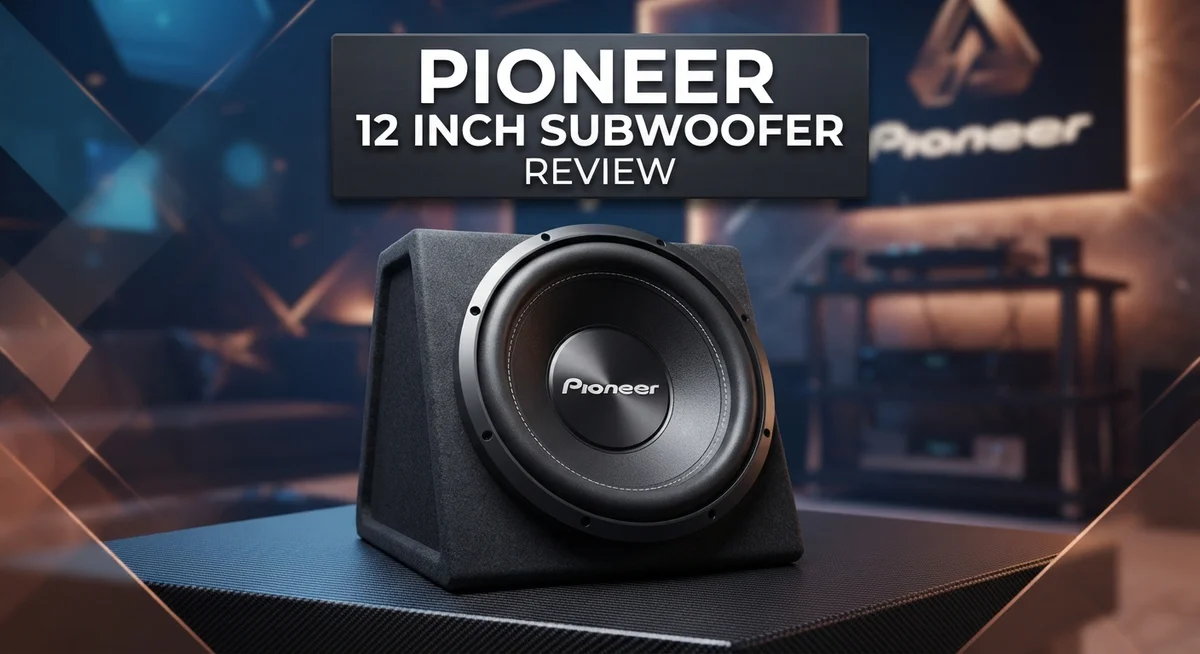
Pioneer 12 Inch Subwoofer Review: Worth the Splurge?
Are you searching for a subwoofer that delivers punchy, clean bass? The Pioneer 12 inch subwoofer might be exactly what your car audio setup needs.
This subwoofer brings deep, powerful sound to any vehicle. It stands out because of its solid build and strong performance.
Pioneer designed these subwoofers with real bass lovers in mind. Models like the TS-A301D4 feature a dual voice coil and a heavy magnet for extra punch.
Other variants, such as the TS-W12PRS, use solid metal construction. This makes them tough and reliable for daily use.
In a Nutshell
- Dual voice coil design gives you flexible wiring options for different amp setups.
- The IMPP cone models handle 500W continuous power with ease, making them solid for daily bass needs.
- Pro, Z, and D line variants carry a strong reputation among car audio fans.
- You will get clean, punchy bass without heavy distortion at higher volumes.
- Pair this sub with a decent external amplifier to unlock its full potential.
- Compared to rivals like the Rogersound Labs Speedwoofer 10S MKII, this Pioneer model focuses more on car audio performance.
- Build quality stays consistent across most Pro/Z/D models, though exact specs can vary by generation.
- This subwoofer works well for listeners who want strong output without overcomplicating their setup.
Build Quality and Construction
The Pioneer 12 inch subwoofer stands out because of its solid metal construction and heavy-duty components. The frame uses substantial metal parts that resist damage during installation and daily use. This means your subwoofer stays reliable for years without falling apart.


Last update on 2026-07-19 / Affiliate links / Images from Amazon Product Advertising API Some of the links on this website are affiliate links, which means that at no additional cost to you, I earn a commission if you click through and make a purchase. I only recommend products and services that I believe will add value to my readers. Thank you for your support!
The TS-A301D4 model features a 90 oz double-stack magnet system. This magnet design pulls harder on the voice coil, which creates tighter bass response. You get cleaner sound instead of muddy, loose bass that rattles around.
Pioneer uses IMPP cone technology on many of their 12 inch models. IMPP stands for Injection Molded Polypropylene, a material that resists moisture and heat damage. Car environments get hot and humid, so this material choice matters for long-term durability.
The dual voice coil design appears on several Pioneer variants. This construction allows the cone to move with more control and precision. You hear the difference when bass notes sound defined instead of blurry.
The TS-W12PRS delivers solid metal construction throughout its entire housing. The cabinet does not flex or vibrate on its own, which keeps sound quality consistent. A rigid enclosure prevents unwanted rattling that ruins your listening experience.
Internal bracing patterns support the cone and magnet assembly. This keeps all parts aligned even when the subwoofer works hard at high volumes. Misalignment causes distortion, but proper bracing prevents this problem.
The voice coil sits in a copper-lined gap on most Pioneer models. This design reduces heat buildup during extended listening sessions. Cooler voice coils last longer and perform better over time.
Pioneer builds these subwoofers to handle serious power demands. The construction methods support peak power levels up to 1,600W without structural failure. This means the frame, cone, and magnet assembly work together as one solid unit.
Overall, the build quality reflects Pioneer’s experience in car audio. You get metal components instead of cheap plastic parts. The engineering supports reliable performance whether you drive daily or take your vehicle to car audio competitions.
Sound Performance and Bass Output
The Pioneer 12 inch subwoofer delivers bass that cuts through music with impressive clarity. You get tight, controlled lows that don’t muddy your overall sound mix. The subwoofer handles both subtle bass lines and hard-hitting kick drums without losing detail.
Peak power reaches 1,600W on many models, which means serious output when you need it. The continuous power rating sits at 500W, so you get sustained performance during long listening sessions. This power handling makes the subwoofer capable of filling medium to large spaces with consistent bass energy.
The dual voice coil design plays a key role in bass performance. You can wire the subwoofer to match your amplifier’s output impedance, which optimizes power transfer. This flexibility means cleaner bass reproduction and better integration with your existing audio system.
IMPP cone technology keeps distortion low across the frequency range. The cone material resists deformation under high pressure, so bass stays punchy even at maximum volume. You won’t hear cone breakup or unwanted noise when the subwoofer works hard.
The 90 oz double stack magnet system on certain models provides strong magnetic force. Stronger magnets mean faster cone movement and more precise bass control. Your music gets that snappy, responsive feel rather than mushy, delayed bass.
Internal bracing and copper lined voice coil gaps keep everything stable during operation. These engineering choices reduce unwanted vibrations that can cloud bass quality. The result is cleaner output across the entire frequency range.
Pairing this subwoofer with a solid external amplifier unlocks its true potential. The amp delivers consistent power to the voice coils, which keeps performance steady. Without adequate amplification, you won’t experience the full bass capabilities this subwoofer offers.
The solid metal construction throughout the housing absorbs internal vibrations effectively. Heavy duty components resist fatigue over time, so bass quality remains consistent year after year. You get reliable, powerful bass performance that doesn’t fade with use.
Power Handling and Amplification Requirements
The Pioneer 12 inch subwoofer needs proper amplification to shine. Most models in this line work best with an external amplifier rather than relying on built-in power alone.
The IMPP cone models deliver 500W of continuous power output. This means they can run all day without overheating or losing performance. When you push them harder, these subs reach 1,400 to 1,600W of peak power for those intense bass moments.
Understanding your amplifier’s power rating matters here. You want an amp that matches or slightly exceeds what the subwoofer can handle. A weak amplifier will leave this sub performing below its potential. A quality external amplifier brings out the clean, punchy bass that Pioneer designed into these units.
The dual voice coil design on many Pioneer models gives you flexibility. You can wire the voice coils in different ways depending on your amplifier setup. This means you can run it at 2 ohms, 4 ohms, or other impedance levels. That flexibility helps you get the most power from whatever amp you already own.
Heat management becomes important when you run high power through any subwoofer. The copper lined voice coil gaps on Pioneer models help dissipate heat effectively. This keeps the coils cool during extended listening sessions. Internal bracing patterns also support stable operation under serious power demands.
The 90 oz double stack magnet system found on the TS-A301D4 provides strong magnetic force. This helps the cone move precisely even at high power levels. Precision matters because it keeps distortion low across the frequency range.
Most car audio fans find that pairing this Pioneer sub with a solid amplifier unlocks its true capability. You do not need an expensive powerhouse amp, but a decent quality unit makes a real difference. The subwoofer responds well to clean power delivery. When everything works together properly, you get impressive bass output with minimal distortion.
Top 3 Alternatives
Subwoofer Rockford Fosgate

Last update on 2026-07-16 / Affiliate links / Images from Amazon Product Advertising API Some of the links on this website are affiliate links, which means that at no additional cost to you, I earn a commission if you click through and make a purchase. I only recommend products and services that I believe will add value to my readers. Thank you for your support!
ORION XTR12SWD4 XTR Series 12″ Shallow Subwoofer

Last update on 2026-07-19 / Affiliate links / Images from Amazon Product Advertising API Some of the links on this website are affiliate links, which means that at no additional cost to you, I earn a commission if you click through and make a purchase. I only recommend products and services that I believe will add value to my readers. Thank you for your support!
Sony Subwoofer Active

Last update on 2026-07-16 / Affiliate links / Images from Amazon Product Advertising API Some of the links on this website are affiliate links, which means that at no additional cost to you, I earn a commission if you click through and make a purchase. I only recommend products and services that I believe will add value to my readers. Thank you for your support!
Installation and Setup Considerations
Installing a Pioneer 12 inch subwoofer requires careful planning and attention to detail. You need to decide between a sealed or ported enclosure setup before you begin. Sealed boxes offer tighter bass response. Ported enclosures deliver louder output at lower frequencies.
Space availability matters significantly in your installation location. Measure your trunk, cabin, or room dimensions carefully. The Pioneer 12 inch sub fits in most standard enclosures, but tight spaces may limit your options. Consider airflow around the subwoofer to prevent heat buildup during extended use.
Amplifier placement and wiring play critical roles in your setup success. Run power cables separately from audio signal wires to avoid noise interference. Use quality RCA cables for your audio input connections. Keep the remote turn-on wire away from power lines whenever possible.
Grounding your amplifier properly prevents electrical noise and hum issues. Connect the ground cable directly to the vehicle frame or room electrical panel. Remove paint or rust from the connection point to ensure solid contact. A poor ground connection ruins your sound quality immediately.
Enclosure construction affects how your Pioneer subwoofer performs. Build or purchase an enclosure that matches your listening environment. Improper box design can cause boomy or muddy bass response. Seal all internal joints with caulk to prevent air leaks that reduce output.
Positioning your subwoofer in a corner typically produces stronger bass response. Corner placement reinforces low frequencies naturally. However, this may create uneven bass distribution in larger rooms. Experiment with different locations to find the sweet spot in your space.
Ventilation holes in your enclosure need proper sizing. Undersized ports create port noise and reduce output capability. Oversized ports allow air to escape too freely, weakening bass impact. Calculate port dimensions based on your specific enclosure volume and tuning frequency.
Test your installation before permanently securing everything. Check all connections for tightness. Verify that your amplifier powers on and responds to audio signals. Run music through your system at low volume initially. Gradually increase volume to ensure everything operates smoothly without distortion or rattling sounds.
Value for Money and Pricing
When you compare the Pioneer 12 inch subwoofer to other options in its class, several factors stand out beyond the basic specs. The continuous power output of 500W delivers solid performance for most car audio setups. Peak power reaching 1,600W on many models means you get serious punch when music demands it.
The real value emerges from what Pioneer includes in the package. You get a 90 oz double stack magnet system on certain models. This magnetic force translates to cleaner bass reproduction. The IMPP cone technology keeps distortion low, so your music stays clear even at high volumes.
Construction quality matters more than you might think when evaluating long term satisfaction. The solid metal components on models like the TS-W12PRS resist damage from daily use. Heavy duty builds hold up better inside car trunks and enclosures. You won’t find cheap plastic parts that fail after a few months.
The dual voice coil design gives you installation flexibility. You can wire this subwoofer in different ways depending on your amplifier setup. This adaptability means the Pioneer works well across various car audio systems. Whether you have a 2 ohm or 4 ohm amplifier, you have options.
External amplifier requirements do matter for your decision. Pairing this subwoofer with a solid external amp unlocks its true capability. The investment in proper amplification pays off through better bass response and cleaner sound. Your amplifier’s power rating should match or slightly exceed what the subwoofer can handle.
Heat management becomes important when you run high power through the system. The copper lined voice coil gaps keep everything stable during operation. This design choice prevents voice coil failure from extended use.
Real world performance speaks louder than specs alone. Users consistently report impressive bass quality across different Pioneer 12 inch models. The Pro, Z, and D line variants earn strong recommendations from car audio enthusiasts. You get dependable performance that lasts through years of regular listening. This reliability factor significantly impacts your overall satisfaction with the purchase.
Pros and Cons
The Good Stuff
Pioneer 12 inch subwoofers deliver clean, impressive bass quality that car audio fans consistently praise. You get solid metal construction throughout these models, which means they hold up well over time. The high output capability stands out when you consider what you’re getting in the package.
These subs perform well in real world conditions. The IMPP cone design produces punchy bass without distortion at moderate volumes. Dual voice coil options give you flexibility when wiring to your amplifier setup. Many owners report that the bass response feels tight and controlled rather than boomy or muddy.
The Pro and Z line variants have earned strong reputations among car audio enthusiasts. You’ll find plenty of positive feedback from people who’ve installed these in their vehicles. The substantial magnet system works hard to deliver consistent performance across different music genres.
The Not So Good Stuff
Performance varies noticeably between different model generations and variants. What works great in one generation might disappoint in the next. This inconsistency makes it harder to predict exactly what you’ll experience.
These subwoofers absolutely need a decent external amplifier to shine. Without proper amplification, you won’t unlock their true potential. Underpowering a Pioneer 12 inch sub leads to flat, lifeless bass that won’t impress you.
Limited detailed specifications appear in many available reviews online. This gap makes comparison shopping more difficult than it should be. You might struggle to find exact frequency response charts or detailed impedance information for some models.
Heat management becomes critical when you push these subs hard over extended periods. Running maximum power continuously can stress the voice coils and magnet system. Proper ventilation in your enclosure helps prevent performance degradation from heat buildup.
Installation complexity shouldn’t be underestimated either. Getting everything wired correctly and grounded properly requires attention to detail. Mistakes during setup can result in noise, hum, or disappointing sound quality that masks the subwoofer’s actual capabilities.
Who Should Buy It
A Pioneer 12 inch subwoofer works best for car audio enthusiasts who want clean, powerful bass without excessive complexity. If you drive a sedan, coupe, or compact SUV, this sub fits your space constraints well.
You should buy this model if you already own a quality external amplifier. The Pioneer performs best when paired with decent amp power. Solo amp buyers will notice a real difference in output and clarity.
DIY installers appreciate this subwoofer because the dual voice coil design offers flexibility. You can wire it in multiple configurations depending on your amplifier’s impedance needs. This adaptability makes installation planning simpler than some competitors offer.
Car audio fans who prioritize sound quality over maximum volume will love what Pioneer delivers. The bass comes through clean and detailed rather than boomy or muddy. Your music stays tight and controlled even at higher volumes.
Truck owners with cargo space benefit from this 12 inch option. You have room for a solid enclosure without sacrificing your entire trunk. The subwoofer handles various box types effectively, from sealed to ported designs.
Budget conscious buyers who refuse to compromise on construction quality should consider this model. Pioneer uses substantial metal components and solid engineering throughout. You get durability that lasts years of regular use.
Upgrading from factory car speakers? This subwoofer transforms your listening experience. Factory systems lack the bass depth and impact that aftermarket subs provide. Even modest external amplifiers unlock noticeable improvements.
Avoid this model if you want a plug and play solution with zero installation effort. You need basic electrical knowledge and proper tools for setup. Grounding your amplifier correctly matters for eliminating noise issues.
You should skip this option if your vehicle has extremely limited trunk space. A 12 inch sub requires adequate enclosure volume to perform properly. Cramped installations compromise the sound quality you paid for.
Casual listeners who rarely turn up the volume might find this subwoofer overkill. You won’t experience the full benefits unless you actually use the power available. This is a tool for people who care about their car audio system.
Final Verdict
Pioneer has built a strong name in car audio. This 12 inch subwoofer keeps that reputation alive. It gives clear bass without sounding muddy or weak.
The build quality feels solid every time you touch it. Metal parts and a sturdy frame make this sub feel like it belongs in a serious setup.
Compared to brands like Rogersound Labs, Pioneer still holds its own. It may not match every spec sheet, but real world sound often speaks louder than numbers.
This subwoofer suits people who want a dependable upgrade. It fits well into systems where you already have decent gear around it.
Trust in the brand matters too. Pioneer has years of experience making car audio gear that lasts. That history gives buyers confidence beyond just one product.
If you want a sub that grows with your system, this one fits. You can pair it with better amps later and still get strong results.
Some listeners may want more plug and play simplicity. If that describes you, look at options with built in amplification instead.
For most car audio fans though, this subwoofer earns its spot. It rewards people who care about sound quality and are willing to build a proper setup around it.
Final thoughts come down to this. Pioneer delivers a subwoofer that performs well when treated right. It is not the flashiest option on the market, but it stays reliable and satisfying over time.
If you already trust Pioneer as a brand, this model will not let you down. It offers a strong middle ground between basic factory sound and high end audiophile gear.
In short, this 12 inch subwoofer earns a solid recommendation. It fits car audio enthusiasts who want dependable bass without unnecessary complications. Pair it with the right amplifier, and it will reward you with sound that feels both powerful and clean.
Frequently Asked Questions
What power output do Pioneer 12 inch subwoofers deliver?
Pioneer’s 12 inch models typically handle 500W continuous power. Peak output reaches 1,400 to 1,600W depending on your specific model. This means you get substantial bass energy without needing an enormous amplifier. The dual voice coil design on models like the TS-A301D4 gives you flexibility in how you wire the sub to your system.
Do these subwoofers need an external amplifier?
Yes, these subs perform best with a dedicated external amplifier. Factory car audio systems rarely provide enough clean power to unlock what Pioneer’s 12 inch models can do. A quality amplifier transforms the bass from decent to impressive. This requirement separates serious car audio fans from casual listeners.
Which Pioneer 12 inch model should I choose?
The Pro, Z, and D line variants all earn strong reputations. The TS-W12PRS offers solid metal construction and heavy-duty build quality. The TS-A301D4 features the 90 oz double-stack magnet and dual voice coil setup. Your choice depends on your amplifier setup and installation space. Check which model fits your vehicle and your existing audio components.
How does bass quality compare to other brands?
Pioneer holds its ground against competitors like Rogersound Labs. You get clean, powerful bass that prioritizes sound quality over maximum volume. The IMPP cone construction delivers consistent performance. Many listeners find Pioneer’s approach more musical and controlled than aggressive competitors.
Can I install this myself?
DIY installation is possible if you have basic car audio experience. The dual voice coil design offers wiring flexibility. Heat management matters during extended listening sessions at high volumes. Take time to plan your installation location and amplifier placement for best results.

Hello everyone my name is Alenya and i am a gadget discovering Enthusiast 🐻🐻