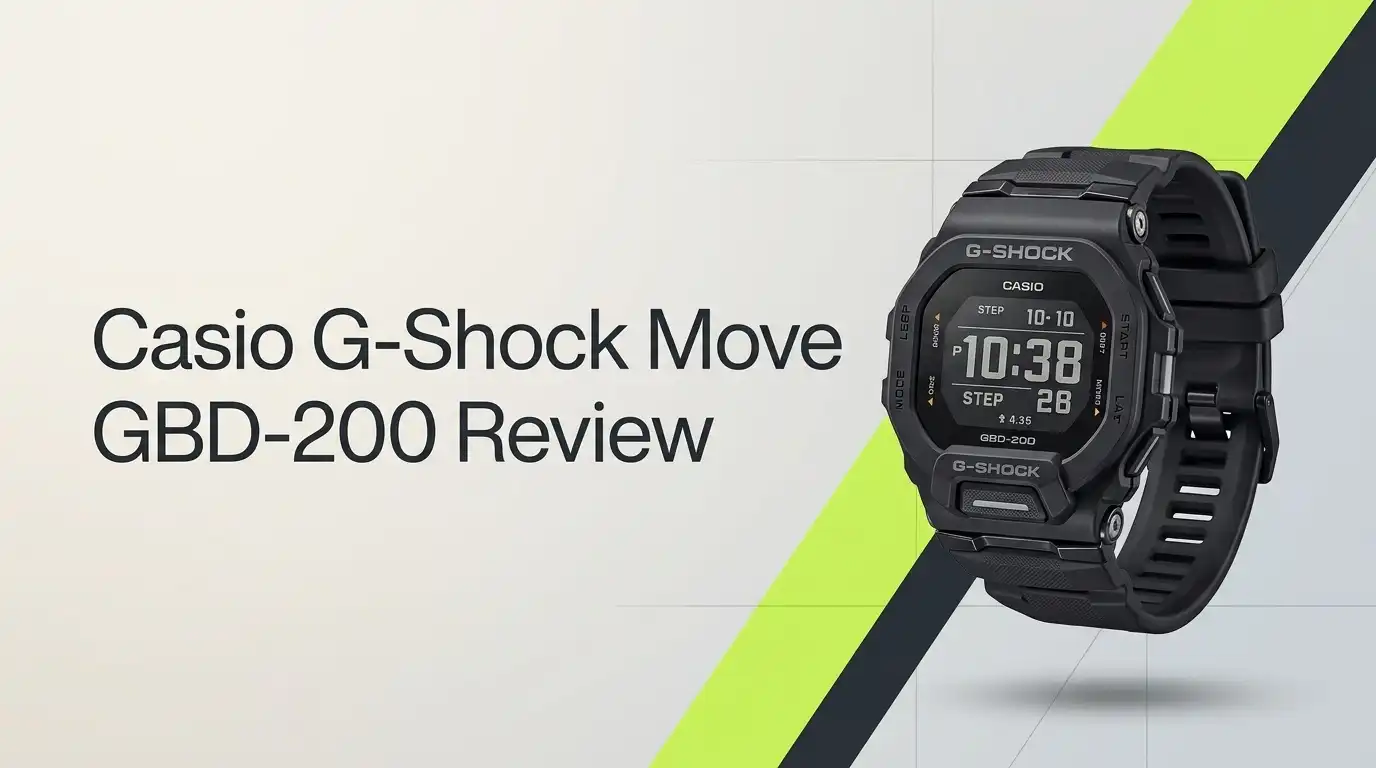
Casio G-Shock Move GBD-200 Review: Is It Still Worth It in 2026?
Looking for a tough watch that also tracks your workouts? The Casio G-Shock Move GBD-200 might be the answer. It blends classic G-Shock toughness with fitness features you can use every day.
This watch has a slim 15mm resin case. It feels light on the wrist. Its 200m water resistance means you can swim or wash your hands without worry.
Inside, you get a bright MIP display that stays easy to read. The watch connects to the G-Shock Move app over Bluetooth. You can track distance, pace, and steps with ease.
Battery life lasts about two years, so you will visit the charger far less often. In this review, we explore how the GBD-200 performs for daily wear, fitness tracking, and everyday comfort.
In a Nutshell
- Water resistance: The watch handles depths up to 200 meters, so swimming and rainy runs pose no problem for this tough G-Shock model.
- Workout tracking: You can monitor distance, pace, and daily steps during every session. Bluetooth GPS correction also helps keep your route data more accurate when you run or cycle outdoors.
- Easy app pairing: The watch connects to the G-Shock Move app over Bluetooth. Your workout data syncs to one place, so you can review progress on your phone without extra setup.
- Comfortable fit: The soft urethane band includes multiple holes for adjustment. Casio lists a maximum wrist size of 215mm, so most people can find a snug and secure fit for long workouts.
- Slimmer design: This model is thinner than older G-Shock MOVE watches. That makes daily wear feel less bulky under a shirt sleeve or during long office hours.
- Honest catch: Some users say the watch interface feels slow and chunky when they browse menus. Smartwatch performance also falls short for some buyers, so think about your must-have features before you decide.
Design and Build
No products found.
Design plays a big role in how a watch feels every day. The Casio G-Shock Move GBD-200 keeps the familiar G-Shock look. Its shape feels sporty, yet it never looks bulky on the wrist.
The case material keeps the total weight low. Many people forget they wear it during long workdays. Light materials also help during workouts, since the watch does not weigh down the arm.
Shock resistance is the core promise of the G-Shock line. Casio built this model to handle drops, knocks, and rough handling. Athletes and outdoor fans often need that peace of mind on every trip.
The dial stays clear at a glance. Simple markings help you check the time quickly. Less clutter means fewer distractions during a run or a gym session.
Buttons on G-Shock watches tend to feel firm and clear. You can press them with gloves on or wet fingers. This helps during cold runs or pool sessions.
Owners with larger wrists should check the maximum wrist size Casio lists. Those with very small wrists should try the watch on first. A fit check helps you avoid a loose or cramped feel.
Compared with slim fitness bands, this watch looks more like a traditional timepiece. Many shoppers want that blend of style and sport. Its rugged frame and classic shape set it apart from smooth devices that look like mini phones.
The watch also suits people who switch between work and play. A sporty look pairs well with a casual shirt or a gym outfit. That flexibility makes daily wear easy.
Keep the band clean after sweaty workouts. Rinse it with fresh water and let it dry in open air. This simple habit protects the material and keeps the watch looking new.
Overall, the design suits daily life. It blends in at the office and still looks right on a trail. Anyone who wants a tough, light tracker will likely feel at home with this build. Try it on for a few days before you decide.
Display and Visibility
Reading a watch quickly matters more than most people think. A runner glances at the screen mid stride, so the display must deliver information in a split second.
The MIP display handles strong daylight with ease. Sunlight often washes out weaker screens, yet this panel keeps its numbers sharp on bright trail runs.
Night workouts need a different approach. The light function helps you read numbers on dark streets, though you must press the button each time.
Large digits make key data easy to scan. Pace and distance appear in clear numbers, so you never need to squint or stop your stride.
Layout matters as much as brightness. A clean screen shows fewer items at once. This focus helps you avoid endless scrolling during fast intervals.
Viewing angle plays a role too. You can usually read the numbers while your arm swings, although extreme tilts reduce contrast on any screen.
Quick reading protects your rhythm. A single glance at your step count or elapsed time keeps you on track without breaking your stride.
Slow menu transitions can hide information at the wrong moment. Some owners wait for the screen to catch up after pressing a button, which feels frustrating mid workout.
Think about your habits. If you mostly check numbers at a glance, this display suits you well. If you want colorful graphics, a touchscreen model may fit better.
Glare can also cause trouble on snowy hikes or on the water. The reflective panel keeps reflections manageable, so you can check your progress without shading the dial with your hand.
Simple habits help too. Wiping the glass after sweaty workouts keeps the screen clear and avoids smudges that blur small text.
Text size matters for older eyes as well. Bold numerals stay readable for many people, so this watch suits a wide range of users.
Overall, the screen values clarity over flash. Strong light performance, large digits, and simple layouts help you focus on movement instead of the watch.
Fitness Tracking Accuracy
Accuracy matters most when you train hard. Many runners and walkers want numbers they can trust. This section explains how the GBD-200 measures your effort and where it may fall short.
The watch uses Bluetooth GPS correction to refine location data during outdoor sessions. Your route and pace depend on that signal.
A slow response can cost you valuable seconds. If you pause or start a run, a delayed reaction may shift your split times.
Smartwatch performance is another concern. Some owners consider it subpar for G-Shock models. This suggests the GBD-200 works best as a training companion rather than a precise lab tool.
Keep your phone nearby during runs. A stable Bluetooth link helps the watch sync data. Weak connections may leave gaps in your log.
Tall buildings and dense trees can block satellite signals. Expect small gaps in those areas. Running on open roads usually gives cleaner routes.
Think about your goals first. Casual walkers may find the data useful for daily habits. Serious racers may want more detail from a dedicated sports watch.
Test the watch on a known course. Measure a track or a marked path before you trust the readings. Compare the result with your phone or a bike computer. This quick check reveals how close the numbers come.
Look for trends, not single sessions. One odd workout means little on its own. Track the same route over several weeks to spot real patterns.
After each session, review the summary in the app. Look for sudden jumps in distance or pace. Those spikes often signal a signal issue rather than real effort.
Wrist position also affects counts. Arm swing, carrying bags, or typing can add extra steps. Keep the watch snug so it stays steady during movement.
Garmin and Fitbit often offer richer sensor data. Casio GBD-300 and models that work with Strava may suit other needs. Compare features before you decide which fits your routine.
Your habits shape the final results. Accuracy depends on how you wear and use the watch. Small changes in setup can make the data far more useful.
Overall, the GBD-200 gives useful guidance for everyday fitness. It may not match top sports watches for pinpoint precision. Set realistic expectations and enjoy the steady motivation it provides.
Top 3 Alternatives
Fitbit Charge 6

Last update on 2026-09-19 / Affiliate links / Images from Amazon Product Advertising API Some of the links on this website are affiliate links, which means that at no additional cost to you, I earn a commission if you click through and make a purchase. I only recommend products and services that I believe will add value to my readers. Thank you for your support!
The Fitbit Charge 6 suits people who want daily health tracking on their wrist. It monitors heart rate, sleep, and steps with ease. Built-in GPS helps you follow runs and walks without your phone. You also get Google apps and smart notifications right on the screen. The slim band feels comfortable during workouts and while you rest. It works well for gym sessions, busy weeks, and quiet evenings alike.
Garmin Forerunner 55

Last update on 2026-10-30 / Affiliate links / Images from Amazon Product Advertising API Some of the links on this website are affiliate links, which means that at no additional cost to you, I earn a commission if you click through and make a purchase. I only recommend products and services that I believe will add value to my readers. Thank you for your support!
The Garmin Forerunner 55 fits runners who love clear data. It offers GPS tracking and training insights that help you plan each week. The battery can last up to two weeks in smartwatch mode. Simple menus make the watch easy to use, even for beginners. You can track pace, distance, and heart rate during every run. Many runners rely on it for steady progress over time.
Amazfit Bip 5

Last update on 2026-10-30 / Affiliate links / Images from Amazon Product Advertising API Some of the links on this website are affiliate links, which means that at no additional cost to you, I earn a commission if you click through and make a purchase. I only recommend products and services that I believe will add value to my readers. Thank you for your support!
The Amazfit Bip 5 offers a lightweight design that feels good all day. It supports GPS and tracks many sports modes, from walking to swimming. Its large display stays easy to read outdoors. The watch also tracks sleep, stress, and blood oxygen levels. Many people enjoy its long battery life for everyday wear. It makes a fine choice for anyone who wants simple, useful fitness tracking.
App Experience and Usability
The G-Shock Move app does much of the heavy lifting. The watch handles quick checks during a session. The phone app shows the bigger picture once your workout ends.
Setup feels straightforward for most owners. You install the app, sign in, and pair the watch with a few taps. Then you choose which health data to share.
Reviewing your workouts is where the app earns its place. Session summaries, step totals, and pace records sit in one spot. You can scroll back through weeks of activity without digging through watch menus.
Trends tell a more useful story than single numbers. Compare your weekly distance with the week before. Small gains add up over a month, and the app makes those patterns easy to spot.
The app also feels less crowded than the watch screen. Information sits in organized panels, so you can browse at your own pace. That calm layout suits people who like to study their data after a run.
Some owners feel the software lags behind the hardware. Menus may feel dated, and certain screens take a moment to load. Think of the app as a practical tool rather than a flashy dashboard.
Notification settings deserve a quick review. Turn on alerts only for the features you actually use. A cluttered phone screen can distract you during training, so trim the list early.
Data sharing with other fitness platforms is another useful angle. Strava-compatible models can send activities to that platform. Check compatibility before you rely on one service for all your training records.
Updates matter too. Keep the app current so bug fixes and improvements arrive on time. A quick check of the app store once a month works well for most people.
Overall, the app suits people who value history over instant feedback. Casual users get clear summaries that show progress. Serious trainers may want a faster companion for detailed analysis.
Pros and Cons
Pros
– Slim case feels lighter than older G-Shock MOVE models.
– Soft urethane band stays comfortable through the whole day.
– Water resistance up to 200m suits pool sessions and rainy runs.
– Battery lasts about two years, so charging stays rare.
– Multiple strap holes fit wrists up to 215mm.
Cons
– Bulky styling may feel heavy on smaller wrists.
– Smartwatch features lag behind dedicated fitness watches.
– Serious athletes may want deeper training metrics.
– Garmin models offer more advanced tracking for the same goals.
Who Should Buy It
This Casio model suits people who want one watch for work, workouts, and weekends. It looks tough enough for a job site, yet it still tracks steps and pace.
People new to tracking often find it a gentle starting point. They can learn their daily habits without facing a crowded screen full of charts.
Gym regulars who lift weights may also appreciate the watch. Its rugged build handles dropped weights, sweaty grips, and chalky hands with ease.
Office workers who walk between meetings can use the step count as a simple guide. They can aim for a daily target and check progress with one glance.
People who want fewer phone checks during the day will value this approach. Key numbers stay on the wrist, so the phone can stay in a pocket.
Frequent travelers can also benefit from this design. It works well in hotel gyms, airports, and new cities where walking becomes the main activity.
Parents who juggle busy family schedules can benefit too. A quick glance shows whether a long day on the move has reached its goal.
Older adults building a gentle walking routine may find the layout easy to read. The clean display keeps daily checks simple and calm.
Students and young professionals often like the rugged look for daily wear. The design suits casual clothes, campus life, and weekend outings.
Who should skip this model? Buyers who need detailed recovery insights may want a different option. This watch focuses on everyday movement rather than deep performance analysis.
Think about your daily routine before you decide. A simple watch fits people who value toughness and clear daily numbers.
Your routine should guide the final choice. If you want a dependable companion for everyday movement, this Casio model earns a close look. Matching the watch to your habits leads to a happier experience over time.
Final Verdict
The Casio G-Shock Move GBD-200 suits people who want one watch for many daily jobs. It fits a morning walk, a work day, and a weekend hike with ease.
Simplicity is its strongest trait. The display stays easy to read at a glance, even during a workout. Clear screens make it simple to check progress on the go.
Durability is another reason to consider it. The resin case feels light, and the watch handles rain and pool sessions without worry. Many owners wear it every day, not just for special occasions.
Long-term use also deserves a look. G-Shock models have a reputation for lasting through years of rough handling. If you plan to keep a watch for a long time, this model fits that plan well.
Still, the watch does not suit everyone. Buyers who need detailed route maps or advanced recovery data should look elsewhere. Think about your main goal before you decide.
Try the watch on in person when you can. Check that the band sits snugly without pinching the skin. Smaller wrists may need a closer fit, so test the strap holes carefully.
Pair the watch with your phone during setup. Spend a few minutes choosing which alerts matter most. This small step keeps your day calm and focused.
Think of this model as a steady partner, not a performance coach. It helps you build habits, track steps, and stay active. For many people, that quiet support is enough.
Choose this watch if you prefer a rugged design, a clear display, and easy daily tracking. Skip it if you want cutting edge smart features. Your routine should guide the final decision.
Frequently Asked Questions
Does this Casio model work with Strava?
Some Casio models pair with Strava, so check the companion app settings first. Confirm the sync option before your first run. Support can change over time, so review the latest app details.
Do I need my phone nearby for accurate tracking?
Yes, the watch relies on Bluetooth GPS correction from your phone. Keep your phone close during walks or runs. This helps the distance and pace readings stay more accurate.
Why does the menu feel slow?
Some owners report a slow, chunky interface. Expect a short pause when you switch screens. Most daily checks, like steps and time, still feel manageable.
How does it compare with a Fitbit?
Fitbit focuses more on all day health data and sleep insights. This Casio focuses on a tough build and a simple screen. Choose based on your goal. Pick Fitbit for health trends, or pick this Casio for a rugged everyday watch.
Is the display easy to read outdoors?
The MIP display earns praise for visibility. It stays clear in bright light, so you can glance at your pace or steps mid-walk. The clean layout also keeps the screen easy to scan.

Hello everyone my name is Alenya and i am a gadget discovering Enthusiast 🐻🐻