Garmin Forerunner 580 Review: Features, Performance & Comparison
Runners want a watch that keeps up with them. The Garmin Forerunner 580 promises to do just that.
This smartwatch blends smart design with serious training tools. It fits right into Garmin’s popular Forerunner lineup.
You get a bright, easy to read display that works in any light. The screen shows your stats clearly, even during a fast morning run.
Built in speaker and microphone let you take calls without your phone. Music storage means you can leave your phone at home too.
In a Nutshell
- Two sizes for every wrist: The watch comes in 42mm and 47mm options. Smaller wristed runners get a fit that feels natural, not bulky.
- Smart training data made simple: You get deep training insights without a confusing interface. Numbers make sense at a glance.
- A middle child with a strong resume: This model sits between other Forerunner watches. It still holds its own on features that matter.
- Early feedback was mixed: Some runners questioned its spot in the lineup right after launch. Real world use tells a different story.
- Strong competition nearby: The Forerunner 265, Forerunner 970, and Venu 4 all compete for the same runners. Each one brings something different to the table.
- Built for daily training, not just race day: This watch handles everyday runs and tougher sessions with equal ease. It fits into a runner’s routine without extra fuss.
Display and Design
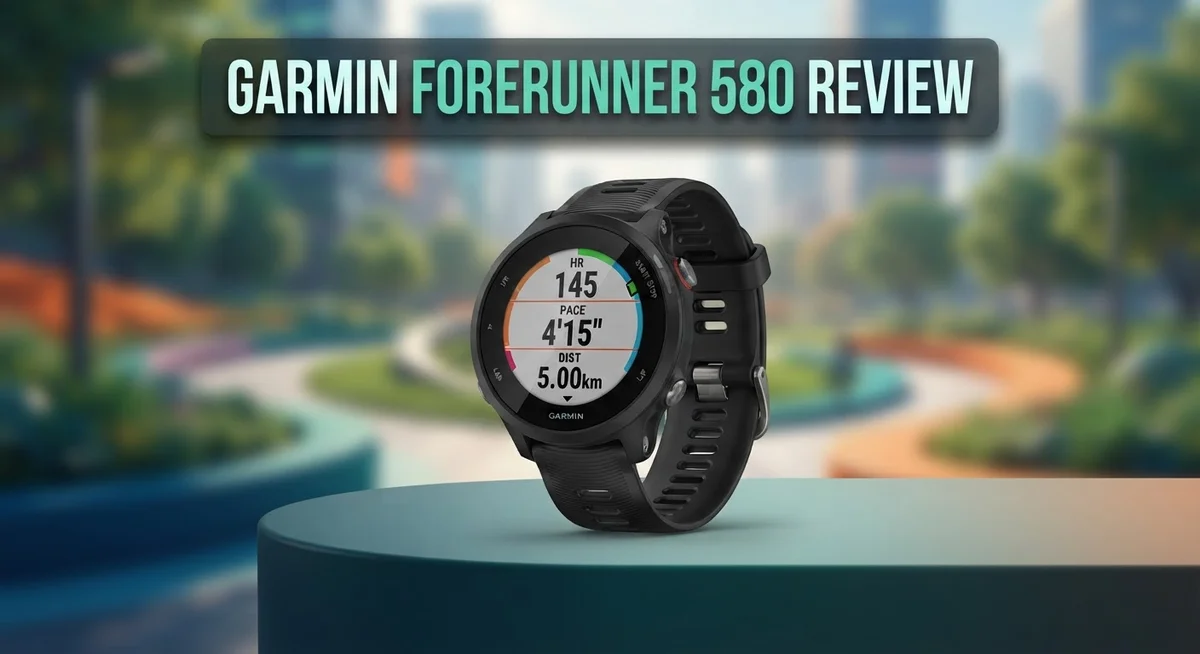
The display on this watch grabs your attention the moment you power it on. The AMOLED screen delivers vibrant colors and deep blacks that make every metric pop off the face. You’ll read your pace, heart rate, and distance without squinting, even when the sun is beating down on your wrist during midday runs.
The watch comes in two distinct sizes to match your wrist perfectly. The 42mm option feels sleek and minimal for runners with smaller frames. The 47mm version gives you more screen real estate and suits those who prefer a bolder presence on their wrist.
Beyond the display itself, the overall design philosophy keeps things simple and functional. The watch doesn’t try to do too much visually. Instead, it focuses on what runners actually need to see during their workouts. The interface lets you customize watch faces so your most important stats sit front and center.
The build quality reflects Garmin’s reputation for durability. The lightweight materials mean you forget you’re wearing it after a few minutes. This matters because a heavy watch becomes distracting during long training runs. Your wrist stays comfortable whether you’re running five miles or twenty.
The speaker and microphone integration sits discreetly along the edge of the watch. These features don’t interrupt the clean design aesthetic. You get functional smart features without sacrificing the athletic look that runners expect from their gear.
The screen brightness adapts to your environment, so readability stays consistent whether you’re running at dawn or dusk. You won’t battle glare or struggle to see your splits when conditions change quickly.
The watch strikes a balance between looking like a serious training tool and appearing refined enough for everyday wear. It transitions smoothly from your morning run to your office without looking out of place. This versatility appeals to runners who want one device that handles both training and daily life without compromise.


Last update on 2026-10-14 / Affiliate links / Images from Amazon Product Advertising API Some of the links on this website are affiliate links, which means that at no additional cost to you, I earn a commission if you click through and make a purchase. I only recommend products and services that I believe will add value to my readers. Thank you for your support!
GPS and Heart Rate Accuracy
GPS tracking and heart rate monitoring form the backbone of any serious running watch. This model delivers on both fronts with excellent accuracy that runners depend on for training data and race preparation.
The GPS system locks onto satellites quickly and maintains a strong signal throughout your run. You get consistent distance measurements and accurate pace data, even when you’re running through tree cover or urban canyons. The watch handles various terrain types without losing track of your location. This reliability means your training log stays honest and your workouts get recorded the way they actually happened.
Heart rate monitoring works through optical sensors on the watch back. The sensor reads your pulse continuously and updates frequently during intense efforts. You can trust the numbers you see on screen, whether you’re warming up, pushing hard, or cooling down. The accuracy holds steady across different running speeds and intensities.
What makes this setup practical is how the data flows into your training routine. The watch captures both metrics simultaneously, so you see the full picture of your effort. You understand how hard your heart is working relative to your pace. This connection helps you train smarter and hit specific heart rate zones without guessing.
Real world testing shows the GPS and heart rate sensors perform consistently across multiple runs. The watch rarely drops signal or gives wildly inaccurate readings. Runners report confidence in their data, which matters when you’re building a training plan or analyzing performance trends.
One practical note: the optical heart rate sensor works best when the watch sits snugly on your wrist. A loose fit can cause occasional spikes or dips in readings. Tightening the band slightly during runs solves this issue for most users.
The combination of reliable GPS and accurate heart rate monitoring makes this watch a solid choice for runners who want dependable training data. You get the accuracy you need without fussing with external sensors or dealing with dropped signals mid run.
Battery Life and Charging
The battery life on this watch keeps up with serious runners. You get up to 18 hours of continuous use on a single charge, which covers most training days without worry.
Smartwatch mode versus GPS mode makes a real difference in how long the battery lasts. When you’re wearing it for daily activities and checking notifications, the battery stretches even further. Switch to GPS mode for a run, and the watch draws more power to maintain that satellite connection.
Charging happens through a standard connector that clips to the back of the watch. The process is straightforward. You attach the charger, and the battery fills up without any complicated steps. Most runners report a full charge takes around an hour, so you can juice up overnight or between morning and evening workouts.
Real world testing shows the battery holds strong through multiple training sessions. A typical week of running doesn’t require daily charging. You might charge every two to three days, depending on how many GPS activities you log. Runners who stick to shorter runs can go even longer between charges.
The AMOLED display does consume more battery than older LCD screens, but Garmin optimized the power management to keep this in check. The watch adjusts screen brightness automatically, which helps preserve battery life throughout the day.
One practical consideration: longer races or ultra distance training sessions will drain the battery faster. If you’re running for more than 15 hours straight, you might need to plan accordingly. Most everyday runners won’t hit that limit during their typical training.
The battery indicator on your wrist gives you clear warnings before power runs out. You’ll see notifications when the charge drops to certain levels, so you’re never caught off guard. This transparency helps you plan your charging schedule around your training calendar.
Overall, the battery performance matches what serious runners need. It balances daily smartwatch features with the power demands of GPS tracking and heart rate monitoring.
Top 3 Alternatives
Garmin Forerunner 645

Last update on 2026-09-19 / Affiliate links / Images from Amazon Product Advertising API Some of the links on this website are affiliate links, which means that at no additional cost to you, I earn a commission if you click through and make a purchase. I only recommend products and services that I believe will add value to my readers. Thank you for your support!
Apple Watch Series 9
![Apple Watch Series 9 [GPS 45mm] Midnight Aluminum Case with Midnight Sport Band M/L (Renewed)](https://devicediscoveries.blog/wp-content/plugins/aawp/public/image.php?url=YUhSMGNITTZMeTl0TG0xbFpHbGhMV0Z0WVhwdmJpNWpiMjB2YVcxaFoyVnpMMGt2TkRGa0xWTkZUR1ZZVFV3dVgxTk1NVFl3WHk1cWNHYz18MTc5MjM5Mzk5OA=)
Last update on 2026-10-14 / Affiliate links / Images from Amazon Product Advertising API Some of the links on this website are affiliate links, which means that at no additional cost to you, I earn a commission if you click through and make a purchase. I only recommend products and services that I believe will add value to my readers. Thank you for your support!
Fitbit Sense 2

Last update on 2026-09-19 / Affiliate links / Images from Amazon Product Advertising API Some of the links on this website are affiliate links, which means that at no additional cost to you, I earn a commission if you click through and make a purchase. I only recommend products and services that I believe will add value to my readers. Thank you for your support!
Training Features and Data Tracking
The training features on this watch go beyond basic step counting. You get comprehensive workout metrics that capture the full picture of your performance. Every run generates detailed data about your pace, distance, and elevation changes.
The watch automatically detects your activity type. Whether you’re running on roads, trails, or the track, it adjusts its tracking accordingly. This means the data you collect stays accurate no matter where your training takes you.
Training status is one feature that stands out. The watch analyzes your recent workouts and tells you whether you’re building fitness or need recovery time. This helps you make smarter decisions about your next session instead of guessing how hard to push.
You can set up custom workouts directly on the watch or through the Garmin app. Interval training becomes straightforward. The watch guides you through each segment and alerts you when it’s time to switch between warm up, work, and recovery phases.
The data syncs automatically when your watch connects to your phone. Your training log builds up over time without any manual entry required. This creates a useful history you can review to spot trends in your performance.
Cadence tracking tells you how many steps per minute you’re taking. This metric helps runners find their natural rhythm and identify when fatigue is changing their form. Ground contact time shows how long your foot stays on the ground with each stride.
The watch stores all this information on your wrist. You don’t need constant phone connection to track your workouts. This means you can train anywhere, even in remote areas, and review your data later when you sync up.
VO2 Max estimates give you insight into your aerobic fitness level. The watch updates this number based on your actual training data. Over weeks and months, you’ll see this number change as your fitness improves.
The training load feature accumulates your weekly effort. It balances your hard workouts with easier days to help you avoid overtraining. This simple feedback loop keeps your training sustainable and injury prevention front and center.
Music and Connectivity
The Forerunner 570 brings music and connectivity features that keep you connected during your runs without extra weight. The watch includes built in storage for your favorite tracks, so you can leave your phone at home on shorter outings.
Bluetooth connectivity links your watch to wireless headphones seamlessly. Pairing happens quickly through the Garmin app on your phone. Once connected, you control music playback directly from your wrist. You can skip tracks, adjust volume, and pause without reaching for your phone.
The built in speaker and microphone add another layer of convenience. You can take calls on your wrist when your phone is nearby. Voice control works with compatible smartphones, letting you send quick voice messages or activate functions hands free. This feature proves useful when your hands are full during a workout.
Music syncing happens through your computer or the Garmin app. You upload MP3 files to the watch’s storage, and they stay there even when your phone is disconnected. The storage capacity holds enough songs for several workouts. Battery life remains solid even with music playing, giving you hours of listening time.
Smart notifications keep you informed without constant phone checking. Text messages, calls, and app alerts appear on your wrist. You can read incoming texts and choose which notifications matter during your run. This filtering prevents distractions while keeping you connected to what’s important.
The watch syncs training data automatically when it connects to your phone. Your Garmin Connect account stores all your workout information in the cloud. You can review detailed stats from any device. Sharing your achievements with friends happens with a few taps.
WiFi connectivity speeds up software updates and data syncing. Your watch connects to your home network for faster downloads. This means less time tethered to your phone for essential updates.
The combination of music storage, Bluetooth audio, and smart notifications makes this watch feel like a complete companion. You get entertainment, communication, and training data all from your wrist. The connectivity features work reliably across multiple devices and platforms.
Pros and Cons
Pros
- AMOLED display stays bright and easy to read in sunlight and during outdoor runs
- GPS and heart rate sensors deliver accurate tracking for your workouts
- Lightweight design feels comfortable on your wrist all day long
- Comprehensive training data gives you insights without overwhelming complexity
- Works well for runners with smaller wrists thanks to the 42mm size option
Cons
- Battery drains faster during longer races and ultra distance training sessions
- AMOLED screen uses more power than older LCD displays on previous models
- Some runners question whether the features justify choosing this watch over other options in the Forerunner lineup
Who Should Buy It
This watch works best for runners who want a complete training companion on their wrist. You get GPS accuracy, heart rate monitoring, and training insights all in one device.
Competitive runners benefit most from this watch. You can track your VO2 Max, monitor training load, and detect when you need rest days. The automatic activity detection learns your patterns over time. Custom workouts sync from the Garmin app, so you follow your coach’s plan directly on your wrist.
Casual joggers also find value here. The lightweight design stays comfortable during easy runs and long weekend outings. You don’t feel weighed down, even after hours of wear.
Runners with smaller wrists have a real advantage. The 42mm size fits comfortably without looking oversized. Many watches skip this option, but this one includes it. If standard watches slip around on your wrist, this model solves that problem.
Music lovers appreciate the built in storage and speaker. You can leave your phone at home and still enjoy your playlist. Bluetooth connectivity links your wireless headphones instantly. The microphone lets you take calls or use voice features without stopping your run.
People who want data without confusion fit here perfectly. The training status feature tells you exactly what your body needs. Cadence tracking shows your running efficiency. Everything syncs automatically to your phone, so your data stays organized.
Tech savvy runners who like connectivity thrive with this watch. WiFi speeds up updates and data syncing. Smart notifications keep you informed about calls and messages without constant phone checking. The Garmin app gives you deeper insights into your performance trends.
However, ultra distance runners should know the battery drains faster during very long efforts. The AMOLED display uses more power than older LCD screens. Plan accordingly for races lasting many hours.
Runners comparing this against other Forerunner models should consider what features matter most to them. This watch sits in the middle of the lineup, offering music and connectivity that some competitors don’t include. Your training goals determine if those extras help your running.
Final Verdict
The Garmin Forerunner 580 stands out as a strong option for runners who want smart features without extra bulk.
It fits between simpler watches like the Forerunner 265 and more advanced options like the Forerunner 970. This makes it a solid pick for runners who want more than basics but do not need every advanced metric.
Compared to the Venu 4, this watch leans more toward serious training. It focuses on performance data rather than general wellness tracking.
If you train for races often, this watch gives you what you need. Heart rate accuracy and GPS tracking remain reliable throughout your runs.
Casual runners will also enjoy the experience. The interface stays simple, so you will not feel lost in menus or settings.
Some runners might wonder if this watch offers enough to stand apart from other models. That question is fair, given how many similar watches exist in the same lineup.
Still, the overall package feels complete. You get music, notifications, and detailed metrics in one lightweight device.
Runners who want a watch that just works will appreciate this model. It does not try to overwhelm you with unnecessary features.
If you already own a newer Forerunner model, upgrading might not feel necessary. But if you are moving from an older watch, this upgrade will feel noticeable.
Smaller wristed runners get a real advantage here too, thanks to the comfortable fit and size options.
In short, this watch works best for runners who want a balanced experience. It blends comfort, accuracy, and smart features without unnecessary complexity.
If you want a dependable running companion that keeps things simple, this watch delivers. It may not be the flashiest option, but it gets the job done well.
For most everyday runners, that reliability matters more than extra bells and whistles.
Frequently Asked Questions
Does the Forerunner 580 have a speaker and microphone?
Yes, it does. The built-in speaker lets you hear alerts and notifications right on your wrist. The microphone works with your phone for calls and voice commands. This feature makes the watch feel more like a smart device than just a fitness tracker.
How long does the battery last?
You get up to 18 hours of battery life on a single charge. This works well for most daily training sessions and shorter races. Keep in mind that battery drains faster during longer efforts. If you run ultra distance events, you may need to charge mid-event or plan accordingly.
Can I store music on this watch?
Absolutely. The watch has built-in music storage, so you can load your favorite songs directly onto it. Pair it with wireless earbuds, and you have a complete audio setup without carrying your phone. Music lovers really appreciate this feature.
What size options are available?
The watch comes in two sizes: 42mm and 47mm. The 42mm fits runners with smaller wrists perfectly. It looks proportional without appearing oversized on your arm. The 47mm suits those who prefer a larger display or have bigger wrists.
How accurate is the GPS and heart rate monitoring?
Both sensors deliver excellent accuracy. The GPS tracks your route and distance reliably, even in challenging environments. The heart rate monitor gives you consistent readings throughout your workouts. This accuracy matters when you’re analyzing training data. You can trust the numbers you see on your screen.

Hello everyone my name is Alenya and i am a gadget discovering Enthusiast 🐻🐻