Polar Grit X2 Pro Review: Performance & Multisport Capabilities
Are you searching for a smartwatch that can survive extreme conditions? The Polar Grit X2 Pro might be the answer.
This watch stands out in a crowded market. It brings military grade construction and a tough sapphire crystal screen. You get a durable companion for tough adventures.
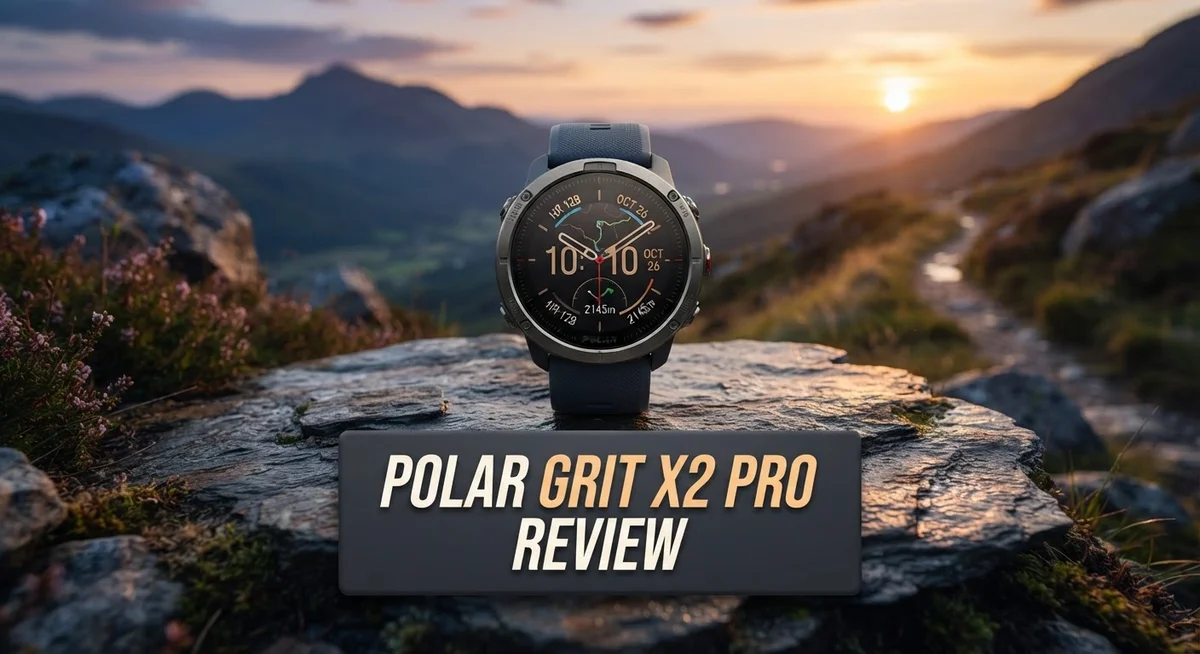
The AMOLED touchscreen looks bright and clear. It works well even under direct sunlight. Every tap feels smooth and fast.
In a Nutshell
- Military grade build makes this watch tough enough for rough trails and harsh weather.
- The improved heart rate sensor gives more accurate readings during workouts.
- Multisport tracking covers running, swimming, and hiking with ease.
- Buttons feel tactile and respond fast, even with gloves on.
- Battery drains quickly once you turn on GPS tracking for long sessions.
- Cycling data can feel inconsistent compared to other sports modes.
Design and Build Quality
The Polar Grit X2 Pro feels like a watch built for serious outdoor use. The case uses military-grade materials that can handle drops, scratches, and extreme weather. You get a watch that won’t break easily when you’re hiking rough trails or climbing mountains.
The AMOLED touchscreen sits under sapphire crystal protection. This means the display stays scratch-free even after months of hard use. The screen itself delivers vibrant colors and sharp text. Sunlight visibility is excellent, so you can read data on bright days without squinting.
The band quality stands out immediately. Polar chose materials that feel premium but stay comfortable during long workouts. The strap sits flat against your wrist and doesn’t dig in during exercise. You can also swap bands easily if you want a different look or feel.
Physical buttons get special attention in the design. Each button has tactile feedback that you can feel through your fingers. This matters when you’re wearing gloves or using the watch with one hand. The buttons respond instantly to every press. You never need to tap twice or wait for the interface to catch up.
The watch body itself balances size and weight well. It sits on your wrist without feeling heavy or bulky. The shape follows natural wrist contours, which reduces pressure points during all-day wear.
The improved heart rate sensor sits on the back of the case. It makes better contact with your skin than older models. This gives more accurate readings during intense workouts and recovery periods. The sensor design also reduces false alerts from movement.
Overall, the build quality reflects Polar’s focus on durability. Every material choice serves a purpose. The watch doesn’t feel delicate or fragile. Instead, it feels like a piece of equipment you can trust in demanding situations. The construction quality matches what you’d expect from a watch in this category, with solid engineering throughout.


Last update on 2026-10-14 / Affiliate links / Images from Amazon Product Advertising API Some of the links on this website are affiliate links, which means that at no additional cost to you, I earn a commission if you click through and make a purchase. I only recommend products and services that I believe will add value to my readers. Thank you for your support!
GPS Accuracy and Navigation
The Polar Grit X2 Pro uses dual frequency GPS technology to lock onto your location faster and more reliably than single frequency systems. This matters when you’re moving through dense forests or steep canyons where signals bounce off rocks and trees.
Offline global maps come built in, so you navigate without needing a phone connection. You can download specific regions before heading out on your adventure. The maps load quickly on the AMOLED screen, and you can zoom in or out with simple finger swipes.
GPS accuracy during running and hiking feels solid in real world testing. The watch tracks your route consistently and captures waypoints without major drift. Trail runners appreciate how the screen updates your position in near real time. The sapphire crystal doesn’t interfere with signal reception, even though it sits between the antenna and sky.
However, GPS battery drain is significant during extended sessions. If you activate continuous GPS tracking for 8+ hours, expect the battery to drop noticeably faster than Polar claims. This trade off is common across sports watches, but it’s worth knowing upfront.
Cycling mode shows some inconsistency compared to running or hiking. The GPS sometimes struggles to capture tight switchbacks accurately, and you might notice gaps in your recorded path. Road cyclists report better results than mountain bikers, likely because paved surfaces offer clearer signal paths.
Navigation features work well for basic point to point routing. You can set a waypoint and the watch guides you back with distance and direction indicators. The compass integration helps when GPS signals weaken temporarily.
Real world performance depends on your environment. Open terrain like deserts or alpine meadows delivers excellent GPS results. Urban canyons and heavily forested areas introduce occasional signal delays. The watch recovers quickly once you exit shadowed areas.
For serious hikers and trail runners, the GPS accuracy justifies the technology investment. Cyclists should test it themselves before committing, since the tracking feels less reliable for that specific sport.
Battery Life and Power Management
The Polar Grit X2 Pro delivers up to 10 days of battery life when you use basic smartwatch functions without GPS. This makes it reliable for everyday wear and multi-day trips where you only need time and notifications.
GPS usage changes everything. Once you activate GPS tracking, battery drain accelerates noticeably. A full day of continuous GPS use will consume a significant portion of your battery, especially with dual frequency GPS active. This is the trade-off you accept for accurate location data on long trail runs or mountain hikes.
The watch manages power through intelligent battery modes. You can switch to lower power GPS settings or disable certain features during shorter activities. This flexibility helps extend your battery between charges when you plan your sessions carefully.
Heart rate monitoring runs continuously in the background without draining the battery quickly. The improved sensor uses power efficiently while delivering accurate readings throughout the day. Sleep tracking and general activity monitoring also consume minimal power, so passive health tracking doesn’t hurt your battery reserve.
For multi-sport athletes, battery planning becomes important. A runner who logs one hour of GPS tracking daily can expect 5 to 7 days between charges. Someone who uses GPS several times per week will see longer intervals between charging sessions.
The AMOLED touchscreen requires more power than basic LCD displays, but Polar optimized the software to balance brightness with battery efficiency. You can dim the screen or reduce always-on display time to gain extra hours of use.
Real world battery performance depends on your activity mix. Hikers who track long outdoor sessions will charge more frequently than casual users. The 10-day claim assumes minimal GPS use and mostly smartwatch functions.
Power management works best when you understand your usage pattern. Athletes doing heavy GPS tracking should charge every 3 to 5 days. Casual users who track occasional workouts can stretch to 7 to 10 days comfortably. The watch itself won’t limit your activities—your charging schedule will adjust based on how intensively you use the GPS features.
Top 3 Alternatives
Garmin Epix Gen 2

Last update on 2026-10-14 / Affiliate links / Images from Amazon Product Advertising API Some of the links on this website are affiliate links, which means that at no additional cost to you, I earn a commission if you click through and make a purchase. I only recommend products and services that I believe will add value to my readers. Thank you for your support!
Apple Watch Ultra
![Apple Watch Ultra 3 [GPS + Cellular 49mm] Running & Multisport Smartwatch w/ Rugged Titanium Case w/ Natural Titanium Milanese Loop - M w/ AppleCare+ (2 years)](https://devicediscoveries.blog/wp-content/plugins/aawp/public/image.php?url=YUhSMGNITTZMeTl0TG0xbFpHbGhMV0Z0WVhwdmJpNWpiMjB2YVcxaFoyVnpMMGt2TlRGbE1YTlZaWFJWTWt3dVgxTk1NVFl3WHk1cWNHYz18MTc5MjM3MDU0NQ=)
Last update on 2026-10-14 / Affiliate links / Images from Amazon Product Advertising API Some of the links on this website are affiliate links, which means that at no additional cost to you, I earn a commission if you click through and make a purchase. I only recommend products and services that I believe will add value to my readers. Thank you for your support!
Coros Apex Pro

Last update on 2026-10-14 / Affiliate links / Images from Amazon Product Advertising API Some of the links on this website are affiliate links, which means that at no additional cost to you, I earn a commission if you click through and make a purchase. I only recommend products and services that I believe will add value to my readers. Thank you for your support!
Multisport Tracking and Performance
The Polar Grit X2 Pro shines when tracking multiple sports in one device. You get comprehensive multisport functionality that adapts to running, hiking, swimming, and trail activities without switching watches.
The dual frequency GPS system locks onto satellites quickly and maintains accuracy across different terrain types. This matters when you’re moving between open fields and dense forest cover. The offline global maps let you explore without relying on your phone. You can download specific regions before your adventure starts.
Running mode performs exceptionally well. The watch captures pace, distance, and cadence with precision that serious runners appreciate. Hiking mode leverages the GPS accuracy to track elevation gain and descent with reliability. Swimming mode handles pool and open water sessions, though the multisport transition between activities works smoothly when you chain workouts together.
Cycling presents a weak point in the multisport lineup. Tracking accuracy drops noticeably compared to running or hiking. If you’re a dedicated cyclist, you might notice gaps in data consistency. This limitation affects athletes who do triathlon training or regularly mix cycling with other sports.
The watch handles sport switching seamlessly during multisport events. You transition between activities without losing data or experiencing lag. The responsive buttons make mode changes quick, even when wearing gloves or with wet hands.
Real world performance depends on your activity environment. Open terrain produces stellar results. Urban canyon areas or dense tree coverage can create occasional GPS signal delays, though the dual frequency system minimizes these issues compared to single frequency watches.
For trail runners and mountain athletes, the multisport tracking justifies the investment. The combination of accurate GPS, offline maps, and reliable heart rate monitoring creates a complete picture of your performance. You get detailed metrics that help you understand your fitness progression across different activities.
The watch stores multiple sport profiles, so you customize tracking parameters for each activity type. This flexibility means casual runners and serious ultramarathoners both find value in the same device. Multisport athletes gain the most benefit from this watch’s feature set.
Display and User Interface
The Polar Grit X2 Pro features an AMOLED touchscreen that delivers vibrant colors and sharp text. This display type uses more power than traditional LCD screens, but Polar engineered the software to keep battery drain manageable. The sapphire crystal protection resists scratches during outdoor adventures, so your screen stays clear after repeated use.
Touchscreen responsiveness feels snappy during normal operation. You can swipe through menus and tap notifications without lag. The interface reacts immediately to your input, which matters when you’re checking stats mid-activity.
Beyond the touchscreen, physical buttons provide tactile feedback that works well even with gloves on. The responsive button design lets you control the watch without relying solely on touch input. This dual-control approach proves valuable during cold weather training or muddy trail runs.
The user interface organizes information logically across multiple screens. You scroll through widgets to view heart rate, GPS status, and training metrics. The layout feels intuitive after a few days of use, so you won’t spend time hunting for basic functions.
One practical feature is the always-on display mode. You can keep the screen visible without constantly tapping to wake the watch. This mode does consume more battery, but many athletes prefer the convenience of checking time and stats at a glance.
The AMOLED technology produces deeper blacks and better contrast than LCD alternatives. Text remains readable in bright sunlight, though reflections can happen on extremely sunny days. Indoors and during overcast conditions, the display shines with excellent clarity.
Navigation menus feel smooth and organized. The watch groups similar functions together, so you find what you need quickly. Sport profiles, settings, and data screens follow a consistent structure that reduces confusion.
The interface supports customization too. You can rearrange widgets and choose which data fields appear during activities. This flexibility lets you personalize the experience to match your training needs.
Overall, the display and interface combination works well for athletes who want both visual quality and physical control. The AMOLED screen looks premium, while the button design ensures usability in any condition.
Pros and Cons
Pros
- Accurate GPS tracking with dual frequency system that locks onto satellites quickly across different terrain types
- Excellent band quality and responsive physical buttons with tactile feedback that work well even with gloves on
- Fast performance and snappy touchscreen responsiveness during normal operation
- Strong multisport functionality, especially for running and hiking activities
- AMOLED display delivers vibrant colors, sharp text, and deeper blacks compared to LCD alternatives
Cons
- Battery life drops significantly when you activate GPS tracking, requiring careful power planning during longer activities
- Cycling tracking performs unreliably compared to running or hiking modes, with noticeable accuracy drops
- Limited accessibility due to premium positioning in the market
- AMOLED touchscreen requires more power than basic LCD displays, impacting overall battery endurance
Who Should Buy It
The Polar Grit X2 Pro works best for serious endurance athletes who spend significant time outdoors. If you run trails, hike mountains, or compete in multisport events, this watch delivers the performance you need.
Trail runners benefit most from this device. The dual frequency GPS system locks onto satellites quickly even in dense forest canopy. You get accurate distance and pace data mile after mile. The rugged construction handles rocky terrain without worry.
Mountain athletes appreciate the offline global maps. You can navigate remote areas without cellular service. The watch stores detailed topographic data for your adventures. This feature matters when you venture far from civilization.
Multisport competitors find value in the sport switching capability. The watch transitions smoothly between running, hiking, and swimming. You track each activity separately without manual intervention. However, skip this watch if cycling is your primary sport, as tracking reliability drops noticeably in pedal sports.
Fitness enthusiasts who value durability should consider this model. Military grade construction means the watch survives harsh conditions. The sapphire crystal screen resists scratches better than standard glass. The band quality feels premium and lasts through years of use.
People who prefer physical control over touchscreens will appreciate the responsive buttons. These buttons work reliably even when wearing gloves. You can operate the watch without removing layers during cold weather activities.
Night time athletes benefit from the AMOLED display. The always on mode keeps vital information visible without draining battery excessively. The screen produces vibrant colors and sharp text in low light conditions.
Skip this watch if you need extended GPS battery life. The battery drops quickly when GPS tracking runs continuously. You must plan longer activities carefully or accept reduced tracking time.
This watch is not ideal for casual fitness trackers. The feature set targets serious athletes with specific needs. Beginners may find the interface overwhelming.
The Polar Grit X2 Pro suits athletes who demand accuracy, durability, and multisport capability. You should buy it if your training involves trails, mountains, and multiple sport types. The investment makes sense when these activities define your athletic life.
Final Verdict
The Polar Grit X2 Pro stands out as a serious tool for outdoor athletes. It combines smart engineering with practical features that matter during real activities.
Military grade construction means this watch survives drops, knocks, and rough weather. Athletes who train in tough conditions will appreciate this durability.
The sapphire crystal screen protection adds another layer of confidence. You can wear this watch on rocky trails without worrying about scratches or cracks.
Offline global maps give hikers and mountain athletes real freedom. You can explore new terrain without needing a phone signal or internet connection.
Multisport tracking works well across different activities. Runners and hikers get accurate data, though cyclists may notice some inconsistencies during rides.
The improved heart rate sensor delivers better readings than older Polar models. This helps athletes train smarter and recover properly between sessions.
Battery performance remains the biggest tradeoff. You get up to 10 days in normal mode, but GPS activities drain power much faster.
This watch fits athletes who plan their GPS usage carefully. Ultra runners doing multi-day events should pack a charger or backup plan.
Compared to competitors like the Garmin Enduro 3 or COROS Vertix 2S, the Grit X2 Pro holds its own in build quality and display technology. However, those alternatives may offer longer GPS battery life for extreme endurance events.
The Suunto Vertical Solar brings solar charging into the mix, which some athletes might prefer for extended trips.
Overall, the Polar Grit X2 Pro works best for athletes who value toughness, clear displays, and dependable navigation. It rewards users who understand its battery limitations and plan accordingly.
If you need a watch that survives harsh conditions and keeps you on track outdoors, this model delivers. Just remember to manage GPS settings wisely for longer adventures.
For casual users or those needing all day GPS tracking without interruption, exploring other options makes sense.
Frequently Asked Questions
Does the Polar Grit X2 Pro work for casual fitness users?
Not really. This watch suits serious endurance athletes who train outdoors regularly. Casual fitness enthusiasts might find the interface overwhelming. The focus on multisport tracking and offline maps appeals to people who push their limits, not those seeking basic step counting.
Can I use GPS all day without draining the battery?
No. GPS tracking drains the battery quickly. You’ll get roughly 10 days without GPS active. Once you enable GPS, battery life drops significantly. This means you need to plan your GPS sessions carefully or the watch becomes less useful for extended activities.
How does the heart rate sensor perform?
The improved heart rate sensor delivers better readings than older Polar models. It captures accurate data during most activities. However, results vary based on your wrist size and fit. Runners and cyclists report solid performance during their workouts.
Is the touchscreen reliable in cold weather?
Yes. The AMOLED touchscreen responds well even in cold conditions. The sapphire crystal protection keeps it scratch free and functional. Physical buttons work great with gloves on, so you have backup controls when touchscreen use feels difficult.
How does it compare to Garmin watches?
The Grit X2 Pro holds its own against competitors like the Garmin Enduro 3. It offers similar multisport functionality and build quality. The main difference lies in battery management. Garmin models often deliver longer GPS battery life. Choose based on your preferred interface and which features matter most to your training style.

Hello everyone my name is Alenya and i am a gadget discovering Enthusiast 🐻🐻