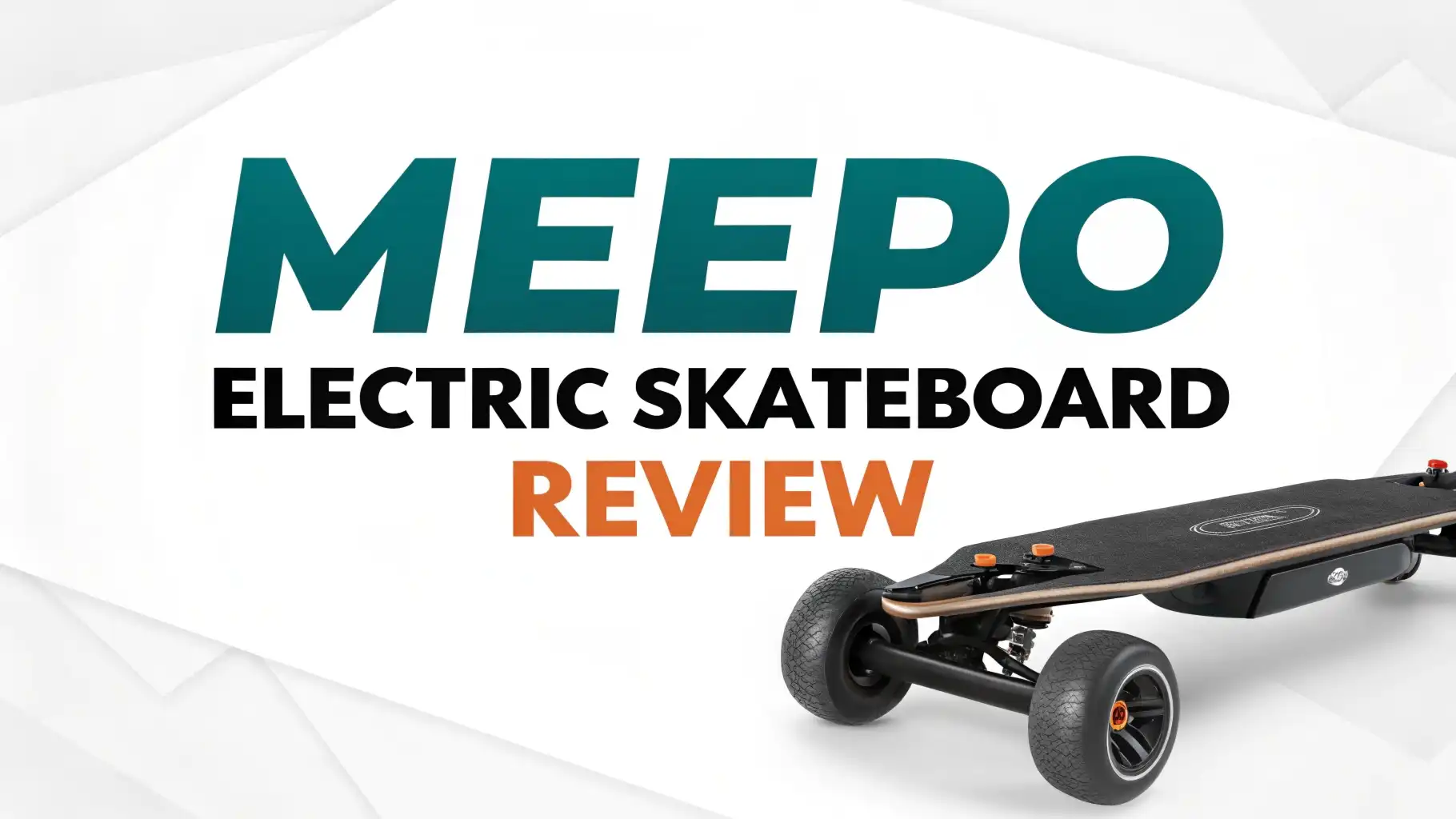
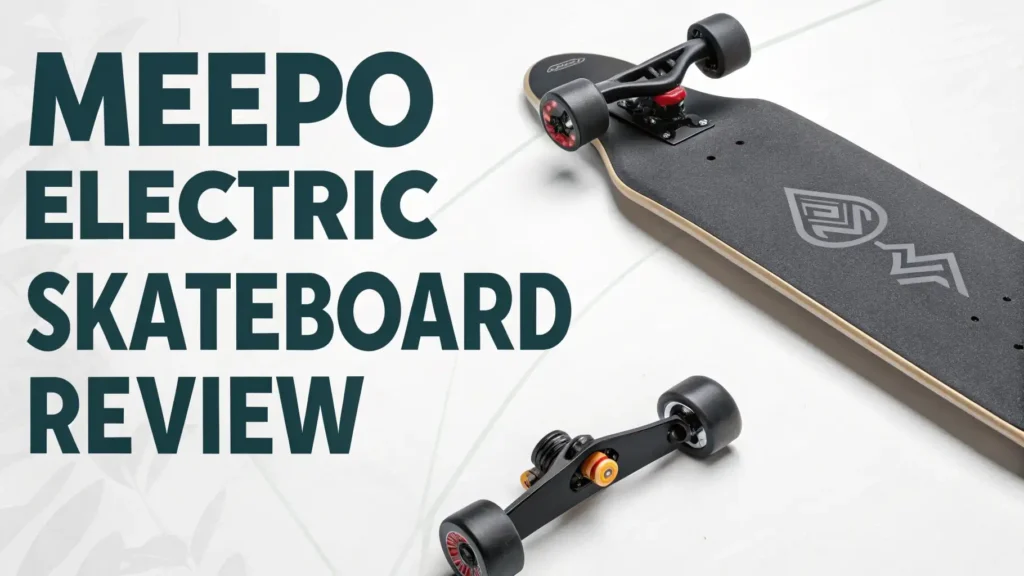
Meepo Electric Skateboard Review 2026: Is It Worth the Hype?
Ever wondered if those budget-friendly electric skateboards you see online can actually deliver a thrilling ride? You’re not alone. Many people think they need to spend thousands to get a quality electric skateboard. That’s where Meepo boards flip the script.
Meepo electric skateboards have taken the market by storm since 2017, offering powerful performance without the premium price tag.
These boards pack serious features like dual motors, impressive range, and speeds that make your morning commute feel like an adventure. Whether you’re a complete beginner or a seasoned rider looking for value, Meepo boards deliver an experience that punches way above their weight class.
Key Takeaways
- Affordable Performance: Meepo boards offer incredible value with prices ranging from $379 to $749, delivering speeds up to 32 mph and ranges up to 24 miles. These specs compete with boards costing twice as much.
- Versatile Model Range: From the compact Mini series to the surf-inspired Flow, Meepo offers 10+ different models designed for various riding styles, terrains, and skill levels. Every rider finds their perfect match.
- Powerful Dual Motors: Most Meepo boards feature dual hub or belt-driven motors ranging from 1000W to 3000W total power, enabling smooth acceleration and the ability to conquer hills up to 26% grade.
- Quality Construction: Boards feature durable materials including bamboo-fiberglass composite decks, Canadian maple, and high-quality trucks that provide stability at high speeds while maintaining flexibility for comfortable rides.
- Strong Community Support: Meepo maintains active customer service, regular firmware updates, and a dedicated rider community that shares tips, modifications, and real-world experiences to help new riders get started.

Last update on 2026-08-31 / Affiliate links / Images from Amazon Product Advertising API Some of the links on this website are affiliate links, which means that at no additional cost to you, I earn a commission if you click through and make a purchase. I only recommend products and services that I believe will add value to my readers. Thank you for your support!
What Makes Meepo Electric Skateboards Stand Out
Meepo boards distinguish themselves through smart engineering choices that prioritize rider experience. The company focuses on functional design rather than flashy marketing. Every component serves a purpose.
The brand started with a simple mission: make electric skateboarding accessible to everyone. Traditional electric skateboards cost $1500 or more. Meepo changed that equation. They achieved lower prices through efficient production and direct-to-consumer sales.
Their manufacturing facility in Shenzhen allows close quality control. The team tests each board before shipping. This hands-on approach catches issues early. Riders receive boards ready to ride straight from the box.
Meepo invests heavily in motor technology. Their dual motor systems provide smooth power delivery. The acceleration feels natural, not jerky. Braking responds precisely to remote input. These details matter when you’re cruising at 28 mph.
The company also listens to their community. Rider feedback shapes new models. When customers requested better hill-climbing ability, Meepo developed more powerful motor options. When portability became important, they created the Mini series. This responsive approach keeps Meepo relevant.
Meepo V5 Electric Skateboard Performance
The Meepo V5 represents the brand’s commitment to balanced performance. This board serves as the perfect entry point for new riders while satisfying experienced skaters.
The V5 features dual 500W motors delivering smooth acceleration. Top speed reaches 28 mph, fast enough for commuting but controllable for beginners. The four-speed modes let riders gradually increase their comfort level. Start in beginner mode, then progress as skills develop.
Range hits approximately 11 miles on a single charge. That covers most daily commutes with battery to spare. The charge time takes about 3 hours using the included charger. Quick enough to top up during work hours.
The deck uses 8-ply Canadian maple construction. This provides excellent flex characteristics. The board absorbs road vibrations without feeling unstable. At 16 pounds, it’s light enough to carry up stairs. The integrated handle makes transport easier.
Braking performance deserves special mention. The regenerative braking system slows the board smoothly. It feels intuitive, like riding a regular longboard. The system also recovers energy, extending range slightly. New riders appreciate how predictable the braking feels.
Meepo Mini Series: Compact Power

Last update on 2026-08-31 / Affiliate links / Images from Amazon Product Advertising API Some of the links on this website are affiliate links, which means that at no additional cost to you, I earn a commission if you click through and make a purchase. I only recommend products and services that I believe will add value to my readers. Thank you for your support!
The Meepo Mini series proves good things come in small packages. These compact boards measure just 30-34 inches long, making them incredibly portable.
Despite their size, Mini boards pack serious power. The Mini 3 Max reaches speeds up to 32 mph. Range extends to 24 miles thanks to upgraded battery packs. These numbers match or exceed many full-size boards.
The smaller deck offers unique advantages. Maneuverability increases dramatically in tight spaces. Navigating crowded sidewalks becomes easier. The boards fit in lockers, under desks, and in car trunks without hassle.
Weight capacity remains impressive at 330 pounds. The maple construction handles heavy riders without flexing excessively. The kicktail design adds functionality. Riders can perform quick turns and navigate obstacles with confidence.
Motor options include both hub and belt-driven systems. Hub motors run silently, perfect for urban commuting. Belt-driven versions provide more torque for hill climbing. Riders choose based on their primary riding environment.
The Mini series works exceptionally well for last-mile transportation. Take it on the bus, then ride the final stretch to work. Store it easily at the destination. This flexibility makes daily commuting practical.
Top 3 Alternatives for Meepo Electric Skateboard
No products found.

Last update on 2026-08-28 / Affiliate links / Images from Amazon Product Advertising API Some of the links on this website are affiliate links, which means that at no additional cost to you, I earn a commission if you click through and make a purchase. I only recommend products and services that I believe will add value to my readers. Thank you for your support!

Last update on 2026-09-01 / Affiliate links / Images from Amazon Product Advertising API Some of the links on this website are affiliate links, which means that at no additional cost to you, I earn a commission if you click through and make a purchase. I only recommend products and services that I believe will add value to my readers. Thank you for your support!
Meepo Flow: Surf-Style Electric Skateboard
The Meepo Flow introduces surf-inspired carving to electric skateboarding. This board uses double kingpin trucks for increased turning radius. The riding experience mimics surfing on pavement.
Speed maxes out at 32 mph, among the fastest in Meepo’s lineup. Range extends to 24 miles, perfect for longer rides. The belt-driven motors deliver 3000W combined power. Hill climbing ability reaches 26% grade inclines.
The deck features bamboo-fiberglass composite construction. This material combination provides excellent flex and vibration damping. Riders report comfortable rides even on rough pavement. The board absorbs impacts without transferring shock to your feet.
The DKP trucks require adjustment time. They feel loose initially compared to traditional trucks. After a few rides, the increased maneuverability becomes addictive. Carving through turns feels smooth and natural.
Battery capacity sits at 504Wh, Meepo’s largest. Charging takes approximately 4 hours. The remote features four speed modes and precise throttle control. The LCD display shows speed, battery level, and riding mode.
The Flow targets experienced riders seeking new sensations. The surf-style carving adds excitement to familiar routes. It’s not the best beginner board due to the loose trucks, but intermediate riders love it.
Battery Life and Charging Specifications
Meepo uses high-quality lithium-ion battery packs across their lineup. Battery capacity varies by model, ranging from 144Wh to 504Wh. Larger batteries provide extended range but add weight.
Most Meepo boards achieve 10-30 miles per charge under normal conditions. Real-world range depends on several factors. Rider weight impacts distance significantly. Heavier riders see reduced range. Terrain matters too. Hills drain batteries faster than flat ground.
Riding speed affects battery life dramatically. Cruising at moderate speeds extends range. Constantly hitting top speed drains the battery quickly. Wind resistance also plays a role. Headwinds reduce range noticeably.
Charging times range from 3-5 hours depending on battery size and charger output. Most models include a 2A charger standard. Faster chargers are available as upgrades. The BMS (Battery Management System) prevents overcharging and protects battery health.
Motor Power and Hill Climbing Ability
Meepo offers both hub motor and belt-driven motor configurations. Each type has distinct characteristics. Hub motors integrate into the wheel, creating a cleaner look. They run silently and require minimal maintenance.
Belt-driven motors mount externally and use belts to drive the wheels. These systems provide more torque and better hill-climbing ability. They’re noisier than hub motors but offer superior performance. The belts require occasional replacement, adding minor maintenance.
Power output ranges from 1000W to 3000W total across dual motors. Entry-level models like the V5 feature 1000W systems. Premium models like the Flow pack 3000W of power. More power means better acceleration and hill climbing.
Hill-climbing ability impresses across the Meepo lineup. Most models handle 20-26% grade inclines. The Flow and Envy models conquer the steepest hills thanks to powerful motors and belt-driven systems. Rider weight affects hill performance. Lighter riders climb steeper grades.
Deck Materials and Build Quality
Meepo uses various deck materials optimized for different riding styles. Canadian maple dominates entry-level models. This traditional skateboard material provides familiar feel and durability. 8-10 ply construction creates strong, rigid decks.
Bamboo-fiberglass composites feature in premium models. Bamboo offers natural flex and shock absorption. The fiberglass layers add strength without excessive weight. This combination creates comfortable, responsive decks that reduce foot fatigue on long rides.
Deck flex varies by model and intended use. Stiff decks provide stability at high speeds. They work well for commuting and speed-focused riding. Flexible decks absorb road vibrations better. They excel for cruising and longer recreational rides.
Length ranges from 30 inches (Mini series) to 38 inches (full-size boards). Longer decks offer more foot room and stability. Shorter decks increase maneuverability and portability. Width typically measures 9-10 inches, accommodating most foot sizes comfortably.
Remote Control Features and Functionality
The Meepo remote controls board operation through 2.4GHz wireless connection. This frequency provides reliable, low-latency communication. The connection rarely drops or experiences interference.
Remote designs vary by model. Entry-level boards include basic remotes with simple controls. Premium models feature LCD display remotes showing speed, battery level, and riding mode. These displays improve the riding experience by providing real-time feedback.
The throttle trigger controls acceleration and braking. Forward motion accelerates, backward motion brakes. The trigger feels responsive with good tactile feedback. Smooth input changes translate to smooth board responses.
Speed mode buttons let riders adjust maximum speed and acceleration. Most boards offer four modes: beginner, eco, sport, and pro. Beginners start in low-speed modes for safety. Experienced riders unlock full performance in pro mode.
Remote batteries typically use rechargeable lithium cells. Battery life extends several days of regular use. Low battery indicators warn when charging becomes necessary. Charging takes 1-2 hours using included USB cables.
Safety Features and Riding Experience
Meepo prioritizes rider safety through multiple design elements. The four-speed modes help beginners build confidence gradually. Starting in low-speed mode reduces risk while learning board control.
The braking system combines regenerative and mechanical braking. Regenerative braking slows the board while recovering energy. When more stopping power becomes necessary, mechanical brakes engage. This dual system provides reliable stopping in various conditions.
Wheel quality affects safety significantly. Meepo uses 90-97mm polyurethane wheels with various durometer ratings. Softer wheels (78-83a) absorb vibrations better. Harder wheels (85-90a) roll faster on smooth surfaces. Most models include medium-soft wheels balancing comfort and performance.
Truck quality ensures stable steering. Meepo uses precision trucks with quality bushings. The trucks allow smooth turning without speed wobble. At high speeds, stability remains excellent. Tightening or loosening trucks adjusts turning radius to rider preference.
Lights improve visibility for night riding. Some models include front and rear LED lights. These lights help cars see you in low-light conditions. Additional aftermarket lights enhance visibility further.
Maintenance Requirements and Costs
Meepo boards require minimal maintenance compared to gas-powered vehicles. Regular cleaning keeps components functioning properly. Wipe down the deck and enclosure after rides. Remove dirt and debris from wheel wells.
Wheel wear varies based on riding style and surfaces. Aggressive riding and rough pavement accelerate wear. Inspect wheels regularly for flat spots or uneven wear. Replace wheels when they become significantly worn. Replacement wheels cost $40-80 per set.
Belt-driven models require belt inspection and replacement. Belts typically last 500-1000 miles before showing wear. Cracks, fraying, or missing teeth indicate replacement time. Spare belts cost $15-30. The replacement process takes 15-20 minutes with basic tools.
Bearing maintenance extends wheel life. Clean and lubricate bearings every few months. This simple task keeps wheels spinning smoothly. Quality bearing sets cost $20-40 if replacement becomes necessary.
Battery care affects long-term costs. Following proper charging practices extends battery lifespan. Avoid storing batteries fully charged or completely depleted. Keep batteries at moderate temperatures. Replacement batteries cost $150-300 depending on capacity.
Price Comparison Across Models
Meepo’s pricing strategy makes electric skateboarding accessible. Entry-level models start around $379, delivering solid performance for beginners. Mid-range options cost $500-700, offering enhanced features. Premium models reach $750-900 with top specifications.
The V5 at $379 provides the lowest entry point. This board includes dual motors, decent range, and quality construction. It’s hard to find comparable performance at this price. Value-conscious buyers find this model compelling.
The V3 Series Max costs approximately $469. Upgraded battery capacity extends range. Better trucks improve handling. The modest price increase brings significant improvements. Many riders consider this the best value in Meepo’s lineup.
The Mini series ranges from $349-$549 depending on specifications. The compact format commands slightly lower prices than full-size boards. Performance remains impressive relative to size. These boards suit riders prioritizing portability.
The Go model sits at $529. Belt-driven motors provide excellent hill-climbing ability. Range reaches 20 miles. This board competes with options costing $200-300 more from other brands.
Customer Service and Warranty Coverage
Meepo provides customer support through multiple channels. Email support responds within 24-48 hours. The company maintains active social media presence. Community forums connect riders with helpful information.
Warranty coverage varies by model and component. Most boards include 180-day limited warranties. This coverage protects against manufacturing defects. Normal wear items like wheels and belts aren’t covered.
Battery warranties typically extend 6 months. Motor warranties cover 180 days. Deck and truck warranties vary. Keep purchase receipts for warranty claims. Register your board on Meepo’s website to activate coverage.
Shipping times from China warehouse average 7-15 business days to the US. Express shipping options reduce wait times. Domestic warehouses in the US ship faster when stock is available. Track shipments through provided tracking numbers.
Replacement parts availability gets mixed reviews. Common items like wheels and belts stock regularly. Specialty components may require longer wait times. Some riders purchase spare parts proactively to minimize downtime.
Should You Buy a Meepo Electric Skateboard
Meepo boards make sense for specific rider types. Budget-conscious buyers find exceptional value. The performance-to-price ratio beats most competitors. You get reliable transportation without breaking the bank.
Beginner riders benefit from graduated speed modes and stable designs. Learning curves feel manageable. The supportive community helps new riders develop skills. Safety features reduce worry during the learning phase.
Commuters appreciate the practical features. Ranges cover typical commute distances. Speeds make travel time competitive with cars in urban areas. The portable designs integrate into multi-modal transportation seamlessly.
Enthusiast riders seeking experimentation find Meepo boards excellent platforms. The affordable prices allow trying electric skateboarding without massive investment. If it becomes a passion, upgrade later. If it doesn’t stick, the financial risk remains minimal.
Riders demanding absolute top-tier performance might look elsewhere. Premium brands offer refined experiences and exotic materials. Meepo prioritizes value over luxury. The boards perform well but don’t match $2000+ premium options.
FAQs
How fast do Meepo electric skateboards go?
Meepo boards reach speeds between 24-32 mph depending on the model. Entry-level boards like the V5 top out at 28 mph. Premium models like the Flow and Mini 3 Max hit 32 mph. These speeds provide exciting rides while remaining controllable for most riders. Four speed modes let you limit maximum speed for safety and battery conservation.
What is the range of a Meepo electric skateboard?
Range varies from 11 to 24 miles per charge across different models. Entry-level boards typically achieve 11-15 miles. Mid-range and premium models reach 20-24 miles. Real-world range depends on rider weight, terrain, riding style, and weather conditions. Lighter riders on flat terrain achieve maximum range. Heavy riders climbing hills see reduced distances.
Are Meepo electric skateboards good for beginners?
Yes, Meepo boards work excellently for beginners. The four-speed modes allow gradual skill progression. Start in beginner mode at reduced speeds and acceleration. Build confidence before unlocking full performance. Stable deck designs and predictable handling help new riders feel secure. The affordable prices reduce financial risk while learning.
How long do Meepo batteries last?
Meepo batteries typically maintain 80% capacity after 500 charge cycles. With proper care, batteries last 2-3 years of regular use. Factors affecting lifespan include charging habits, storage conditions, and usage patterns. Avoid fully depleting batteries frequently. Store at 50-60% charge during extended non-use periods. Extreme temperatures accelerate degradation.
Can Meepo boards climb hills?
Most Meepo boards climb hills with 20-26% grades successfully. Belt-driven models like the Flow and Go handle steeper inclines better than hub motor versions. Rider weight significantly affects hill-climbing ability. Lighter riders ascend steeper grades than heavier riders. Maintain momentum when approaching hills for best results.
How much weight can a Meepo skateboard hold?
Weight capacities range from 220 to 330 pounds depending on the model. Mini series boards typically support up to 330 pounds despite their compact size. Full-size boards handle 220-250 pounds comfortably. Exceeding weight limits reduces range, affects handling, and may damage components. Check specific model specifications before purchasing.
Is Meepo better than Boosted boards?
Meepo offers better value while Boosted provided premium refinement. Boosted boards cost significantly more but featured polished designs and refined experiences. Meepo boards deliver similar performance at half the price. Build quality favors Boosted, but Meepo’s value proposition attracts budget-conscious riders. Note that Boosted discontinued operations in 2020.
Do I need a license to ride a Meepo board?
License requirements depend on local regulations. In most US states, no license is required for electric skateboards under 20 mph on bike paths. Some states require riders to be 16+ years old. Helmet requirements vary by location. Always check local laws before riding. Some cities restrict electric skateboard use on sidewalks or certain roads.
Can you ride Meepo boards in rain?
Meepo boards aren’t waterproof and shouldn’t be ridden in rain. Light moisture won’t immediately damage electronics, but water exposure risks component failure. Wet surfaces reduce traction dramatically, increasing crash risk. Riding through puddles may damage battery packs and motors. If caught in rain, dry the board thoroughly before storage.
How long does it take to charge a Meepo board?
Charging times range from 3-5 hours depending on battery capacity. Entry-level models with smaller batteries charge in 3 hours. Premium models with larger batteries require 4-5 hours. Fast chargers reduce charging time by 30-40% but cost extra. The included chargers balance charging speed with battery health preservation.

Hello everyone my name is Alenya and i am a gadget discovering Enthusiast 🐻🐻