HP Pavilion vs i7: Which Laptop To Buy in 2026?
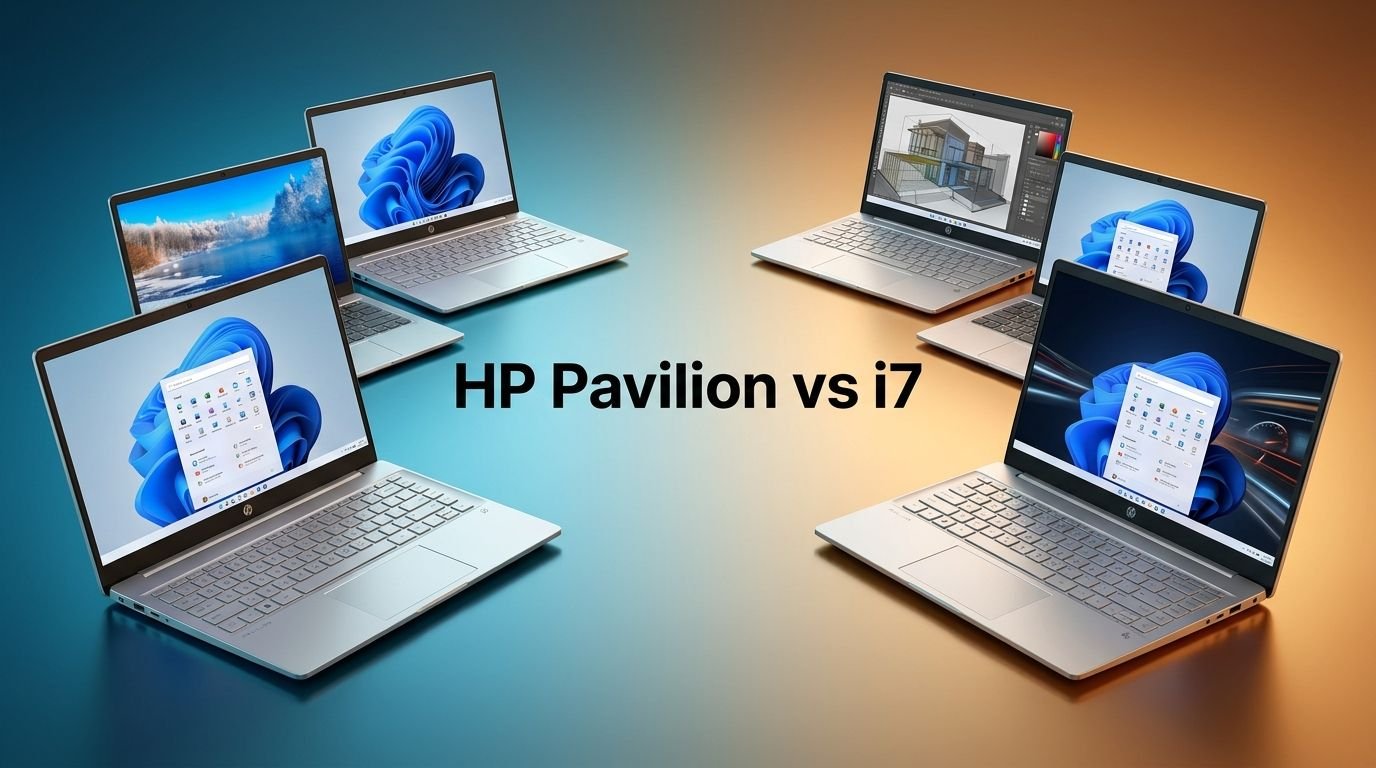
You just typed “HP Pavilion vs i7” into your search bar. You probably want to know if the HP Pavilion series stacks up against laptops powered by Intel Core i7 processors. Here is the thing.
HP Pavilion is a laptop product line, and i7 is a processor class from Intel. Many HP Pavilion models actually come with i7 chips inside them.
So the real question breaks down into two parts. First, should you pick an HP Pavilion with an i5 or lower chip over a different brand laptop with an i7? Second, which HP Pavilion i7 model deserves your money?This post answers both questions. You will learn how HP Pavilion laptops perform across price points. You will see how they compare to i7 laptops from Dell and Lenovo.
Key Takeaways
- HP Pavilion is a laptop series, not a processor. It spans budget to mid range machines. Intel Core i7 is a high performance processor tier. Many Pavilion models ship with i7 chips, so these two categories overlap rather than compete directly.
- An HP Pavilion with an i7 processor gives you the best of both worlds. You get the affordable, well built Pavilion chassis combined with strong multitasking and content creation power from the i7 chip. Models with the 12th or 13th Gen i7 hit a sweet spot for everyday users and professionals.
- Not every i7 laptop is equal. The i7-1255U focuses on power efficiency for thin laptops. The i7-1355U pushes faster speeds up to 5.0 GHz. The i7-13620H delivers desktop class performance for heavier workloads. Check the exact i7 model number before you buy.
- HP Pavilion i7 laptops cost between $500 and $850 on Amazon. This price range makes them competitive with Dell Inspiron and Lenovo IdeaPad models that use the same i7 chips. Build quality, display, and battery life vary by model.
- RAM and storage matter as much as the processor. A Pavilion with 16GB RAM and 512GB SSD handles daily tasks well. If you run multiple heavy apps or edit video, look for 32GB RAM and 1TB SSD configurations.
- Dell and Lenovo offer strong i7 alternatives. The Dell Inspiron 15 and Lenovo IdeaPad Slim 3 both pack i7 power at similar prices. Compare display quality, keyboard feel, and port selection alongside raw specs to find your best match.
HP Pavilion 15.6″ FHD Laptop with Intel Core i7-1255U

Last update on 2026-07-27 / Affiliate links / Images from Amazon Product Advertising API Some of the links on this website are affiliate links, which means that at no additional cost to you, I earn a commission if you click through and make a purchase. I only recommend products and services that I believe will add value to my readers. Thank you for your support!
This 2025/2026 edition HP Pavilion packs a 12th Gen Intel Core i7-1255U processor with 10 cores and speeds up to 4.7 GHz. It ships with 24GB DDR4 RAM and a 1TB PCIe NVMe SSD. The 15.6 inch Full HD anti glare display offers 250 nits brightness and an 85% screen to body ratio.
The laptop weighs just 3.52 pounds and includes Wi-Fi 6, Bluetooth 5.3, USB-C, and HDMI. A built in camera shutter and mic mute key add privacy during video calls. The soft grey chassis looks clean and professional for office or classroom use.
Pros:
- 10 core i7 processor handles multitasking with ease
- 24GB RAM is generous for the price point
- 1TB SSD provides fast boot times and ample storage
- Lightweight at 3.52 lbs for daily carrying
- Wi-Fi 6 and Bluetooth 5.3 offer modern connectivity
Cons:
- 250 nits display brightness may struggle in direct sunlight
- No dedicated graphics card for gaming or heavy video editing
- 12th Gen processor is one generation behind the latest
- Battery life averages around 7 hours under mixed use
HP Pavilion 15.6″ FHD Touchscreen with 13th Gen i7-1355U (16GB)

Last update on 2026-07-27 / Affiliate links / Images from Amazon Product Advertising API Some of the links on this website are affiliate links, which means that at no additional cost to you, I earn a commission if you click through and make a purchase. I only recommend products and services that I believe will add value to my readers. Thank you for your support!
This Pavilion model steps up to the 13th Gen Intel Core i7-1355U with speeds reaching 5.0 GHz. It pairs 16GB RAM with a 1TB PCIe SSD. The FHD touchscreen display adds a layer of interaction that the base Pavilion models lack.
Intel Iris Xe integrated graphics power the visuals. This GPU handles light photo editing, casual gaming, and 4K video playback. The laptop runs Windows 11 and comes ready for everyday business and student tasks.
Pros:
- 13th Gen i7-1355U offers faster single core performance than the 1255U
- Touchscreen adds flexibility for note taking and browsing
- Iris Xe graphics handle light creative work
- 1TB SSD provides plenty of room for files and apps
- Solid build quality at a mid range price
Cons:
- 16GB RAM may feel tight for heavy multitaskers
- Touchscreen models tend to drain battery faster
- No backlit keyboard on some configurations
- Integrated graphics limit gaming performance
HP Pavilion Business Laptop with i7-1355U and 32GB RAM

Last update on 2026-07-29 / Affiliate links / Images from Amazon Product Advertising API Some of the links on this website are affiliate links, which means that at no additional cost to you, I earn a commission if you click through and make a purchase. I only recommend products and services that I believe will add value to my readers. Thank you for your support!
The business focused HP Pavilion pushes RAM to 32GB and pairs it with the i7-1355U and a 1TB PCIe SSD. It features a 15.6 inch FHD touchscreen, fingerprint reader, and a backlit keyboard. Windows 11 Pro comes preinstalled for enterprise management features.
This configuration targets professionals who run multiple browser tabs, spreadsheets, and video calls at the same time. The fingerprint reader adds fast, secure login. The backlit keyboard makes late night work sessions easier on the eyes.
Pros:
- 32GB RAM easily handles demanding multitasking
- Fingerprint reader provides quick biometric security
- Backlit keyboard improves low light usability
- Windows 11 Pro supports domain joining and BitLocker
- FHD touchscreen with good color accuracy
Cons:
- Heavier than ultrabook alternatives
- No Thunderbolt port limits high speed peripheral options
- Plastic chassis feels less premium than metal competitors
- Battery life drops to around 6 hours under heavy loads
Understanding Intel Core i7 Processor Generations
The Intel Core i7 label covers many different chips. A 12th Gen i7-1255U and a 13th Gen i7-13620H deliver very different performance levels. The U series processors focus on power efficiency. They run cool and quiet inside thin laptops. The H series processors push higher wattage for faster speeds in thicker machines.
The i7-1255U has 10 cores with a max turbo of 4.7 GHz. The i7-1355U bumps that to 5.0 GHz and improves single thread performance by about 10 to 15 percent. The i7-13620H jumps to a 45W power envelope and delivers stronger sustained performance for rendering and compiling.
Always check the full processor model number. Two laptops can both say “Intel i7” on the box and perform very differently. The generation number and letter suffix tell you what you are actually getting.
HP Pavilion i5 vs HP Pavilion i7: Is the Upgrade Worth It?
Many shoppers wonder if the jump from i5 to i7 inside the same Pavilion chassis justifies the extra cost. The i5-1235U and i7-1255U share the same architecture. The i7 adds two extra efficiency cores and higher turbo speeds.
For web browsing, document editing, and streaming, the i5 Pavilion performs nearly the same as the i7 model. You will notice the difference during video editing, large file compression, and compiling code. The i7 shaves 15 to 25 percent off processing times for these tasks.
The price gap between i5 and i7 Pavilion models typically runs $100 to $200. If your daily work stays light, save that money and spend it on more RAM or SSD storage instead. If you push your laptop hard, the i7 upgrade pays for itself in time savings.
Dell Inspiron 15 with Intel i7-1355U (32GB RAM)

Last update on 2026-07-27 / Affiliate links / Images from Amazon Product Advertising API Some of the links on this website are affiliate links, which means that at no additional cost to you, I earn a commission if you click through and make a purchase. I only recommend products and services that I believe will add value to my readers. Thank you for your support!
The Dell Inspiron 15 directly competes with the HP Pavilion i7 lineup. This model uses the same 13th Gen i7-1355U processor. It pairs 32GB RAM with a 1TB SSD and a 15.6 inch FHD touchscreen display.
Dell’s build quality focuses on a sturdy hinge design and a comfortable keyboard with good key travel. The laptop includes HDMI, USB-C, and Wi-Fi 6. Dell’s support ecosystem offers next business day service options that HP’s Pavilion line does not always match.
Pros:
- Same i7-1355U chip as the top Pavilion models
- 32GB RAM supports heavy workloads
- Dell’s keyboard has excellent tactile feedback
- Strong customer support and warranty options
- 1TB SSD with fast read/write speeds
Cons:
- Display brightness can be underwhelming at 250 nits
- Heavier than competing 15.6 inch laptops
- Fan noise increases under sustained load
- Webcam quality is average at 720p on some versions
Lenovo IdeaPad Slim 3 with Intel i7-13620H

Last update on 2026-07-27 / Affiliate links / Images from Amazon Product Advertising API Some of the links on this website are affiliate links, which means that at no additional cost to you, I earn a commission if you click through and make a purchase. I only recommend products and services that I believe will add value to my readers. Thank you for your support!
The Lenovo IdeaPad Slim 3 brings something the Pavilion and Inspiron models lack. It uses the i7-13620H processor, which is an H series chip with a higher power ceiling. This means faster sustained performance for workloads like video rendering and software development.
The laptop features a 15.3 inch WUXGA (1920 x 1200) IPS display, which gives you slightly more vertical screen space than standard FHD. It ships with 24GB DDR5 RAM and a 2TB SSD. DDR5 memory runs faster than the DDR4 found in most Pavilion models.
Pros:
- H series i7-13620H delivers superior sustained performance
- 2TB SSD offers double the storage of most competitors
- DDR5 RAM provides faster memory bandwidth
- WUXGA display gives extra vertical pixels for productivity
- Slim, modern design with narrow bezels
Cons:
- Higher power processor reduces battery life to 5 to 6 hours
- Fan runs louder under heavy workloads
- No touchscreen option on this model
- Lenovo’s software bloatware requires cleanup after purchase
Display Quality Comparison Across Models
The display can make or break your daily experience. HP Pavilion models ship with 15.6 inch FHD (1920 x 1080) panels at 250 nits brightness. The anti glare coating helps reduce reflections but the brightness level is average.
The Dell Inspiron 15 offers a similar 250 nit FHD panel. Some touchscreen versions use a glossy finish that looks sharper but catches more glare. The Lenovo IdeaPad Slim 3 stands out with its WUXGA (1920 x 1200) IPS panel. The 16:10 aspect ratio gives you about 10 percent more vertical content on screen.
If you work with spreadsheets, documents, or code, that extra vertical space makes a real difference. For photo and video editing, none of these budget panels cover wide color gamuts. You would need to step up to an HP Pavilion Plus or Envy series for better color accuracy.
Battery Life and Portability
HP Pavilion 15 models pack a 41 Wh battery. Real world use delivers 6 to 8 hours depending on your workload and screen brightness. HP Fast Charge restores 50 percent battery in about 45 minutes. The 3.52 pound weight makes the Pavilion easy to carry.
The Dell Inspiron 15 carries a similar 41 to 54 Wh battery depending on configuration. Battery life lands in the 6 to 7 hour range for typical use. It weighs about 3.8 pounds, making it slightly heavier than the Pavilion.
The Lenovo IdeaPad Slim 3 with its H series i7 chip draws more power. Expect 5 to 6 hours on a charge. It weighs around 3.7 pounds. If battery life is your top priority, the HP Pavilion with the U series i7 gives you the longest runtime among these options.
Build Quality and Design Differences
The HP Pavilion uses a polycarbonate plastic chassis with a soft touch finish. It feels solid for its price but does not match the aluminum builds found in premium laptops. The micro edge bezel gives the screen a modern look. Port selection includes USB-A, USB-C, HDMI, and a headphone jack.
Dell’s Inspiron 15 uses a similar plastic construction. The lid flexes slightly under pressure. Dell places the power button away from the keyboard, which prevents accidental presses. The hinge opens smoothly and holds its position well.
The Lenovo IdeaPad Slim 3 offers the slimmest profile. Its design borrows visual cues from pricier ThinkPad models. The Arctic Grey color option looks professional. All three laptops share similar build materials at this price point, so the choice comes down to personal design preference.
Who Should Buy the HP Pavilion i7?
The HP Pavilion with an i7 processor fits a specific buyer profile. You want reliable performance for office work, online classes, streaming, and light creative tasks. You do not need a gaming GPU or a color accurate OLED display.
Students benefit from the Pavilion’s light weight, long battery life, and affordable price. Remote workers appreciate the webcam, privacy features, and comfortable keyboard. Budget conscious professionals get i7 power without spending over $900.
If you need heavy gaming, 3D rendering, or professional video editing, look at the HP Pavilion Gaming line, OMEN series, or workstations instead. The standard Pavilion i7 is a daily driver, not a performance machine. It does everyday tasks very well and saves you hundreds of dollars compared to premium alternatives.
Final Verdict: HP Pavilion vs i7 Laptops
The comparison between HP Pavilion and i7 comes down to understanding what each term means. HP Pavilion is the vehicle. Intel Core i7 is the engine. The best option combines both.
For most buyers, the HP Pavilion with 13th Gen i7-1355U and 32GB RAM offers the strongest value. It handles everything from spreadsheets to video calls without breaking a sweat. If you want more raw processing power and extra storage, the Lenovo IdeaPad Slim 3 with i7-13620H is the better pick.
The Dell Inspiron 15 holds its own as a solid middle ground with great keyboard feel and support options. All three brands deliver competitive i7 laptops at similar prices. Test your priorities against the pros and cons listed above, and you will find the right match.
Frequently Asked Questions
Is the HP Pavilion a good laptop for everyday use?
Yes. The HP Pavilion series offers solid performance for web browsing, document editing, video streaming, and light creative work. Models with 16GB RAM and an SSD handle daily tasks smoothly. The lightweight build and decent battery life make it a practical choice for students and professionals.
Does the HP Pavilion come with an i7 processor?
Many HP Pavilion configurations include Intel Core i7 processors. You can find Pavilion models with 12th Gen i7-1255U and 13th Gen i7-1355U chips on Amazon. Check the exact specs before purchasing because some Pavilion laptops ship with i3 or i5 processors at lower price points.
Is an i7 laptop better than an i5 laptop?
The i7 generally performs better than the i5 in multi threaded tasks like video editing, compiling, and running virtual machines. For basic everyday tasks, the difference is small. The i7 costs more, so you should choose based on your actual workload rather than the name alone.
How long does the HP Pavilion battery last?
Most HP Pavilion 15 models with a 41 Wh battery last 6 to 8 hours on a single charge. Battery life depends on screen brightness, active apps, and whether you use Wi-Fi. HP Fast Charge can restore 50 percent battery in about 45 minutes.
Can the HP Pavilion i7 handle gaming?
The HP Pavilion i7 with Intel Iris Xe integrated graphics can run older titles and indie games at low to medium settings. It is not built for modern AAA gaming. If gaming is a priority, look at the HP Pavilion Gaming series or OMEN laptops that include dedicated NVIDIA graphics cards.
Which is better: HP Pavilion, Dell Inspiron, or Lenovo IdeaPad?
All three brands offer strong mid range laptops with i7 processors. The HP Pavilion wins on portability and value. The Dell Inspiron offers better keyboard feel and support. The Lenovo IdeaPad Slim 3 provides the best raw performance with its H series i7 chip. Your best choice depends on which features matter most to you.

Hello everyone my name is Alenya and i am a gadget discovering Enthusiast 🐻🐻