LandAirSea 54 GPS Tracker Review: Reliable Tracking?
You’ve misplaced your car keys one too many times. You’re worried about your vehicle’s safety. Your valuable equipment keeps disappearing from job sites. These are real problems that demand real solutions—not vague promises of “maybe you’ll find it.”
The LandAirSea 54 GPS Tracker exists to solve the uncertainty that comes with losing track of what matters most.
This device gives you exact location updates every three seconds, waterproof durability, and a built-in magnet that sticks anywhere. If you need peace of mind more than you need another gadget, this tracker might be exactly what you’ve been searching for.
In a Nutshell:
- Real-time updates arrive every three seconds through 4G LTE cellular technology, making this one of the fastest trackers available for immediate location confirmation
- 1500 mAh rechargeable battery lasts seven to fourteen days depending on tracking frequency and signal strength, reducing constant recharging hassles
- Waterproof IP67 rating means the device survives rain, dust, and accidental water exposure without damage or performance loss
- Built-in super magnet allows hassle-free mounting on any metal vehicle surface without drilling, brackets, or professional installation
- SilverCloud app integration provides historical playback of up to one year of movement data, geofencing alerts, and speed notifications through a clean mobile interface
- Made in the USA from domestic and imported parts, supporting American manufacturing while maintaining global tracking coverage

Last update on 2026-07-31 / Affiliate links / Images from Amazon Product Advertising API Some of the links on this website are affiliate links, which means that at no additional cost to you, I earn a commission if you click through and make a purchase. I only recommend products and services that I believe will add value to my readers. Thank you for your support!
Getting the LandAirSea 54 Out of the Box
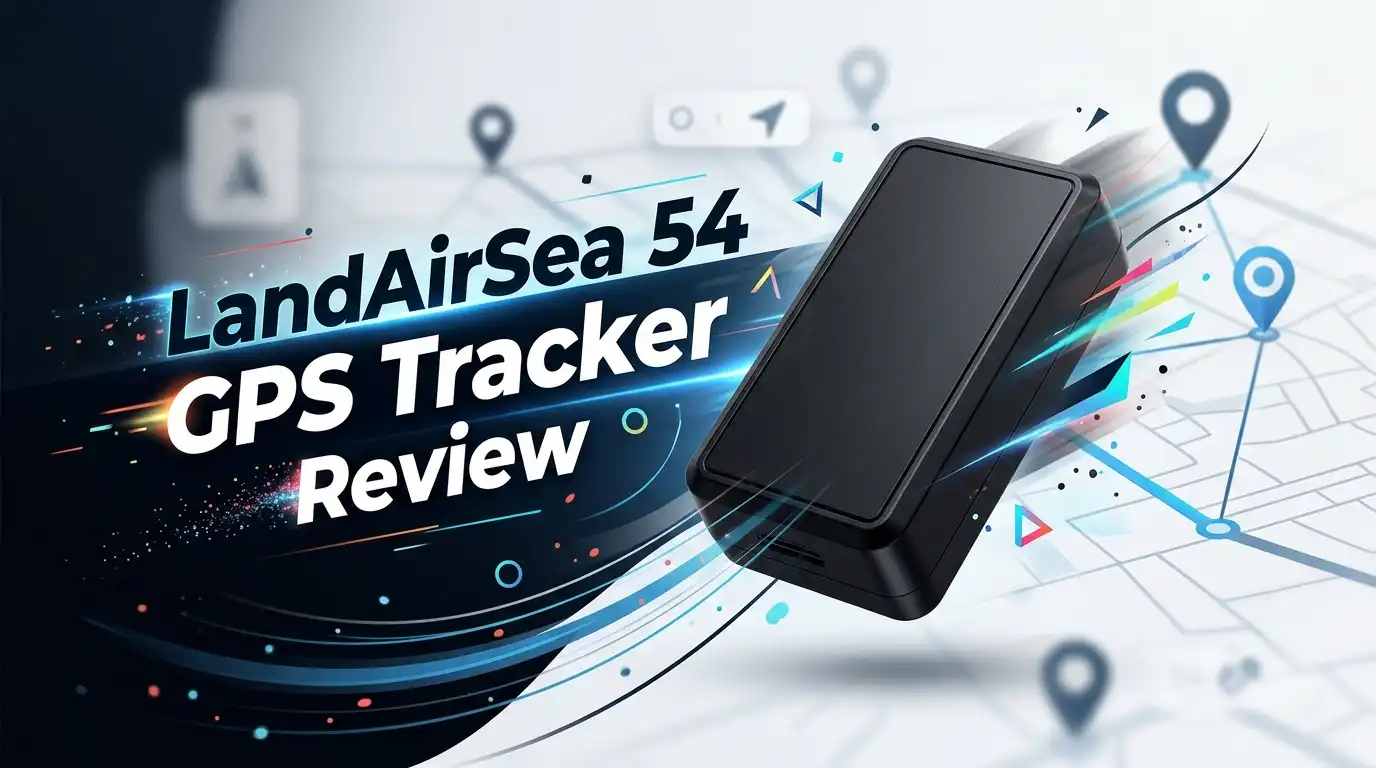
When your package arrives, you’ll find the GPS device itself—a compact black rectangle roughly the size of a car air freshener. The build quality feels solid, not cheap or plasticky.
The magnet on the bottom is genuinely strong. It won’t accidentally slide off your vehicle or fall from a metal surface.
Inside the box you also get a USB-C charging cable, a basic instruction manual, and small documentation about your subscription requirements. The packaging is minimal, which means less unboxing excitement but also less waste.
The device itself weighs less than three ounces, so you’ll forget it’s there. The screen shows minimal information—just the power indicator—because all the tracking happens through the SilverCloud app on your phone.
There’s no touchscreen or complicated interface on the physical device. It’s designed to work silently in the background.
The Experience: Real-Time Tracking That Actually Works
When you first activate the device, expect a brief setup period. You’ll download the SilverCloud app, create an account, and enter your subscription details.
The subscription fee ranges from $9.95 per month for two-year prepaid plans up to $19.95 for month-to-month flexibility. This ongoing cost is important to factor into your decision—the device itself is only half the equation.
Once activated, the three-second update interval becomes immediately noticeable. Open the app, and your vehicle’s location refreshes constantly. This isn’t a five-minute delay like some competitors offer.
Three-second updates mean you can watch your car move in real-time, see when someone stops at an intersection, or verify that your equipment actually left the parking lot. The accuracy stays within a few meters in most conditions, though urban canyons with tall buildings can sometimes add uncertainty.
The geofencing feature works exactly as advertised. You set a boundary around your home, office, or jobsite, and the app alerts you instantly when the tracker enters or exits that zone.
Speed notifications let you know if your vehicle exceeds a threshold you define. Historical playback shows you everywhere the device traveled over any date range you select. For someone managing fleet vehicles or expensive equipment, this data creates accountability and helps identify patterns.
Battery Life and the Charging Reality
The manufacturer claims seven to fourteen days of battery life, and real-world testing confirms these numbers hold up. The actual duration depends heavily on your tracking frequency setting.
If you’re pulling location data every few seconds continuously, you’ll see the lower end of that range. If you adjust the app to request updates less frequently, battery stretches toward two weeks. Most users find themselves charging every ten days with moderate use.
The USB-C charging takes roughly two to three hours for a complete charge from empty. This is standard for devices in this category. The battery doesn’t degrade dramatically after a few charging cycles, so you won’t see a dramatic reduction in performance within the first year of ownership.
Who This Works For and Who It Doesn’t
This tracker excels for vehicle owners who want theft recovery assistance, parents managing teenage drivers, fleet managers overseeing multiple vehicles, or business owners protecting expensive equipment that moves between job sites. It’s also valuable for anyone storing a vehicle long-term who wants to verify it hasn’t been disturbed.
This tracker underperforms for different use cases. If you’re trying to track a person discreetly, the device is too large for a pocket or purse. If you need months of battery life without charging, look elsewhere.
If budget is tight and you can’t afford the monthly subscription, this isn’t the choice. The subscription requirement is non-negotiable—without it, the device becomes a paperweight because it has no way to transmit location data.
Potential Irritants and Honest Drawbacks
The monthly subscription is not optional and represents ongoing cost beyond the initial purchase. While $9.95–$19.95 per month isn’t astronomical, it adds up to $120–$240 annually. Some users find this frustrating when they already own the hardware.
The device requires cellular coverage to function. In rural areas with poor 4G LTE signals, the tracker struggles to report location reliably. If you’re covering remote territory, you might experience gaps in tracking data. This isn’t a device failure—it’s a cellular coverage limitation that affects all real-time trackers.
The app occasionally shows minor loading delays when you’re on slower internet connections. The interface itself is straightforward, but it lacks some cosmetic polish compared to apps from manufacturers with bigger tech budgets.
Moisture can occasionally accumulate inside the battery compartment if the device experiences extreme temperature swings. This is rare and doesn’t affect most users, but it’s worth noting if you’re storing the device in conditions that swing from freezing to hot.
Top 3 Alternatives for Real-Time GPS Trackers

Last update on 2026-07-30 / Affiliate links / Images from Amazon Product Advertising API Some of the links on this website are affiliate links, which means that at no additional cost to you, I earn a commission if you click through and make a purchase. I only recommend products and services that I believe will add value to my readers. Thank you for your support!

Last update on 2026-07-28 / Affiliate links / Images from Amazon Product Advertising API Some of the links on this website are affiliate links, which means that at no additional cost to you, I earn a commission if you click through and make a purchase. I only recommend products and services that I believe will add value to my readers. Thank you for your support!

Last update on 2026-08-02 / Affiliate links / Images from Amazon Product Advertising API Some of the links on this website are affiliate links, which means that at no additional cost to you, I earn a commission if you click through and make a purchase. I only recommend products and services that I believe will add value to my readers. Thank you for your support!
Comparing Real-Time Update Speeds
The LandAirSea 54’s three-second refresh rate stands out in this space. Most competitors offer updates every five to sixty seconds depending on the plan tier.
Faster updates cost more because more frequent cellular connections drain battery faster and generate higher data usage. The LandAirSea 54 balances speed against battery life reasonably well, though aggressive three-second updating will shorten each charge cycle.
Installation Without Complications
Simply locate a metal surface on your vehicle, wipe it clean, and press the device firmly against the surface. The magnet does the rest. No drilling, no wiring into your vehicle’s electrical system, no professional installation needed.
Removal is equally simple—pull straight away and the device releases. This magnetic mounting also means you can easily move the tracker between vehicles or remove it when selling your car.
For equipment tracking, the same principle applies. Stick it to the trailer hitch, the metal toolbox, or any flat metal surface. The waterproof rating means you don’t need to protect it from weather.
Real User Feedback from Trustpilot and Reddit
Users consistently praise the accuracy and magnet strength. Vehicle owners report successful theft recovery with police assistance using location data from the LandAirSea 54.
Fleet managers mention they’ve reduced equipment losses significantly after installing these trackers. The three-second update speed receives repeated mentions as a major differentiator.
Criticism centers primarily on subscription requirements and occasional dead zones in cellular coverage. Some users wish the monthly fee was lower or optional. A small number report customer service delays when requesting subscription support or account modifications.
Monthly and Annual Cost Breakdown
A two-year prepaid subscription costs approximately $239.88 total ($9.95 per month), bringing annual cost to roughly $119.94. A month-to-month subscription at $19.95 monthly costs $239.40 annually.
The device itself typically sells for $100–$150 depending on current promotions. Your total first-year cost ranges from $220–$400 depending on subscription choice and device price. Second-year and beyond costs only reflect the subscription fee if you already own the device.
Does the Warranty Cover Magnet Failure?
The manufacturer’s standard warranty covers manufacturing defects for twelve months. This includes magnet separation if the adhesive fails from normal use.
It does not cover damage from dropping the device, extreme heat exposure, or using non-magnetic surfaces. The warranty is straightforward—no hidden conditions—but you must register your device within thirty days of purchase to activate coverage.
How Accurate is the GPS Location Data?
Under optimal conditions, you’ll see accuracy within three to ten meters of the actual location. Urban environments with clear sky visibility typically deliver the tighter accuracy.
Tunnels, parking garages, or dense urban areas with tall buildings can reduce accuracy to within twenty to fifty meters. This is still close enough for recovery or accountability purposes, but not precise enough to know which parking space your vehicle occupies.
How Long Does Charging Actually Take?
From completely empty to full charge takes approximately two to three hours using the included USB-C cable. Partial charges happen faster—forty percent charge in roughly forty-five minutes. The battery supports fast charging without degradation, so plugging in whenever convenient won’t harm long-term battery health.
Will the Tracker Work in My Country?
The LandAirSea 54 uses global GNSS (GPS, GLONASS, Galileo) positioning combined with 4G LTE cellular service. If your country supports 4G LTE networks through cellular carriers, the device works. If you live in a rural area without any cellular coverage, it won’t function. The app works worldwide on any smartphone with internet connectivity.
What Happens If I Stop Paying the Subscription?
Your device stops transmitting location data and the app displays no recent information. The hardware itself still exists and functions normally, but you lose all tracking capability. If you resume the subscription later, the device reactivates and begins tracking again without requiring any hardware changes.
Should You Buy the Most Recent Version?
The LandAirSea 54 has remained relatively stable for several years with minor software updates rather than hardware redesigns. The current version performs comparably to previous iterations. There’s no compelling reason to wait for a newer model if you find the current one available at a good price.
Is the Magnet Strong Enough for Highways?
Yes, extensively. Users report the magnet holds securely even at highway speeds and through aggressive driving. The device doesn’t slide or vibrate loose due to vehicle movement. Wind and vibration don’t affect the magnetic bond.
What Happens to Location Data If My Subscription Lapses?
Any historical data stored on your account remains accessible as long as you maintain your subscription. If your subscription ends, you lose access to the historical records. If you later reactivate the subscription, your previous data doesn’t return. This data retention policy is consistent across most subscription-based tracking services.
Can Multiple People Access One Device?
Yes, the SilverCloud app allows you to share device access with up to five people. Each person downloads the app, logs into their own account, and you grant them permission to view a specific device’s location. This works well for families managing a shared vehicle or businesses where multiple fleet managers need visibility.
Does the Battery Percentage Show in the App?
Yes, the app displays remaining battery life as a percentage. You’ll receive low battery warnings when capacity drops below twenty percent, giving you advance notice to charge before the device loses power entirely.
Disclosure: This content is part of an Amazon Creator Connections campaign, meaning I earn a commission from qualifying purchases. Using these links costs you nothing extra but directly supports my blog and future content.

Hello everyone my name is Alenya and i am a gadget discovering Enthusiast 🐻🐻