Pentax K1000 Review: A Comprehensive Guide
The Pentax K1000 stands as one of the most iconic film cameras ever made. This mechanical marvel captured hearts from 1976 to 1997. Photographers around the world still praise this camera for its simplicity and reliability.
You want to know if this camera deserves the hype. You need to understand what makes it special.
This complete review shows you everything about the Pentax K1000 and the best products you can buy on Amazon today.
Key Takeaways:
- The Pentax K1000 is a fully mechanical 35mm SLR camera that operates without batteries except for the light meter which needs one small LR44 battery
- This camera remained in production for 21 years from 1976 to 1997 making it one of the longest produced cameras in history
- You get a simple but effective design with shutter speeds from 1 second to 1/1000 second plus bulb mode for longer exposures
- The K mount lens system gives you access to thousands of compatible lenses from Pentax and third party manufacturers
- Photography schools and universities chose this camera as their recommended teaching tool for decades because it forces you to learn manual exposure
- The camera maintains excellent build quality with a durable metal body that can last for generations with proper care

Last update on 2026-08-28 / Affiliate links / Images from Amazon Product Advertising API Some of the links on this website are affiliate links, which means that at no additional cost to you, I earn a commission if you click through and make a purchase. I only recommend products and services that I believe will add value to my readers. Thank you for your support!
Pentax K1000 Manual Focus SLR Film Camera with 50mm Lens
The classic Pentax K1000 comes with the legendary 50mm f/2 lens. This combination creates the perfect starter kit for film photography. The camera body features all metal construction. You feel the quality when you hold it. The 50mm lens delivers sharp images with beautiful color rendition. Many photographers never need another lens.
This camera teaches you photography the right way. You must set the aperture manually. You must choose the correct shutter speed. You must focus by hand. These actions connect you to the image making process. Modern cameras do everything automatically. The K1000 makes you think about each shot. This mindful approach improves your photography skills dramatically.
The light meter inside the camera works with one small battery. The meter uses a simple needle display in the viewfinder. You match the needle to get correct exposure. This system proves reliable and easy to understand. Even if the battery dies your camera still works perfectly. You can estimate exposure or use an external light meter. This battery independence makes the K1000 incredibly reliable for travel and outdoor photography.
Understanding the Pentax K1000 Camera Body and Build Quality
The Pentax K1000 features a robust metal body construction. Asahi Optical manufactured this camera in Japan during its early production years. Later models came from Hong Kong and China. The Japanese versions often command higher prices among collectors. All versions share the same basic design and functionality.
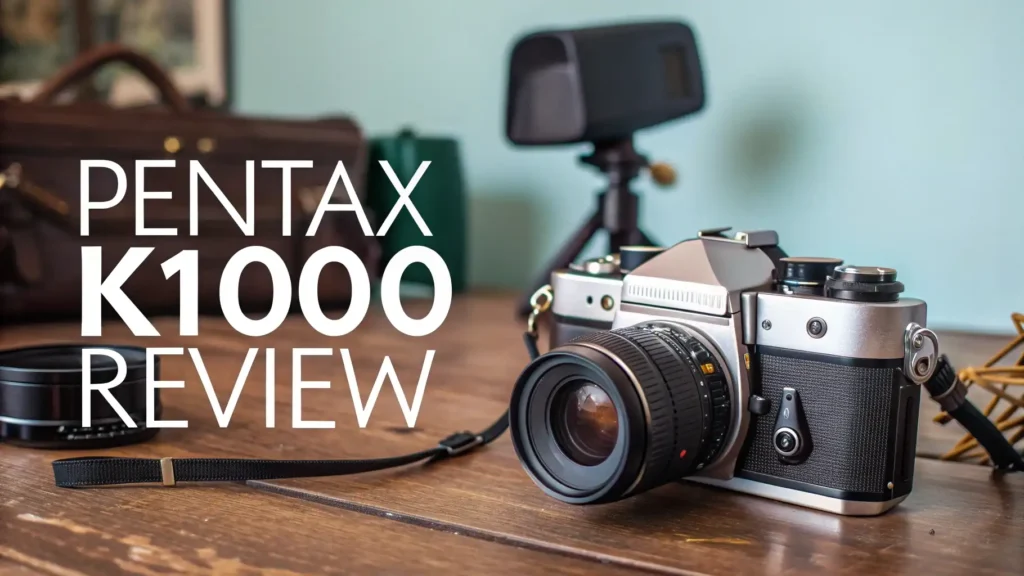
The camera weighs approximately 620 grams without a lens. This substantial weight gives you stability when shooting. The black finish looks professional and resists minor scratches. Chrome accents add visual interest. The top plate contains all essential controls. You find the shutter speed dial on the left. The film advance lever sits on the right. The rewind crank occupies the left side.
The camera design emphasizes simplicity and durability. No complicated electronic circuits exist inside. Fewer components mean fewer things can break. The horizontal travel cloth shutter proves remarkably reliable. Many K1000 cameras from the 1970s still work perfectly today. This longevity explains why photographers trust this camera for important projects.
The viewfinder offers bright and clear viewing. The pentaprism design shows approximately 91 percent of the actual frame. You see most of what the film captures. The focusing screen includes a microprism collar and split image rangefinder. These focusing aids help you achieve sharp focus quickly. The viewfinder also displays the light meter needle for exposure guidance.
Pentax K1000 Renewed Version: Budget Friendly Film Photography

Last update on 2026-08-28 / Affiliate links / Images from Amazon Product Advertising API Some of the links on this website are affiliate links, which means that at no additional cost to you, I earn a commission if you click through and make a purchase. I only recommend products and services that I believe will add value to my readers. Thank you for your support!
Amazon offers renewed Pentax K1000 cameras at competitive prices. These cameras undergo inspection and testing. Qualified technicians verify all functions work correctly. You get a camera ready to shoot film immediately. The renewed option costs less than pristine collector examples. This makes film photography accessible to more people.
Renewed cameras may show cosmetic wear. Small scratches or paint loss happens with vintage equipment. These minor imperfections do not affect image quality. The mechanical components matter most. A camera with a worn exterior often functions as well as a mint condition example. Smart photographers focus on functionality over appearance.
The renewed Pentax K1000 usually includes the 50mm f/2 lens. This lens focal length works perfectly for general photography. You can shoot portraits landscapes and street photography. The f/2 maximum aperture allows shooting in lower light conditions. The lens design dates back decades but still produces excellent results on film. Many professional photographers consider this lens a hidden gem.
Buying renewed saves money for film and developing costs. Film photography requires ongoing investment in consumables. Each roll of film costs money. Processing and scanning add more expenses. Starting with a renewed camera leaves more budget for actually shooting photographs. You build your skills while spending less money initially.
Top 3 Alternatives for Pentax K1000

Last update on 2026-08-28 / Affiliate links / Images from Amazon Product Advertising API Some of the links on this website are affiliate links, which means that at no additional cost to you, I earn a commission if you click through and make a purchase. I only recommend products and services that I believe will add value to my readers. Thank you for your support!

Last update on 2026-08-28 / Affiliate links / Images from Amazon Product Advertising API Some of the links on this website are affiliate links, which means that at no additional cost to you, I earn a commission if you click through and make a purchase. I only recommend products and services that I believe will add value to my readers. Thank you for your support!

Last update on 2026-08-28 / Affiliate links / Images from Amazon Product Advertising API Some of the links on this website are affiliate links, which means that at no additional cost to you, I earn a commission if you click through and make a purchase. I only recommend products and services that I believe will add value to my readers. Thank you for your support!
The Canon AE-1 represents the main competitor to the Pentax K1000. This camera offers aperture priority automation. You set the aperture and the camera chooses the shutter speed. Many photographers prefer this semi automatic operation. The AE-1 costs similarly to the K1000 in the used market. Both cameras teach fundamental photography skills effectively.
The Nikon FM2 delivers professional level performance in a compact body. This camera features a titanium shutter capable of 1/4000 second. The faster shutter speed helps in bright conditions. The FM2 costs more than the K1000 but offers additional capabilities. Professional photographers used this camera as a backup body. The build quality exceeds even the excellent K1000 standards.
How the K Mount Lens System Expands Your Creative Options
The Pentax K mount revolutionized lens compatibility when introduced in 1975. This bayonet mount system allows quick lens changes. You rotate the lens about 70 degrees to lock it in place. The mount includes mechanical linkages for aperture control. This purely mechanical connection works reliably for decades without electronic failures.
Pentax produced hundreds of different K mount lenses over the years. You find everything from 15mm fisheyes to 600mm super telephotos. Third party manufacturers like Sigma Tamron and Tokina made excellent K mount options. This enormous selection gives you unlimited creative possibilities. You never feel limited by lens availability with the K mount system.
The 50mm f/1.7 lens offers the best value for K1000 shooters. This lens costs less than the f/1.4 version while delivering similar sharpness. The maximum aperture of f/1.7 still allows beautiful background blur. Many photographers shoot exclusively with this lens. The classic focal length works for most photographic situations.
Wide angle lenses open new creative possibilities. The 28mm f/2.8 lens provides a moderately wide view. This focal length works well for environmental portraits and landscapes. The price remains reasonable for excellent optical quality. A 28mm lens complements your 50mm perfectly. These two lenses cover most shooting situations.
Manual Focus Mastery: Learning to Shoot Like a Pro
Manual focus seems intimidating to photographers raised on autofocus cameras. The Pentax K1000 forces you to master this essential skill. The split image rangefinder in the viewfinder makes focusing easier. You align the two halves of the split image. When the halves match perfectly the image is in focus.
The microprism collar surrounds the split image rangefinder. This area shows a shimmering pattern when out of focus. The pattern disappears when you achieve sharp focus. These focusing aids work together to ensure accurate focus. Most beginners master manual focus within a few shooting sessions.
Focus technique matters more than you might think. You should focus then recompose your shot. This technique works when your subject is not in the center of the frame. Focus on the most important element first. Lock focus by maintaining pressure on the focus ring. Recompose your shot to achieve better composition. This workflow becomes second nature with practice.
The Light Meter System and Exposure Fundamentals
The Pentax K1000 uses a center weighted light meter. This meter measures light from the entire frame but emphasizes the center area. The system works well for most photographic situations. The meter cell uses CdS technology proven reliable over decades. One small LR44 battery powers the meter circuit.
The meter needle appears on the right side of the viewfinder. You see a plus sign at the top and a minus sign at the bottom. A circle marks the center position indicating correct exposure. You adjust aperture or shutter speed to center the needle. This simple system teaches you the exposure triangle quickly.
Understanding the relationship between aperture shutter speed and ISO forms the foundation of photography. The aperture controls depth of field and light quantity. The shutter speed controls motion blur and light quantity. The ISO determines film sensitivity to light. Changing one parameter requires adjusting another to maintain correct exposure.
Film Loading and Operation Tips for Perfect Results
Loading film correctly prevents light leaks and wasted frames. Open the camera back by pulling up the rewind knob. Insert your film canister into the left chamber. Pull the film leader across to the take up spool. Insert the leader into one of the slots. Advance the film using the film advance lever.
Close the camera back firmly. Advance the film two or three times while pressing the shutter button. Watch the rewind knob. The knob should rotate when you advance the film. This confirms the film is loading properly. Set your ISO dial to match your film speed. The ISO dial has no electronic function but helps you remember your film speed.
The film advance lever features a comfortable angle and length. One smooth stroke advances the film and cocks the shutter. The lever also serves as a grip for your thumb when shooting. This design element demonstrates the thoughtful engineering of the K1000. Small details like this make the camera pleasant to use.
Shutter Speeds and Creative Control Options
The Pentax K1000 offers shutter speeds from 1 second to 1/1000 second. You also get bulb mode for exposures longer than one second. This range covers most photographic needs. The shutter speed dial clicks firmly into each position. You cannot accidentally move the dial while shooting.
Fast shutter speeds freeze action. Use 1/500 or 1/1000 for sports and wildlife. These speeds stop motion cleanly. Moderate shutter speeds around 1/125 work well for general photography. This speed prevents camera shake with normal lenses. Slower speeds create intentional motion blur for creative effects.
The bulb mode requires you to hold the shutter button down. The shutter stays open as long as you press the button. This mode works perfectly for night photography and light painting. You need a cable release for bulb exposures longer than a few seconds. Holding the button causes camera shake during long exposures.
Essential Accessories to Enhance Your K1000 Experience

Last update on 2026-08-28 / Affiliate links / Images from Amazon Product Advertising API Some of the links on this website are affiliate links, which means that at no additional cost to you, I earn a commission if you click through and make a purchase. I only recommend products and services that I believe will add value to my readers. Thank you for your support!
A lens cap protects your front element from scratches and dirt. The 49mm size fits the standard 50mm lens. Always use a lens cap when not shooting. This simple accessory prevents costly lens repairs. Quality lens caps snap on securely but remove easily when needed.
A camera strap makes carrying your K1000 comfortable. Choose a wide padded strap for extended shooting sessions. The strap attaches to metal lugs on the camera body. These lugs prove very strong and secure. Many photographers prefer vintage leather straps for classic aesthetic appeal.
Extra batteries for the light meter should always stay in your camera bag. LR44 batteries are small and inexpensive. Keep two or three spares with you. Battery failure at a critical moment causes frustration. This simple preparation ensures you never miss important shots.
Film Stock Recommendations for Your Pentax K1000

Last update on 2026-08-28 / Affiliate links / Images from Amazon Product Advertising API Some of the links on this website are affiliate links, which means that at no additional cost to you, I earn a commission if you click through and make a purchase. I only recommend products and services that I believe will add value to my readers. Thank you for your support!
Kodak Ultramax 400 offers excellent value for everyday shooting. This film handles various lighting conditions well. The 400 ISO speed allows shooting in lower light without flash. Colors appear vibrant and pleasing. The film costs less than professional options while delivering quality results. Many professional photographers shoot Ultramax for personal projects.
Black and white film creates timeless images with classic appeal. Kodak Tri-X 400 remains the gold standard for black and white photography. This film delivers beautiful grain structure and excellent tonal range. The film responds well to push processing when you need extra speed. Tri-X works perfectly for documentary and street photography styles.
Slide film produces incredible color saturation and sharpness. Fujichrome Velvia creates intensely vivid colors. Landscapes shot on Velvia show breathtaking color depth. Slide film requires precise exposure. You get much less latitude than negative film. This discipline improves your exposure skills dramatically.
Maintenance and Care for Long Term Reliability
Clean your camera regularly but gently. Use a soft brush to remove dust from the exterior. Never use compressed air inside the camera body. The high pressure can damage the shutter curtain. A blower brush works safely for removing dust. Clean the viewfinder with a microfiber cloth designed for optics.
The mirror and focusing screen require special care. Never touch these surfaces with your fingers. Oil from your skin damages the coatings permanently. Dust on these surfaces usually does not affect your images. Only clean when absolutely necessary. Use proper cleaning tools designed for camera internals.
Store your camera in a dry environment with moderate temperature. Humidity causes fungus growth on internal surfaces. Fungus damages the viewfinder prism permanently. Use silica gel packets in your camera bag to control humidity. Replace these packets regularly to maintain effectiveness.
Common Problems and Simple Solutions
Viewfinder fungus affects many older K1000 cameras. This fungus grows on the prism surfaces. You see dark spots or hazy areas when looking through the viewfinder. Fungus does not affect image quality but impairs viewing. Professional cleaning removes fungus but costs money. Prevention through proper storage works better than cure.
Sticky shutter speeds plague cameras stored improperly. The shutter mechanism accumulates old lubricant that thickens over time. Low shutter speeds may run slowly or stick completely. A qualified technician can clean and lubricate the shutter mechanism. This repair restores proper function and costs less than buying another camera.
Light seals deteriorate with age. These foam seals prevent light from leaking into the camera. Degraded seals cause light streaks on your film. Replacement seals cost very little. Many photographers replace seals themselves using kits available online. This simple maintenance prevents ruined photographs.
Why Photographers Still Choose the K1000 in 2026
The film photography renaissance brings new interest to classic cameras. Young photographers discover the K1000 offers unique benefits. The camera slows down your shooting process. You think more carefully about each frame. This mindful approach creates better photographs than spray and pray digital shooting.
The mechanical operation appeals to photographers tired of electronic complexity. Modern cameras feature hundreds of menu options. The K1000 has no menus at all. Every control sits immediately accessible. You never dig through submenus to change settings. This directness feels refreshing after using complicated modern cameras.
Learning on manual cameras builds technical skills that transfer to any system. Understanding exposure manually helps you shoot better with automatic cameras too. You know what the camera does behind the scenes. This knowledge makes you a more capable photographer regardless of equipment.
Frequently Asked Questions
Does the Pentax K1000 need batteries to take pictures?
No, the Pentax K1000 operates completely mechanically without batteries. You can shoot photographs even with a dead battery. The camera only needs one small LR44 battery to power the light meter. All shutter speeds work without any power. This makes the K1000 extremely reliable for travel and outdoor photography.
What type of film works best in the Pentax K1000?
The Pentax K1000 accepts any standard 35mm film. You can use color negative film, black and white film, or slide film. Most photographers start with Kodak Gold 200 or Ultramax 400 for general shooting. These films offer good latitude and affordable prices. Choose your film based on lighting conditions and desired aesthetic results.
Can I use modern lenses on the Pentax K1000?
Yes, modern Pentax K mount lenses work on the K1000 with limitations. The camera only supports manual focus and aperture control. Modern autofocus lenses must be operated manually on the K1000. The aperture ring must be set manually rather than electronically. Most photographers prefer vintage manual focus lenses for authenticity and cost effectiveness.
How much does a Pentax K1000 cost today?
Prices for the Pentax K1000 vary widely based on condition. Working cameras typically range from 100 to 250 dollars. Cameras with the 50mm lens cost more than body only options. Pristine examples command higher prices from collectors. Renewed and refurbished options on Amazon provide tested cameras at fair prices with some warranty protection.
Is the Pentax K1000 good for beginners?
The Pentax K1000 is excellent for beginners learning film photography. The simple controls make understanding exposure easy. You must master aperture shutter speed and focus manually. This hands on learning builds fundamental skills quickly. Photography schools recommended this camera for students for decades. The rugged construction forgives beginner handling mistakes.
What shutter speed should I use for handheld shooting?
The general rule suggests using a shutter speed faster than your focal length. With a 50mm lens use at least 1/60 second. With a 135mm lens use at least 1/125 second. This prevents blur from camera shake. Faster shutter speeds always work better if lighting permits. Your personal camera holding technique affects this rule significantly.
How do I know if my Pentax K1000 works properly?
Test all shutter speeds by listening to the sound. Each speed should sound distinctly different. Slow speeds should run longer than fast speeds obviously. Check the film advance mechanism for smooth operation. Look through the viewfinder at a bright surface. The image should appear clear and bright. The light meter needle should move when pointing at different brightness levels.

Hello everyone my name is Alenya and i am a gadget discovering Enthusiast 🐻🐻