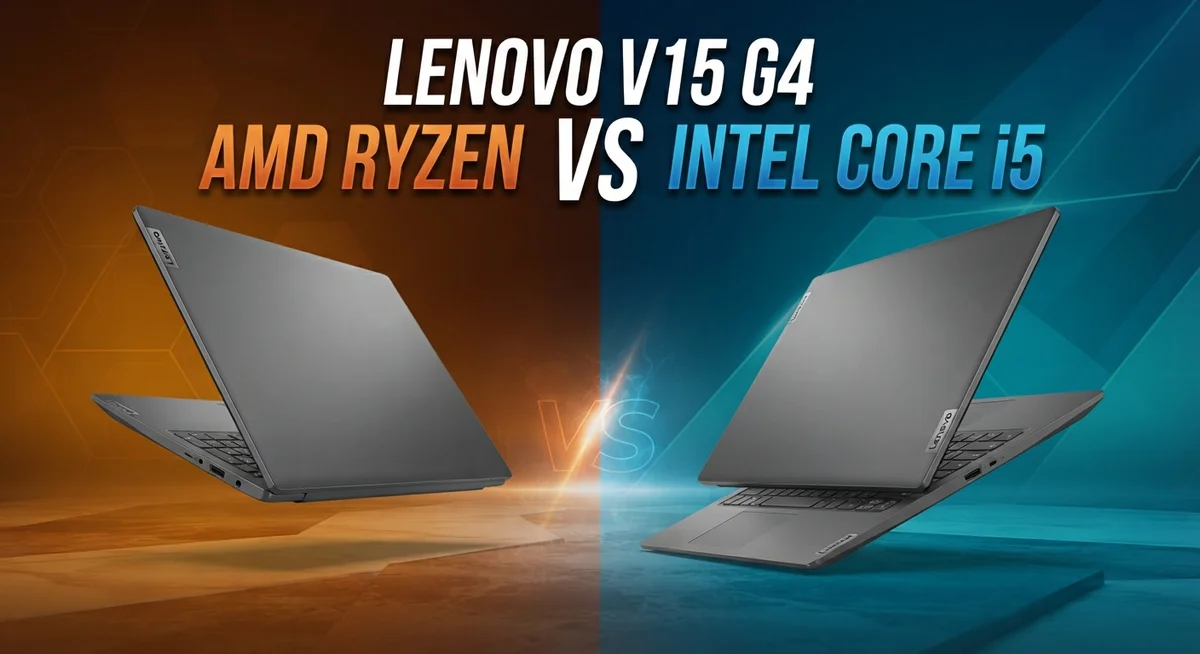
Lenovo V15 G4 AMD Ryzen vs Intel Core i5: Who Wins?
Choosing a new laptop feels like a big decision. You want speed, good build quality, and a display that does not hurt your eyes.
The Lenovo V15 G4 with AMD Ryzen and the Lenovo with Intel Core i5 both aim to please. But they take very different paths to get there.
The Ryzen model brings a lighter footprint for simple tasks. It handles browsing, emails, and basic office work without fuss.
The Intel Core i5 version steps up with stronger performance. It manages multitasking, light gaming, and demanding apps with ease.
Quick Comparison: Lenovo V15 G4 Amd Ryzen vs Lenovo Intel Core I5
| Feature | Lenovo V15 G4 Amd Ryzen | Lenovo Intel Core I5 |
|---|---|---|
| Processor | AMD Ryzen 5 7520U (2.8–4.3 GHz) | Intel Core i5-13450HX (up to 4.6 GHz) |
| Graphics | Radeon 610M integrated GPU | Integrated Intel graphics |
| RAM | Non-upgradable RAM | 8–16 GB configurable |
| Storage | Fixed configuration | 512 GB–1 TB SSD |
| Display | 15.6″ FHD TN panel | FHD, IPS options available |
| Build Quality | Cheap plastic build | Sturdier, premium options |
| Battery Life | Decent battery life | ~13 hours light use |
| Best Use | Light office work, browsing | Multitasking, light gaming |
Lenovo V15 G4 Amd Ryzen Review

Last update on 2026-08-09 / Affiliate links / Images from Amazon Product Advertising API Some of the links on this website are affiliate links, which means that at no additional cost to you, I earn a commission if you click through and make a purchase. I only recommend products and services that I believe will add value to my readers. Thank you for your support!
The Lenovo V15 G4 with AMD Ryzen 5 7520U is an entry-level laptop built for everyday computing. It runs Windows 11 Home and features a 15.6″ FHD display, making it ideal for office work, web browsing, and light productivity tasks.
The processor delivers clock speeds from 2.8 to 4.3 GHz, paired with integrated Radeon 610M graphics. Battery life potential is solid for light use, giving you several hours away from a power outlet without strain.
The build uses plastic materials throughout, which keeps weight down but feels less premium than higher-end models. The display uses a TN panel, so viewing angles and contrast suffer when you tilt the screen or sit at an angle.
RAM and storage come soldered to the motherboard, meaning you cannot upgrade them later. This locks you into your initial configuration from day one.
Pros
- Light and portable for travel or daily commutes
- Handles email, documents, and streaming smoothly
- Decent battery endurance for basic tasks
- Simple, no-frills design suits minimalist workflows
Cons
- Non-upgradable RAM limits future flexibility
- TN display shows poor viewing angles and washed-out colors
- Plastic chassis feels flimsy compared to metal alternatives
Lenovo Intel Core I5 Review

Last update on 2026-08-09 / Affiliate links / Images from Amazon Product Advertising API Some of the links on this website are affiliate links, which means that at no additional cost to you, I earn a commission if you click through and make a purchase. I only recommend products and services that I believe will add value to my readers. Thank you for your support!
The Lenovo V15 G4 with Intel Core i5 targets professionals and students who need reliable multitasking performance. This model pairs a 13th-generation Intel Core i5 processor (up to 4.6 GHz) with configurable RAM and storage, making it flexible for different workloads.
The Intel processor uses a hybrid core architecture that balances speed and efficiency better than older generations. You get real performance gains when running multiple applications, video calls, or light creative work simultaneously.
Build quality jumps significantly compared to budget alternatives, with sturdier materials and better thermal management. The machine stays quiet during everyday use and maintains steady performance without throttling under moderate load.
Battery life stretches to approximately 13 hours during light use, making it genuinely portable for full workdays. Display options include IPS panels with better color accuracy and viewing angles than basic TN screens.
Pros
- Faster processing with hybrid core architecture and higher clock speeds up to 4.6 GHz
- Exceptional battery endurance for school and work environments
- Superior thermal control keeps the laptop cool and quiet
- Multiple port options and upgrade flexibility with configurable RAM and SSD
Cons
- Higher price point than entry-level alternatives
- ThinkPad variants carry premium pricing for the brand name
- Heavier than ultraportable models despite solid build quality
Head to Head: Key Differences
The AMD Ryzen 5 7520U runs at 2.8 to 4.3 GHz with integrated Radeon 610M graphics. The Intel Core i5 (13th gen) reaches up to 4.6 GHz and uses a hybrid core design that handles speed and efficiency together.
In real world use, the Intel processor completes tasks faster. The AMD option works fine for email, documents, and web browsing but slows down when you open multiple programs at once.
The Intel model gives you about 13 hours of battery life during light work. The AMD version offers decent battery endurance but typically falls short by a few hours.
Display quality differs significantly between the two. The AMD Ryzen laptop uses a TN panel with narrow viewing angles and weak contrast, while Intel options often feature IPS screens with better color accuracy and wider viewing angles.
Build materials tell different stories. The AMD model relies on plastic throughout, which keeps it light but feels less solid in hand.
The Intel version uses sturdier materials and manages heat better, so the fan runs quieter during demanding tasks.
Upgrade options matter for longevity. The AMD laptop has RAM and storage soldered directly to the motherboard, so you cannot change them later.
The Intel model typically offers more configuration flexibility at purchase time.
Thermal performance favors Intel significantly. The hybrid architecture and better cooling system mean the Intel laptop stays cooler under pressure and produces less noise.
The AMD variant can get warm during extended use and the fan kicks in more often.
For everyday office work and casual browsing, the AMD Ryzen handles the job well. For multitasking, school projects, or light creative work, the Intel Core i5 delivers noticeably better performance and reliability.
Which One Should You Buy
The Lenovo Intel Core i5 model stands out as the overall winner in this comparison. It offers stronger performance, better build quality, and longer battery life.
Its efficient thermal management also makes it a more capable and well-rounded machine. This makes it the smarter pick for anyone who needs consistent daily performance.
Still, the Lenovo V15 G4 AMD Ryzen has its own strengths for simpler needs. Your final choice depends on how you plan to use your laptop daily.
Best for each buyer
- Lenovo V15 G4 AMD Ryzen: This model suits users who need a simple laptop for basic office tasks, web browsing, and light everyday productivity.
- Lenovo Intel Core i5: This model suits students or professionals who need reliable multitasking performance, long battery life, and durability for demanding schoolwork, office use, or light gaming.
Frequently Asked Questions
Which laptop handles demanding applications better?
The Intel Core i5 model wins here. Its hybrid core architecture combines performance cores and efficiency cores to tackle heavy workloads faster.
The i5 reaches speeds up to 4.6 GHz, while the AMD Ryzen 5 7520U maxes out at 4.3 GHz. Real world tasks complete noticeably quicker on Intel.
The AMD variant suits light office work and web browsing. For video editing, coding, or running multiple programs at once, the Intel processor delivers smoother performance without slowdowns.
How do these laptops compare for battery life?
Intel pulls ahead significantly here. Expect around 13 hours of battery life during light use on the Intel model.
The AMD Ryzen option offers decent endurance but falls short of Intel’s efficiency.
This matters if you spend full workdays away from outlets. The Intel version keeps running through classes, meetings, and commutes without needing a charge break.
Which one stays cooler and quieter?
Intel’s thermal management is superior. The fan runs quieter during demanding tasks because the processor handles heat more efficiently.
The AMD variant can get warm during extended use, triggering the fan more often.
You’ll notice the difference in quiet environments like libraries or offices. The Intel model won’t distract you or your neighbors.
Does display quality differ between them?
Yes, significantly. The AMD Ryzen model uses a TN panel with poor viewing angles and weak contrast.
Colors shift when you tilt the screen.
Intel variants often feature IPS display options with better color accuracy and wider viewing angles. This matters if you edit photos, watch videos, or work with graphics.

Hello everyone my name is Alenya and i am a gadget discovering Enthusiast 🐻🐻