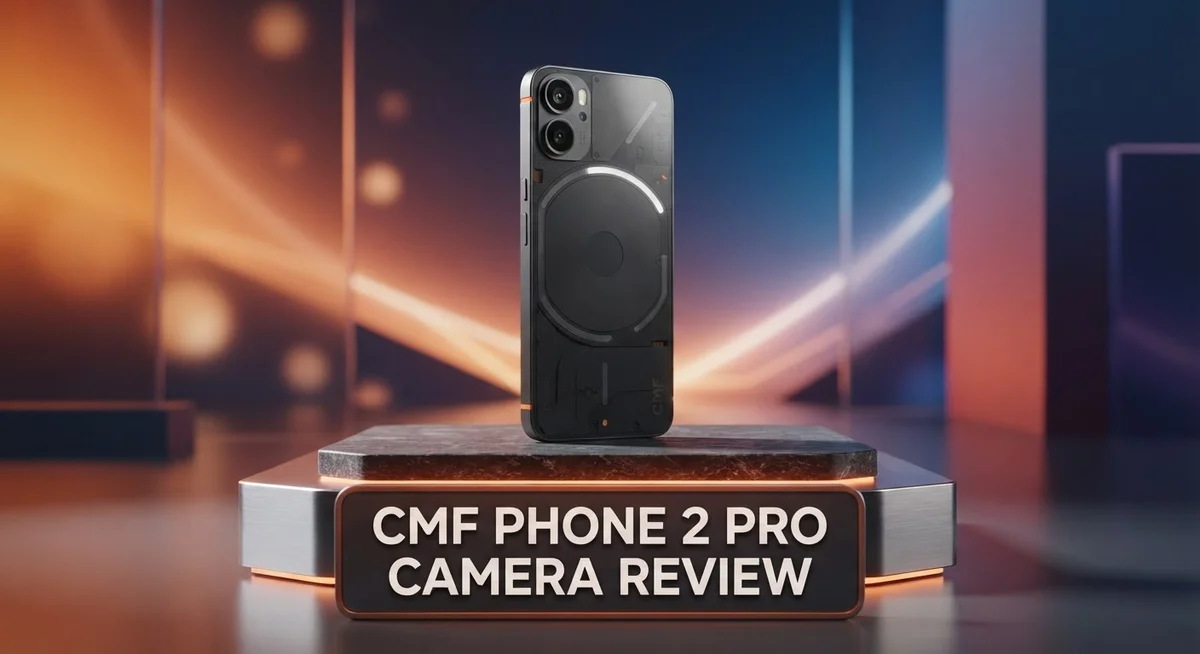
CMF Phone 2 Pro Camera Review: Live Up To The Hype?
The CMF Phone 2 Pro brings a bold camera setup to the table. It packs a 50MP main sensor, a 50MP telephoto lens, and an 8MP ultra wide camera. This trio promises flexibility for everyday shooting.
Many phones in this space skip good hardware. This one does not. The large Samsung GN9 sensor pulls in 64% more light than its predecessor. That means brighter shots even before software kicks in.
But specs only tell half the story. How does the CMF Phone 2 Pro camera perform in real life? Does it handle daylight shots well? Can it manage tricky low light scenes?
In a Nutshell
- The 50MP main sensor grabs 64% more light than the previous model. This helps in daylight shots and adds punch to colors.
- A 50MP telephoto lens gives you real 2x zoom without quality loss. You also get up to 20x digital zoom for distant subjects.
- The 8MP ultra-wide camera rounds out a flexible three-lens system. You can switch styles fast for different scenes.
- Low light is the weak spot here. Photos lose detail and clarity once the sun goes down.
- There is no optical image stabilization. Shaky hands may notice blur in tricky shots.
- The 16MP front camera handles daytime selfies fine but struggles indoors or at night.
- Some users swap to GCam for brighter shots and better shadow detail. Stock camera software still needs polish.
Camera Specifications and Sensor Quality
The sensor quality on the CMF Phone 2 Pro sets a solid foundation for mobile photography. The main camera uses Samsung’s GN9 sensor, which measures 1/1.57 inches. This larger sensor size means each pixel captures more light information, especially important when shooting in varied conditions.
The 50MP resolution paired with an f/1.88 aperture creates a capable daylight performer. Wide apertures like this let more light reach the sensor, so your photos stay sharp even when conditions aren’t perfect. The telephoto camera features a similar 50MP count but uses an Omnivision sensor in a ½.88″ format. This keeps the 2x zoom option optically clean without relying on software tricks.
Sensor performance shows real strengths in bright outdoor scenes. Colors pop with natural vibrancy, and the dynamic range handles both bright skies and shadowed areas reasonably well. The ultra-wide 8MP camera rounds out the setup with a ¼” sensor and f/2.2 lens. This gives you a wider field of view for landscapes and group shots, though it sacrifices some detail compared to the main lens.
One important limitation stands out: the absence of optical image stabilization (OIS) affects video and handheld shots. Without OIS, movement translates directly into your footage. This becomes especially noticeable in low light, where longer exposure times amplify any camera shake.
The front facing 16MP sensor handles daytime selfies adequately. Indoor or nighttime selfies reveal the weakness, as the smaller ⅓” sensor struggles to gather sufficient light. Some users report that the stock camera app produces darker output than expected, which impacts perceived image quality.
The hardware foundation here is genuinely solid for the segment. The sensor sizes and aperture values suggest the engineers prioritized light capture and detail. However, software processing plays an equally important role in final image quality. The camera system’s real-world performance ultimately depends on how well the computational photography algorithms work together with these physical components.

Last update on 2026-09-17 / Affiliate links / Images from Amazon Product Advertising API Some of the links on this website are affiliate links, which means that at no additional cost to you, I earn a commission if you click through and make a purchase. I only recommend products and services that I believe will add value to my readers. Thank you for your support!
Daylight and Color Performance
Daylight performance on the CMF Phone 2 Pro shines where it matters most. The 50MP main sensor with its f/1.88 aperture captures sunlit scenes with impressive clarity. You get vibrant, punchy colors that feel natural without looking oversaturated.
The large 1/1.57″ Samsung GN9 sensor does heavy lifting in bright conditions. It pulls in 64% more light than the previous generation. This means your outdoor shots retain detail in both shadows and highlights. The dynamic range handles tricky backlit situations reasonably well.
Colors stay consistent across different lighting angles. Reds don’t bleed into adjacent areas. Blues hold their depth. Greens render with realistic tone. The camera’s color science leans slightly warm, which many users prefer for skin tones and landscapes.
The 50MP telephoto lens performs admirably in daylight. Its 2x magnification keeps quality intact without visible degradation. You can frame distant subjects without losing sharpness. The f/1.85 aperture on this secondary sensor helps it maintain detail even when zoomed.
The 8MP ultra-wide camera rounds out daylight versatility. Wide shots stay sharp from edge to edge. Distortion correction works smoothly without obvious warping. Colors match the main sensor reasonably well, though slight differences appear in specific tones.
One real-world observation: the stock camera app produces slightly darker output than some competitors. This isn’t a flaw for daylight shooting, but it means you may adjust exposure slightly more often than expected. GCam users report brighter, warmer results with better shadow recovery. Some photographers prefer the stock app’s more conservative approach.
Handheld stability matters for daylight shots too. Without optical image stabilization, you’ll notice slight motion blur in video or when shooting at slower shutter speeds. This limitation becomes more apparent indoors or in shade, but daylight shooting usually stays sharp.
Overall, daylight photography on this phone delivers solid results. Colors feel accurate. Details stay crisp. The multi-camera system gives you genuine shooting flexibility. You’ll capture good photos in sunny conditions without technical frustration.
Low-Light Photography and Night Mode
Low light photography reveals where the CMF Phone 2 Pro shows its limitations. The larger 50MP main sensor captures 64% more light than before, yet the phone still struggles when darkness falls. Night mode performance lags behind what you might expect from the hardware alone.
The absence of optical image stabilization becomes painfully obvious in dim environments. Handheld shots turn blurry without steady hands or a tripod. Video recording at night shows visible shake and reduced clarity. This omission hurts more in low light than it does during daylight shooting.
The stock camera app produces noticeably darker output in night scenes. Colors shift toward muddy tones. Shadow details disappear into black patches. Highlights blow out too easily. The software processing simply doesn’t extract the full potential from that large sensor.
Many users discover that switching to GCam (Google Camera alternative) transforms night results. Brighter images emerge immediately. Shadows reveal hidden details. Warm tones replace the cool color cast. The same hardware suddenly performs much better with different software. This gap between stock and alternative apps shows the real bottleneck: processing, not sensors.
The 16MP front camera performs even worse at night. Selfies turn grainy and dark. Facial details blur together. Indoor lighting barely helps. You’ll want to avoid night selfies altogether with this phone.
The telephoto lens also struggles in low light. The narrower f/1.85 aperture and smaller sensor size limit light collection. Digital zoom amplifies noise rather than detail. Night zoom shots look particularly rough.
Real-world night photography requires compromises here. Long exposures produce motion blur without stabilization. High ISO settings introduce visible grain. HDR mode takes time but helps somewhat. The phone simply cannot match flagship night performance at this segment.
If night photography matters to you, understand these limitations upfront. The CMF Phone 2 Pro excels in daylight but shows clear weakness when the sun disappears. The large sensor helps during day, yet software and stabilization gaps prevent it from becoming a night powerhouse.
Top 3 Alternatives
Nothing Phone 2a

Last update on 2026-09-17 / Affiliate links / Images from Amazon Product Advertising API Some of the links on this website are affiliate links, which means that at no additional cost to you, I earn a commission if you click through and make a purchase. I only recommend products and services that I believe will add value to my readers. Thank you for your support!
The Nothing Phone 2a offers a clean software experience with minimal bloatware. You get a 50MP main camera sensor that captures sharp details in daylight conditions. The phone runs Nothing OS, which keeps your interface simple and fast.
The camera app feels intuitive. You can switch between modes quickly without confusion. Night mode performs decently for a mid-range device. The ultra-wide lens gives you flexibility when framing shots. Video recording stays stable thanks to effective stabilization.
Battery life stretches through a full day of heavy use. The display is bright and responsive. Processing power handles daily tasks without lag.
Motorola Edge 50

Last update on 2026-09-17 / Affiliate links / Images from Amazon Product Advertising API Some of the links on this website are affiliate links, which means that at no additional cost to you, I earn a commission if you click through and make a purchase. I only recommend products and services that I believe will add value to my readers. Thank you for your support!
Motorola Edge 50 features a 50MP primary camera with optical image stabilization. This means your photos stay sharp even when your hands move slightly. The sensor captures vibrant colors in various lighting situations.
The zoom capabilities work well up to 2x without losing detail. Night photography improves significantly compared to budget phones. The camera interface stays minimal, which many users prefer.
This phone runs near-stock Android, so you get fast updates and clean software. The display delivers excellent brightness outdoors. Processing performance remains smooth during everyday activities.
Samsung Galaxy A55

Last update on 2026-09-17 / Affiliate links / Images from Amazon Product Advertising API Some of the links on this website are affiliate links, which means that at no additional cost to you, I earn a commission if you click through and make a purchase. I only recommend products and services that I believe will add value to my readers. Thank you for your support!
Samsung Galaxy A55 brings a 50MP main camera with advanced computational photography. The phone processes images to enhance details and colors automatically. You get Samsung’s software refinements that many photographers appreciate.
The ultra-wide camera provides a 123-degree field of view. Macro mode lets you capture small objects with clarity. Video stabilization performs exceptionally well across different frame rates.
The display offers vibrant colors with good brightness levels. Battery endurance reaches two days with moderate use. Samsung’s One UI adds useful camera features without overwhelming the interface.
Zoom Capabilities and Telephoto Performance
The CMF Phone 2 Pro includes a dedicated 50MP telephoto lens with a 2x optical zoom capability. This secondary camera operates at f/1.85 aperture with a ½.88″ Omnivision sensor. The setup lets you frame subjects closer without losing detail in bright conditions.
Daylight telephoto performance stands out as genuinely solid. The 2x magnification captures crisp, detailed shots when you need to zoom in on distant subjects. Colors remain consistent with the main camera output. Details stay sharp across the frame. You get reliable framing flexibility during outdoor photography sessions.
Beyond the native 2x optical zoom, the phone supports up to 20x digital zoom. Digital magnification works best in well-lit environments where the sensor captures plenty of light. Beyond 5x to 10x magnification, expect some softness in fine details. The digital zoom serves occasional use rather than everyday shooting.
The telephoto lens shows real limitations in low light situations. Without optical image stabilization, handheld shots become challenging when light drops. The camera struggles to maintain sharpness in dim indoor spaces or evening scenes. You’ll notice increased noise and color shifts in darker telephoto shots. The 2x lens essentially inherits the low-light challenges that affect the main camera.
Switching between the main and telephoto cameras during daylight work feels natural. The transition preserves exposure consistency. Colors don’t shift dramatically when you swap between lenses. This multi-camera approach gives you shooting flexibility for framing different compositions.
For practical use, treat the telephoto lens as a daylight specialist. It excels when you need closer framing in bright outdoor settings. The 2x optical option beats digital cropping from the main sensor in terms of detail retention. However, if your photography happens mostly indoors or during evening hours, the telephoto becomes less useful.
The telephoto setup rounds out the camera system nicely for general photography needs during daylight hours. It doesn’t revolutionize mobile zoom, but it handles common zoom scenarios competently when light conditions cooperate.
Front Camera and Selfie Quality
The 16MP front camera on the CMF Phone 2 Pro handles selfies in daylight reasonably well. You get decent detail and color accuracy when shooting in bright outdoor conditions. The sensor captures skin tones without excessive smoothing, which many users appreciate.
However, the front camera shows real weaknesses in low light situations. Indoor selfies and evening shots lose clarity quickly. The lack of optical image stabilization becomes noticeable when you’re holding the phone at arm’s length in dim environments. Your selfies may appear softer or blurrier than you’d like.
Daylight selfies perform better than you might expect from a 16MP sensor. The phone maintains good edge definition and doesn’t over-process your face. Colors stay true without artificial warmth or coolness. Group selfies work fine too, thanks to the wide field of view.
The front camera struggles with backlit situations. When the sun sits behind you or bright windows appear in the background, the phone has difficulty balancing exposure. Your face tends to darken while the background remains bright. This is a common limitation across many phones at this specification level.
Night mode on the front camera leaves much to be desired. The phone doesn’t offer dedicated night selfie modes. You’re stuck with what the standard camera app provides, which often results in grainy, dark images. Many users find themselves avoiding selfies entirely in low light conditions.
Portrait mode on the front camera works adequately in daylight. The phone creates decent background blur with reasonable edge detection around your face. Results look natural without excessive smoothing or artificial bokeh effects.
If you take frequent selfies in challenging lighting, you’ll notice limitations here. The front camera prioritizes daylight performance over low light capability. For casual daytime selfies and video calls in well-lit rooms, the 16MP sensor does its job. Just understand that evening or indoor photography demands better lighting conditions to shine.
Pros and Cons
Pros
- 50MP main sensor with large 1/1.57″ Samsung GN9 chip captures 64% more light than the previous model
- Vibrant, punchy colors with solid dynamic range in daylight shooting
- Dedicated 50MP telephoto lens delivers crisp 2x optical zoom performance during the day
- Versatile multi-camera setup gives you flexibility across wide, standard, and zoomed framing
- Excellent hardware specs for the price point you’re paying
Cons
- No optical image stabilization means handheld shots suffer in dim lighting or when zooming
- Low light performance falls short, with noticeably darker output from the stock camera app
- 16MP front camera struggles badly at night and in backlit situations
- Software processing needs work; switching to GCam alternative produces noticeably brighter, warmer night images with better shadow recovery
Who Should Buy It
The CMF Phone 2 Pro camera works best for specific types of users. If you shoot mostly during daylight hours, this phone delivers solid results. Bright outdoor scenes bring out vibrant colors and sharp details. The large main sensor captures plenty of light in sunny conditions.
Content creators who focus on daytime photography will appreciate the versatile setup. The main, ultra-wide, and telephoto lenses give you multiple framing options. You can switch between them smoothly without losing quality. Telephoto shots in daylight are particularly impressive. The 2x magnification captures crisp details when you need closer framing.
This phone suits people who rarely use the front camera. If you take occasional selfies in good lighting, the 16MP front camera performs adequately. However, if you frequently shoot selfies in dim rooms or at night, look elsewhere. The front camera struggles badly in low light situations.
Travel photographers will find the multi-camera system helpful. You get wide shots for landscapes, standard framing for general scenes, and zoomed shots for distant subjects. The 64% improvement in light capture over the previous model makes a real difference in outdoor travel photography.
Skip this phone if you need excellent low light performance. The stock camera app produces noticeably darker images at night. Without optical image stabilization, handheld shots become blurry in dim lighting. Night mode doesn’t compensate enough for these limitations.
Users who want to customize their camera experience should consider GCam. The alternative app produces brighter night images and better shadow recovery. This requires extra setup, but it improves overall low light results significantly.
The CMF Phone 2 Pro fits photographers who accept trade-offs. You get excellent daytime performance and a versatile camera system. You sacrifice low light capability and front camera quality. If your photography happens mainly in daylight, this phone delivers real value. If you shoot frequently at night or take many selfies in dim lighting, the limitations will frustrate you.
Final Verdict
The CMF Phone 2 Pro camera delivers a mixed bag of strengths and weaknesses. Its hardware punches above its class, giving you a genuinely capable setup for daytime shooting.
Software remains the weak link here. The image processing doesn’t fully unlock what the sensors can do, especially once light fades.
This gap between hardware and software is the biggest takeaway from our testing. You get premium sensor specs paired with camera app tuning that plays it safe.
Nothing’s team clearly has room to improve through future updates. A few software patches could brighten shadows and boost overall consistency across lighting conditions.
For now, buyers should judge this camera on what it delivers today. Don’t wait for promised improvements that may or may not arrive.
The multi-lens system remains this phone’s calling card. You get real flexibility between wide and zoomed shots without needing extra gear.
That flexibility matters if you shoot varied subjects throughout your day. Switching between framing styles feels natural and quick.
Think of this camera as a solid all rounder with one clear blind spot. Daylight photography feels rewarding, while night shooting feels held back.
Should you buy this phone for its camera alone? That depends entirely on your shooting habits and priorities.
Frequent night shooters or serious selfie takers might find better options elsewhere. Casual users who mostly shoot outdoors during the day will likely feel satisfied.
The overall package still impresses when you consider everything packed into this device. Few phones in this segment offer three dedicated rear lenses working together.
Our final take is simple. Buy this phone if you value daytime versatility and don’t mind supplementing with GCam for tougher lighting scenarios.
Skip it if night photography or selfie perfection tops your list. Every camera involves trade offs, and this one asks you to accept darker low light shots in exchange for daytime flexibility and strong core hardware.
Frequently Asked Questions
Does the CMF Phone 2 Pro have optical image stabilization?
No, it doesn’t. The camera lacks OIS, which means handheld shots can blur in dim lighting or when you zoom in. This is the main hardware limitation you’ll notice during casual photography.
How does the 50MP telephoto lens perform?
The 2x telephoto delivers crisp, detailed shots during daylight hours. It uses a dedicated 50MP sensor, so you get genuine optical zoom rather than digital cropping. Daytime telephoto photos come out sharp and vibrant.
Can this phone handle low light photography?
Low light is where the CMF Phone 2 Pro struggles most. The stock camera app produces noticeably darker images in dim conditions. The 16MP front camera performs particularly poorly at night and in backlit situations.
Should I use GCam instead of the stock camera app?
GCam produces brighter images with warmer tones and better shadow recovery. If you want to customize your camera experience and improve low light output, GCam is worth trying. The gap between hardware and software is the biggest takeaway from testing.
Who should buy this phone for its camera?
Content creators focused on daytime photography will appreciate the versatile multi-camera setup. Travel photographers benefit from the flexibility across wide, standard, and zoomed framing. Skip this phone if you shoot frequently in low light or rely heavily on the front camera. Think of this camera as a solid all rounder with one clear blind spot.

Hello everyone my name is Alenya and i am a gadget discovering Enthusiast 🐻🐻