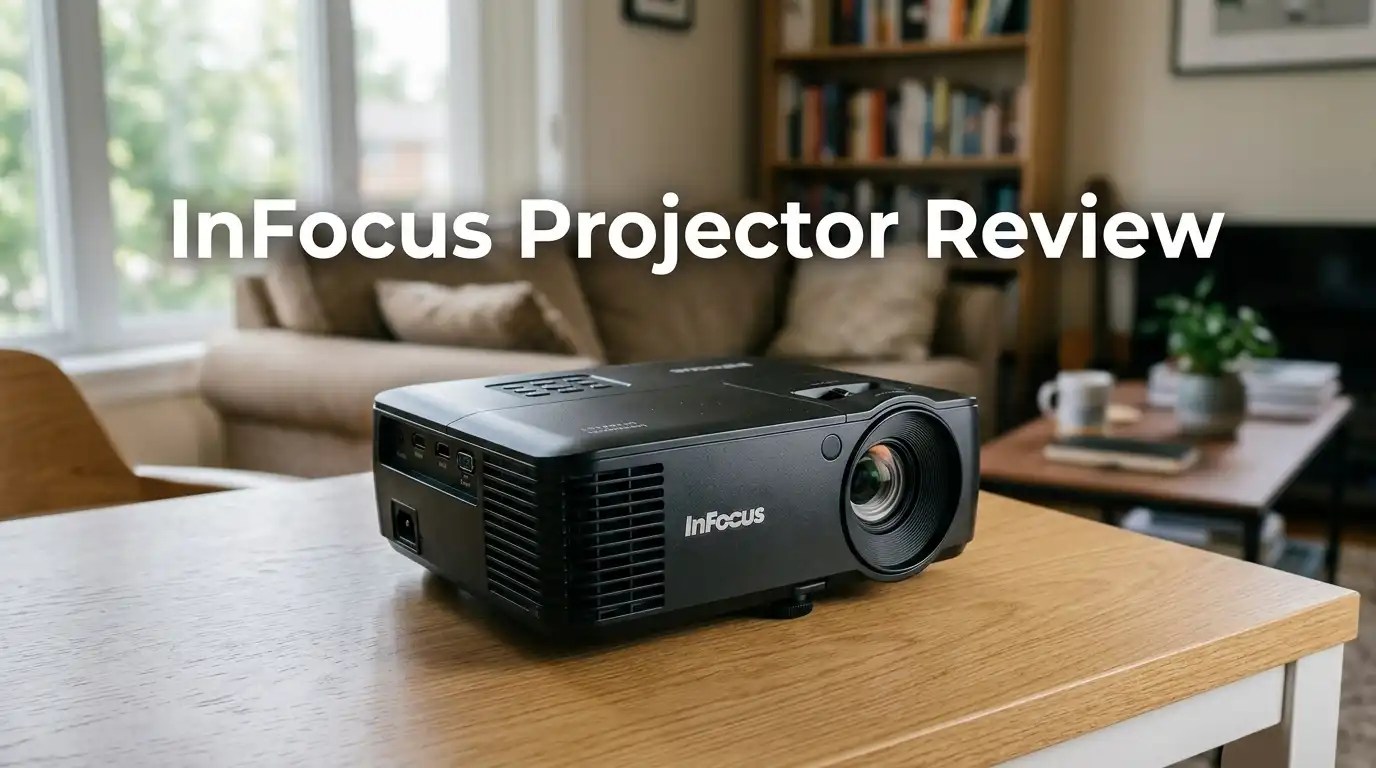
InFocus Projector Review 2026: Top Tier or Trash?
Are you searching for a projector that lights up your room the right way? The InFocus projector promises clear images for classrooms and meeting spaces. But does it truly deliver enough brightness for your needs?
Many buyers want a screen that stays sharp even with some ambient light. This InFocus model uses 3LCD technology to push out crisp visuals. It aims to serve schools and small offices without fuss.
We tested its performance across different settings. You will learn how it handles daylight, dim rooms, and everything between. We also checked the fan noise and picture clarity that users care about most.
In a Nutshell
- Brightness performs well in mid-sized rooms. Conference spaces and classrooms get clear, sharp images. Direct sunlight or high glare rooms may still challenge the lamp.
- The 3LCD technology pairs with a UHP lamp. This combo delivers steady color output. Text and presentations stay crisp during regular use.
- Fan noise shows up at startup. It settles down once the unit warms up. Many users find the pitch tolerable during meetings.
- Video quality dips on entry level models. Budget versions show softer detail during motion scenes. Business use cases still work fine for slides and static content.
- Audio output stays weak. You will want external speakers for movies or presentations. The built in sound is fine for quiet rooms only.
- VGA connections cause quality loss. HDMI ports give a cleaner signal path. Stick with digital inputs when possible for the best picture.
Brightness and Light Output
InFocus projectors use 3LCD technology paired with UHP lamps to deliver light output suitable for mid-sized spaces. The brightness levels work well in conference rooms and classrooms where you need clear visuals without excessive ambient light interference.
The brightness performance shines in controlled environments. You get consistent illumination across the screen without hot spots or dark corners. This makes the projector reliable for presentations where viewers sit at various distances from the display.
However, daylight and high-ambient light settings present challenges. If your room has large windows or bright overhead lighting, you may notice the image appears washed out. The projector struggles to compete with strong natural light or intense indoor lighting. For these situations, you would need to close curtains or dim the room significantly.
The 3LCD engine produces balanced color output alongside brightness. This combination helps maintain image clarity even when the lamp runs at higher intensity settings. Unlike single-chip alternatives, the 3LCD approach distributes light more evenly across colors.
Real world brightness depends on your room setup. A dedicated presentation space with controlled lighting will show the best results. Temporary setups in bright offices or outdoor venues will disappoint. The projector performs predictably in the spaces it was designed for.
Fan noise accompanies the brightness delivery. When the lamp runs at full power, the cooling system kicks in louder. This becomes noticeable during quiet moments in your presentation, though many users accept this as standard for the technology type.
Brightness uniformity holds steady across the screen. You won’t see significant fading at the edges compared to the center. This consistency matters when you display detailed charts, graphs, or text that viewers need to read from all angles.
For schools and offices with standard indoor lighting, the brightness output meets expectations. Educational institutions and corporate meeting rooms see reliable performance. The projector delivers what these environments require without overshooting or underperforming.
If brightness in bright rooms matters most to you, compare competitor options before deciding. Some alternatives specialize in high-lumen output specifically for challenging lighting conditions.

Last update on 2026-07-28 / Affiliate links / Images from Amazon Product Advertising API Some of the links on this website are affiliate links, which means that at no additional cost to you, I earn a commission if you click through and make a purchase. I only recommend products and services that I believe will add value to my readers. Thank you for your support!
Image Quality and Resolution
Image quality depends on resolution, color accuracy, and how sharp your content appears on screen. InFocus projectors use 3LCD technology to separate light into three color channels. This approach delivers balanced colors without the rainbow effect some users notice with single-chip designs.
The Core Series models offer XGA resolution at 1920×1080 native. This means you get crisp text and clear details for presentations and classroom content. The 4:3 aspect ratio works well for traditional business slides. However, if you plan to show movies or widescreen content, you may need to adjust your setup.
Color performance stays consistent across the screen. The 3LCD engine produces uniform brightness and hue from edge to edge. You won’t see dark corners or washed out areas in the middle. This matters when multiple people view from different angles in a conference room or lecture hall.
Video quality varies by model tier. Entry level InFocus projectors show softer edges on moving content. Mid range options handle video more smoothly. The standard throw lens works for typical room distances. If you sit very close or far away, image sharpness may suffer.
VGA connections degrade picture quality compared to HDMI. If your source uses VGA, expect softer text and less vibrant colors. Modern devices use HDMI or wireless connections, so this mainly affects older equipment.
Contrast ratios influence how deep blacks appear. InFocus projectors deliver moderate contrast. Dark scenes won’t look as dramatic as premium models, but they remain watchable. Classroom materials and office charts display with acceptable depth.
HDR support appears on select models. This tech expands the color range and brightness levels. If your content includes HDR, these variants make a real difference.
Real world performance depends on your content type. Presentations and text shine on these projectors. Video playback works adequately. For critical color work or cinema quality viewing, you may want alternatives. Schools and offices find the image quality meets their daily needs without complaint.
Noise Levels and Cooling Performance
InFocus projectors produce audible fan noise during startup and operation. This happens because the cooling system kicks in to manage heat from the UHP lamp. The fan pitch remains relatively low compared to other projector brands, which many users appreciate.
Startup noise peaks when you first power on the unit. The fan ramps up quickly to establish airflow. After the initial burst, sound levels stabilize at a steady hum. In quiet conference rooms or classrooms, you may notice this background noise during presentations.
The cooling performance directly supports the brightness output you get. The UHP lamp generates significant heat to deliver light across mid-sized spaces. The internal fan system works continuously to prevent overheating and maintain consistent performance. Better cooling means the projector maintains brightness levels throughout your presentation or lesson.
Real world noise impact depends on your room environment. In busy offices with existing background sound, the fan noise becomes less noticeable. In silent classrooms or small meeting spaces, you hear it more clearly. Most users report the noise stays manageable during normal operation.
Thermal management affects projector lifespan and reliability. InFocus designs these units with airflow paths that cool the lamp chamber efficiently. Dust buildup inside the projector can reduce cooling performance over time. Regular filter cleaning keeps the fan from working harder and getting louder.
Ventilation placement matters for noise control. Position your projector where air intake and exhaust vents stay unobstructed. Blocked vents force the fan to work harder and generate more noise. Proper mounting or placement reduces thermal stress on the cooling system.
The noise level trade-off comes with brightness benefits. You get reliable light output suitable for daytime indoor use because the cooling system handles heat effectively. If silent operation matters most to you, consider testing the unit in person before committing. Some competitors offer quieter alternatives, though they may sacrifice brightness performance in return.
Top 3 Alternatives
Epson EB-2250U Projector

Last update on 2026-07-28 / Affiliate links / Images from Amazon Product Advertising API Some of the links on this website are affiliate links, which means that at no additional cost to you, I earn a commission if you click through and make a purchase. I only recommend products and services that I believe will add value to my readers. Thank you for your support!
BenQ LU9715 Projector

Last update on 2026-07-27 / Affiliate links / Images from Amazon Product Advertising API Some of the links on this website are affiliate links, which means that at no additional cost to you, I earn a commission if you click through and make a purchase. I only recommend products and services that I believe will add value to my readers. Thank you for your support!
Optoma EH412 Projector

Last update on 2026-07-27 / Affiliate links / Images from Amazon Product Advertising API Some of the links on this website are affiliate links, which means that at no additional cost to you, I earn a commission if you click through and make a purchase. I only recommend products and services that I believe will add value to my readers. Thank you for your support!
Connectivity and Setup
InFocus projectors offer straightforward connectivity options that work well for most business and education settings. The standard models include VGA and HDMI ports, though HDMI delivers noticeably better picture quality than VGA connections.
When you connect via VGA, signal degradation occurs. This older technology struggles with digital content and can produce softer images. HDMI avoids these problems by carrying digital signals directly to your projector. If your space has both options available, choose HDMI whenever possible.
Setup takes minimal time with InFocus units. You unpack the projector, mount it on a ceiling or place it on a stand, and connect your source device. The lens focuses manually using the focus ring on the projector body. Most users complete basic setup in under thirty minutes without technical expertise.
Lamp installation happens easily when replacement time arrives. The lamp cartridge slides into place with clear guides. InFocus includes helpful documentation that shows each step clearly. Experienced users report straightforward maintenance compared to other projector brands.
Wireless connectivity appears on select newer models. This feature lets you stream content from laptops and tablets without cables. The wireless setup process follows standard pairing procedures. Connection stability depends on your network strength and distance from the projector.
Cable management matters in permanent installations. Run HDMI cables through walls or cable trays to keep your space neat. Avoid routing cables near heat sources or sharp edges. Proper cable organization prevents connection issues down the road.
For conference rooms, schools, and training spaces, the connectivity setup proves adequate. You get reliable wired options and wireless alternatives on compatible models. The projector accepts content from standard business devices without special adapters or software. This straightforward approach means less troubleshooting and more time actually presenting your material.
Installation flexibility allows ceiling mounting or tabletop placement depending on your room layout. Most InFocus projectors ship with basic mounting hardware included. Professional installation services remain available if you prefer expert setup in complex environments.
Audio Quality and Speaker Performance
InFocus projectors come with built-in speakers that serve basic audio needs. These speakers deliver sound suitable for small to medium conference rooms and classrooms. The audio output works well when you need simple notification sounds or background audio during presentations.
The speaker performance relies on the projector’s internal amplifier and speaker size. Most InFocus models feature modest speaker components that prioritize portability and compact design. You’ll hear clear dialogue and alert tones, but don’t expect theater-quality sound reproduction. The speakers produce adequate volume for a quiet office environment without straining.
Audio limitations become apparent in larger venues or noisy spaces. If your room has significant background noise, the projector’s speakers struggle to compete. The sound output reaches moderate levels but lacks the power needed for auditoriums or busy training centers. You may need to increase volume significantly, which can cause distortion at maximum settings.
For professional presentations, consider external audio solutions. Most InFocus projectors include standard audio output ports. You can connect external speakers, soundbars, or audio systems to supplement the built-in speakers. This flexibility allows you to match your audio needs to your specific room setup. Many users add a separate speaker system for better sound quality and coverage.
The speaker placement on InFocus projectors typically positions sound output toward the ceiling or rear. This mounting location means audio travels away from your audience rather than directly toward them. Strategic speaker positioning during installation helps direct sound where listeners sit. Ceiling-mounted projectors benefit most from external audio reinforcement.
Startup noise affects the overall audio experience as well. The fan creates audible sounds during power-on and operation. This background noise can interfere with quiet presentations or recordings. Positioning your projector away from sensitive microphones helps minimize this interference.
Bottom line: Use InFocus projectors for basic audio needs only. The internal speakers handle simple sounds and notification tones adequately. For any presentation requiring quality audio, connect external speakers to your projector. This approach gives you flexibility and ensures your audience hears everything clearly regardless of room size or ambient noise levels.
Pros and Cons
Pros
- Produces sufficient brightness for mid-sized conference rooms and school environments
- 3LCD technology delivers reliable performance over extended use
- Fan noise pitch stays relatively low during normal operation
- Straightforward setup works well for business and education settings
- Easy lamp replacement when maintenance time arrives
Cons
- Fan noise peaks noticeably during startup and initial power-up
- Video quality suffers on budget model variants
- Built-in speakers lack power for larger venues or noisy spaces
- VGA connections cause signal degradation that affects image sharpness
- Insufficient brightness for rooms with high ambient light or daylight exposure
Who Should Buy It
InFocus projectors work best for specific user groups with clear needs. If you run a small to mid-sized business, these units fit your conference room setup perfectly. They deliver enough brightness for presentations without overwhelming your space.
School administrators and teachers benefit from InFocus models too. Classrooms need reliable projectors that start quickly and stay quiet during lessons. InFocus delivers on both fronts. The 3LCD technology runs dependably through long school days without constant maintenance headaches.
Training facilities and corporate education teams should seriously consider InFocus options. Your instructors need projectors that handle multiple presentations daily. These units handle that workload well. Setup takes minutes, not hours, which matters when you’re running back to back sessions.
If your room stays indoors with controlled lighting, you’ll be happy. InFocus projectors struggle in bright spaces or rooms flooded with natural light. Daylight environments require something else entirely. Check your room’s light levels before committing.
You should skip InFocus if audio matters to your presentations. The built in speakers sound weak in larger venues. You’ll want external audio equipment anyway. This makes InFocus less ideal for auditoriums or big event spaces.
Avoid these projectors if you depend on cutting edge video quality for design work or video production. Budget models show visible quality drops. Mid-range options perform better, but they’re not cinema grade. Graphic designers and video professionals need different tools.
Users who prefer wireless everything might feel frustrated. While some newer models include wireless options, older InFocus units stick to cables. If your setup requires extensive cable runs, plan accordingly.
Organizations in bright rooms with high ambient light should look elsewhere. The Epson EpiqVision Flex CO-FH02 handles daylight better. BenQ TH575 offers stronger brightness too. These alternatives work when sunlight floods your space.
Bottom line: Buy InFocus if you need a reliable projector for controlled indoor spaces. Schools, training centers, and standard conference rooms get real value here. Skip it if brightness, audio quality, or video performance rank at the top of your priority list.
Final Verdict
InFocus projectors answer the brightness question with a clear yes and no.
Yes, if you use them in a controlled room. Conference rooms and classrooms with dimmed lights get crisp, clear images. The lamp output matches these spaces well.
No, if sunlight floods your room. Daylight washes out the picture fast. Windows without shades become a real problem here.
Think about your actual room first. A windowless training room works great. A sunny sales floor does not.
Teachers running morning classes near windows should test brightness before buying. Corporate teams with blackout curtains face no issues at all.
The core strength stays consistent across models. Indoor use with basic lighting control brings out the best picture quality. This projector shines in that specific setting.
Where it falls short is just as clear. High ambient light exposes the brightness ceiling quickly. Outdoor events or glass walled offices push this projector past its limits.
Competitors like the Epson EpiqVision Flex CO-FH02 target brighter rooms directly. If your space fights natural light daily, that model deserves a look too.
BenQ TH575 also handles brighter environments with more ease. Compare these options if your room lacks light control.
Our final take stays simple. Buy this projector for standard rooms with manageable light. Skip it if you present in bright, open spaces often.
Schools, small offices, and training rooms fit the sweet spot perfectly. Bright showrooms, outdoor setups, and sunlit halls do not.
Match the projector to your room, not the other way around. This single rule decides success or disappointment here.
InFocus delivers solid brightness for its intended use case. It simply was not built to fight daylight. Know your room, and this projector will serve you well for years.
Frequently Asked Questions
Can I use an InFocus projector in a room with windows?
InFocus projectors perform best in spaces with controlled lighting. If your room has windows but you can close blinds or curtains, you’ll get solid results. Direct sunlight or bright daylight flooding the room will wash out the image and make viewing difficult. Test the projector in your actual space before committing. Morning classrooms near windows may struggle unless you manage light carefully.
What causes the noise when I turn on an InFocus projector?
The fan ramps up during startup to cool the UHP lamp quickly. This initial surge creates noticeable noise for the first minute or two. Once the projector reaches operating temperature, the fan settles into a quieter rhythm. The pitch stays relatively low during normal use, so ongoing presentations remain undisturbed.
Will this projector work for video editing or design work?
No. InFocus models prioritize brightness and reliability for business presentations and classroom teaching. Video quality on budget variants suffers noticeably, making them unsuitable for color critical work or video production. If you need accurate colors and sharp detail for design tasks, look at other options that specialize in that area.
Is the built in speaker loud enough for my audience?
The speakers lack power for larger rooms or noisy environments. For small training sessions with 10 to 15 people in a quiet space, audio works adequately. Bigger audiences or venues with background noise need an external speaker system. Most organizations connect their own audio setup anyway.
What connection options does InFocus offer?
Most models include VGA connections, though this older standard degrades signal quality over longer cable runs. Check your specific model for HDMI or wireless options. VGA can affect image sharpness, so use quality cables if that’s your only choice.

Hello everyone my name is Alenya and i am a gadget discovering Enthusiast 🐻🐻