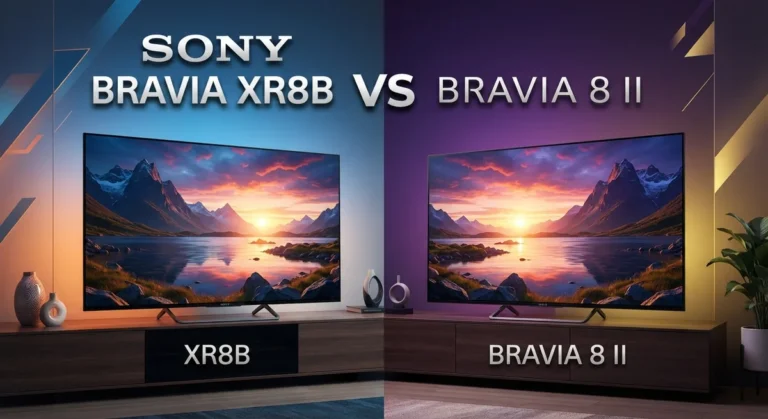
Sony Bravia XR8B vs Samsung QLED: Battle of the Best
Picking a new TV can feel confusing. Two big names often top the list: Sony Bravia XR8B and Samsung QLED.
Both promise stunning 4K pictures. But they use different technology to get there.
Sony’s XR8B uses OLED panels. This gives it deep blacks and near infinite contrast.
Samsung QLED uses Quantum Dot technology. This makes it shine brighter in sunny rooms.
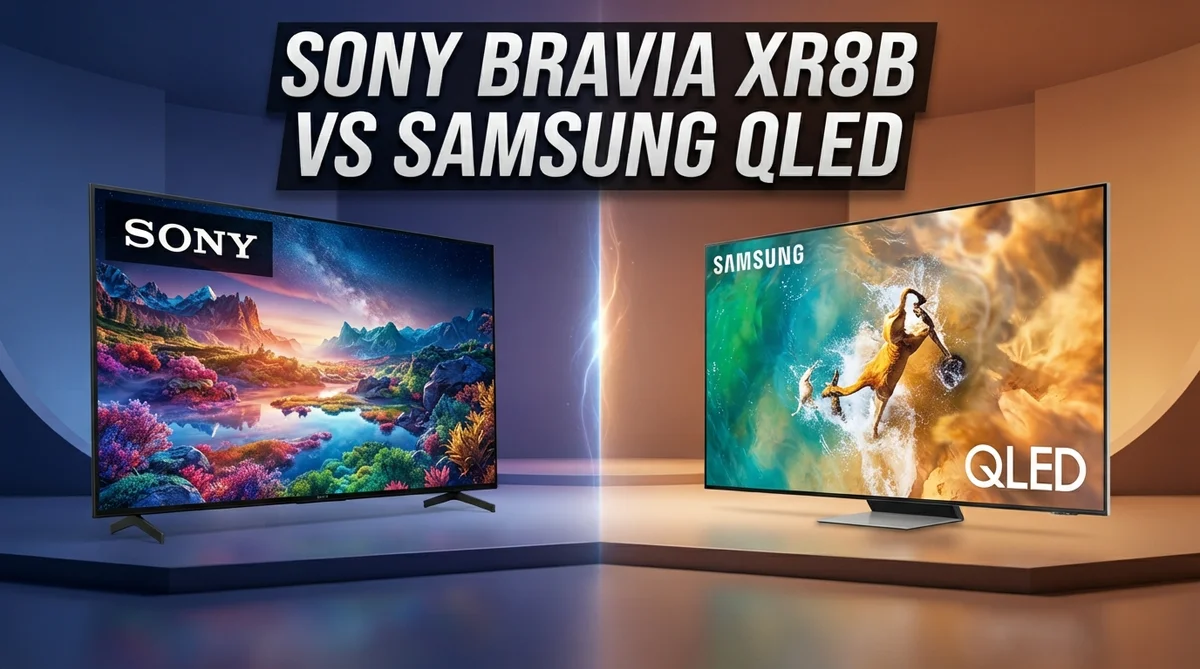
Quick Comparison: SONY Bravia XR8B vs Samsung Qled
| Feature | SONY Bravia XR8B | Samsung Qled |
|---|---|---|
| Display Type | OLED | QLED (Quantum Dot) |
| Resolution | 4K (3840×2160) | 4K |
| Refresh Rate | Native 120Hz | Varies by model |
| HDMI/Gaming | HDMI 2.1, VRR, 2 ports @120fps | Better sustained gaming performance |
| Contrast/Blacks | Near-infinite contrast, perfect blacks | Blooming in high-contrast scenes |
| Peak Brightness | Lower peak brightness | Higher peak brightness |
| Color Accuracy | Excellent skin tones | Accurate, vibrant colors |
| Durability/Reliability | No known issues reported | DSE, vertical discoloration reports |
SONY Bravia XR8B Review

Last update on 2026-09-19 / Affiliate links / Images from Amazon Product Advertising API Some of the links on this website are affiliate links, which means that at no additional cost to you, I earn a commission if you click through and make a purchase. I only recommend products and services that I believe will add value to my readers. Thank you for your support!
The Sony Bravia XR8B is a premium OLED TV that delivers exceptional contrast and picture quality. It comes in 55″ and 65″ sizes, both featuring 4K resolution (3840×2160) and a native 120Hz refresh rate.
This TV shines in dark and controlled lighting environments. The OLED panel produces perfect blacks with zero blooming, creating a viewing experience that feels genuinely cinematic.
The XR8B includes HDMI 2.1 support on two ports, enabling 4K gaming at 120fps with VRR (Variable Refresh Rate) support. Google TV comes built-in, giving you instant access to streaming apps and content.
Real-world performance is strong for movies, shows, and gaming in darker rooms. However, direct reflections can be distracting, and peak brightness falls short compared to competing QLEDs—this matters if your room gets lots of natural light.
Pros
- Near-infinite contrast ratio with true black levels and no blooming
- Excellent skin tone reproduction and realistic image quality
- Full HDMI 2.1 connectivity for next-gen gaming performance
- Native 120Hz refresh rate for smooth motion handling
Cons
- Lower peak brightness makes it less ideal for bright rooms
- Direct reflections can distract from the viewing experience
- Best suited for dark room environments only
Samsung Qled Review


Last update on 2026-09-21 / Affiliate links / Images from Amazon Product Advertising API Some of the links on this website are affiliate links, which means that at no additional cost to you, I earn a commission if you click through and make a purchase. I only recommend products and services that I believe will add value to my readers. Thank you for your support!
Samsung QLED TVs use Quantum Dot technology to deliver bright, vivid pictures that perform exceptionally well in lit rooms. These sets are built for viewers who want vibrant colors and strong brightness without sacrificing image quality.
This TV shines when natural light floods your space. The high peak brightness cuts through glare and keeps your picture clear and engaging, even during daytime viewing.
Gaming performance remains consistent thanks to excellent refresh rate handling and low input lag.
Samsung QLED screens display accurate, punchy colors that pop off the screen. The Quantum Dot layer enhances color volume while maintaining detail in bright scenes.
Build quality is solid, with sturdy panels and reliable frame construction across most models.
Real-world use shows strong performance for sports, action movies, and competitive gaming. The TV handles fast motion smoothly and maintains color accuracy across different content types.
Long-term reliability has raised some concerns among users, particularly with potential discoloration issues.
Pros
- Higher peak brightness makes it ideal for bright rooms and daytime viewing
- Vibrant, accurate colors with excellent saturation and detail
- Strong gaming performance with low input lag and consistent refresh rates
- Excellent value for the picture quality delivered
Cons
- Black levels don’t match OLED depth, appearing more gray in dark scenes
- Blooming occurs around bright objects on dark backgrounds
- Some user reports of durability concerns including discoloration over time
Head to Head: Key Differences
The Sony Bravia XR8B and Samsung QLED represent two distinct approaches to premium television technology. Each excels in different viewing situations.
Contrast and Black Levels
The XR8B’s OLED panel produces true blacks with zero light bleed. Samsung QLED cannot match this depth because the backlight always emits some light, even in dark scenes.
Brightness in Bright Rooms
Samsung QLED delivers significantly higher peak brightness, making it superior when sunlight streams through windows. The XR8B struggles with reflections and loses impact in bright environments.
Color and Vibrancy
Both TVs show accurate colors, but they feel different. Samsung’s Quantum Dot technology creates punchy, vibrant hues that jump off the screen, while Sony prioritizes natural, film-like color accuracy.
Gaming Performance
The XR8B includes full HDMI 2.1 on two ports for 4K gaming at 120fps with VRR support. Samsung QLED also handles gaming well with low input lag, though some models may lack identical next-gen connectivity.
Long Term Durability
User reports suggest Samsung QLED occasionally experiences discoloration issues or vertical banding over time. Sony OLED panels have proven reliable, though burn-in remains a theoretical concern with static images.
Motion and Refresh Rates
The XR8B’s native 120Hz refresh rate handles fast action smoothly. Samsung QLED performs similarly for most content, with no meaningful difference in everyday use.
Best Use Case
Choose the XR8B for dark rooms and cinematic viewing where contrast matters most. Pick Samsung QLED if your space gets bright sunlight or you prioritize sustained gaming sessions with maximum brightness.
Which One Should You Buy
The Sony Bravia XR8B stands out as the overall winner in this matchup. It delivers near-perfect blacks and infinite contrast, giving every scene a realistic depth.
Its OLED panel avoids blooming issues completely. This makes it a more technically advanced display than the Samsung QLED.
For buyers who value picture accuracy and a premium viewing experience, the Sony Bravia XR8B is the smarter pick.
Best for each buyer
- Sony Bravia XR8B: Best for dark room viewing, cinematic content, and buyers who prioritize contrast and realistic image quality.
- Samsung QLED: Best for bright room environments, gaming enthusiasts, and buyers who want vibrant, high-brightness performance.
Frequently Asked Questions
Which TV handles reflections better in a bright living room?
Samsung QLED wins here. Its high peak brightness cuts through sunlight and reduces glare impact.
The Sony Bravia XR8B struggles with direct reflections because OLED screens have lower brightness levels. If your room gets lots of natural light, Samsung delivers a clearer, more watchable picture.
Does the Sony Bravia XR8B have any gaming advantages?
Yes. The XR8B includes full HDMI 2.1 on two ports, letting you play 4K games at 120fps with VRR support.
Both TVs handle motion well, but Sony’s native 120Hz refresh rate feels smoother for fast action. Samsung QLED also supports gaming, though some models have fewer HDMI 2.1 ports depending on the specific model.
What picture quality difference will I actually notice?
Sony delivers deeper blacks and infinite contrast. You’ll see zero light bleed in dark scenes.
Samsung shows brighter, more vibrant colors that pop more. For movies in dim rooms, Sony feels more cinematic.
For sports and bright content, Samsung feels punchier and more energetic. Your room lighting matters most here.
Are there any long-term reliability concerns I should know?
User reports suggest Samsung QLED occasionally experiences discoloration or vertical banding over extended use. Sony OLED panels have proven durability records, though burn-in remains a theoretical risk with static images.
Real-world use shows both TVs hold up well for normal viewing habits. Check the warranty details for your specific model before deciding.
Which TV should I choose for movie watching?
Pick the Sony Bravia XR8B. Its OLED panel avoids blooming completely and produces true blacks that make films feel immersive.
Skin tones look realistic. The contrast balance feels natural, not exaggerated.
Samsung works fine for movies too, but Sony creates a more theatrical, premium experience for cinematic content.

Hello everyone my name is Alenya and i am a gadget discovering Enthusiast 🐻🐻