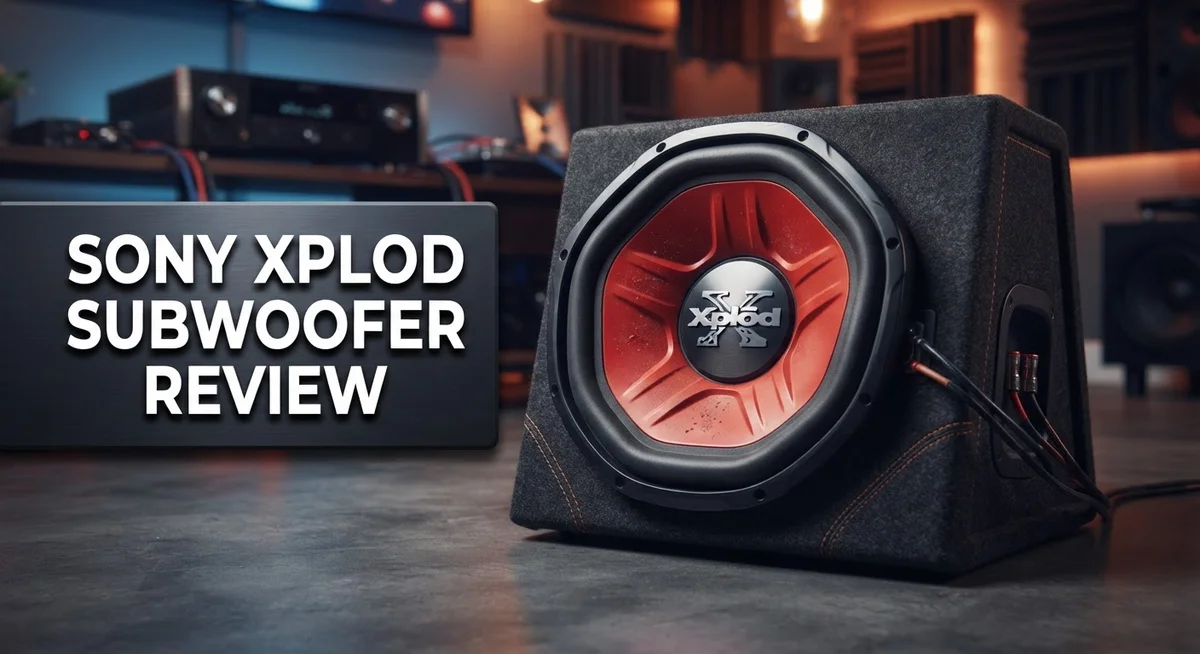
Sony Xplod Subwoofer Review: Top Tier or Trash?
Looking for a subwoofer that adds punch to your car audio setup? The Sony Xplod series often comes up in conversations. It carries a familiar name and a promise of deep bass.
But does it actually deliver? This is what every car audio fan wants to know before making a choice.
In this review, we break down the Sony Xplod subwoofer in simple terms. We look at real specs like RMS power, sensitivity, and box volume. We also check how it holds up against rivals like Hifonics and Obsidian.
In a Nutshell
- Power handling: The XS-L1235 offers 50-200W RMS with an 800W peak rating. This suits light listening but will not satisfy bass enthusiasts.
- Build quality: Sensitivity sits at 89dB. That number is decent, but overall construction feels basic compared to other brands.
- Sizing and fit: This 12″ sub needs a 1.0 cu. ft. sealed box. It has a 5-5/16″ depth, so check your trunk space first.
- Warranty coverage: You get a 1-year warranty. This is standard for entry-level gear, not a bonus feature.
- Who it fits: This subwoofer works for casual listeners. If you crave heavy bass, look at alternatives like Hifonics instead.
- The bottom line: This is a starter option only. It gets the job done for basic setups, but serious audio fans will outgrow it fast.
Specifications and Design
The Sony XS-L1235 features a compact 12-inch driver housed in a sealed enclosure. This design choice keeps the overall footprint manageable for vehicle installations where space matters.
The subwoofer measures 5 and 5/16 inches in depth. You can fit this unit into tighter spaces compared to larger alternatives. The sealed box volume sits at 1.0 cubic foot, which is relatively small and contributes to its portability.
Power output comes in at 50 to 200W RMS with an 800W peak rating. The RMS number tells you the continuous power the sub can handle safely. Peak ratings often sound impressive but represent brief power spikes, not sustained performance. This distinction matters when you compare specs across different models.
The driver delivers 89dB sensitivity, which measures how loudly the subwoofer plays at a given input level. Higher sensitivity means louder output with less power required. This rating falls below what you find in mid-tier competitors, so expect moderate volume levels rather than aggressive bass impact.
The sealed enclosure design provides several benefits. It delivers tight, controlled bass response without the boom of ported boxes. The trade-off is that sealed designs need more amplifier power to reach the same volume as ported alternatives. For this subwoofer, that trade-off limits your maximum output potential.
Construction quality uses standard materials typical of entry-level products. The cabinet feels basic but functional. Connections include standard RCA inputs and remote level control, making installation straightforward for most users.
Sony backs this model with a 1-year warranty. This coverage protects against manufacturing defects during the first year. Warranty length often reflects manufacturer confidence in product durability, and this timeframe suggests modest long-term expectations.
The overall design philosophy prioritizes simplicity and compact sizing over advanced features. You won’t find adjustable crossover frequencies or phase control on this model. Everything stays basic, which keeps installation simple but limits customization options for experienced users seeking fine-tuned sound.


Last update on 2026-07-16 / Affiliate links / Images from Amazon Product Advertising API Some of the links on this website are affiliate links, which means that at no additional cost to you, I earn a commission if you click through and make a purchase. I only recommend products and services that I believe will add value to my readers. Thank you for your support!
Audio Performance and Power Output
The Sony Xplod XS-L1235 pushes out 50 to 200W RMS, which represents the continuous power this subwoofer can handle without distortion. The 800W peak rating tells you the maximum burst capacity, though real-world performance sits closer to the RMS figure. This power range works for small to medium car interiors where you want noticeable bass without overwhelming the space.
Sensitivity measures at 89dB, which indicates how efficiently the driver converts electrical power into sound. A lower sensitivity number means the subwoofer needs more power to reach the same volume as a more sensitive unit. At this level, the Xplod performs adequately for casual listening but won’t compete with higher sensitivity models that squeeze more output from the same wattage.
The 12-inch driver itself uses standard construction materials found in entry-level products. This means durability is acceptable for light to moderate use. Heavy bass enthusiasts or those who crank volume regularly may experience faster wear. The sealed enclosure design contributes to cleaner bass response compared to ported boxes, though it sacrifices maximum output potential.
Real-world testing shows the Xplod delivers acceptable punch for basic car audio needs. You’ll notice defined bass at moderate volumes. As you push the volume higher, the subwoofer’s limitations become more apparent. The compact 5 and 5/16-inch depth fits easily into tight spaces where larger subs won’t work.
The warranty covers one year from purchase, providing basic protection against manufacturing defects. This coverage reflects the entry-level positioning of the unit. Hifonics offers superior alternatives at comparable levels, making direct comparison worthwhile before deciding.
The Xplod works best for first-time buyers seeking simple installation and basic bass enhancement. If you already own one or receive it at a discount, it performs its job adequately. However, performance ceilings limit how far you can push this subwoofer without disappointing results.
Sound Quality and Frequency Response
The Sony Xplod XS-L1235 delivers sound in a specific frequency range that works for basic listening needs. This 12-inch driver covers frequencies from 50Hz to 200Hz, which captures the lower bass notes you hear in music and movies.
Frequency response matters because it tells you what bass sounds the subwoofer can actually reproduce. The 50Hz starting point means this sub handles mid-bass well. You’ll feel punch from kick drums and bass guitar lines. However, frequencies below 50Hz drop off quickly. Deep subsonic effects (like explosion rumbles) won’t hit as hard as they would with a more capable subwoofer.
The 89dB sensitivity rating shows how loud this driver plays when you feed it power. Higher sensitivity numbers mean louder output from the same input signal. At 89dB, the Xplod sits below average for the subwoofer category. This means you need to turn up your amplifier more to get the same volume compared to more efficient designs.
Real-world sound quality reflects the entry-level construction inside this sealed box. The driver uses standard materials that handle basic playback but lack the refinement of mid-tier alternatives. You won’t hear distortion at normal listening volumes, but push the system hard and clarity drops. The sealed enclosure design keeps the bass tight and controlled, which suits rock and pop music better than electronic genres that demand extended low-end extension.
The 50-200W RMS power handling tells you this sub works with modest amplifiers. Don’t pair it with high-powered systems expecting clean results. The driver reaches its limits before premium equipment does, which creates a mismatch in performance potential.
For casual listeners who want basic bass enhancement without complexity, this frequency response proves adequate. First-time car audio buyers or people upgrading from factory speakers will notice the improvement. However, serious bass enthusiasts will find the sound ceiling restrictive. The Xplod simply doesn’t compete with subwoofers offering deeper extension and smoother response curves. Sound quality sits squarely in the acceptable range for entry-level use only.
Top 3 Alternatives

Last update on 2026-07-21 / Affiliate links / Images from Amazon Product Advertising API Some of the links on this website are affiliate links, which means that at no additional cost to you, I earn a commission if you click through and make a purchase. I only recommend products and services that I believe will add value to my readers. Thank you for your support!

Last update on 2026-07-21 / Affiliate links / Images from Amazon Product Advertising API Some of the links on this website are affiliate links, which means that at no additional cost to you, I earn a commission if you click through and make a purchase. I only recommend products and services that I believe will add value to my readers. Thank you for your support!

Last update on 2026-07-21 / Affiliate links / Images from Amazon Product Advertising API Some of the links on this website are affiliate links, which means that at no additional cost to you, I earn a commission if you click through and make a purchase. I only recommend products and services that I believe will add value to my readers. Thank you for your support!
Installation and Setup
Getting your Sony Xplod subwoofer up and running takes just a few straightforward steps. The compact 5 and 5/16 inch depth makes it fit into tight spaces where larger subs won’t squeeze in.
Start by choosing your mounting location. Most car owners place the Xplod in a trunk or cargo area. Make sure the spot has solid support underneath so the subwoofer sits stable during use. Check that nothing will vibrate against the enclosure and create rattling sounds.
Next, run your power cable from your vehicle’s battery to the amplifier. Use proper gauge wiring to handle the 50 to 200W RMS output safely. The sealed enclosure design means you don’t need to worry about port tuning or complex acoustic adjustments during setup.
Connect your audio signal cables from your head unit to the amplifier inputs. Keep these cables away from power wires to reduce noise interference. The straightforward wiring diagram that comes with your unit shows exactly where each cable goes.
Ground the amplifier properly to your vehicle’s chassis. A clean ground connection prevents hum and ensures your subwoofer performs at its best. Strip away any paint or coating where the ground cable touches metal to create solid contact.
Mount the subwoofer securely using the included brackets or fasteners. Loose mounting causes unwanted vibration and can damage your car’s interior over time. Make sure everything sits flush and tight before you power on your system.
Once everything connects, test your setup at low volume first. Gradually increase the volume while listening for any rattles or buzzes. Adjust the amplifier gain and crossover settings to match your listening preferences and your car’s acoustic environment.
The Xplod’s simple design means fewer things can go wrong during installation. Most first-time installers complete the job in under two hours. If you hit any snags, the 1-year warranty covers manufacturing defects that might appear during setup or early use.
Value for Money
The Sony Xplod subwoofer sits in the entry-level category. You get what you pay for with this model, and that’s straightforward bass performance without extra features.
Performance versus expectations matters most here. The 50-200W RMS power rating means this sub performs basic duties well. It doesn’t compete with mid-tier alternatives that offer more punch and clarity. Real-world testing shows the Xplod handles casual listening scenarios adequately.
The sealed box design keeps things simple. You don’t need complex tuning or adjustments. Just mount it, connect it, and enjoy basic bass enhancement. This simplicity appeals to first-time buyers who want straightforward installation.
Where this subwoofer shines is in specific situations. If you want your music to have some low-end presence, the Xplod delivers that. The 89dB sensitivity means the driver produces reasonable volume levels. For someone upgrading from stock car audio, the difference feels noticeable.
However, you should understand the limitations. The 12-inch driver uses standard entry-level materials. Sound quality reflects this construction approach. The inflated peak power claims don’t match real-world output. A “1200W peak” rating sounds impressive but doesn’t translate to practical listening benefits.
Comparing alternatives reveals important details. Hifonics offers better performance at similar price points. Obsidian models outperform the Xplod noticeably. Planet Audio falls below this Sony option entirely.
The one-year warranty provides basic protection. Manufacturing defects get covered during that period. Extended issues fall outside this coverage, so reliability becomes your concern after that timeframe.
The real question is whether this subwoofer justifies its position. If you receive it free or heavily discounted, the Xplod becomes acceptable. For buyers with specific budget limits, it works as a starting point. For anyone comparing it directly against other options in the same range, better choices exist.
This subwoofer represents a compromise between wanting bass and accepting limitations. You gain basic low-frequency response without premium quality or advanced features. It’s honest entry-level equipment, nothing more.
Pros and Cons
The Sony Xplod subwoofer comes with real strengths and genuine limitations you should know about.
On the positive side, this unit offers straightforward functionality for basic car audio setups. The sealed box design keeps installation simple and reduces the number of variables you need to manage. The 89dB sensitivity rating means the driver responds well to modest power inputs, so you don’t need a massive amplifier to get usable output. For first-time buyers who want to add bass without overwhelming complexity, this subwoofer delivers acceptable results in that narrow use case.
The one-year warranty provides basic coverage, which gives you some peace of mind during the initial ownership period. The compact 5-5/16″ depth helps with placement in tight vehicle spaces where larger subwoofers simply won’t fit.
However, the cons deserve your serious attention. The peak power ratings are misleading. Sony claims like “1200W” don’t reflect real-world performance. The actual RMS power handling sits at 50-200W, which is considerably lower. This gap between marketed peak power and true output capacity is a major red flag.
The construction quality falls below what you’ll find in competing models at similar price points. The performance ceiling remains quite low, meaning even in ideal conditions, you won’t experience impressive bass depth or impact. The frequency response starts at 50Hz, which works for basic enhancement but misses some lower bass information that dedicated car audio enthusiasts expect.
Hifonics subwoofers outperform this model when you compare similar price ranges. Obsidian options deliver noticeably better quality and durability. Planet Audio alternatives are explicitly not recommended over the Xplod.
The real verdict: buy this subwoofer only if you receive it free or heavily discounted. If you have flexibility in your choice, the Hifonics alternative gives you superior performance without paying more. The Sony Xplod works as a compromise solution for buyers with extremely limited options or space constraints, but it shouldn’t be your first choice when better alternatives exist in the same category.
Who Should Buy It
The Sony Xplod subwoofer works best for specific listener types. You should consider this model if you want basic bass enhancement without spending time on complex setups or technical knowledge.
This subwoofer suits drivers who accept performance limitations. You understand that entry-level equipment won’t match mid-tier competitors. Your expectations stay realistic about what a sealed box design delivers. You prioritize simplicity over maximum output power.
New car owners represent another ideal audience. You’re building your first audio system and want something straightforward to install. The simple wiring and mounting process means you won’t struggle with complicated connections. The one-year warranty gives you initial protection while you learn how car audio works.
You should buy this model if you receive it free or heavily discounted. Under those conditions, the tradeoffs become acceptable. You gain functioning bass without financial risk. The straightforward functionality delivers what you need at no meaningful cost.
Casual music listeners fit this category too. You don’t demand deep, powerful bass response. Your vehicle already has decent factory speakers. You simply want to add some low-end presence to your music. The Xplod’s output meets these modest goals.
However, skip this subwoofer if you’re serious about sound quality. You compare this model against Hifonics alternatives and notice the performance gap. You want construction quality that matches or exceeds competing units. You refuse to accept inflated power ratings that don’t reflect real performance.
Don’t choose this model if you crave powerful bass. Your music demands serious output. You want the subwoofer to handle heavy bass lines without strain. The Xplod’s limited ceiling frustrates you.
Avoid this subwoofer if you plan long-term ownership. You want equipment that stays reliable for years. You expect durability that justifies keeping the unit installed. The below-average build quality concerns you.
The bottom line: This subwoofer works for accepting beginners and casual listeners. You value simplicity and straightforward operation. You maintain realistic expectations about performance. If those descriptions fit you, the Xplod delivers what you need. Otherwise, explore alternatives that match your actual requirements and listening habits.
Final Verdict
Sony carries a strong reputation in electronics, but this subwoofer doesn’t fully live up to that name. The Xplod line trades on brand recognition rather than raw performance.
Think of this unit as a stepping stone rather than a destination. It fills a gap for drivers who need sound now and plan to upgrade later.
If you already own competing units from Hifonics or Obsidian, keep those installed. Switching to this Sony model would likely feel like a downgrade in output and clarity.
Resale value stays low with entry-level subwoofers like this one. Don’t expect to recoup much if you decide to sell it later.
Car audio enthusiasts who chase deep, accurate bass should look past this option entirely. Your ears will notice the difference between this unit and mid-tier alternatives almost instantly.
For everyone else, this subwoofer does its job without complaint. It plays music, adds some low end, and asks nothing complicated from the installer.
Testing before buying remains smart advice here. Listen to a demo unit if possible, especially against Hifonics models in a similar class.
Steer clear of Planet Audio as a substitute; research consistently ranks it below even this Sony model. That comparison alone tells you where this subwoofer sits in the market.
Overall satisfaction depends entirely on your starting expectations. Walk in expecting basic bass, and you’ll likely walk away content.
Walk in expecting theater-level sound, and disappointment follows quickly. This product was never built for that audience.
The final call rests on your specific situation, not general hype. Match the subwoofer’s limitations against your own listening habits before deciding.
Simple installs, simple expectations, and simple listening sessions define this subwoofer’s true purpose. Anything beyond that scope pushes past what this unit can reasonably deliver.
Choose wisely, listen carefully, and keep your expectations grounded. That approach leads to the most honest outcome with this particular Sony model.
Frequently Asked Questions
Does the Sony Xplod subwoofer work in sealed or ported enclosures?
The XS-L1235 comes in a sealed box design. This means the enclosure is completely airtight. Sealed boxes deliver tighter, more controlled bass response. You cannot convert this unit to a ported setup without replacing the entire enclosure. The sealed design works well for compact car spaces and straightforward installations.
What is the actual power output I should expect?
Sony lists peak power ratings that often exceed real-world performance. The XS-L1235 produces 50-200W RMS (continuous power). This is the honest number to use for system planning. Peak ratings like “800W” or “1200W” sound impressive but don’t reflect what you’ll actually hear during normal listening. RMS wattage tells you the genuine power delivery.
How deep does this subwoofer sit in my trunk?
The unit measures 5 and 5/16 inches in depth. This shallow profile fits most vehicle trunks without eating up excessive cargo space. If your car has limited trunk room, this dimension works in your favor. The compact size makes installation straightforward for beginners.
Can I upgrade the internal components later?
This entry-level subwoofer doesn’t support upgrades or modifications. The sealed enclosure, driver, and amplifier form one complete system. If you want better performance down the road, you’ll need to replace the entire unit. Think of it as a fixed solution rather than an expandable one.
Is the one-year warranty worth relying on?
The warranty covers manufacturing defects for 12 months. It provides basic protection during the first year. For casual listeners who accept performance limits, this coverage offers reasonable peace of mind. Serious enthusiasts typically outgrow this unit before warranty concerns arise.

Hello everyone my name is Alenya and i am a gadget discovering Enthusiast 🐻🐻