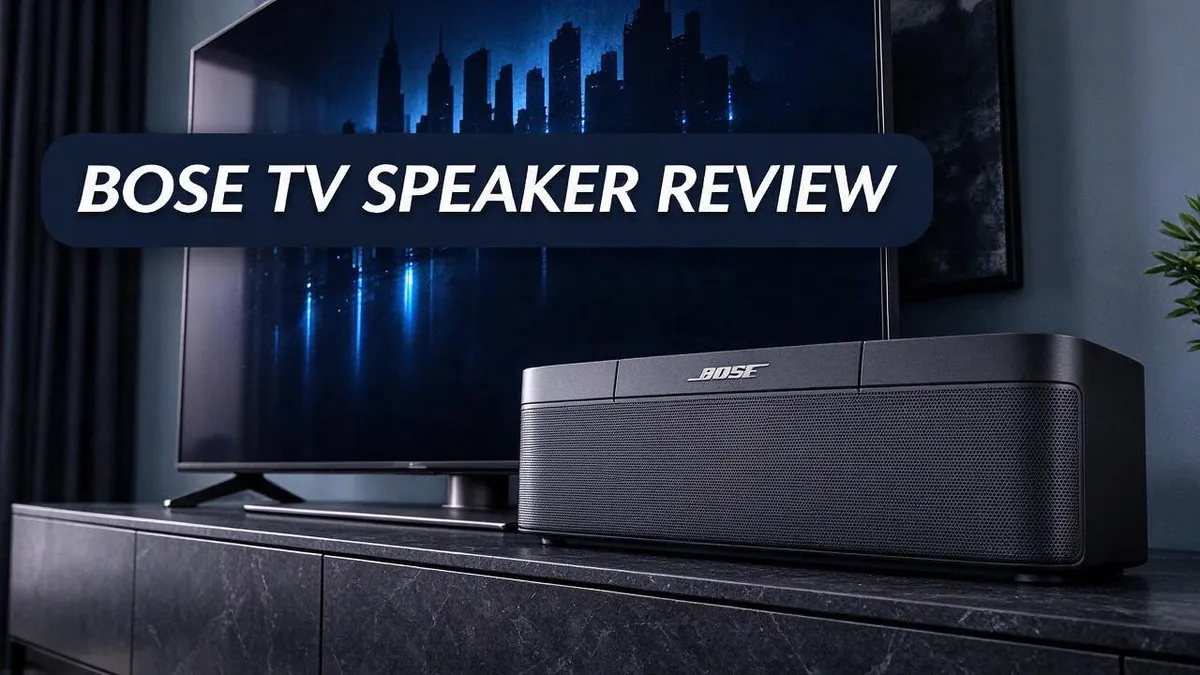
Bose TV Speaker Review 2026: Is It Worth Upgrading?
Tired of muffled dialogue? You are not alone. Many people struggle to hear their favorite shows clearly. A good soundbar can change that.
The Bose TV Speaker is a compact option that aims to fix this problem. It connects through Bluetooth and HDMI ARC, so setup stays simple. Shoppers love how it sounds. Its 4.6 out of 5 star rating comes from over 3,910 reviews.
Many owners say movies and TV shows sound far better than the speakers inside their TVs. The design also looks attractive in any living room.
In this review, we will look at sound quality, setup, and daily use. Let us find out if this little speaker deserves a spot in your home.
In a Nutshell
- Connects two ways: The speaker works with Bluetooth and HDMI ARC. This gives you flexible options for your TV setup.
- Built for spoken words: Its main job is making dialogue easier to follow. Actors, hosts, and narrators sound crisp and clear.
- Strong star rating: Buyers gave it 4.6 out of 5 stars across 3,910 reviews. That is a good sign of steady satisfaction.
- Attractive look: The design looks neat and modern. It suits most living room styles.
- Other options to compare: The Sony HT S350 offers better bass than standard TV speakers, but it lacks Dolby Atmos. The Yamaha YAS 209 pairs a soundbar with a subwoofer. The Polk React is a smart soundbar that suits simple setups.
- Check your needs: The research does not list any Bose specific downsides. Many soundbars in general lack deep bass or surround sound, so check these features before you buy.
Sound Quality and Dialogue Clarity


Last update on 2026-09-19 / Affiliate links / Images from Amazon Product Advertising API Some of the links on this website are affiliate links, which means that at no additional cost to you, I earn a commission if you click through and make a purchase. I only recommend products and services that I believe will add value to my readers. Thank you for your support!
Sound quality is where this speaker truly earns its place. Most people watch TV to follow the story. Clear voices matter more than huge sound, and this speaker focuses on them.
Late night viewing becomes much easier. You can keep the volume low and still catch whispers and quiet lines. Family members sleeping nearby stay undisturbed. Quiet scenes feel calm rather than strained.
Action scenes often bury speech under explosions and music. This speaker helps keep characters easy to understand when the soundtrack gets loud. Crime dramas and news programs are good examples where this matters most.
Music also sounds fuller than flat TV audio. Opening themes and background scores gain more body. The speaker still puts speech first, so the midrange stays clean and clear.
Voices sound natural rather than thin. Actors keep their tone and emotion. This helps dramas feel more personal and engaging.
Set realistic bass expectations. Compact models can sound lighter in the low end. Expect crisp voices and gentle warmth rather than a theater rumble.
Viewers who want deep bass should consider a soundbar and subwoofer combo, such as the Yamaha YAS 209.
Placement changes how clear voices feel. Keep the speaker centered below your screen. Avoid placing heavy objects or thick cabinet doors in front of it.
Small and medium living rooms suit this design well. Dialogue stays focused even at lower volumes. Test the speaker with a movie you know well to hear the difference.
Use dialogue boost settings for extra help. Many TVs and streaming apps offer a speech or voice mode. Turn it on during shows with soft spoken casts. You may notice a difference right away.
Clear sound also reduces listening fatigue. Your ears work less hard when every word comes through cleanly. Long binge sessions feel more relaxed as a result.
Overall, dialogue clarity is the real win. You get easier listening every night. Bass lovers may want more power, but everyday viewers gain the most. Think about your viewing habits before you decide.
Design and Footprint
Space matters when you add a soundbar to your entertainment setup. The Bose TV Speaker keeps its footprint small. That means it fits neatly on most TV stands.
Measure your stand first. Place the speaker centered in front of the TV. Leave a little room around it so air can flow.
The narrow profile helps it sit low without blocking the screen. Viewers on the couch can still see the full picture. Your eye line stays clear and open.
Think about the TV size too. A large screen can make a small speaker look tiny. Match the speaker width to the TV width for a balanced look.
Height matters too. Sound may feel distant when placed too high. Aim for a spot near your ear level when you sit down. This simple step helps the audio feel closer.
A wall mount can free up shelf space. If your stand feels crowded, consider mounting the speaker on the wall. Check the mounting options for your model before you start drilling.
Cable routing deserves attention too. Run the HDMI cable behind the stand to keep things tidy. A clean cord setup makes the whole area look more polished.
Keep the space around it clear. Books, plants, and game consoles can crowd the spot. A little open space keeps the setup looking neat.
The simple shape blends with most TV designs. It rarely draws attention away from the screen. Its neutral look also works in bedrooms and home offices.
Small rooms benefit most from this size. Apartments and dorm rooms often have limited shelf space. This compact build gives you better sound without taking over the room.
Check your existing setup first. Look at your TV stand depth and the wall space behind it. This quick check helps you avoid surprises after delivery.
The speaker works well as a centerpiece for a media unit. Pair it with a clean stand and a simple lamp for a balanced look. Simple decor helps the whole room feel calm and organized.
Setup and Connectivity
Setting up the Bose TV Speaker takes only a few minutes. Most owners finish before their first show starts.
Start by finding the right port on your television. Look for a port labeled ARC on the back or side panel. Use that port for the cleanest audio.
Next, plug the power cord into a wall outlet. Wait for the status light to settle before you continue.
Then change the audio output on your TV. Open the sound settings and select the external speaker option. Some TVs call this option eARC.
Bluetooth works well for phones and tablets. Open the Bluetooth menu on your device. Choose the speaker name and confirm the pairing.
Many TVs include a feature called CEC. It lets one remote control the volume. Turn it on in the TV settings if you want that convenience.
Test the connection before you relax. Play a familiar show and raise the volume slowly. Listen for clear dialogue from the center of the room.
If the sound stays silent, check the cable first. Confirm the input source matches the port you used. Restart the TV if nothing changes.
Watch for common mistakes. A loose cable often causes crackling or dropouts. Plugging into a standard HDMI port instead of ARC can also block sound.
Check the manufacturer website for firmware updates. Updates can improve compatibility with newer TVs and streaming devices.
Keep the TV software current too. An outdated TV can misread audio signals from the speaker. Look for updates in the support section of your TV menu.
Label your inputs if you use several devices. Game consoles, streaming sticks, and cable boxes can compete for the same port. A clear label saves time later.
Expect a short learning curve. Some people need a few evenings to adjust dialogue levels. Small changes in the TV sound menu make a big difference.
Save your settings once everything works. You will rarely need to repeat these steps. Enjoy your shows with clearer voices.
Top 3 Alternatives
Here are three strong options for better TV sound. Each one suits a different room and set of needs.
Sonos Beam

Last update on 2026-09-19 / Affiliate links / Images from Amazon Product Advertising API Some of the links on this website are affiliate links, which means that at no additional cost to you, I earn a commission if you click through and make a purchase. I only recommend products and services that I believe will add value to my readers. Thank you for your support!
The Sonos Beam fits neatly under most TV stands. It delivers clear dialogue, so you can follow every line of your favorite show. Its compact shape also works well in apartments and smaller spaces.
You can control it with your voice or the Sonos app. It also supports Wi-Fi streaming, so music sounds great too. Many owners enjoy its smart features for everyday viewing.
Polk Audio Signa S4

Last update on 2026-11-06 / Affiliate links / Images from Amazon Product Advertising API Some of the links on this website are affiliate links, which means that at no additional cost to you, I earn a commission if you click through and make a purchase. I only recommend products and services that I believe will add value to my readers. Thank you for your support!
The Polk Audio Signa S4 offers a wide, full sound stage. It works well in medium to large living rooms where people sit at different angles. The sound feels open and natural.
Its slim design blends easily with modern decor. Setup is simple. You connect it with one cable, and it is ready for movies, sports, and music within minutes.
Yamaha YAS-109
No products found.
The Yamaha YAS-109 is a compact choice with a clean, simple design. It uses virtual surround features to create a wider feel from a small cabinet. Movies and games sound more immersive than a standard TV speaker.
Bluetooth lets you play audio from your phone with ease. It suits bedrooms, kitchens, and smaller living rooms very well. Connect it through HDMI ARC or optical for a quick and reliable setup.
Bass and Surround Performance
Bass is where a soundbar earns or loses trust. Thin low notes make action films feel flat. Full bass gives scenes more weight and drama.
The Bose TV Speaker focuses on making dialogue clearer first. That goal shapes how it handles everything else. Bass plays a supporting role rather than the lead.
Test the bass with a scene you already know. Pick a film with a slow, heavy soundtrack. Listen for rumble under the music, not just loud booms.
Music offers a clearer test than action scenes. Play a song with a steady bass line. Notice whether the low notes stay tight or turn muddy.
Surround feel works differently with one speaker. Much of the width comes from sound bouncing off nearby walls. Room shape matters more than many people expect.
Hard walls reflect sound and can widen the stage. Heavy curtains and thick rugs soak up sound and narrow it. Try both setups to see what sounds best to you.
Seating distance changes the experience too. Sit at a similar distance from the speaker as you would from the screen. This keeps the sound balanced across the couch.
Turn off extra sound effects on your TV before you judge the audio. Many TVs add their own processing that can muddy the bass. Add effects one at a time so you hear each change.
Reviewers often praise how clear the sound feels. Customers highly value its sound quality, and the product holds a 4.6 out of 5 rating from 3,910 reviews. Most owners seem happy with everyday viewing.
Still, one soundbar has limits. Deep rumble and full room power need more hardware. If you crave strong low end, a subwoofer pairing helps most. Sony’s HT-S350 also offers more bass than typical TV speakers. Compare how each model handles your favorite scenes.
Give the speaker a full week of use before you decide. Your ears adjust over time, and you will spot strengths faster. Trust what you hear in your own room most.
Pros and Cons
Pros
- Dialogue sounds clearer than most built-in TV speakers.
- Many customers praise the sound quality and easy use.
- The speaker holds a 4.6 out of 5 star rating from 3,910 reviews.
- Its clean look fits well in most living rooms.
- Sound feels fuller during TV shows and everyday viewing.
Cons
- The compact size may struggle to fill a large room with sound.
- Deep bass and surround effects can feel limited for action movie fans.
- Many praise comments come from older reviews, so check recent feedback too.
- You need an HDMI-ARC port for the best connection.
Who Should Buy It
This speaker suits people who want a simple upgrade. It fits viewers who find TV dialogue hard to follow. Think of news shows, talk programs, and quiet dramas.
Small apartments and cozy bedrooms are a good match. The unit takes little shelf or wall space. It also avoids a tangle of extra cables.
Older viewers often benefit most. Clear speech can reduce the strain of turning up the volume. Family members who talk over the TV will notice the change.
Gamers who sit close to the screen can also enjoy it. Close seating helps voices and effects reach you clearly. Some players, though, want deeper rumble for racing or shooter titles.
Bass lovers should look elsewhere. Anyone who wants rumbling explosions may prefer the Sony soundbar. It offers stronger low end than a standard TV speaker.
Home theater fans with big rooms may want a full setup. The Yamaha soundbar combo pairs a bar with a separate subwoofer. That combo fills space far better than one small unit.
Smart features matter to some buyers. People who want a compact soundbar with extra tech may check the Polk React. It targets shoppers who prefer a streamlined smart option.
Shoppers who plan to use only the TV can skip extra gear. A single unit keeps the living room tidy. Less equipment also means fewer parts to manage later.
First time soundbar buyers often feel unsure. This model offers a gentle starting point. It lets you hear what a dedicated speaker adds before you expand.
Think about how you watch. Mostly streaming news and sitcoms? This speaker covers those needs well. Frequent action movie nights call for a bigger system.
Ask yourself one question before you buy. Do you want clearer voices, or do you want to feel every explosion? Your answer points to the right choice. Your room size and viewing habits matter most, so keep those two points in mind as you decide.
Final Verdict
Overall, the Bose TV Speaker earns a strong recommendation for most viewers. It does its main job well. Most people will hear a clear difference right away.
The biggest win is speech. Voices stand out, so you can follow shows without constant rewinds. That alone makes daily viewing feel calmer and less tiring.
Real owner feedback supports this view. Thousands of people rate it highly, which suggests the sound holds up in many different homes.
Who gets the most from it? Viewers with small or medium rooms are a great fit. So are people who want better sound without a tangle of cables.
Think about your viewing habits before you commit. If you mostly watch talk shows, news, or drama series, this speaker suits you well.
Action fans should plan ahead. If loud movie nights are your favorite, a bigger system with a subwoofer may give you the punch you want. The Yamaha combo offers a soundbar and subwoofer pair. That pairing adds more low end, but it takes up more space.
Consider how you plan to grow your setup. Some people start with a soundbar and add a subwoofer later. Others prefer one compact unit that stays simple.
Before you decide, run a quick check. Measure your room and picture your daily routine. Think about what you watch most often.
Keep your expectations realistic. This is a clear voice upgrade, not a full theater replacement. Raw power is not its main strength.
Trust your ears during a test. Play a familiar show at your normal volume. If you can follow every line easily, you have found a good match.
The bottom line. The Bose TV Speaker delivers clearer dialogue, a tidy look, and strong owner support. It is a dependable pick for everyday TV watching.
Choose it when clear speech matters most. Choose something bigger when you crave thunderous sound.
Frequently Asked Questions
Can I connect it to devices other than my TV?
Yes, the speaker includes Bluetooth. You can pair a phone or tablet to play music or podcasts. Dialogue sounds best when you watch TV shows.
How long does setup take?
Setup is quick for most people. Connect one cable, pair the remote, and press play. Most viewers finish in a few minutes.
Will it work under a wall-mounted TV?
Yes, the compact size makes placement easy. Set it on a shelf or stand right below the screen. Its clean look also keeps the area tidy.
Does it work well for music?
It focuses on voices, so songs may sound thinner than a full sound system. Use it mainly for TV, movies, news, and talk shows.
Is it a good choice for kids?
Yes, kids often enjoy cartoons with clear voices. Keep the volume at a comfortable level, since young ears need gentle listening. Parents can also adjust settings with the remote.

Hello everyone my name is Alenya and i am a gadget discovering Enthusiast 🐻🐻