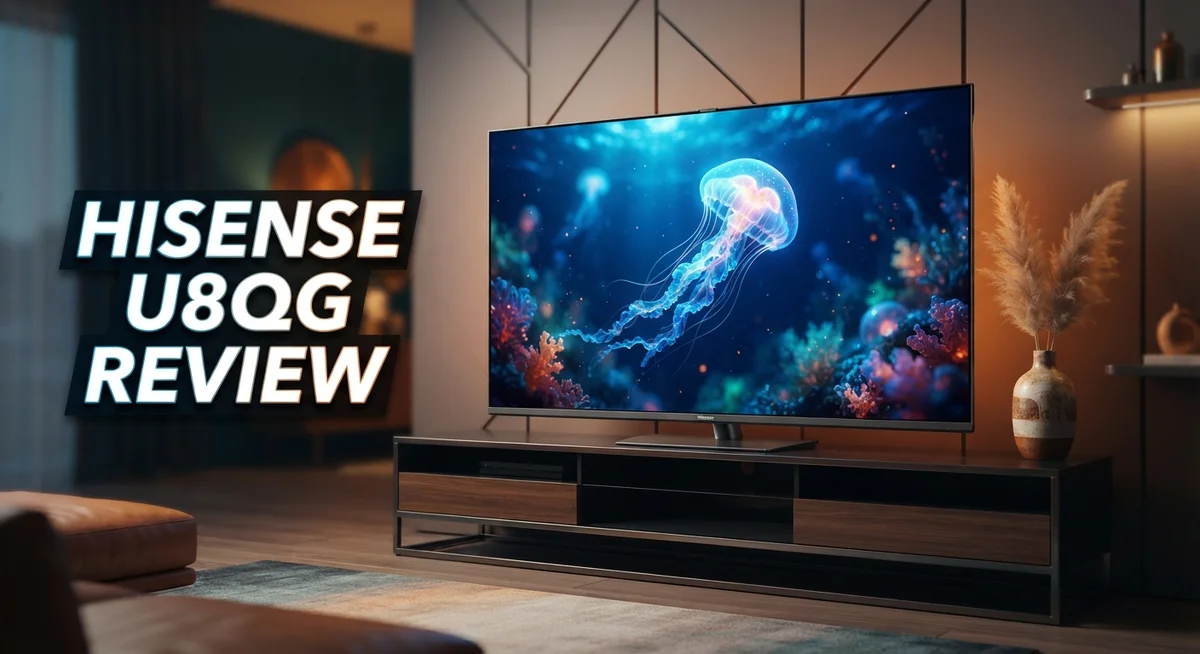
Hisense U8QG Review: MiniLED 4K TV with Gaming Features
The Hisense U8QG walks into the room and turns on the lights. Literally. This TV pushes out an incredible 5,000 nits of peak brightness, making it one of the brightest sets you can buy today.
But brightness is not the whole story here. The U8QG uses MiniLED Pro technology to deliver deep blacks and strong contrast. Colors pop in HDR content, and gaming fans get a serious treat too.
With 4K at 165Hz and support for VRR, this TV feels built for speed. Google TV runs smoothly in the background, giving you fast access to your favorite apps and shows.
In a Nutshell
- Brightness king: This TV hits 5,000 nits at peak, making it one of the brightest models around. Sunny rooms are no match for this screen.
- Deep blacks, punchy colors: Thanks to MiniLED Pro tech, contrast stays sharp. HDR scenes pop with rich, vibrant tones.
- Gamers, take note: With 4K@165Hz and 1080p@288Hz, this set handles fast action smoothly. VRR support keeps gameplay tear free.
- Smart features that work: Google TV runs fast here. Apps load quickly, and navigation feels smooth day to day.
- Not without flaws: Viewing angles drop off quickly if you sit off center. Direct light sources can cause glare issues too.
- Connection limits: You only get three HDMI 2.1 ports. Heavy home theater setups might feel squeezed.
Display Technology and Picture Quality
The display tech inside the U8QG sets it apart from many competitors on the market today. Hisense packed this TV with MiniLED Pro technology, which uses thousands of tiny LED backlights to control brightness zones independently. This approach delivers something most standard LED TVs cannot match: precise contrast control that keeps blacks deep while highlights stay brilliant.
Peak brightness reaches 5,000 nits, which is genuinely exceptional. This matters most if your living room gets lots of natural light. Even with windows open and sun streaming in, the picture remains visible and vibrant. Reflections still happen, but the sheer light output fights back effectively.
Color performance shines across HDR content. The U8QG handles bright reds, greens, and blues without washing them out. Darker tones stay saturated too. Movies and streaming shows look punchy without feeling artificial or oversaturated.
Gaming visuals benefit from this tech stack as well. Fast motion stays smooth thanks to the high refresh rates, while the contrast makes details pop during gameplay. Whether you’re exploring a dark dungeon or racing under bright skies, the picture adapts well.
One real weakness emerges when you sit off to the side. Viewing angles are narrow, so the image dims and colors shift if you’re not centered in front of the screen. This limits how many people can watch comfortably from different seating positions. Direct light sources in the room can also create reflections on the screen surface.
The MiniLED system does introduce occasional blooming. Bright objects on dark backgrounds sometimes show halos around their edges. It’s not severe, but noticeable viewers will catch it during certain scenes.
Compared to OLED alternatives, the U8QG trades perfect blacks for brighter overall performance. OLED still wins on infinite contrast, but this Hisense gets much brighter. For rooms with lots of light, that tradeoff works in the U8QG’s favor. The picture quality sits firmly in the premium tier, even if it doesn’t reach absolute perfection in every situation.

Last update on 2026-08-31 / Affiliate links / Images from Amazon Product Advertising API Some of the links on this website are affiliate links, which means that at no additional cost to you, I earn a commission if you click through and make a purchase. I only recommend products and services that I believe will add value to my readers. Thank you for your support!
Gaming Performance and Refresh Rates
The Hisense U8QG delivers serious gaming firepower that puts it in a strong position for console and PC gamers. The TV supports 4K resolution at 165Hz refresh rates, which means fast-moving games stay smooth and responsive. Drop down to 1080p and you get an impressive 288Hz option for competitive titles where every frame matters.
Variable Refresh Rate (VRR) support is built in. This feature syncs the TV’s refresh rate with your gaming device, eliminating screen tearing during intense action sequences. Whether you’re playing on PlayStation 5, Xbox Series X, or a high-end gaming PC, the U8QG adapts to your hardware without stuttering or visual artifacts.
MiniLED Pro technology plays a huge role in gaming performance here. The contrast between bright explosions and dark shadows stays crisp without washing out details. Fast-paced games benefit from this precision because you spot enemies in dimly lit areas more easily. HDR colors pop during dramatic moments, making the overall experience feel immersive and punchy.
The three HDMI 2.1 ports handle the bandwidth these high refresh rates demand. You can connect multiple gaming devices simultaneously, though you’ll need to swap cables if you want more than three connected at once. This limitation matters less for single-console gamers but frustrates those juggling multiple setups.
One practical advantage emerges during long gaming sessions. The U8QG’s exceptional peak brightness of 5,000 nits means glare and room reflections don’t wash out your image. Daytime gaming in bright rooms stays visible and enjoyable. You won’t squint at the screen or struggle to see what’s happening on screen.
The bottom line: Gaming performance on the U8QG checks all the boxes for modern console and PC gamers. Fast refresh rates, VRR support, and excellent contrast combine to deliver responsive, visually engaging gameplay. The only real drawback is the three port limitation, which may inconvenience gamers with extensive device collections.
Design, Build Quality, and Connectivity
The Hisense U8QG packs a solid physical design that feels premium without unnecessary fuss. The stand sits stable on most entertainment centers, and the frame thickness stays reasonable. The TV comes in five size options: 55″, 65″, 75″, 85″, and 100″ so you can pick what fits your space.
Connectivity options cover most needs, though one limitation stands out. You get three HDMI 2.1 ports for gaming consoles, streaming devices, and other gear. The missing fourth HDMI 2.1 port can feel restrictive if you own multiple next-gen devices. A USB-C port with alt-display support adds flexibility for laptops and tablets.
The speaker system includes side firing and up firing speakers that deliver decent audio for casual viewing. You won’t need a soundbar immediately, though serious movie fans often add one anyway.
The remote deserves mention here. It’s backlit for easy nighttime use, and the button layout feels intuitive. Google TV runs smoothly on this set, so navigating apps and streaming services happens without lag or frustration.
One design consideration matters for your room setup. The TV’s bezels are slim, but direct sunlight creates problematic reflections on the screen. If your room gets bright afternoon light, plan your placement carefully or consider window treatments.
Build quality feels solid throughout. The materials don’t feel cheap, and the overall construction suggests this TV will last years of regular use. The MiniLED panel sits behind quality glass, which protects the display from accidental bumps.
Viewing angles represent the main design weakness. Sit off to the side and picture quality drops noticeably. The brightness and contrast fade when you’re not positioned directly in front. This matters if your seating arrangement spreads across a wide angle or if you have multiple viewing positions.
The cable management on the back stays simple. You can route wires through the stand or use wall mounting holes for a cleaner look. Overall, the U8QG balances practical design choices with solid build quality that matches its performance capabilities.
Top 3 Alternatives
Samsung QN90C QLED

Last update on 2026-08-29 / Affiliate links / Images from Amazon Product Advertising API Some of the links on this website are affiliate links, which means that at no additional cost to you, I earn a commission if you click through and make a purchase. I only recommend products and services that I believe will add value to my readers. Thank you for your support!
LG C3 OLED

Last update on 2026-08-31 / Affiliate links / Images from Amazon Product Advertising API Some of the links on this website are affiliate links, which means that at no additional cost to you, I earn a commission if you click through and make a purchase. I only recommend products and services that I believe will add value to my readers. Thank you for your support!
Sony K95XR OLED

Last update on 2026-08-29 / Affiliate links / Images from Amazon Product Advertising API Some of the links on this website are affiliate links, which means that at no additional cost to you, I earn a commission if you click through and make a purchase. I only recommend products and services that I believe will add value to my readers. Thank you for your support!
Smart TV Platform and User Interface
Google TV powers the Hisense U8QG, and it runs smooth and fast. You get quick app launches and snappy menu navigation. The platform feels responsive when you’re jumping between streaming services.
The interface itself keeps things simple. You see your favorite apps right on the home screen. Google TV learns what you watch and suggests content based on your habits. This personalization works well in practice, so you spend less time searching and more time watching.
Voice control is built in through the remote. You can search for shows, control smart home devices, and adjust settings hands free. The microphone responds reliably to voice commands most of the time.
One thing worth noting: occasional software bugs pop up. Some users report rare freezes or app crashes. These issues seem minor and infrequent, but they happen. Updates from Hisense usually fix these problems when they occur.
The backlit remote makes navigation easy in dark rooms. Buttons feel responsive and the layout is intuitive. You won’t fumble around trying to find what you need.
App compatibility covers all the major streaming platforms. Netflix, Disney Plus, Amazon Prime Video, YouTube, and others load without problems. The app store gives you access to thousands of options, so you can customize your entertainment setup exactly how you want it.
Menu responsiveness stays consistent even when you’re multitasking. Switching between apps doesn’t cause slowdowns. The TV handles everything you throw at it without stuttering or lag.
One practical benefit emerges during everyday use: the TV remembers your preferences. Your watch history syncs across devices if you use Google TV on other screens. This means you can start watching on your phone and pick up right where you left off on the U8QG.
Overall, Google TV on the U8QG delivers a user friendly experience that feels natural and fast. The platform gets out of your way and lets you enjoy your content without frustration.
Audio Quality and Speaker Configuration
The Hisense U8QG features a speaker system built into the TV’s frame with side firing and up firing speakers. These speakers work together to create a soundstage that extends beyond the screen itself. The up firing design adds vertical dimension to your audio experience, which helps with immersive content like movies and games.
The audio output delivers clear dialogue and distinct sound separation across channels. Mid-range frequencies come through well, making voices and music feel natural. Bass response stays present without overwhelming the rest of the mix. For casual viewing and streaming shows, the built-in speakers handle everyday content competently.
Gaming audio benefits from the speaker configuration during fast-paced action sequences. The side firing elements help place sound effects around your room, which enhances immersion when you’re playing. Explosions and directional audio cues feel more engaging than a standard front-facing speaker setup would provide.
However, serious movie enthusiasts should consider external audio. The TV’s speakers lack the depth and power that dedicated soundbars or surround systems offer. If you watch lots of cinematic content, adding a separate audio setup will unlock better bass impact and overall sound quality. The U8QG’s speakers work fine as a foundation, but they have limits.
The remote includes a dedicated mute button and volume controls that respond instantly. Adjusting audio levels feels smooth and responsive during normal use. You can access audio settings quickly through the Google TV menu without digging through multiple screens.
One practical advantage emerges during gaming sessions. The side firing speakers help you pinpoint directional audio cues in competitive games, which can give you an edge. Racing games and action titles benefit from this spatial audio approach more than turn-based games do.
Overall, the speaker configuration on the U8QG represents a solid middle ground. It performs better than basic TV speakers but doesn’t replace dedicated audio equipment. For everyday viewing, gaming, and streaming, the built-in audio gets the job done. Your room size and listening preferences should guide whether you need additional speakers.
Pros and Cons
Pros
- Exceptional brightness at 5,000 nits makes this TV shine in bright rooms without glare taking over
- Excellent contrast and black levels paired with vibrant HDR colors create stunning picture quality
- Strong gaming performance with 4K at 165Hz, 1080p at 288Hz, and VRR support for smooth gameplay
- Google TV runs fast and smooth with instant app loading and consistent menu responsiveness
- Backlit remote makes it easy to navigate in dark rooms and find what you want quickly
Cons
- Poor viewing angles mean the picture quality drops noticeably when you sit off to the side
- Direct reflections from windows or lights can wash out the image in certain lighting conditions
- Only 3 HDMI ports available, which limits how many devices you can connect at once
- Occasional software bugs have been reported by users during everyday operation
Who Should Buy It
The Hisense U8QG works best for specific types of viewers. If you sit in a bright room with lots of natural light, this TV shines. The 5,000 nit peak brightness cuts through glare and keeps your picture clear even when sunlight floods in.
Gamers find real value here. The 4K at 165Hz and 1080p at 288Hz performance makes fast action smooth. VRR support eliminates screen tearing during intense moments. The three HDMI 2.1 ports handle modern consoles and gaming PCs without compromise.
Sports fans appreciate the motion handling. The TV keeps fast action crisp, whether you’re watching football, hockey, or racing. The high refresh rate support means you see every detail without blur.
People who love vibrant colors will enjoy this display. The MiniLED Pro technology and excellent contrast create images that pop. HDR content looks stunning with deep blacks and bright highlights working together.
The Google TV platform appeals to cord cutters and streaming lovers. Everything loads fast, and navigating between apps feels natural. You get voice control built into the remote for hands free searching.
This TV is NOT ideal for everyone though. If you sit at angles to the screen, picture quality drops noticeably. Side seating positions show washed out colors and reduced brightness. Rooms with large windows or direct light sources create reflection problems that can be distracting.
Movie enthusiasts who want premium sound should plan for external speakers. The built in speakers handle dialogue clearly but lack the depth serious audio fans expect.
Consider the U8QG if you prioritize brightness and gaming. Choose it for bright living spaces where reflections normally ruin viewing. Pick it if gaming performance matters more than perfect viewing angles. The TV delivers strong performance in these specific situations.
Skip it if you need perfect picture quality from every seat in the room. Avoid it if you want immersive audio without adding extra speakers. Look elsewhere if your room stays dark most of the time.
Final Verdict
The Hisense U8QG earns its spot as a strong contender in the MiniLED TV space. Its picture quality stands out thanks to smart engineering choices that Hisense made across the board.
This TV suits homes with bright living rooms. It also suits gamers who want fast response times. If your setup matches these needs, the U8QG delivers real results.
Compare it to the Hisense UR9 and you will notice a difference in backlight technology. The UR9 uses RGB MiniLED for richer color accuracy. The U8QG still holds its own with vibrant HDR output.
The Hisense U8N offers similar specs but falls slightly behind in contrast levels. This makes the U8QG the better pick between these two siblings.
OLED TVs remain a different beast entirely. They use self lit pixels instead of a backlight system. This gives OLED perfect black levels but the U8QG counters with much higher brightness.
Software bugs pop up occasionally on this TV. Most users report these issues get fixed through updates. This is a minor tradeoff for the performance gains you get elsewhere.
The three HDMI ports may feel limiting for some households. Homes with multiple gaming consoles and soundbars might need an HDMI switch. Keep this in mind before you finalize your setup.
Should you buy the Hisense U8QG? The answer depends on your viewing habits and room setup. Bright rooms and central seating positions bring out the best in this display.
Home theater purists who sit off center or want perfect angles should look elsewhere. Everyone else gets a TV that performs above expectations in most real world situations.
The U8QG proves that strong performance does not require compromise across every category. It picks its battles wisely and wins most of them. This makes it a smart choice for many households ready to upgrade their viewing experience today.
Frequently Asked Questions
Does the Hisense U8QG work well for gaming?
Yes, this TV is built for gamers. You get 4K resolution at 165Hz refresh rate, which keeps fast-action games smooth and responsive. At 1080p, it pushes 288Hz for competitive titles. Variable refresh rate (VRR) support eliminates screen tearing during gameplay.
The 5,000 nit peak brightness also helps you see details in dark game scenes without losing clarity in bright areas.
Can I use this TV in a bright room?
Absolutely. The exceptional brightness output makes it one of the best choices for rooms with lots of natural light or bright lamps. Direct sunlight won’t wash out your picture like it does on many other TVs.
However, direct reflections from windows can still cause problems. Position your TV away from direct light sources when possible.
What about the viewing angles?
This is a weak point. If you sit off to the side, the picture quality drops noticeably. Colors fade and contrast weakens when you’re not sitting straight ahead.
Families who gather around from different angles should know this limitation upfront.
How many HDMI ports does it have?
The U8QG includes three HDMI 2.1 ports plus a USB-C port with alt-display support. Some households need four HDMI ports for multiple devices, so the three-port setup may feel tight if you own several gaming consoles, streaming boxes, and soundbars.
Is the Google TV platform easy to use?
Yes. Google TV runs fast with instant app loading and smooth menu navigation. Cord cutters and streaming fans appreciate the quick access to Netflix, Disney Plus, and other services.
The backlit remote makes searching for content simple in dim lighting.

Hello everyone my name is Alenya and i am a gadget discovering Enthusiast 🐻🐻