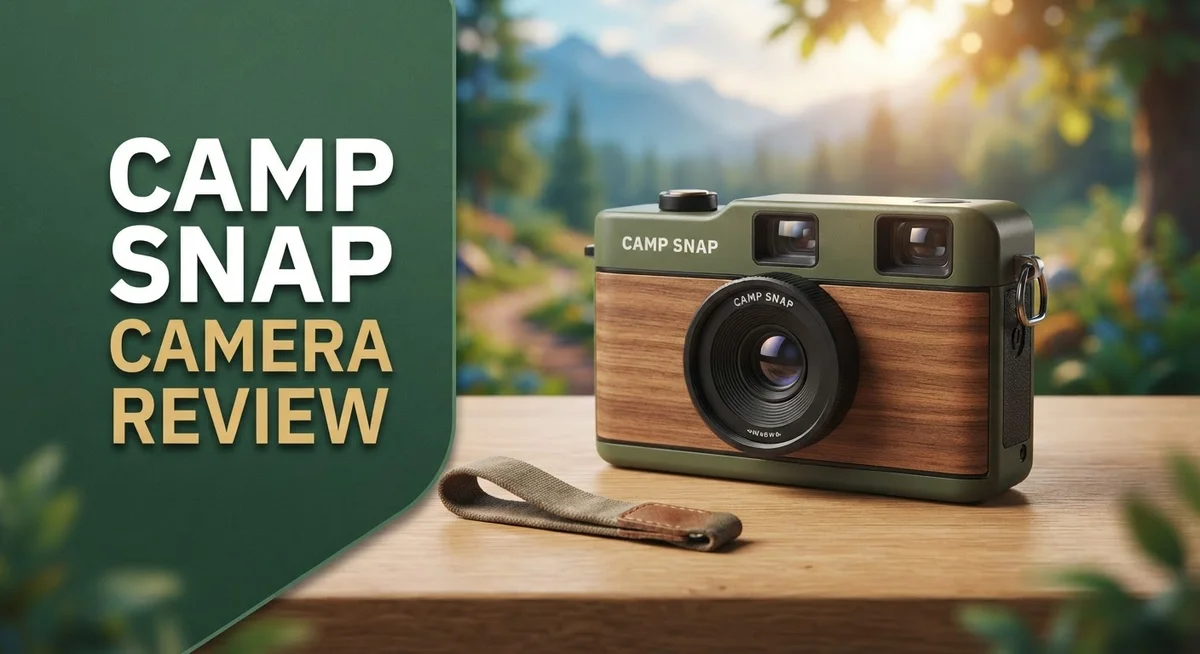
Camp Snap Camera Review 2026: Worth the Splurge?
Remember film cameras? The Camp Snap camera brings back that same fun feeling. It skips the screen and lets you just point and shoot.
This little camera has a retro soul with modern parts. You get an 8MP sensor, a simple lens, and an LED flash. It even comes with a microSD card ready to go.
Kids and adults both enjoy it. The controls are so simple that anyone can pick it up and start snapping right away. There is no menu to learn and no screen to distract you.
In a Nutshell
- Screen free design. You snap a photo and move on. No screen means you stay in the moment instead of checking every shot.
- Simple controls. Anyone can pick this up and start shooting right away. Kids figure it out in minutes.
- Image quality has limits. Photos often look grainy and overexposed. This camera focuses on fun, not sharp detail.
- 8MP sensor on the base model. The CS Pro version bumps this up to 16MP for slightly better results.
- Six built in filters let you switch looks on the fly. You get that retro film feel without extra apps or editing.
- Built for casual moments. Think parties, road trips, and hangouts with friends. This is not a camera for professional shoots.
- Portable and sturdy. It fits in a bag or pocket easily. The build feels solid despite its playful look.
Key Features and Specifications
The Camp Snap camera packs a surprising amount of capability into a compact body. You get an 8MP sensor on the standard model, which captures decent detail for casual photography. The Pro version steps up to 16MP if you need more resolution for larger prints or cropping flexibility.
The lens sits at an F1.8 to F2.2 aperture with a 35mm equivalent focal length. This means you can shoot in lower light without cranking up your ISO too much. The LED flash helps when things get dark, and it connects via USB-C for fast file transfers to your computer.
Your package includes a 4GB microSD card right out of the box. This gives you room for hundreds of photos before you need to swap cards or clear storage. The camera also features six swappable filters built into the hardware itself.
The real standout here is the screen-free design. There’s no LCD display on the back. You frame shots using the viewfinder and trust the camera to handle exposure. This forces you to slow down and think about composition instead of chimping after every shot.
The minimal button layout keeps things straightforward. You won’t find menus buried three levels deep or confusing mode dials. Press, focus, shoot. That’s the workflow.
One thing to know: the camera performs best in bright daylight. Indoors or at dusk, you might notice overexposure in some areas. The shutter speeds run on the slower side, which can lead to motion blur if your subject moves quickly.
The build quality feels solid and portable. Kids can handle it without worry, and adults appreciate the throwback aesthetic. The retro styling isn’t just window dressing either. It genuinely changes how you approach photography.
Image processing adds character to every frame. Colors get punchy, and details sharpen noticeably. Some people love this look. Others find it too processed for their taste.
The Camp Snap works best when you embrace its limitations rather than fight them. It’s a camera for moments, not masterpieces.

Last update on 2026-09-17 / Affiliate links / Images from Amazon Product Advertising API Some of the links on this website are affiliate links, which means that at no additional cost to you, I earn a commission if you click through and make a purchase. I only recommend products and services that I believe will add value to my readers. Thank you for your support!
Design and Build Quality
The Camp Snap camera feels solid in your hands. The body uses durable materials that resist everyday bumps and drops. This is a camera built to go places with you.
The compact size makes it easy to slip into a backpack or jacket pocket. You won’t feel weighed down carrying it around. The screen-free front keeps the design clean and simple. There are no distracting buttons or menus to confuse you.
The physical controls are minimal by design. You get a power button, shutter release, and a few mode switches. Everything sits exactly where your fingers expect to find it. The tactile feedback from each button press feels intentional and responsive.
The lens barrel protrudes slightly when powered on. This is normal for the fixed 35mm equivalent focal length. The F1.8 to F2.2 aperture range gives you some flexibility in different lighting situations. The glass elements feel smooth when you focus manually.
The USB-C port sits on the side for charging and file transfers. This is a modern addition that makes syncing photos to your phone or computer straightforward. The 4GB microSD card slot accepts standard cards if you want to expand storage beyond what comes included.
The flash unit mounts on top and deploys when needed. It’s not overpowering, which suits the camera’s casual nature. The LED indicator lights show battery status and operational modes at a glance.
The overall build quality reflects the retro-inspired aesthetic without sacrificing modern durability. The materials don’t feel cheap or plasticky. Weight distribution feels balanced, so the camera sits naturally when you hold it one-handed.
Weather resistance is limited. This camera works best in dry conditions. Moisture and extreme temperatures can affect performance. The design prioritizes portability and simplicity over ruggedness.
The retro styling is intentional and consistent throughout. Every element, from the rounded corners to the textured grip, contributes to a cohesive look. The camera doesn’t try to hide its inspiration from film cameras of decades past. It celebrates that heritage while incorporating current technology like USB-C connectivity.
Image Quality and Performance
The Camp Snap camera delivers photos with a distinctive character. The 8MP sensor captures light and color, but the results lean heavily toward a vintage aesthetic. You’ll notice grain patterns in most shots, which some photographers embrace as charm while others view as a limitation.
Shutter speeds run quite slow, especially in indoor or low light settings. This causes overexposure in many situations. Bright outdoor scenes perform better, but even then, the images show signs of over processing. The camera applies aggressive sharpening that can make edges look artificial. Colors tend toward saturation rather than accuracy.
The F1.8 to F2.2 lens helps gather light, which is useful on cloudy days. However, the sensor struggles to convert that light into clean, detailed files. Noise becomes visible at normal viewing sizes. If you zoom into photos on your computer, the quality drops noticeably.
The six built in filters add visual options without improving core image quality. They layer additional effects onto already processed files. Think of them as creative tools rather than quality enhancers. Some filters work better than others depending on your subject and lighting.
Performance in daylight remains the camera’s strongest area. Outdoor snapshots at noon produce acceptable results for casual sharing. Indoor photography becomes problematic due to slow shutter speeds and limited flash reach. The LED flash helps but doesn’t solve the underlying sensor limitations.
The Camp Snap works best when you accept its constraints. This camera prioritizes the shooting experience over technical perfection. Users who want sharp, detailed images should look elsewhere. The Flashback One35 V2 and Fujifilm X Half offer better image quality if that matters to you.
The real value here lies in simplicity and fun, not image quality. Every photo carries that retro vibe intentionally. You’re trading technical excellence for an engaging, screen free experience. This camera succeeds when you use it for casual moments, parties, and everyday memories rather than important events where image quality matters.
Top 3 Alternatives
GoPro Hero 12

Last update on 2026-09-17 / Affiliate links / Images from Amazon Product Advertising API Some of the links on this website are affiliate links, which means that at no additional cost to you, I earn a commission if you click through and make a purchase. I only recommend products and services that I believe will add value to my readers. Thank you for your support!
The GoPro Hero 12 captures action moments with stunning clarity and speed. This camera records 5.3K video at 60 frames per second. You get excellent low-light performance and smooth stabilization. The rugged design handles drops, water, and extreme conditions. Battery life reaches about 2 hours of continuous recording. The touchscreen lets you preview footage instantly. Wide-angle lens captures everything around you without distortion.
DJI Osmo Action 4

Last update on 2026-09-17 / Affiliate links / Images from Amazon Product Advertising API Some of the links on this website are affiliate links, which means that at no additional cost to you, I earn a commission if you click through and make a purchase. I only recommend products and services that I believe will add value to my readers. Thank you for your support!
DJI Osmo Action 4 delivers professional-grade video quality in a compact package. It shoots 4K at 120 frames per second for ultra-smooth slow-motion clips. The camera features a bright screen that works even in sunlight. Waterproofing goes down to 16 meters without a case. Battery performance extends to 2.5 hours per charge. The magnetic mounting system connects to various accessories quickly. Color accuracy remains consistent across different lighting situations.
Insta360 X3

Last update on 2026-09-17 / Affiliate links / Images from Amazon Product Advertising API Some of the links on this website are affiliate links, which means that at no additional cost to you, I earn a commission if you click through and make a purchase. I only recommend products and services that I believe will add value to my readers. Thank you for your support!
Insta360 X3 offers 360-degree recording capability that standard cameras cannot match. Dual cameras capture everything around you simultaneously. The camera shoots 8K resolution in full spherical format. You can edit footage to create traditional flat videos from any angle. Stabilization technology keeps footage smooth even during fast movement. The battery lasts approximately 1.5 hours per session. Unique perspective options let you reframe shots after recording, giving creative freedom other action cameras don’t provide.
Screen-Free Experience and Usability
The screen-free experience sets the Camp Snap camera apart from nearly every modern device you own. You point, you shoot, you move on. There’s no LCD display to check, no menu system to navigate, and no temptation to review every frame immediately.
This absence of a screen forces a shift in how you photograph. You become more intentional. Each shot matters because you won’t know the result until later. This constraint actually encourages present-moment awareness instead of endless digital fiddling.
The usability hinges on physical simplicity. The button layout remains minimal and intuitive. You’ll find a power switch, a shutter release, and a mode selector. That’s genuinely it. New users pick up the camera and start shooting within seconds. No learning curve. No buried settings menus. No confusion.
The tactile feedback makes operation straightforward. The shutter button responds cleanly. The mode dial clicks into place with satisfying precision. The flash deploys smoothly when activated. Everything feels deliberate and responsive.
One practical advantage emerges during group activities or outdoor adventures. Without a screen, you’re not distracted by composition previews or exposure readings. You simply observe your surroundings more carefully. Kids especially benefit from this approach. They focus on the moment rather than staring at a tiny display.
The USB-C port on the side handles file transfers and charging without fuss. You connect to a computer, your photos appear, and you’re done. The process stays straightforward and quick.
Weather conditions don’t require screen adjustments either. Rain, glare, or bright sunlight don’t affect your ability to operate the camera. You’re not squinting at an LCD trying to see what’s on screen. This makes outdoor use genuinely hassle-free.
The trade-off is clear though. You sacrifice real-time feedback for simplicity. You won’t catch exposure errors until you review images on a computer. You can’t adjust settings based on live previews. This demands trust in the camera’s automatic systems and acceptance of occasional misses.
For casual photographers and families, this screen-free approach feels liberating. For technical users accustomed to manual controls and instant feedback, the lack of a display might feel limiting.
Portability and Kid-Friendliness
The Camp Snap camera shines when it comes to portability. Its compact form factor lets kids slip it into backpacks, jacket pockets, or even small hands without any strain. The lightweight design means young photographers can carry it all day without fatigue.
Kid-friendliness starts with simplicity. The minimal controls reduce confusion and learning curves. Kids don’t need to navigate menus or understand exposure settings. They point, press the button, and capture moments. This straightforward approach keeps children focused on what matters: having fun and exploring their surroundings.
The screen-free design offers unexpected benefits for outdoor use. Kids won’t get distracted by reviewing images constantly. They stay present during hikes, camping trips, or playdates. The absence of a glowing screen also means no battery drain from constant viewing. Parents appreciate this feature because it encourages genuine engagement with the environment.
Physical durability matters for young users. The Camp Snap feels solid and built to withstand drops and bumps. The retro aesthetic hides modern construction that can handle rough handling. Weather resistance has limits, but the camera survives typical outdoor adventures without coddling.
The tactile controls work well for smaller hands. The shutter button sits in an intuitive position. The filter wheel and power switch respond with satisfying clicks. Kids can operate the camera independently within minutes of first use. No instruction manual required for basic operation.
One practical advantage emerges during group activities. When everyone gathers around a campfire or plays together, the screen-free design prevents the usual “look at my screen” distractions. Kids photograph what they see rather than what a display suggests.
The USB-C port on the side handles charging and file transfers smoothly. Parents can easily download photos without complicated software. The included 4GB microSD card provides plenty of storage for a weekend adventure.
The Camp Snap succeeds as a kid’s first camera. It removes barriers between young photographers and their creative impulses. The simplicity, durability, and portability combine to create a genuine tool for exploration and discovery rather than just another screen-based device.
Pros and Cons
Pros
- Minimal controls make it genuinely simple to use, even for first-time photographers
- Screen-free design forces you to stay present and enjoy the moment instead of reviewing shots constantly
- Lightweight and compact, perfect for backpacks, day trips, and outdoor adventures
- Retro aesthetic appeals to people who want a break from modern smartphone cameras
- Solid build quality withstands drops and rough handling from kids and active users
Cons
- Image quality suffers from graininess, over-processing, and excessive sharpening that looks unnatural
- Shutter speeds run too slow indoors and in low light, leading to blurry shots and overexposure problems
- Base 8MP resolution limits how large you can print or crop photos without losing detail
- Not suitable if you care about sharp, clean, professional-looking results from your camera
Who Should Buy It
The Camp Snap camera works best for specific types of photographers. Casual users who value simplicity over technical perfection find this camera ideal. You don’t need to learn complex settings or menus.
Parents seeking a first camera for their children should consider this option. The straightforward design means kids can pick it up and start shooting immediately. No confusing buttons or hidden features get in the way. Young photographers develop confidence faster when the camera itself stays out of their way.
Travelers and adventurers appreciate the lightweight, pocket-friendly form factor. You can slip it into a backpack without thinking twice. The screen-free design means you stay engaged with your surroundings instead of staring at a display. This encourages genuine moments rather than endless review cycles.
Retro enthusiasts and aesthetic-focused photographers gravitate toward this camera. The physical design evokes vintage film cameras. If you love that nostalgic look and feel, the Camp Snap delivers that experience without the hassle of actual film development.
People who want to disconnect from technology benefit here too. The lack of a screen forces intentionality. You think before you shoot. This mindfulness appeals to those tired of constantly reviewing and deleting photos on their phones.
However, this camera is NOT for quality-focused photographers. If you need sharp, well-exposed images for professional or serious hobbyist work, look elsewhere. The 8MP sensor and processing issues produce underwhelming results in many lighting conditions.
Photographers who shoot frequently in low light will struggle. Indoor events, dimly lit venues, and evening activities reveal the camera’s limitations. Overexposure and slow shutter speeds create frustration.
Those who want flexibility and control should skip this model too. The fixed settings and minimal adjustments don’t suit people who like tweaking exposure or focus. If you’re comfortable with manual controls and want to adjust settings, other cameras serve you better.
The Camp Snap thrives with users who prioritize experience over output quality. It’s perfect for making memories and enjoying the act of photography itself. It fails for anyone demanding technical excellence or creative control.
Final Verdict
The Camp Snap camera delivers a clear message. It trades sharp images for genuine fun. This trade off defines the entire experience.
Simplicity is the real star here. You point, you click, and you move on with your day. There’s no menu to fumble through or screen to squint at.
Think of this camera as a tool for making memories, not portfolios. It won’t replace your phone or a proper mirrorless setup. That’s fine, because it never tries to.
Families and casual shooters will likely fall in love with the experience. Kids get a durable device they can call their own. Parents get peace of mind knowing it can survive a tumble.
Compare it to competitors like the Flashback One35 V2 or Paper Shoot, and you see a pattern. These cameras all chase the same feeling: joy over precision. Camp Snap fits neatly into that niche.
If you crave crisp details or professional results, look elsewhere. The Fujifilm X Half or a proper mirrorless body will serve you better. Camp Snap simply isn’t built for that job.
But if you want a companion for road trips, campouts, or lazy weekends, this little camera earns its spot. It asks you to slow down and enjoy the moment. That’s a rare quality in today’s gadget world.
Every photo you take will look imperfect. Grain, blur, and odd exposure are part of the package. Once you accept this, the camera becomes surprisingly enjoyable to use.
The verdict is simple. Buy it for the experience, not the output. Treat every shot as a keepsake, not a masterpiece.
This camera won’t win awards for image quality. It will, however, win a place in your favorite summer memories. That’s exactly what it promises, and exactly what it delivers.
Frequently Asked Questions
Does the Camp Snap camera work well in low light situations?
Not really. The camera struggles indoors and at dusk. Shutter speeds run too slow, which causes blurry shots and overexposure problems. If you shoot frequently in dim environments, this camera will frustrate you. Stick with models that offer manual controls or faster sensors for low light work.
Can I use the Camp Snap for professional photography?
No. This camera is not for quality-focused photographers. Image quality suffers from graininess, over-processing, and excessive sharpening that looks unnatural. The 8MP sensor on the base model keeps resolution low. If you need crisp details or professional results, look elsewhere. This camera prioritizes experience over output quality.
What types of photographers should actually buy this camera?
The Camp Snap works best for specific groups. Parents seeking a first camera for their children will find it intuitive and durable. Travelers and adventurers appreciate the lightweight, pocket-friendly form factor. Retro enthusiasts and aesthetic-focused photographers gravitate toward this camera. People who want to disconnect from technology benefit here too. Think of it as a tool for making memories, not portfolios.
How does the Camp Snap compare to other retro cameras?
Competitors like the Flashback One35 V2, Paper Shoot, and Fujifilm X Half also offer screen-free designs and retro appeal. The Camp Snap stands out for its minimal controls and simplicity. However, it lags behind some rivals in image quality and sensor resolution. Compare your priorities. If you want the absolute easiest experience, the Camp Snap wins. If you want better photos, other options exist.
Is this camera durable for kids and outdoor use?
Yes. The Camp Snap has solid build quality and withstands drops and rough handling. It’s lightweight and compact, perfect for backpacks and day trips. Kids can safely use it without fear of breaking expensive gear. The screen-free design also means fewer fragile parts to damage.

Hello everyone my name is Alenya and i am a gadget discovering Enthusiast 🐻🐻