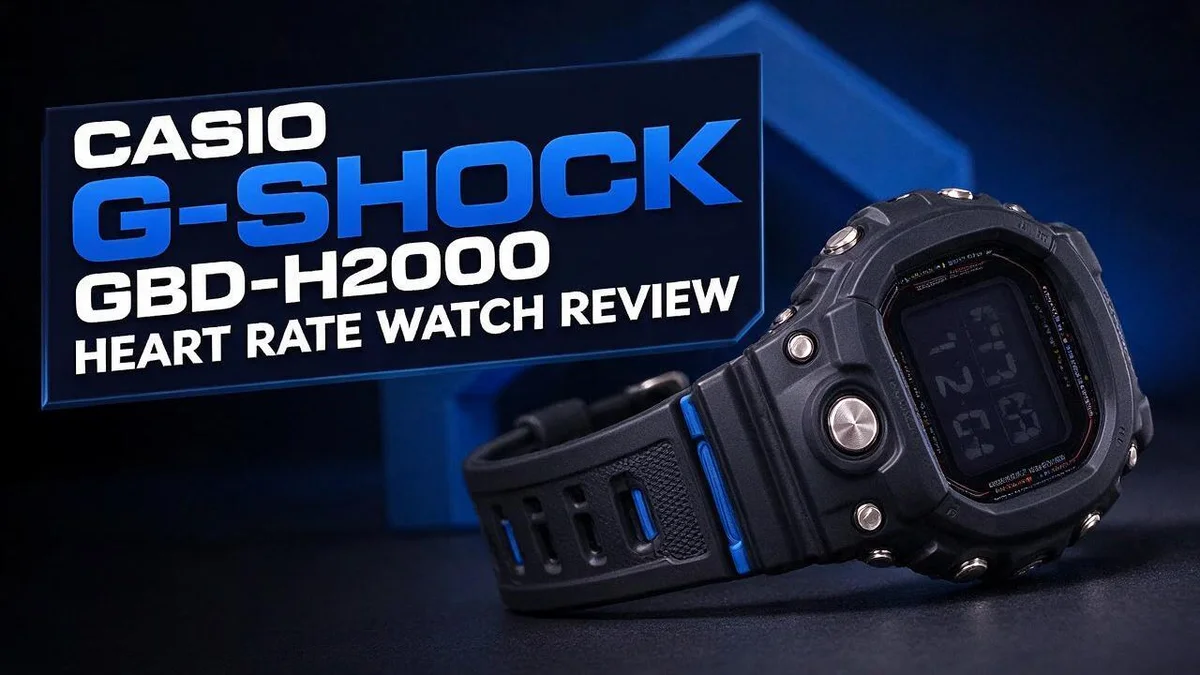
Casio G-Shock GBD-H2000 Review: Skip or splurge?
Are you looking for a watch that can keep up with your workouts? The Casio G-Shock GBD-H2000 might be the answer. It combines the famous G-Shock style with useful fitness tools.
Many people enjoy how light this watch feels on the wrist. It stays comfortable for all day wear, whether you train or just go about your day.
The watch includes GPS that tracks your position, distance, and speed. You also get a compass, an optical heart rate sensor, and Strava sync. Solar power helps keep the battery going.
Still, it helps to know the downsides. Some users say heart rate readings are not very accurate. The case can also feel large for sleep. In this guide, we break down the features, strengths, and drawbacks so you can decide if this watch fits your routine.
In a Nutshell
- Optical pulse sensor: The watch checks your heart rate with an optical sensor on your wrist. This helps you track effort during training sessions.
- Strava sync: You can send your activities to Strava. This makes it easy to review runs and rides in one place.
- Solar assisted charging: Light from the sun helps keep the battery charged. You may need to plug it in less often.
- Built in compass: The compass helps you find your direction on trails. It adds a useful tool for outdoor adventures.
- Pulse and timer functions: The timer works well for intervals and workout rounds. You can use these tools for many types of exercise.
- Mineral glass and size: Some reports mention mineral glass on the face, so confirm this detail first. The case feels large, so some people may find it uncomfortable for sleep.
Heart Rate Tracking Accuracy
No products found.
When you want exact numbers, your wrist is a tricky place to measure. Optical sensors read blood flow through the skin, so small movements can affect the result. Keep this in mind before you plan a hard training block.
Fit makes a big difference. Wear the watch snug, about a finger width above your wrist bone. A loose strap lets light leak in and creates noisy readings. Clean skin and a dry sensor also help.
Intense efforts are the hardest test. Sprints, hill repeats, and heavy lifting cause fast changes in pulse. Optical readings often lag behind these shifts. You may see numbers climb slowly when your heart already races.
Steady activities give better results. Easy runs, brisk walks, and cycling at a consistent pace produce smoother data. The sensor has more time to settle, so the trend line looks more useful.
Give the sensor a few minutes before you start. Warm up gently, then check whether the numbers level out. Readings that jump wildly in the first minute often steady later.
Think of the watch as a trend tool. Daily resting heart rate and general effort levels show patterns over weeks. Those patterns can guide recovery days. They also help you notice when you feel more tired than usual.
If you need precise zone training, pair the watch with a chest strap. Chest straps read electrical signals from the heart directly. Many athletes use both devices. The watch records the session, while the strap provides the exact data.
Sleep tracking deserves caution too. Lying still can shift the sensor, and a bulky case may feel uncomfortable overnight. Treat overnight numbers as rough guides rather than medical facts.
Accuracy depends on how you use the watch. A good fit, a steady pace, and realistic expectations go a long way. Use the data as a helpful guide, and you will get the most from your training.
Design, Size and Wearability
The overall look of this watch is bold and sporty. Its square case gives it a clear presence on the wrist. Many people like this style for outdoor and training days.
The case is lighter and thinner than the older model. The manufacturer says the new design cuts down on bulk. That change helps when you wear it for hours at a desk or on a trail.
The strap is flexible, so it moves with your wrist during workouts. It also helps the watch stay in place when you sweat. A secure band matters more than many shoppers expect.
Look closely at the buttons before you decide. Large buttons are easier to press with gloves or cold fingers. Small buttons can feel fiddly during a fast interval.
The display needs to stay easy to read in bright light. Strong light, sweat, and motion can all affect how you read the screen. Check how clearly the time and timer show when you stand outside. Clear numbers save you from squinting during a run.
Bulk can become an issue at night. The watch feels somewhat large for comfortable sleep wear. Some people prefer a smaller watch for bed, and that choice is fine.
Measure your wrist before you shop. Compare the case width with your wrist width. A good match keeps the watch balanced on your arm.
Your wrist shape also matters. Flat wrists and rounder wrists react differently to a thick case. Test both sides to see which feels better.
Consider your daily routine too. A watch for gym sessions may need a different feel than one for office hours. Think about where you spend most of your time.
Try the watch on for at least an hour if you can. Heat, movement, and long wear reveal comfort issues fast. Good design should feel natural, even after a full day.
GPS, Compass and Sports Features
The GBD-H2000 includes built-in GPS for tracking your position, distance, and speed. This means you can leave your phone at home during many outdoor sessions.
GPS works best with a clear view of the sky. Tall buildings and dense tree cover can slow down the signal. Give the watch a minute to lock on before you start moving.
Speed data updates as you run or ride. You can compare pace across several sessions. Over weeks, patterns show which routes feel easier and which feel harder.
Distance tracking works for road runs, trail walks, and bike rides. Measured routes help you check the numbers against a map.
GPS uses more battery than timekeeping alone. Check the charge level before a long route or a full day outdoors.
Choose the right activity before you start. This step helps the watch save the correct data. Skipping it can leave you with messy logs.
The compass also helps beyond the trail. Use it to orient a paper map or line up with a landmark in a new city.
Many runners like seeing a live map of their route. Check whether the screen shows enough detail in bright sunlight. Readability matters when you glance at the watch mid stride.
Keep the watch steady during movement so readings stay smooth. Loose wear can create small jumps in the data.
Test the GPS on a familiar route first. Compare the results with your phone map app. This quick check builds trust in the numbers before race day.
GPS accuracy can drop on crowded city streets. Expect small differences in distance on winding paths. Treat the readings as helpful guides rather than exact measurements.
Pair the watch with a phone when you want full route maps. Syncing after each session keeps your history organized and easy to review.
Overall, the sports features suit people who want one watch for daily life and outdoor sessions. They offer useful tools for casual athletes who enjoy tracking progress.
Top 3 Alternatives
Garmin Forerunner 265

Last update on 2026-11-03 / Affiliate links / Images from Amazon Product Advertising API Some of the links on this website are affiliate links, which means that at no additional cost to you, I earn a commission if you click through and make a purchase. I only recommend products and services that I believe will add value to my readers. Thank you for your support!
The Garmin Forerunner 265 is a strong choice for runners. It has a bright AMOLED screen that is easy to read outdoors.
It tracks heart rate all day and during workouts. You also get training readiness scores, sleep tracking, and smart notifications. Its light body feels comfortable on long runs.
Fitbit Charge 6

Last update on 2026-09-19 / Affiliate links / Images from Amazon Product Advertising API Some of the links on this website are affiliate links, which means that at no additional cost to you, I earn a commission if you click through and make a purchase. I only recommend products and services that I believe will add value to my readers. Thank you for your support!
The Fitbit Charge 6 suits people who want simple health tracking. It counts steps, tracks calories, and monitors heart rate around the clock.
Its GPS lets you record runs without your phone. The band also shows a daily readiness score that helps you decide how hard to train. Many people enjoy the clear app that shows their trends over time.
Polar Vantage V3


Last update on 2026-09-19 / Affiliate links / Images from Amazon Product Advertising API Some of the links on this website are affiliate links, which means that at no additional cost to you, I earn a commission if you click through and make a purchase. I only recommend products and services that I believe will add value to my readers. Thank you for your support!
The Polar Vantage V3 fits serious athletes who want detailed data. It offers accurate heart rate readings and helpful training guidance.
Its recovery tools help you plan rest days with confidence. The watch also includes offline maps and a long battery life for several days of adventure. It supports many sports, from cycling to swimming.
Durability and G-Shock Toughness
Durability matters a lot for a watch you wear every day. Many people want a device that handles bumps, sweat, and long workouts without fuss. This section looks at how this watch holds up over time.
Casio built its name on toughness. The brand designed its watches to survive drops and hard knocks. Owners often expect the same from this model.
Our research did not confirm how this watch compares to standard toughness. The sources left that question open. So we cannot state a clear shock rating here.
User reports describe the watch as reliable. That feedback suggests steady performance during daily wear. However, reliability reviews rarely include drop tests or long term damage data.
Glass is another key detail. Reports mention mineral glass, although the source note says the line may be cut short. Mineral glass resists scratches well, but a hard hit can still crack it.
Solar assisted charging may reduce how often you plug in the watch. Fewer charging sessions may help the battery hold up over the long term.
Check the water rating before you swim. Sweat and rain are normal wear conditions for most people. Look for the exact water resistance number on the official spec sheet. Never assume deep dive safety without that number.
Simple care also protects any watch. Rinse it with fresh water after salt water swims or sweaty runs. Dry it with a soft cloth and keep the case free of grit.
Avoid hard impacts on the edges of the case when possible. Remove the watch before heavy lifting, contact sports, or yard work.
Keep the watch away from hot car dashboards and extreme heat for longer life. Heat can weaken seals and adhesives over time.
Bottom line: the research shows good daily reliability. It leaves shock and water claims unclear. Read the official specs and recent owner reviews before you decide. Then you can judge toughness for your own lifestyle.
Solar Charging and Battery Life
Solar charging helps the GBD-H2000 stay powered during everyday life. The watch turns light into energy, so it recharges without a cable. This feature keeps the watch ready for workouts.
Light is the key to charging. The solar panel needs regular exposure to daylight. Indoor light charges the watch slowly, but sunlight works much faster.
Battery life depends on how you use the watch. Heart rate checks and GPS sessions draw more energy than basic timekeeping. Long outdoor workouts use the most power.
Sleeves can block the light you need. A jacket cuff or long shirt may cover the dial for hours. Try to keep the face open during the day.
Your daily routine shapes your charge level. An office desk far from windows gives less light. A short walk outside each day helps the battery stay topped up.
Plan ahead for cloudy weeks. Overcast skies and dark forests slow the charge rate. Before a trip, check the battery level and spend time near a window.
Power saving settings can stretch your battery further. Turn off alerts you do not need. Limit extra display use, because each light and check uses energy.
Night storage matters too. Place the watch face up near a window overnight, so it gathers light by morning.
Clean charging habits also help. Wipe the dial now and then so dust does not block light. A clear face lets more light reach the solar panel.
Our research did not confirm exact battery runtime figures. Expect the battery to last longer with good light and smart habits. Results vary based on sunlight and activity levels. Check the official specs before you plan long trips.
Pros and Cons
Pros
– Comfortable enough for all-day wear.
– Lighter and thinner than the older model.
– Pulse and timer functions handle quick workouts.
– Strava sync shares your activities fast.
– Versatile for many types of training.
Cons
– Heart rate readings are not very accurate.
– The large case can feel bulky during sleep.
– Mineral glass is the only glass option.
– The bulky look may not suit smaller wrists.
Who Should Buy It
This watch suits people who want one device for daily life and exercise. It handles a morning run, a work day, and a quick gym session with ease.
Commuters who walk or cycle may enjoy the built in GPS. They can track distance and speed without carrying a phone on every trip.
Hikers and trail walkers gain a useful tool as well. The compass and position data help them stay oriented on unfamiliar paths.
Casual exercisers make the best match. If you want general trends rather than exact numbers, this model offers simple insight into your effort.
Athletes who train by strict heart rate zones may look elsewhere. A chest strap often delivers more precise readings for those sessions.
Travelers form another good group for this watch. Maps and direction tools help them explore new cities without constant phone checks.
Shoppers who need detailed health reports should consider dedicated fitness platforms. These offer deeper analysis than a sport watch can provide.
Beginners often want a gentle start. They can focus on the core functions first and build new habits over time.
Outdoor workers may also find the location data useful during long shifts. Distance and speed readings can show how far they travel each day.
Many people simply want a rugged watch that tracks the basics well. For them, this Casio model fits naturally into everyday life.
Choose this watch if you value sturdy style and steady daily use. Match it to your routine, and it becomes a reliable partner for work, play, and travel.
Think about your main activities before you decide. A clear goal makes it easier to see whether this watch meets your needs.
Final Verdict
The Casio G-Shock GBD-H2000 is a practical all round watch. It blends daily wear, light exercise tracking, and GPS features into one package. Most buyers will find it easy to live with.
Its biggest strength is everyday comfort. Many people wear it from morning to night without a second thought. It also suits a work day, a weekend hike, and a quick jog.
Heart rate numbers work best as trend markers. Use the readings to spot patterns over several weeks. Treat any single reading as a rough signal rather than a medical fact.
Durability remains an open question. Our research did not confirm how this model compares to standard G-Shock toughness. Shoppers who plan rough outdoor work should look for firsthand reviews first.
Style is a personal choice. The bold case suits sporty and casual outfits. Many fans like the look because it stands out in a crowd. Some people may prefer a slimmer design for formal events.
Fit matters more than many people expect. The case is large, so try it on before you buy if you can. Check how it sits during long hours of wear.
Know the tradeoffs before you decide. The watch trades some accuracy for convenience and a rugged look. Many people accept that deal because it keeps everything in one place.
Think about your main goal first. If you want one watch for daily life with basic tracking, this model fits well. If you need precise training data, another option may serve you better.
In short, this watch delivers a solid mix of style and function. It is not a perfect fitness tool, but it is a dependable everyday companion. Read this verdict as a guide, then decide what matters most to you.
Frequently Asked Questions
What does the built in GPS measure?
The GPS tracks your position, distance, and speed. It works well for routes where you want to see how far you went and how fast you moved. You can review these numbers after each session.
Does the compass help on outdoor trips?
Yes, the watch includes a compass. It helps you keep your direction on walks or runs in unfamiliar areas. Pair it with a map for longer trips.
How does solar charging work?
The watch uses solar assisted charging. Regular exposure to natural or indoor light can help keep the battery topped up. Our research did not confirm exact runtime figures, so check the manual for details.
Is the compass useful for everyday wear?
Many people use the compass only on outings. You can still check the time, heart rate, and step tracking in daily life. The compass adds value when you explore new places.

Hello everyone my name is Alenya and i am a gadget discovering Enthusiast 🐻🐻