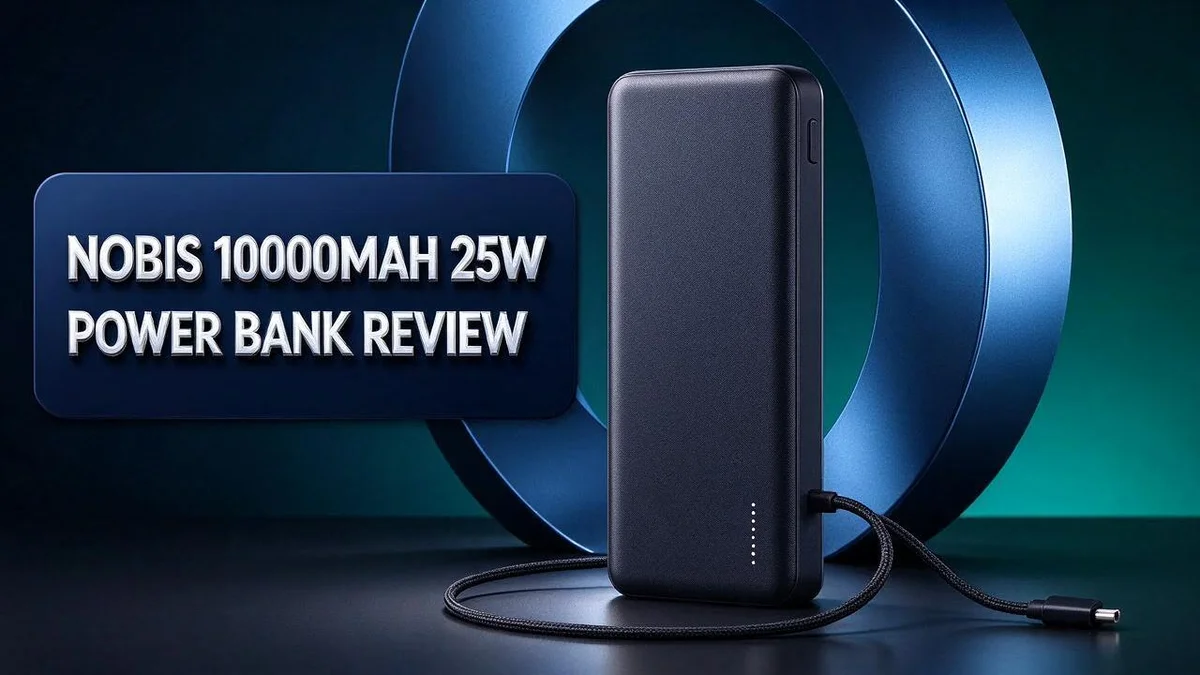
NOBIS 10000mAh Power Bank Review 2026: Buyer’s Guide
Running out of battery at the wrong moment is frustrating. A good power bank can save the day. The NOBIS 10000mAh Power Bank promises fast charging for phones, Android devices, and laptops.
Let us take a closer look at what this power bank offers. Its digital display shows the charge level at a glance. You can also see how much power is left before you head out.
Safety matters too. This model includes protection against over charging, short circuits, and automatic shut off. That gives you peace of mind every time you plug in.
Some sellers list the power output as 35W, while the title says 25W. This review sorts through the details. We cover real world use, charging speed, and how it compares with other NOBIS models.
In a Nutshell
-
Clear digital display: The screen shows the remaining charge at a glance. You never have to guess how much power is left before a long day out.
-
Built in cable: Some versions include a Type C cable. This means one less item to pack, which keeps your bag light for trips.
-
Fast charging support: PD and QC protocols help compatible phones and tablets charge quicker. Your device spends less time plugged in and more time ready to use.
-
Laptop friendly: Many users charge compact laptops with this power bank. It suits work trips, train rides, and days spent away from a desk.
-
Ready for outdoor use: Hikers, campers, and festival goers can keep gadgets powered far from a wall socket. It fits well in a backpack or jacket pocket.
-
Other NOBIS options: The brand also sells a magnetic model with wireless charging. A larger 65W unit can charge up to four devices at once, which helps families or small teams.
Key Specifications

Last update on 2026-10-28 / Affiliate links / Images from Amazon Product Advertising API Some of the links on this website are affiliate links, which means that at no additional cost to you, I earn a commission if you click through and make a purchase. I only recommend products and services that I believe will add value to my readers. Thank you for your support!
Start with the capacity. The NOBIS 10000mAh power bank stores enough energy to give a phone a full charge or more. That makes it a handy companion for a long day out.
Capacity is the battery size. Some energy always gets lost as heat during charging, so the usable charge is always less than the printed number.
The output is rated at 5V. Many listings also mention a higher wattage, so check the label before you buy. Ask yourself what your devices need.
Safety features come built in. The unit includes auto shut off, over charging protection, and short circuit protection. These tools stop damage when a cable or device acts up. You get peace of mind without extra steps.
The charging speed is another key point. One listing states a jump from 17% to 61% in about 30 minutes. The wording is unclear, so treat it as a guide rather than a promise.
Real results depend on your phone and cable. Use a good quality cable for the best flow.
Spec sheets can look confusing at first. Focus on three things: capacity, output, and protections. Those points tell you most of what you need to know.
Read reviews from real buyers too. They often reveal how the power bank performs in daily use. Look for comments about heat and charge speed.
Store the power bank somewhere cool and dry. Top it up before trips so it is ready when you need it.
Design and Build Quality
Good design makes a power bank easier to live with every day. A strong build keeps it safe in a bag, a jacket pocket, or a backpack. This section looks at how the NOBIS 10000mAh feels in real use and what to check before you buy.
Start with the feel in your hand. A power bank should sit comfortably in your palm. Look for smooth edges and a body that does not slip. A weight that feels solid often signals a sturdier internal build.
Think about the shape and size. Capacity pushes the size up, so a 10000mAh unit tends to be larger than a slim model. Many people slide it into a day bag without thinking twice. Others may prefer a compact option for a pocket.
Check the ports and buttons. Ports should sit flush and feel firm when you plug in a cable. Buttons should click with clear feedback. Loose ports or soft buttons can hint at weak assembly over time.
Consider durability for outdoor trips. The brand markets the unit as suitable for outdoor use, so the shell matters. Hikers and campers often toss gear into rough bags. A tough casing gives more peace of mind on the trail.
Look at heat during use. Good build quality also means the bank stays cool while it charges. Warmth is normal, but heat that feels intense may signal a poor design. Pay attention to how it feels after an hour of use.
Hold the unit yourself whenever possible. Visit a store or ask a friend who owns one. A short hands-on test tells you more than any spec sheet.
Charging Performance and Power Output
Charging speed depends on more than the label. The wattage printed on the box sets the upper limit. Your phone decides how much power it actually accepts.
Watts come from volts multiplied by amps. A phone that pulls 2 amps at 5 volts charges at about 10 watts. Higher voltage levels let the same bank move more energy in less time.
Your cable plays a big role too. A thin or worn cable can limit current, even when the bank supports fast output. Choose a short cable that feels sturdy and carries a clear charging rating.
One listing claims a jump from 17% to 61% in about 30 minutes. Treat this figure as a rough guide, since the test setup is not clear. Your own results will vary with phone model, battery age, and room temperature.
Using your phone during charging slows the process. Screen use, games, and video all draw power at the same time. For the quickest top up, keep the screen off or switch to airplane mode.
Plan your charging before a trip. Charge the bank fully at home first. Then check the display after a few minutes to confirm the charge rate looks steady. Pack a spare cable in your bag as well.
Recharging the bank overnight works well too. Slower input often keeps the cells steady, so the bank stays ready for your next trip.
Top 3 Alternatives
Looking for a different option? Here are three strong alternatives to consider.
Anker PowerCore Slim 10000


Last update on 2026-10-28 / Affiliate links / Images from Amazon Product Advertising API Some of the links on this website are affiliate links, which means that at no additional cost to you, I earn a commission if you click through and make a purchase. I only recommend products and services that I believe will add value to my readers. Thank you for your support!
This compact charger slips into a pocket or small bag. It holds 10000mAh of power, enough for about two full phone charges.
Its slim body makes it perfect for daily commutes. Travelers often pick it for its light weight. You can keep it in your jacket and charge on the go.
Anker 533 Power Bank

Last update on 2026-10-28 / Affiliate links / Images from Amazon Product Advertising API Some of the links on this website are affiliate links, which means that at no additional cost to you, I earn a commission if you click through and make a purchase. I only recommend products and services that I believe will add value to my readers. Thank you for your support!
This model focuses on fast, reliable charging through USB-C. It supports power delivery, so compatible phones and tablets charge quicker.
It works well for people who want speed. The sturdy build also handles everyday bumps and drops. Pair it with a fast charging cable for the best results.
UGREEN Nexode Power Bank

Last update on 2026-09-19 / Affiliate links / Images from Amazon Product Advertising API Some of the links on this website are affiliate links, which means that at no additional cost to you, I earn a commission if you click through and make a purchase. I only recommend products and services that I believe will add value to my readers. Thank you for your support!
UGREEN designs this power bank for people who own several devices. It offers multiple ports, so you can charge a phone, earbuds, and a laptop at once.
Its smart charging protects your devices from overheating. Many buyers also like the clean, modern look. It suits home, office, and travel use equally well.
Battery Capacity and Real-World Runtime
Rated numbers never tell the full story. The label shows the total stored energy, but your device receives less. Power changes voltage inside the bank, and that step wastes some energy as heat.
A quick estimate helps you plan. Divide the bank capacity by your phone battery size, then subtract about 30 percent for losses. This gives a fair guess of how many full charges you can expect.
Small devices last longer than big ones. A phone uses far less energy than a laptop. Expect fewer charges when you power a tablet or a compact laptop.
Screen use drains the bank faster. Gaming, video calls, and GPS navigation all pull extra power. Turn down the brightness and close unused apps to stretch your runtime.
Cold weather also cuts runtime. Batteries hold less charge in low temperatures. Keep the bank in an inside pocket when you hike or camp in chilly air.
Sharing power splits the total. Charging two or three devices at once shares the same stored energy. Each device will get a smaller slice, so plan accordingly.
Idle storage can drain slowly. Some power banks lose a little charge while they sit unused. Check the level every few weeks if you store it for a long time.
Test the runtime at home first. Use your phone normally for one full day, then note how often you need to plug in the bank. This simple test shows what the bank can really do for your daily routine.
Device Compatibility and Connectivity
Compatibility starts with your ports. Look at the charging port on each device first. Most modern phones and tablets use USB C, so a USB C cable often works well. Older gadgets may need a different cable or an adapter. Some older iPhones still use Lightning ports.
The NOBIS bank supports PD and QC protocols according to the listings. Power Delivery (PD) and Quick Charge (QC) tell the bank how much power to send. Your device must support the same protocol to reach its top speeds. Check your phone settings or manual to confirm.
Laptops need more care. Many laptops request higher voltage through PD, so check your model’s charging specs first. The listed output may fall short of what a laptop asks for. Heavy laptops can also drain the bank quickly, so use it for light tasks when possible.
Cable choice matters. A weak cable can limit speed, even when the bank is strong. Choose a cable that supports PD and matches your ports. Keep a spare cable in your bag for trips.
Wireless options exist too. NOBIS also sells a 22.5W magnetic 10000mAh model with wireless charging. This version suits people who want to skip cables. It works with phones that support wireless charging.
Test before your trip. Plug in each device once at home. This quick check shows whether your cable, port, and bank work together. It also helps you spot problems before you need the power.
Safety Protections
Safety matters every time you charge a phone or tablet. The NOBIS 10000mAh bank includes three key safeguards that work together.
Automatic shutoff stops the power flow once your device reaches full charge. This helps prevent wasted energy and extra heat.
Overcharging protection keeps your phone battery from taking in more current than it can safely hold. Your device gets only what it needs.
Short circuit protection cuts power when a cable or port causes a fault. This step can prevent damage to both devices.
Batteries can swell, overheat, or lose capacity under unsafe conditions. These guards lower those risks for your daily charging.
Store the bank in a dry place away from metal objects. Moisture and loose coins can cause a short circuit.
Keep these habits in mind. Use the cable that came with your device or a certified replacement. Check each port for dust or bent pins before you plug in.
Stop using the bank if it feels hot, smells strange, or shows visible damage. A quick check now can save you trouble later.
Keep the bank away from children and pets, since small parts can be a hazard. Cables can also pose choking or chewing risks.
Read the product manual first. It lists certification details and full safety notes. Those documents give the clearest answers for your model.
Safety features make this bank a dependable choice for home, office, and travel. Use it with care, and it will serve you well.
Portability and Outdoor Use
Packing light is easy with this bank. It fits in a jacket pocket or a small daypack. You can carry extra power on hikes, city walks, or road trips without feeling weighed down.
Outdoor days bring rain, dust, and rough handling. Store the bank in a zip pocket or a dry bag. This habit keeps moisture and grit away from the ports.
Keep the bank in an outer pocket. You can reach it quickly without unpacking your whole bag.
Flying with this bank is simple too. Most airlines allow power banks in carry on luggage. A 10000mAh model usually stays under the common 100Wh limit. Always check your airline rules before you fly.
Think about where you will recharge the bank itself. A wall adapter works well in hotel rooms. A car charger helps on long drives.
Plan these options before you leave. The bank should never run empty when you need it most.
A small hard case adds extra protection. It helps if your bag gets tossed around in a truck or a boat.
Good planning makes outdoor trips easier. Charge the bank fully the night before you leave. Pack a small pouch for the cable, so it never tangles with your gear.
Your phone can stay ready for photos, maps, and messages all day long. The compact body makes this bank a practical choice for active people who spend time away from outlets.
Pros and Cons
Pros
- The digital display shows the remaining charge at a glance.
- It supports PD and QC fast charging for quicker top ups.
- It works with phones, Android devices, and laptops.
- Listings describe it as a good choice for outdoor trips.
- A built in Type C cable on one version adds convenience.
Cons
- The title says 25W, but listings show 35W.
- One listing claims 17% to 61% in 30 minutes, but the wording is unclear.
- The built in cable only comes with certain models.
- Independent long term user reviews are limited so far.
Who Should Buy It
This bank suits people who spend long hours away from a wall outlet. It gives steady power without adding much weight to a bag.
Commuters are a strong match. A train ride or bus trip offers little chance to plug in. A quick top up keeps maps and tickets ready.
Students also benefit from this bank. Lecture halls and library desks often have few free sockets. A spare charge lets a student study, message friends, and stay connected.
Parents on the move can use it too. Kids often drain tablets on long car rides or flights. A ready bank in the bag keeps the trip calm and fun.
Ride share drivers need a phone that lasts all shift. Navigation apps and messages drain power fast. Long shifts can leave a phone at low battery by noon. A bank helps the phone stay online between pickups.
Remote workers who switch between phone and laptop may also like it. The bank supports phones, Android devices, and laptops. One bank can cover several gadgets in one bag.
Some buyers may want a different style. People who only charge at home rarely need a bank at all. Those who prefer charging a phone on a desk without cables may look at the magnetic wireless model instead.
A simple test can help. Ask how often you charge away from an outlet. If the answer is most days, this bank fits your routine well. Think about your daily habits before you decide.
Final Verdict
The NOBIS 10000mAh power bank earns a solid place in your bag. It charges fast, works with many devices, and shows clear battery levels. Its safety features also give peace of mind during daily use.
Still, one detail needs a quick check. Read the output rating on the packaging before you commit. That small step helps you match the bank to your phone and laptop.
Who should skip it? People who want wireless charging or a magnet mount may prefer a sibling model. Those models add features this bank lacks.
Our bottom line is simple. This bank suits everyday charging on the go. Pick it if you want steady performance and clear safety protection. Look elsewhere if you need to charge four devices at once.
Think about the trade offs. A compact bank may hold less energy than a larger model. Weigh portability against total capacity before you decide.
Compare the output to your devices. Most phones run well on standard fast charging. Laptops often need more wattage, so check that match first. A quick look at your charger ratings goes a long way.
Final thought: Buyers who want steady power and simple controls will likely feel satisfied. Your daily routine should guide the final choice. Think about how often you charge, how many devices you carry, and where you spend your time.
Our verdict in short: This bank earns a strong recommendation for people who want reliable everyday power. Check the details and enjoy your charge.
Frequently Asked Questions
Can I take this power bank on a plane?
Most airlines allow power banks in carry-on bags. Keep it in your cabin bag, not in checked luggage. A 10000mAh bank falls below the common size limit, but check your airline’s rules before you fly.
What should I do if my phone charges slowly?
Start by checking the cable and wall adapter. A fast charging cable helps the bank deliver its best output. Closing heavy apps also helps, since they use power while the phone charges.
How should I store the bank when I am not using it?
Keep it in a cool, dry place away from direct sunlight. Store it with about half charge if you will not use it for several weeks. This habit helps the battery stay healthy over time.
Is it safe to leave the bank plugged in overnight?
The built-in protections guard against overcharging and short circuits. Still, it is best to unplug it once it reaches full charge. Place it on a hard, flat surface instead of a bed or pillow so air can flow around it.

Hello everyone my name is Alenya and i am a gadget discovering Enthusiast 🐻🐻