NOBIS 20000mAh 65W Power Bank Review: Worth the Price?
Long days away from an outlet can drain your phone and laptop fast. A large, powerful power bank can keep everything running. The NOBIS 20000mAh 65W Power Bank promises a lot in one pack.
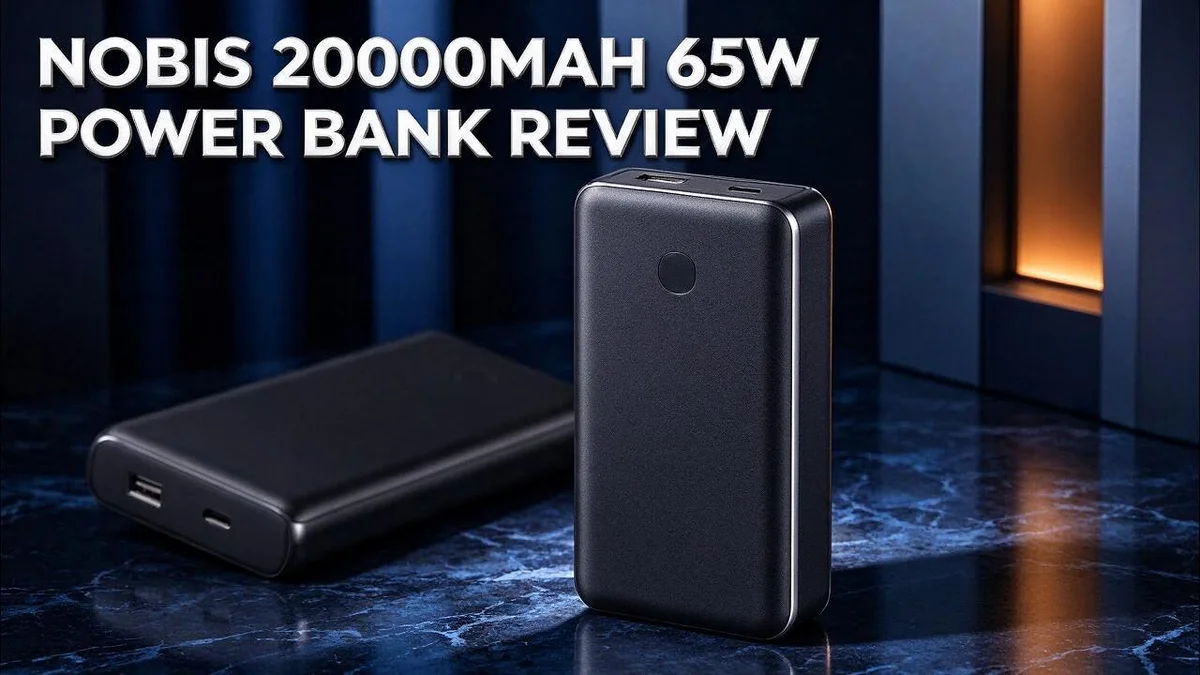
Here is what the listings claim. The bank offers 20000mAh of capacity and 65W of power output. It also includes two USB C ports and two USB A ports, so several devices can charge at once.
Some details need a closer look. Listings show different input ratings, with 45W in one place and 65W in another. Claimed tests say it charges a MacBook Pro and an iPhone 15 Pro quickly, but independent results are still missing.
Is it the right pick for you? Keep reading to see how it performs, where it may fall short, and how it compares with similar chargers.
In a Nutshell
- Big capacity: The NOBIS bank lists 20000mAh of battery power. That can cover several phone charges on a busy day.
- Strong output claim: Listings claim 65W of power output. This can help top up a laptop when you are away from an outlet.
- Four ports: The bank includes 2 USB-C and 2 USB-A ports. You can charge several devices at the same time.
- Conflicting input rating: Some listings state 45W input, while others show 65W. Check the exact model before you decide.
- Claimed test results: One listing says the 45W model charges a 14″ MacBook Pro from 0% to 47% and an iPhone 15 Pro from 0% to 60% in 30 minutes. These numbers come from the seller, not independent testing.
- Limited proof so far: No independent pros or cons are documented yet. A Reddit user asked about reliability, and no clear answer appeared.
Key Features
Power for more than one device is where this bank can help most. When several gadgets plug in at once, the total output gets shared, so each one charges a little slower.
Check the manual to see which port delivers the top wattage. Then plug your laptop into that port and save the others for phones or earbuds.
Carry on rules matter for flyers. Most airlines set a limit of 100Wh for power banks in carry on bags. A 20000mAh bank works out to about 74Wh at standard cell voltage, so it usually falls under that line.
Always check your airline rules before you pack it.
Cables make a real difference. To reach top output, you need a cable rated for high wattage. A basic cable can slow charging, even when the bank supports 65W.
Choose a sturdy cable that matches your laptop and phone.
Camping and road trips show its value. Long drives, hiking, and festival weekends often mean no outlet nearby. A large capacity bank can keep navigation apps, cameras, and phones running for longer.
Pack it in a dry bag if rain is likely.
Weight and size deserve a look. Big capacity often means a heavier block in your bag. A bank you carry every day gets used far more often.
Port layout affects daily comfort. A laptop on one side of a desk and a phone on the other can crowd your space. Think about where your devices sit, then pick cables that reach easily.
Ask what matters most to you. If you charge a laptop often, output power matters more than a long list of phone charges. If you mostly need quick phone top ups, a smaller bank may suit your routine better.
Your daily routine should guide the choice. Think about how often you travel, how many devices you carry, and how long you go without an outlet. Those answers will show whether this bank fits your life.
Design and Build
The look of a power bank matters more than you think. It sits in your bag every day, so shape and finish count. Simple lines usually fit well in most backpacks and tote bags.
Hold the bank in your hand before you buy. A good grip helps when you pull it out on a busy train or in a crowded airport. Check whether the edges feel smooth or sharp.
Ports deserve a close look too. Place them where your fingers can reach without twisting the cable into a tight bend. If the ports sit too close together, a thick plug may block its neighbor.
Buttons and indicators show you the charge level. Look for a clear display or lights that tell you how much power remains. A quick glance saves you from guessing during a long flight.
The listings do not describe the exact materials or finish. That means you should look at photos closely and read any owner notes. Matte surfaces often hide fingerprints, while glossy ones may scratch sooner.
Heat is part of the build story. A power bank that pushes high output can warm up. Good venting and a solid shell help keep temperatures steady. Touch the case during a test charge to see how it feels.
Sturdiness matters for daily carry. A bank that gets tossed into a bag with keys may face bumps and drops. Look for corners that feel firm and a case that does not flex when you press it.
Pick a style that fits your routine. Commuters may want a neat shape that slides easily into a bag. Road trippers may prefer a shell that can take a few knocks.
Overall, the build should feel solid in your hands. The research does not confirm the finish quality yet. Checking the design in person or reading fresh reviews will help you decide.
Charging Performance
Charging speed depends on more than the number on the box. The bank may offer 65W, but your device sets the pace. Each device asks for a set amount of power, and the bank sends only what that device accepts.
Energy loss changes the real result. A 20000mAh bank does not deliver its full capacity. Some energy turns into heat during conversion, so your device gets less. Expect a usable charge that is smaller than the label suggests.
Charging slows down near full. Most devices charge fast at the start, then slow as the battery fills. The last stretch often takes much longer than the first half. Keep this in mind when you only have a short break.
Port sharing changes the speed. When two devices plug in at once, the bank splits its output. One phone may charge quickly while another charges slowly. Plug in one device at a time if you need the fastest result.
Pass through charging is worth a check. Some banks can charge themselves while they power your devices. Read the manual to see whether this model supports it. Pass through use can add extra heat, so watch the bank during long sessions.
Overnight charging works well for slow top ups. A bank can fill a tablet or earbuds while you sleep. Short bursts during the day suit phones that need a quick lift. Match the charging habit to the device that needs it.
A simple USB meter gives clear answers. A small inline meter shows the watts flowing to your device in real time. You can see whether the port delivers the full rate. It also reveals when a device accepts less power than you expected.
Your own test beats any listing. Charge your phone or laptop from low to full and time the session. Write down the results and compare them with the claims. This gives you a real picture of how the bank performs in your daily routine.
Start with a full bank before a trip. A fresh charge means you know exactly what you have. Recharge the bank after each use so it stays ready. This simple habit saves stress when you need power fast.
Top 3 Alternatives
If you want to compare other options, these three alternatives are worth a look. Each one offers something a little different.
Anker Prime Power Bank


Last update on 2026-10-28 / Affiliate links / Images from Amazon Product Advertising API Some of the links on this website are affiliate links, which means that at no additional cost to you, I earn a commission if you click through and make a purchase. I only recommend products and services that I believe will add value to my readers. Thank you for your support!
Looking for raw power? The Anker Prime Power Bank charges laptops and phones at high speed. It offers several ports, so you can power multiple devices at once. Its high wattage output helps during long work sessions on the go. It suits frequent travelers who need serious output.
Anker 737 Power Bank

Last update on 2026-09-19 / Affiliate links / Images from Amazon Product Advertising API Some of the links on this website are affiliate links, which means that at no additional cost to you, I earn a commission if you click through and make a purchase. I only recommend products and services that I believe will add value to my readers. Thank you for your support!
The Anker 737 Power Bank is a strong pick for heavy daily use. Its digital display shows the remaining charge at a glance. Plenty of capacity keeps your gadgets alive during long days. Its sturdy design handles daily bumps in a bag. It works well for laptops, tablets, and phones.
Ugreen Nexode Power Bank

Last update on 2026-09-19 / Affiliate links / Images from Amazon Product Advertising API Some of the links on this website are affiliate links, which means that at no additional cost to you, I earn a commission if you click through and make a purchase. I only recommend products and services that I believe will add value to my readers. Thank you for your support!
The Ugreen Nexode Power Bank focuses on value and versatility. It packs modern fast charging ports for newer laptops and phones. Its compact build fits easily into a backpack. Many shoppers like its balance of speed and size. It makes a smart choice for everyday commuters.
Each option above offers something different. Think about your devices, your travel habits, and how much power you need. The right match will keep your gear charged and ready.
Port Layout and Compatibility
The NOBIS 20000mAh 65W power bank lists four ports. Two are USB-C and two are USB-A. This mix covers most phones, tablets, and laptops you carry.
USB-C ports handle the fast charging. Use these for your laptop and newer phones. They support the power delivery standard that high wattage devices need.
USB-A ports suit older gear. Many earbuds, cameras, and older handsets still use this plug. Keep these ports for smaller accessories so your main devices get the strongest flow.
Apple owners may need one more cable. Older iPhones use Lightning connectors, so a USB-C to Lightning lead links them to the USB-C ports.
Check the port labels before you plug in. Some banks mark the highest output port clearly. If the labels look unclear, test each port with your device and watch the charge icon.
Confirm the input rating too. The listings disagree on input power, with both 45W and 65W showing up. Input speed decides how fast the bank refills itself from a wall charger.
That gap matters for your plan. If you want a full refill in one sitting, you need a charger that matches the higher number. Otherwise, the bank may refill slower than you expect.
Compatibility goes beyond the plug shape. Your laptop must accept USB power delivery. Phones that only use USB-A need a USB-A to USB-C or USB-A to Lightning lead, so check your cable list before a trip.
Compare the port mix with similar chargers. The CIO Max 45W dual USB-C charger appears as a comparable option. Its layout can help you decide if you want more USB-C outlets for daily use.
Some gaps in the research remain. No independent reviews confirm how each port performs under load. Test the bank with your own devices before you rely on it for a long flight.
Safety and Reliability
Safety starts with protection features. Quality power banks guard against overcharging, short circuits, and overheating. The research does not confirm which protections the NOBIS 20000mAh 65W model includes.
Look for safety certifications before you buy. Common marks include CE, FCC, and UN38.3, which covers lithium battery transport. A recognized mark shows that an accredited lab tested the product.
Long term reliability needs more proof. No independent reviews track how the battery holds up after months of daily charging. A Reddit user asked about reliability, and the research shows no answer.
Lithium ion cells lose capacity with each charge cycle. Over several years, the bank will hold less power than it did when new. Plan for gradual wear rather than expecting full performance forever.
Air travel brings extra rules. A 20000mAh bank at 3.7V works out to about 74Wh by simple math. That figure sits under the 100Wh limit many airlines use for carry on power banks. Confirm your airline rules before you fly.
Store and use the bank with care. Keep it away from direct sunlight, hot cars, and water. Stop using it if the casing swells, smells strange, or becomes hot to the touch.
Pair the bank with a quality cable rated for your device. Poor cables can cause heat buildup and unstable charging. Keep cables free from sharp bends and frayed spots.
Safe charging also depends on the devices you connect. Phones and laptops control how much current they accept. The bank should supply power, but your device still sets the limits.
Check the warranty and return policy. Solid support helps if the bank fails early. The research does not list warranty details, so review the seller page before you order.
Good safety habits protect both you and your gear. Treat the bank as a battery, not a toy. With careful use, it can serve you well for years.
Pros and Cons
Pros
- Four ports let you charge several gadgets at once.
- A listing claims a 14″ MacBook Pro gains 47% in 30 minutes.
- The same listing claims an iPhone 15 Pro reaches 60% in that time.
- A video description claims multiple phone charges from one bank.
- The 20000mAh capacity could keep devices running on a day out.
Cons
- The charging claims come from the 45W model, not this one.
- Weight and size details are missing from the research.
- No warranty details appear in the research notes.
- Rival JUOVI has no specs listed, so comparison stays limited.
Who Should Buy It
This power bank suits people who travel often. Commuters who carry a laptop and phone every day can benefit from a large battery. It can cover a full workday away from an outlet.
Students and remote workers may also find it useful. Long study sessions at a library or cafe drain phones quickly. Extra power in a bag keeps work moving.
Families and groups with many gadgets should take a look. Four ports let several people charge devices at the same time. This helps on road trips, camping weekends, or busy day outings.
Office teams that share one charger may also like the spare ports. Each person can plug in without waiting for a turn.
Hikers and campers can also count on it for longer trips. Remote sites offer no wall sockets. A bank with this capacity can keep several small devices running between recharges.
Some shoppers should wait for more proof. Independent pros and cons are missing from the research. A Reddit user asked about reliability, and nobody answered in the excerpt. Buyers who want clear track records may need more reviews first.
Shoppers who want a home charging option can look at the CIO Max 45W dual charger. It is listed as a similar choice. It suits people who mainly need wall charging rather than a portable battery.
Buyers who need a light pocket bank may prefer another model. The weight and size details are not available yet. Check the dimensions before you carry it every day.
Ask yourself three quick questions before you decide. Do you need several charges on one trip? Do you carry a laptop often? Are you comfortable with limited public data about this brand? If you answered yes to most, this bank could fit your routine well.
Final Verdict
The NOBIS 20000mAh 65W Power Bank is a promising pick, but it needs more proof. The research shows what the brand claims. It does not yet show how the bank performs over time.
The biggest open question is the input rating. Listings disagree on whether it takes 45W or 65W. A slower input means longer waits at the wall. Check the exact input spec on the product page before you order.
Ask the seller these questions first. Does the warranty cover battery failure? How long does coverage last? Is the return window clear? Written answers help you avoid surprises later.
Read recent buyer feedback with care. A single Reddit question about reliability went unanswered in the research. Look for reviews that mention real use over several weeks, not just first day impressions.
Compare before you commit. The CIO Max 45W dual charger is a similar option for home use. JUOVI is also mentioned, but no details are available, so it is hard to judge. Place specs, weight, and port layouts side by side.
Weight and size are still missing from the research. That gap matters for anyone who plans to carry the bank every day. Measure your bag space before buying.
Our final take is simple. This power bank may suit heavy users who want many ports and high capacity. Shoppers who need solid proof of long term reliability should wait for independent tests. Trust grows with time and verified feedback.
Test it as soon as it arrives. Charge it fully once and note the time. Check whether the ports deliver the power the listing promises. Keep the receipt and packaging until you feel sure.
Model numbers matter. Some sellers mix up similar products in photos and titles. Match the model name on the box with the listing before checkout.
Frequently Asked Questions
Can I take this power bank on a plane?
A 20000mAh battery holds about 74Wh at a standard cell voltage of 3.7V. Many airlines allow power banks up to 100Wh in carry-on bags. Always check the label and your airline’s rules before you fly.
Will the 65W output charge a laptop fast?
The 65W rating works for many USB-C laptops. However, the research has no independent tests. Real charging speed depends on your laptop and cable. Use a high-power cable for the best results.
Can I use the power bank while it charges?
The research does not confirm pass-through charging. Some power banks cannot charge and send power at the same time. Ask the seller this question before you order.
Will all four ports give full power at once?
The research does not explain how power splits between ports. Multi-port banks often share their total output. Charging two laptops together may slow both. Plug in one high-power device at a time for the fastest charge.
How should I store it between trips?
Keep the power bank in a cool, dry place. Avoid leaving it in a hot car. If you plan to store it for several weeks, charge it to about half. This habit helps the battery last longer.

Hello everyone my name is Alenya and i am a gadget discovering Enthusiast 🐻🐻