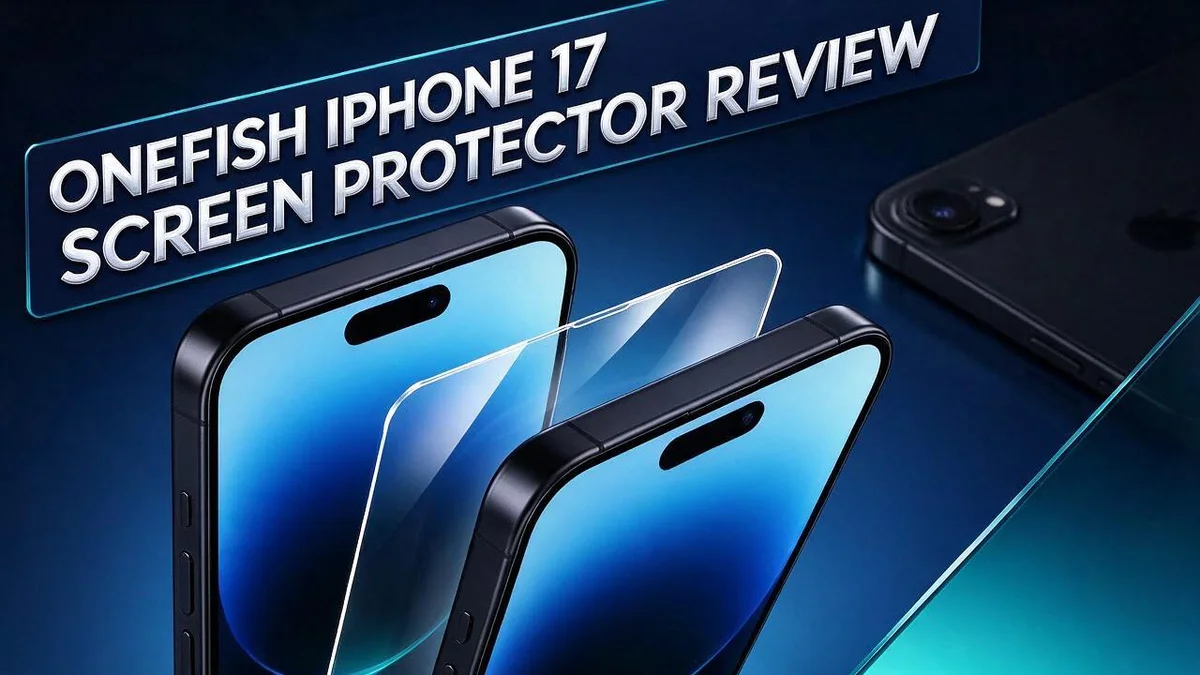
OneFish iPhone 17 Screen Protector Review: Should You Buy It?
Picking the right screen protector for your new phone matters. You want a clean look, smooth touch, and a bit of privacy on busy trains or at cafe tables. The OneFish iPhone 17 screen protector promises all of that in one simple layer.
This review takes a close look at what the OneFish protector does well and where it falls short. We cover the privacy filter, the feel under your finger, and how it handles daily wear. We also share a few fit concerns that other buyers have raised.
Here is the short version. The protector blocks side views and keeps touch response smooth. However, it can dim your display and reduce sharpness. Thick cases may also cause fit trouble.
Keep reading to decide if this protector suits your daily routine.
In a Nutshell
-
Check the listing first. The 2 pack listing we found names the iPhone 16 Pro Max, not the iPhone 17. Sellers sometimes mix up model names, so compare the packaging with your phone before you buy.
-
Expect a dimmer screen. The privacy layer cuts brightness and some sharpness. Reading small text or photos may take more effort, and outdoor use may feel harder.
-
Watch the thickness. This filter sits a little thicker than standard protectors. That extra layer can clash with some cases, so measure your case before you order.
-
Think about your case. Reported fit issues appear with thick cases. Heat buildup has also been mentioned in those setups.
-
Note the unverified glare warning. Forum users worry that protectors may affect the iPhone 17 anti reflective coating. We could not confirm this claim.
-
Compare the alternatives. Nillkin is a popular privacy choice for the iPhone 17 Pro Max. Belkin has user reports of cracking after a drop. Read recent reviews before you pick one.
Privacy Performance

Last update on 2026-10-30 / Affiliate links / Images from Amazon Product Advertising API Some of the links on this website are affiliate links, which means that at no additional cost to you, I earn a commission if you click through and make a purchase. I only recommend products and services that I believe will add value to my readers. Thank you for your support!
Privacy is the main reason most buyers look at this protector. People check messages on trains, in queues, and in busy cafés. A privacy filter helps keep those messages personal.
The effect works best when someone looks from the side. A person sitting directly in front of you still sees the full screen. Keep this in mind if you share a desk or sit beside a coworker.
Viewing angle matters a lot. Test the screen from your usual seat before you commit. Ask a friend to sit beside you and see what they can read.
Work settings call for extra care. Office screens often face colleagues, and a filter can help protect client details or internal messages. Check your company policy before you rely on any screen protector for sensitive work.
Public transport is where this filter helps most. Commuters often read emails, banking alerts, or chats in tight seats. A side view filter keeps those details away from nearby eyes.
Outdoor use is a different test. Bright sunlight can make the display harder to read from any angle, so raise the brightness when you step outside.
Sharing photos is the tricky part. Turning the phone toward a friend often shows a dark or blurred image. Hold the phone straight on for a moment instead.
Home use feels different. Family members or roommates rarely look at your screen from a sharp side angle. You may find the filter less useful there, so weigh your daily locations first.
After you apply the film, check the front camera, the proximity sensor, and your Face ID setup. Quick tests help you spot early issues. Overall, this protector suits people who use their phone in public spaces most often. Your daily routine decides whether the trade offs feel worth it.
Clarity and Brightness
Clarity decides whether a privacy filter feels worth it. You want text that looks crisp on a busy commute. You also want photos that look true to life.
Colour tone deserves a close look first. Many privacy films can shift whites slightly warmer or greyer. Food, skin, and clothing may look a touch off.
Photos need a fair test. Take the same picture with and without the film if you can. Compare skin tones and sky colour side by side.
Small text is another check. Thin fonts in messaging apps and news sites may look softer. Bold text usually reads more easily.
The auto brightness sensor adds another layer. Your phone reads light through the top area of the display. A film over that spot can confuse the sensor. The screen may jump up or down more than you expect.
Try a simple contrast test. Open a white page and a dark page. Look for grey patches, uneven shading, or a faint halo around icons.
Contrast matters in dim rooms too. Dark scenes can look flatter and murkier. Bright scenes often hold up well, so watch a favourite show for ten minutes before you judge.
Edges deserve attention. Set your display to its highest brightness and check the top and bottom corners. Uneven edge dimming is worth noticing before you commit.
Long reading sessions raise another question. Some people feel more eye strain with a softer screen. Others barely notice the difference. Your own comfort matters most here.
Dark mode gives a different result. Dark backgrounds often hide the filter’s dimming effect. Light backgrounds show it more clearly. If you read in dark mode most evenings, this protector may suit you well.
Keep the screen clean. Fingerprints show more on a privacy layer. Wipe it each day with a soft microfibre cloth. Use gentle pressure to protect the coating.
Clarity suits some users far more than others. Decide based on your own screen habits, not someone else’s opinion.
Fit and Case Compatibility
Your case decides most of the fit. Many people keep their phone in a case all day. Check the raised lip around the screen first. A high lip can push on the film and lift the edges over time.
Remove the case before you apply the film. Clean the frame well so dust cannot sit under the edges. A trapped speck near the camera can look like a bubble later.
Look closely at the camera cutout. Some cases have a deep or uneven opening around the lenses.
A cutout that does not line up can leave the camera area exposed or partly covered. Lens shots may also look soft if the case sits badly.
Soft silicone cases can bend a little, so the film may shift during pressing. Hard cases with a firm edge usually hold the film in place better.
Heat is another point to consider. A thick case can trap warmth around the phone.
Add a protector on top, and the phone may feel warmer during long video calls. Keep an eye on this if you use your phone for hours each day.
Measure the full stack. Wallet cases and magnetic stands add bulk on the back. Add up the case, the film, and the accessory thickness. A slim stack usually sits better in pockets and bags too.
Test the fit before you commit. Put the case on, then add the film in a bright room. Let the film sit flat for a few minutes. If the case closes easily and the edges stay down, the setup works well.
Grip cases with raised corner bumpers can sit higher than the screen edge. Check that the film edges stay clear of those bumpers.
Keep the packaging and receipt in case the fit feels wrong. A quick return can save you from a poor result.
Top 3 Alternatives
Looking for other options? These three screen protectors make good alternatives to the OneFish model. Each one fits the iPhone 17 and offers simple, everyday protection.
Spigen Glas.tR Slim

Last update on 2026-10-30 / Affiliate links / Images from Amazon Product Advertising API Some of the links on this website are affiliate links, which means that at no additional cost to you, I earn a commission if you click through and make a purchase. I only recommend products and services that I believe will add value to my readers. Thank you for your support!
This protector is thin and easy to install. It covers the screen edge to edge and keeps touch response sharp. Many people like the clear finish because it looks almost invisible on the display. It also helps guard against small scratches from keys and loose coins.
Best for: people who want a slim fit with strong clarity.
ESR Tempered Glass

Last update on 2026-10-30 / Affiliate links / Images from Amazon Product Advertising API Some of the links on this website are affiliate links, which means that at no additional cost to you, I earn a commission if you click through and make a purchase. I only recommend products and services that I believe will add value to my readers. Thank you for your support!
This option uses tempered glass that feels smooth under your finger. It resists dust and oil well, so the screen stays clean for longer. The kit includes an alignment tool, which makes placement simple. Bubbles are rare when you follow the steps carefully.
Best for: first-time users who want an easy setup.
JETech Screen Protector

Last update on 2026-10-30 / Affiliate links / Images from Amazon Product Advertising API Some of the links on this website are affiliate links, which means that at no additional cost to you, I earn a commission if you click through and make a purchase. I only recommend products and services that I believe will add value to my readers. Thank you for your support!
This protector offers solid drop protection for daily use. It keeps the screen clear and reduces glare in bright light. You can remove and reapply it without leaving much residue. Many users say it feels very close to the original glass.
Best for: people who want reliable coverage for everyday life.
Installation and Touch Feel
Installing the film takes patience. Start with a clean screen and a dry microfibre cloth. Dust trapped under the film can create tiny bumps that you will notice every day.
Line up the film before you peel the full backing. Hang the top edge first. Then lower the rest slowly so you can fix the position.
Use the card in the box to push air out. Work from the centre to the edges. Small bubbles often fade within a day, but large ones need a fresh start.
Keep the release liner handy until the film sits flat. Peeling it off too early can let dust settle on the sticky side.
Touch feel changes right after installation. The surface feels a little less like bare glass. Many people describe the glide as softer and slightly grippy.
Quick taps still register well in most tests. Slow swipes feel steady and controlled. Fast flicks can feel less crisp for some users.
Typing shows the difference most. Your thumb may slide a little on the keys at first. Give it a day of normal use before you judge the feel.
Scrolling gives the most natural test. Flick through a news app for two minutes. Notice whether the speed matches what you expect.
Using one hand depends on your grip. A slightly textured surface can slow a thumb that moves fast across the screen.
Gaming needs its own check. Open a fast game and test drag controls for a few minutes. Watch for lag or missed inputs during quick swipes.
Pen and stylus use is another test if you own one. Some tips grab the surface more than glass does. Try a short note before you decide.
Wait about half a day before heavy cleaning. The adhesive needs time to settle fully. Gentle wiping is fine during that window.
Overall, the touch feel stays smooth for daily tasks. Most users adjust within a few days. Your own habits will decide whether that softer glide suits you.
Durability and Drop Protection
The film takes the first hit. It sits above the glass, so it meets the ground before the display does. That is the main job of any protector.
The research gives limited spec data for this product. No drop rating or impact test result was found. Claims about toughness stay unconfirmed.
The privacy layer is slightly thicker than standard films. That extra thickness may add some cushion. It will not stop every fall, though.
One user report stands out. A Belkin protector cracked after a drop. That case shows films can fail when the impact is strong.
A cracked film is not always bad news. The film may break so the glass underneath survives. Check the screen after any fall, and replace the film if cracks spread.
Look closely at the edges after a fall. Small chips can grow with time and pressure. Lift the corners gently to check the seal.
Scuffs may also show sooner on a privacy layer. Keep a soft cloth nearby for gentle wiping.
Drops on tile or concrete are harder than drops on carpet. Hard surfaces send more force into the film. Keep this in mind when you judge the protection.
Your case matters more than the film for drops. A case with raised edges lifts the screen off hard ground. A thin case leaves the film to do all the work.
Pick a case that protects the front edge too. Front edge protection helps the film stay intact during a slide across the floor.
Keep a spare film in a drawer. Swapping a cracked film takes only a few minutes. The glass stays covered while you wait for a replacement.
Drop protection is useful but not perfect. Treat the film as one layer of defence, not a full shield. Pair it with a sturdy case for the best result. Read real user reports before you decide.
Pros and Cons
Pros
– Hides your screen from people beside you.
– Keeps messages and banking apps private on busy trains.
– Offers a clear view when you look straight on.
– Feels smooth when you scroll through feeds.
– Lets you check notes in public with less worry.
Cons
– The listing shows a 2-pack made for the iPhone 16 Pro Max.
– Specs for the iPhone 17 are hard to confirm.
– Forum posts about glare handling remain unverified.
– Screen brightness may drop in sunny places.
Who Should Buy It
Not everyone needs a privacy film, so think about your daily routine first.
Open office workers often read work emails beside colleagues. Shared desks make screens easy to spot from across the room. This film helps keep those messages private.
Students who study in libraries or cafes can benefit too. Many people sit close together, so a privacy layer gives quiet peace of mind.
Frequent travelers may find it useful in airport lounges and hotel lobbies. Strangers often glance at screens while they wait in line.
Parents who read school updates in public spaces may also like it. Private messages stay private, even in a crowded room.
Remote workers who take calls in cafes should consider this film. Background noise hides a lot, but a nearby glance can reveal client names.
Teachers who check phones between lessons may appreciate extra privacy during breaks. Staff rooms often have shared tables and busy conversations.
Gift buyers may also like this film for a partner who values privacy.
Photographers and designers should look elsewhere. Colour accuracy matters most for their work, and a privacy layer can shift how images look.
People who stay home most days may not need it. A standard film gives them solid protection with fewer compromises.
Ask yourself how often you hand your phone to others. If you rarely share it, the privacy layer may matter less to you.
A final tip: test the film in your usual spots first. Sit in your normal café seat and see who can read your screen.
This film suits people who value discretion more than perfect clarity. Think about where you use your phone most. That answer will tell you if this film fits your life.
Final Verdict
Our verdict is simple. The OneFish privacy protector suits people who need extra screen privacy every day. It does its main job well, but it is not the right pick for everyone.
Think about your own habits first. If you often check messages on a crowded bus, this film earns its place. If you rarely use your phone in public, a standard protector may serve you better.
The research offers limited details for the iPhone 17 model. That gap matters. Before you buy, check that the listing names your exact phone. A quick read of the product page can save you from a poor fit.
Compare it with other options too. Nillkin is a popular choice for privacy filters, so many shoppers look at it first. Belkin also appears in buyer discussions. Read recent reviews from people with your exact model before you decide.
Test your setup early. Apply the film and fit your case straight away. If the case does not sit flush or the camera area looks tight, return the item while the window is open. Keep the packaging and receipt until you feel confident.
Use this quick checklist before you commit:
Check the model number on the listing.
Confirm your case fits over the film.
Accept that clarity may dip a little.
Read the return policy carefully.
Give the film a full week of normal use before you judge it. Your first impression may change once the film settles into your routine.
If most of these points fit your life, this film makes a sensible choice. Privacy comes first for many users, and this product delivers that well. Stay honest about your needs, and you will likely feel happy with your decision.
Frequently Asked Questions
How do I apply the OneFish protector without bubbles?
Clean your screen with a dry microfiber cloth first. Work in a room with little dust. Lay the film down slowly from one edge, then smooth out air pockets with a soft card.
What if the protector cracks after a drop?
Cracks can happen after a hard fall. One Belkin user reported a cracked film after a drop, so expect that any thin film may not stop every impact. Keep your phone in a case that fits well.
Will others see my screen when we watch videos together?
A privacy layer narrows the viewing angle. That helps when you read alone in public. However, a friend beside you may see a dark or faded screen during a shared video. Plan on watching on your own or turning the phone toward your friend.
Should I compare it with the Nillkin option?
Yes, compare the models carefully. The research names Nillkin as a popular choice, but it ties that choice to the iPhone 17 Pro Max. Check that the product matches your exact phone, not just the series name.
How do I remove the film later?
Peel the film slowly from one corner. Pull it at a low angle to avoid tearing. If sticky residue remains, wipe it gently with a soft cloth. Always read the included instructions first.

Hello everyone my name is Alenya and i am a gadget discovering Enthusiast 🐻🐻