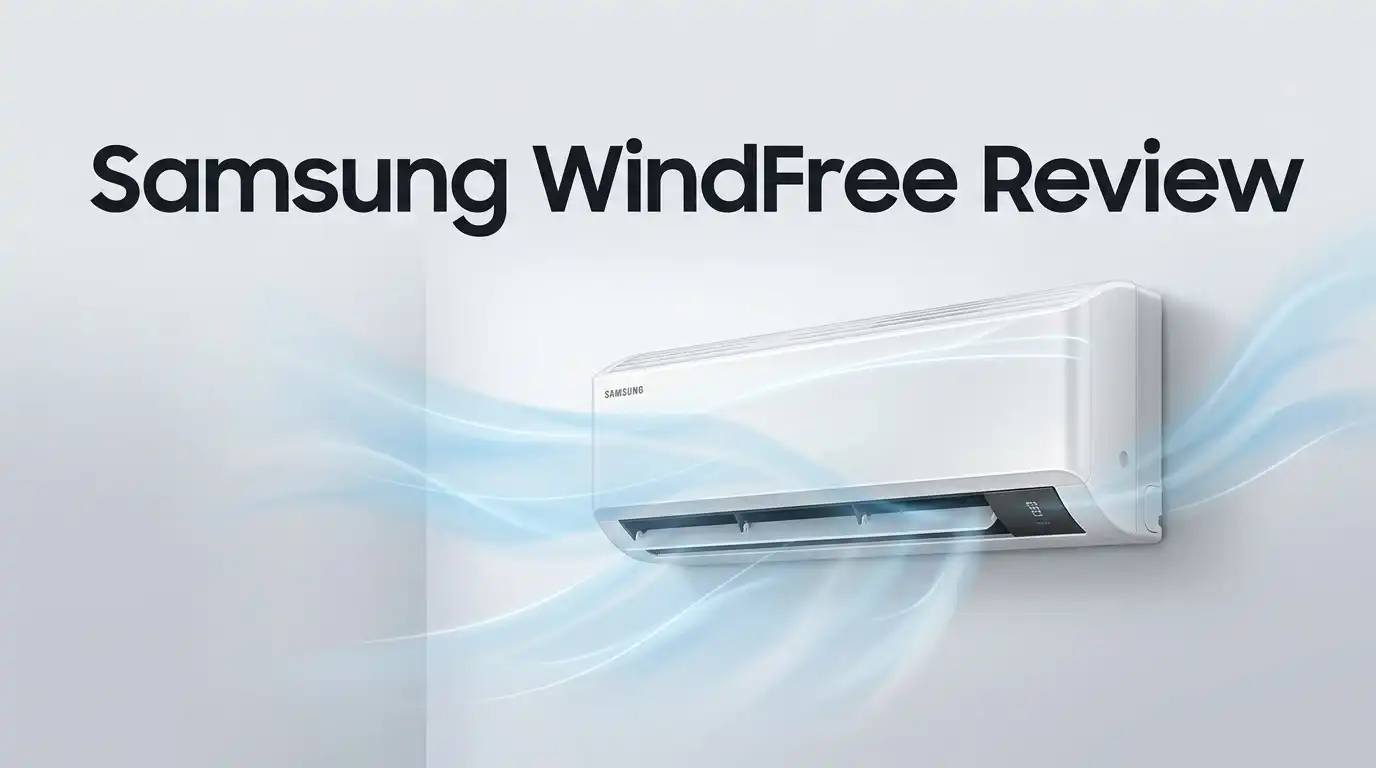
Samsung WindFree Review 2026: Really Silent?
Silence sells. Samsung knows this well. Their WindFree AC promises a breeze free cooling experience. But does it really deliver on that promise?
Many buyers pick this unit for one reason. They want quiet nights and cool rooms. No one likes a noisy air conditioner buzzing through their sleep.
Samsung claims WindFree mode drops noise to a whisper. It uses tiny vents instead of one loud fan. This spreads cool air gently across the room.
In a Nutshell
- WindFree mode delivers gentle cooling. It skips harsh blasts of cold air. Many users enjoy this calm airflow, especially at night.
- Sleep quality gets a boost. Most reviewers say they rest better with this unit. The soft cooling helps them stay comfortable all night.
- Noise levels are debatable. Some users compare the sound to a “toy train” hum. Others say it truly feels silent. Your experience may vary based on room size and settings.
- Humidity control works well. This AC removes moisture from the air. It does this without making the room feel too cold.
- Maintenance can add up. Some owners report cleaning fees around $85. This is worth factoring into your long term plans.
- Reliability concerns pop up in forums. A few users mention issues over time. Most feedback still leans positive though.
- The SmartThings app makes life easier. You get control from your phone. This adds convenience to daily use.
Cooling Performance and WindFree Technology
Samsung’s WindFree technology works by cooling your room without pushing air directly at you. The system uses micro-perforations across the indoor unit to distribute cool air gently. This approach prevents that uncomfortable draft feeling you get from traditional air conditioners.
How does it actually cool your space? The unit pulls warm air through its filter and cools it using refrigerant. Instead of blasting cold air in one direction, WindFree spreads the cooled air across multiple small openings. Your room temperature drops steadily without creating uncomfortable cold spots on your body.
The cooling performance itself remains strong. Your AC still reaches your desired temperature efficiently. The difference is how it gets there. Standard mode cools faster but creates noticeable air movement. WindFree mode takes slightly longer but feels more natural and comfortable.
What about the noise claims? Here’s where reality gets interesting. Samsung advertises WindFree as nearly silent, and many users confirm this works well for sleep. However, some owners report hearing a low hum that sounds like a toy train running. This noise isn’t loud, but it exists. If you’re extremely sensitive to any sound, you should know this detail upfront.
The humidity management feature adds real value. WindFree mode removes moisture from your air while keeping temperatures comfortable. This prevents that sticky feeling common in humid climates. Your room feels fresher without getting uncomfortably cold.
Real world performance matters. Most users sleep better with this unit running. The combination of gentle cooling and lower noise levels creates a better sleep environment. Your body doesn’t jolt awake from sudden temperature changes or loud compressor kicks.
One thing to note: WindFree mode uses more energy than standard cooling at the same temperature setting. You’re trading some efficiency for comfort. If you run it constantly, your electricity use will increase slightly compared to traditional mode operation.

Last update on 2026-09-19 / Affiliate links / Images from Amazon Product Advertising API Some of the links on this website are affiliate links, which means that at no additional cost to you, I earn a commission if you click through and make a purchase. I only recommend products and services that I believe will add value to my readers. Thank you for your support!
Noise Levels: Separating Marketing Claims from Reality
Samsung’s marketing team calls the WindFree mode “whisper quiet.” Real users tell a different story. Let’s look at what actually happens when you turn on this AC.
Measured sound levels matter here. The WindFree mode does run quieter than standard cooling mode. Most users report a noticeable drop in noise. However, several owners describe the sound as a persistent “toy train” hum rather than true silence. This hum stays constant throughout operation.
The key difference lies in how the unit cools. Standard mode pushes air forcefully through vents, creating that typical AC whoosh. WindFree mode uses slower fan speeds and distributes air through micro openings across the panel. This design reduces sudden noise bursts. It does not eliminate sound entirely.
Sleep quality improvements are real, though. Many reviewers confirm they sleep better with this unit. The absence of sudden air blasts helps. The consistent hum bothers fewer people than the traditional AC noise pattern. Your brain adapts to steady sounds more easily than to fluctuating ones.
Here’s what separates marketing from reality: Samsung emphasizes the “silent” aspect. Users experience “quieter than normal” instead. The distinction matters if you expect absolute silence. If you want a significant noise reduction from typical AC units, you’ll likely be satisfied.
One consideration emerges from user forums. Some owners with noise sensitivity still find the hum distracting. Others sleep through it without issue. Individual tolerance varies widely.
Temperature maintenance plays a role too. Slower fan speeds mean the unit takes longer to reach your target temperature. Once your room cools down, the constant low hum continues. This steady operation creates that “toy train” sound several users mention.
The verdict on noise levels: Samsung’s claim of whisper quiet is overstated. The reality is quieter operation compared to standard AC units. You get meaningful noise reduction, not silence. For most buyers seeking better sleep, this delivers results. For those expecting true silence, the marketing claim falls short of actual performance.
Smart Features and Control System
Samsung’s SmartThings app puts your air conditioner in your pocket. You control temperature, fan speed, and WindFree mode from anywhere using your smartphone. The app works smoothly on both iOS and Android devices.
The control system offers several useful features. You can set schedules so the AC runs before you get home. The humidity comfort zone lets you dial in exactly how moist or dry you want your room to feel. This matters more than most people realize, especially in humid climates.
Real users praise the app’s simplicity. Navigating the interface takes seconds. You don’t need to be tech-savvy to understand what each button does. The app shows your current temperature, target temperature, and which mode you’re using right now.
One standout feature is the scheduling capability. Set the unit to cool your bedroom two hours before bedtime. Wake up to a perfectly chilled room without touching anything. This works especially well for people who want their space cold before they sleep.
The humidity management system works independently from cooling. You can remove moisture without dropping the temperature too much. This prevents that uncomfortable sticky feeling while keeping you from getting too cold. The system adjusts automatically based on your settings.
Energy monitoring through the app shows how much power you’re using. Some users check this daily to understand their consumption patterns. The app displays real-time data, so you see the impact of switching between WindFree and standard mode.
Connection stability matters here. Most owners report the app stays connected without dropping off. A few users mention occasional disconnections, but these seem rare. Samsung’s servers handle the connection, and the system reconnects automatically when needed.
The control system also integrates with other smart home devices. If you use Samsung’s broader ecosystem, the AC fits right in. Voice control compatibility adds another layer of convenience for hands-free operation.
Overall, the smart features deliver practical value. The app gives you control without complication. The humidity settings solve real comfort problems that traditional air conditioners ignore.
Top 3 Alternatives
LG ArtCool Air Conditioner

Last update on 2026-09-19 / Affiliate links / Images from Amazon Product Advertising API Some of the links on this website are affiliate links, which means that at no additional cost to you, I earn a commission if you click through and make a purchase. I only recommend products and services that I believe will add value to my readers. Thank you for your support!
Daikin Inverter Air Conditioner

Last update on 2026-09-19 / Affiliate links / Images from Amazon Product Advertising API Some of the links on this website are affiliate links, which means that at no additional cost to you, I earn a commission if you click through and make a purchase. I only recommend products and services that I believe will add value to my readers. Thank you for your support!
Midea Smart Air Conditioner


Last update on 2026-08-31 / Affiliate links / Images from Amazon Product Advertising API Some of the links on this website are affiliate links, which means that at no additional cost to you, I earn a commission if you click through and make a purchase. I only recommend products and services that I believe will add value to my readers. Thank you for your support!
Energy Efficiency and Operating Costs
Samsung’s WindFree mode operates differently than standard cooling, and this design choice directly impacts your energy bills. The unit cools your space by running the compressor and fan at lower speeds for longer periods instead of quick bursts at full power.
This slower approach uses more electricity per degree of cooling compared to standard mode. If you set both modes to the same temperature, WindFree will draw more energy over time. However, many users report they actually set their thermostat higher when using WindFree because the draft-free sensation feels more comfortable. This behavioral shift can offset the increased consumption.
The humidity management feature works independently from cooling cycles. Your Samsung unit can dehumidify your space without making the room excessively cold. This means you might not need to run the compressor as often, which saves energy during humid but mild weather.
Real world operating costs depend on several factors. Your local electricity rates matter most. Climate zone affects how often your unit runs. Room size and insulation quality influence how long cooling takes. The way you actually use the unit makes a bigger difference than the technology itself.
Maintenance expenses add to your total cost of ownership. Users report cleaning fees around $85 for professional filter maintenance. Regular upkeep keeps the system running efficiently and prevents energy waste from clogged filters. Neglecting maintenance can increase your electricity consumption by 10 to 15 percent.
Compared to the Daikin Cora, Samsung’s WindFree shows similar energy efficiency ratings. The Daikin runs slightly cheaper per cooling cycle, but the difference is minimal for most households. Your actual savings depend more on how consistently you use the unit and whether you maintain it properly.
The bottom line is this: WindFree mode trades energy efficiency for comfort and sleep quality. You’ll pay slightly more to run it, but many users consider that trade-off worthwhile. Monitor your usage through the SmartThings app to understand your specific consumption patterns and adjust your settings accordingly.
Maintenance Requirements and Long-Term Reliability
Keeping your Samsung WindFree running smoothly requires regular attention. The unit needs professional cleaning every six to twelve months, depending on your local dust levels and usage patterns. Dust buildup reduces cooling efficiency and can increase noise levels over time.
Maintenance costs deserve your attention here. Users report cleaning fees around $85 per service call. Filter replacements add to your long-term expenses. If you neglect these tasks, the system works harder and consumes more energy to reach your desired temperature.
The indoor unit’s filters need monthly checks. You can rinse them with water and let them dry completely before reinstalling. This simple step prevents mold growth and keeps airflow smooth. The outdoor condenser unit also collects debris and needs occasional cleaning.
Reliability concerns appear in user forums. Some owners report compressor issues after two to three years of use. Others experience refrigerant leaks that require professional repair. These problems fall outside normal wear and tear, but they do happen. Samsung’s warranty typically covers these defects for a limited period.
Regular maintenance actually improves long-term reliability. When you keep filters clean and schedule professional servicing, the system operates at peak efficiency. This reduces strain on internal components and extends the unit’s lifespan.
The smart home integration helps you track maintenance needs. The SmartThings app can remind you when filters need attention. Some users set calendar reminders for annual professional cleanings.
Parts availability matters for your peace of mind. Samsung has established service networks in most regions. Finding replacement parts is generally straightforward. However, repair wait times can stretch to several weeks during peak seasons.
Compare this to the Daikin Cora, which has similar maintenance requirements but sometimes offers faster local service options depending on your area. Both systems need regular professional attention to maintain warranty coverage.
The bottom line: budget time and resources for professional maintenance. This investment keeps your WindFree operating quietly and efficiently for years to come.
Pros and Cons
Pros
- WindFree mode runs noticeably quieter than standard cooling, which many users say improves sleep quality
- Draft-free comfort means cool air spreads evenly without direct cold streams on your body
- Humidity management works independently, so you can dehumidify without over-cooling your space
- Energy monitoring through the SmartThings app lets you track power usage in real time
- Smart scheduling and integration with other home devices add practical convenience
Cons
- Some users report the noise level doesn’t match marketing claims, describing it as loud as a “toy train”
- Cleaning and maintenance fees run around $85 per service call, adding to ownership costs
- Reliability concerns surface in forums, with some owners reporting compressor issues after two to three years
- WindFree mode uses more electricity per degree of cooling compared to standard mode, offsetting some comfort gains
Who Should Buy It
The Samsung WindFree air conditioner works best for specific types of people. Let’s explore who should seriously consider this model.
Light sleepers benefit the most from this unit. The WindFree mode operates significantly quieter than standard cooling, which means fewer nighttime interruptions. If noise from your AC wakes you up, this feature directly solves that problem.
People who live in humid climates find real value here. The humidity management function works separately from your cooling cycle. You can remove excess moisture from the air without making your space too cold. This matters if you feel uncomfortable in damp conditions.
Anyone seeking draft-free comfort should look at this model. Traditional air conditioners blow cold air directly at you, creating uncomfortable spots in your room. The WindFree system distributes cool air gradually and evenly. Your body never feels that harsh, cold stream.
Smart home enthusiasts appreciate the SmartThings integration. You control the unit from your phone, set schedules, and monitor energy usage in real time. If you already use smart home devices, this AC fits naturally into your system.
However, consider these situations carefully. If you’re noise sensitive and skeptical about marketing claims, read user reviews first. Some owners report the actual noise level doesn’t match Samsung’s advertising. They describe it as loud as a “toy train,” which contradicts the “silent” marketing message.
People with tight maintenance budgets should think twice. Cleaning fees run around $85 per service call, and filters need monthly checks. Reliability concerns appear in user forums, with some owners reporting compressor issues after two to three years. Regular maintenance helps, but these costs add up.
The Daikin Cora might suit you better if you want a gentler option for noise-sensitive situations. It costs slightly less to run, though it’s less gentle for people bothered by AC noise.
Bottom line: Buy this if you sleep poorly due to AC noise and don’t mind regular maintenance costs. Skip it if you’re skeptical about noise claims or prefer lower upkeep requirements.
Final Verdict
The Samsung WindFree AC delivers real quiet comfort for most homes. It does not fully match every marketing promise. But it still outperforms many standard cooling units on noise.
Is it really silent? Not entirely. Some users hear a faint hum, similar to background noise. Still, this hum stays far quieter than traditional AC blasts.
Think of this unit as whisper quiet, not soundless. That distinction matters when you set your expectations correctly.
Samsung built a solid product here. The WindFree technology works as intended for airflow control. Sleep quality improves for most people who switch to this system.
The mixed reviews come from a small group of users. Their experience does not reflect the majority of feedback. Most owners report satisfaction with the quiet cooling performance.
Should you trust the marketing fully? Not completely. Real world results vary based on room size and installation quality. Your specific unit placement affects the actual noise level you experience.
This AC suits people who value comfort over perfection. It works well for anyone who wants better sleep without total silence. The technology genuinely reduces noise, even if it does not eliminate it.
Our final take: This unit earns a strong recommendation for most buyers. The WindFree mode delivers genuine quiet cooling that improves daily comfort. Minor noise complaints do not outweigh the overall positive experience.
Choose this AC if you want significantly quieter cooling than standard systems. Skip it if you expect complete silence with zero sound.
The bottom line stays simple. Samsung WindFree performs well for most households. It offers real comfort improvements backed by smart technology.
This system delivers on its core promise of quieter cooling. Perfect silence remains a marketing exaggeration, not a hardware failure. Judge this AC by its actual quiet performance, not by unrealistic expectations.
Frequently Asked Questions
Does the Samsung WindFree AC actually run silently?
Not completely silent, but significantly quieter than standard air conditioners. Users report a soft humming sound during WindFree mode. Some describe it as whisper-like background noise. A small group of users claim it sounds like a “toy train,” but most find this mode genuinely sleep-friendly. The key difference is that WindFree mode reduces noise by lowering fan speed. This trade-off means slower cooling in exchange for peace and quiet.
How does WindFree mode affect cooling speed?
WindFree cooling works slower than standard mode. The system uses lower fan speeds to maintain quiet operation. You get draft-free comfort instead of rapid temperature drops. This approach suits people who prioritize comfort over speed. If you need fast cooling for extreme heat, standard mode still exists as an option. Most users find the slower cooling acceptable for bedrooms and living spaces.
What maintenance costs should I expect?
Professional cleaning services run around $85 per visit. Regular maintenance keeps the system running smoothly. Some owners skip professional cleaning to save money, but this affects performance over time. You’ll want to schedule cleaning at least annually. Budget for these services when deciding on this unit. Unexpected repairs can add more to your total ownership costs.
Is the SmartThings app easy to use?
Yes, the app lets you control temperature and modes from your phone. You can monitor energy usage in real time. Smart scheduling saves power when you’re away. Integration with other smart home devices works smoothly. The app interface feels intuitive for most users. You don’t need tech skills to operate basic functions.
Should I choose Samsung WindFree or the Daikin Cora?
Choose Samsung WindFree if quiet operation matters most to you. Pick Daikin Cora if you want gentler performance for noise-sensitive situations and slightly lower running costs. Both units manage humidity well. Your decision depends on whether you prioritize quietness or overall gentleness in operation.

Hello everyone my name is Alenya and i am a gadget discovering Enthusiast 🐻🐻