Whynter Portable Air Conditioner Review 2026: Worth Buying?
Summer heat hits hard, and central air can’t always reach every room. Maybe your bedroom bakes at night. Maybe your home office turns into a sauna by noon. The Whynter ARC-14S promises a fix you can roll into any room and wheel away when fall arrives.
I spent weeks living with this unit through real heat. This review covers what the marketing skips: actual cooling power, noise, weight, and who should skip it entirely. No fluff, just honest notes from daily use.
In a Nutshell
- Real cooling power: Whynter markets 14,000 BTU, but the current model delivers a 9,500 BTU SACC rating. That is the number that reflects real-room performance, and it cools mid-size spaces well.
- Dual-hose design: Two hoses mean faster, more even cooling than single-hose rivals. This is the unit’s strongest feature and the main reason to pick it.
- Best for large or stubborn rooms: It shines in garages, second-story bedrooms, and sunny offices up to roughly 500 square feet.
- It is heavy: At over 80 pounds, this is one of the bulkiest portable ACs sold. Plan your placement before you buy.
- Energy use is high: Expect a 1,300-watt draw. Efficiency lags behind newer inverter models, so your power bill will notice.
- Includes useful extras: A storage cover, remote, and window bracket caps come in the box. Small touches that competitors skip.


Last update on 2026-07-28 / Affiliate links / Images from Amazon Product Advertising API Some of the links on this website are affiliate links, which means that at no additional cost to you, I earn a commission if you click through and make a purchase. I only recommend products and services that I believe will add value to my readers. Thank you for your support!
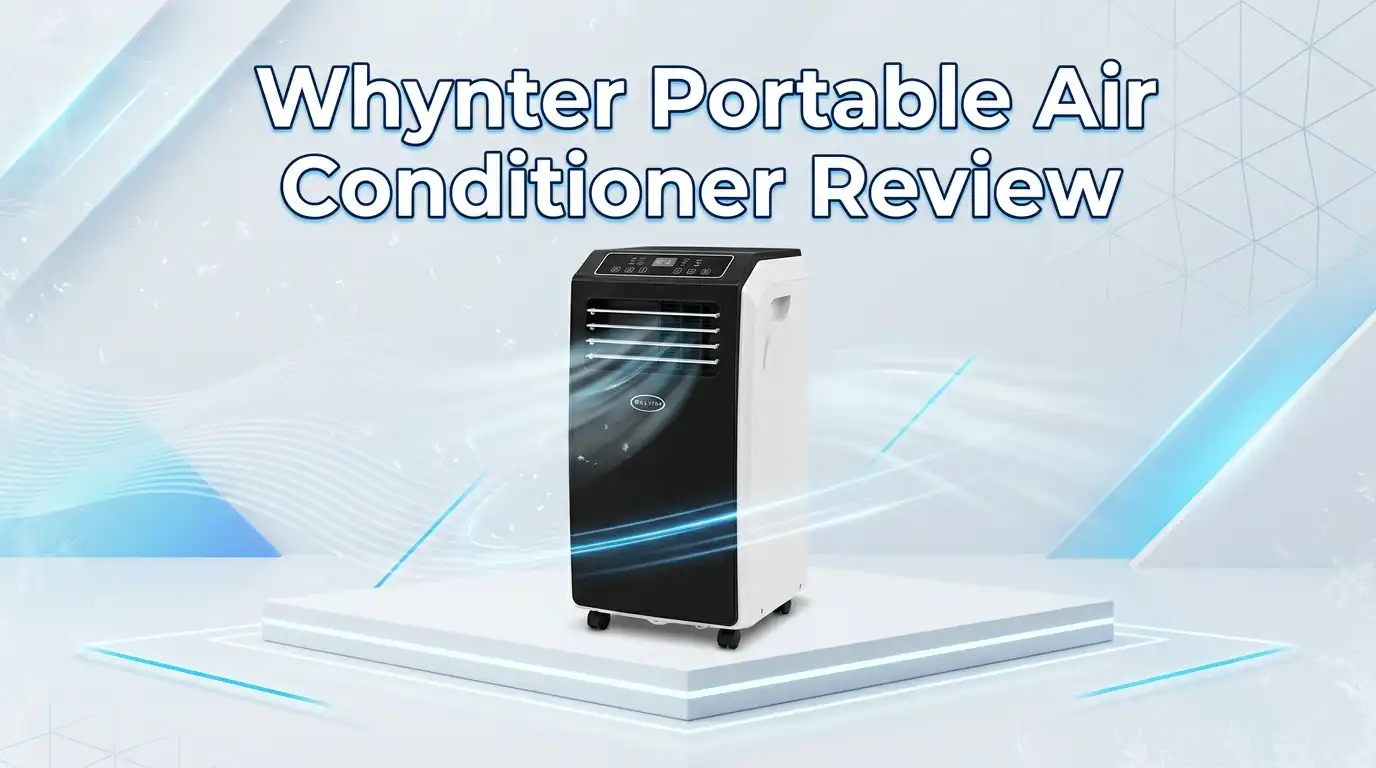
Whynter ARC-14S Portable Air Conditioner
This is the model most people mean when they say “Whynter portable AC.” It is a dual-hose, 14,000 BTU unit built for rooms other portables struggle with. Think large bedrooms, open living areas, and warm garages.
The black finish looks plain but blends in better than glossy white rivals. The control panel sits on top with a simple digital readout. Three fan speeds, three modes, and a 24-hour timer cover what most people need.
What sets it apart is the second hose. One hose pulls outdoor air in for the compressor. The other pushes hot air out. This keeps your room from going negative pressure, which is the flaw that makes single-hose units pull warm air back through door gaps.
It is a no-frills machine. No Wi-Fi, no app, no voice control. For some buyers that is a downside. For others, fewer things break. I lean toward the second camp after years of finicky smart appliances.
Top 3 Alternatives for Whynter ARC-14S
If the Whynter feels too heavy or too thirsty for power, these three are worth a look before you commit.

Last update on 2026-07-28 / Affiliate links / Images from Amazon Product Advertising API Some of the links on this website are affiliate links, which means that at no additional cost to you, I earn a commission if you click through and make a purchase. I only recommend products and services that I believe will add value to my readers. Thank you for your support!
Midea Duo High Efficiency Inverter Portable Air Conditioner

Last update on 2026-07-28 / Affiliate links / Images from Amazon Product Advertising API Some of the links on this website are affiliate links, which means that at no additional cost to you, I earn a commission if you click through and make a purchase. I only recommend products and services that I believe will add value to my readers. Thank you for your support!
Dreo Portable Air Conditioner 515S

Last update on 2026-07-28 / Affiliate links / Images from Amazon Product Advertising API Some of the links on this website are affiliate links, which means that at no additional cost to you, I earn a commission if you click through and make a purchase. I only recommend products and services that I believe will add value to my readers. Thank you for your support!
LG Portable Air Conditioner with Cool & Heat
The Unboxing Experience
The box is huge and heavy, so clear a path before the delivery driver leaves. I dragged mine across the floor rather than lifting it. Two people make this far easier.
Inside, everything sits in molded foam. You get the unit, two hoses, the window bracket, extensions, a remote, and a soft storage cover. The cover surprised me. Most brands make you buy one separately.
First impressions were solid. The plastic shell feels sturdy, not cheap. The wheels roll smoothly on hard floors but fight you on carpet. The hoses click into place with a satisfying snap that felt secure.
Setup and Window Kit
Setup took me about twenty minutes the first time. The window bracket adjusts from roughly 20 to 47 inches, which fits most standard windows. The extensions screw together with the included hardware.
Here is my honest gripe: there is no weather stripping included. You will want to add foam tape around gaps yourself to stop warm air leaks. It is a cheap fix but an annoying oversight.
The dual hoses take more effort than a single hose. You route two thick tubes instead of one. Once installed, though, they stay put. I did not have to readjust mine all season.
How Well Does It Actually Cool
This is the heart of the matter. Whynter advertises 14,000 BTU, but real-world performance follows the SACC rating of 9,500 BTU. That second number is what you should trust.
In practice, it cooled my 350-square-foot bedroom from 84 to 72 degrees in about 40 minutes. That is genuinely good for a portable. Larger spaces near 500 square feet cool slower but still reach comfort.
The dual-hose design earns its keep here. Cooling felt even, not patchy. I never noticed that warm draft from the doorway that plagues single-hose units. For hot, sunny, or upstairs rooms, this thing pulls its weight.
Noise Level and Sleep Use
No portable AC is silent, and this one is no exception. On low fan speed, it produces a steady white-noise hum that I found easy to sleep through. It blended into the background by night two.
On high speed, it gets loud. Conversation-over-the-TV loud. You will reach for the volume remote. I kept it on high only when cooling a hot room down fast, then dropped it to low.
The compressor cycles on and off with a soft click. Light sleepers might notice it at first. Heavy sleepers will not care at all. For an office or living room, the noise is a complete non-issue.
Energy Use and Running Costs
Last update on 2026-07-28 / Affiliate links / Images from Amazon Product Advertising API Some of the links on this website are affiliate links, which means that at no additional cost to you, I earn a commission if you click through and make a purchase. I only recommend products and services that I believe will add value to my readers. Thank you for your support!
Let me be direct: this is not an efficient unit by 2026 standards. It draws around 1,300 watts at full cooling. Newer inverter models like the Midea Duo do more cooling with similar power.
Translated to dollars, running it several hours a day will show up on your bill. If you cool one room occasionally, the cost stays reasonable. If you run it all day every day, the math gets less friendly.
The trade-off is simplicity and price. The Whynter usually costs less upfront than inverter rivals. You pay more over time in electricity. Light-to-moderate users come out ahead. Heavy daily users may prefer an inverter.
Dehumidifier and Fan Modes
Beyond cooling, the unit handles dehumidifying and fan-only duties. The dehumidifier mode is rated near 101 pints per day, which is strong. It pulled noticeable moisture out of my humid basement.
One catch: in dehumidifier mode you must drain the unit manually through the rear plug. There is no continuous drain hose included. For a damp basement, this means regular emptying.
Fan mode is handy on milder days when you want air movement without the compressor running. It is quiet and cheap to run. A nice bonus, though most people buy this strictly for cooling.
The Downsides and Who Should Skip It
Honesty time. The weight is the biggest drawback. At over 80 pounds, moving it between rooms is a real workout. If you planned to shuffle it around daily, reconsider.
It is also tall, standing close to three feet. In a small apartment it takes up visible space. Apartment dwellers tight on room might find it overwhelming.
The carbon filter is a weak point. It crumbles when handled and offers little real benefit. I skipped it entirely with no downside. Skip it too.
This unit is not for people wanting smart features, not for those chasing low power bills, and not for anyone who can’t lift heavy objects safely.
Whynter ARC-14S vs The Competition
Against the Midea Duo, the Whynter loses on efficiency and modern features. The Duo cools more per watt and runs an inverter compressor. If budget allows, the Duo is the smarter long-term buy.
Against single-hose units like many Dreo and budget models, the Whynter wins on cooling speed and even temperatures. The dual-hose advantage is real and noticeable in hot rooms.
So where does it land? It is a workhorse, not a showpiece. You buy it for reliable cooling in demanding rooms, especially at a lower upfront price. You skip it if efficiency or smart controls top your list.
My Honest Verdict
After a full season, I keep the Whynter ARC-14S in rotation. It does the one job that matters: it cools hot, stubborn rooms that defeat lesser portables. The dual-hose design is the reason.
It is heavy, plain, and thirsty for power. I will not pretend otherwise. But it is also durable, simple, and effective. For a garage, sunroom, or upstairs bedroom, it earns its spot.
Is it worth buying in 2026? Yes, with eyes open. Buy it for cooling power and value. Look elsewhere if you want efficiency, smart features, or something you can carry one-handed.
Frequently Asked Questions
What size room does the Whynter ARC-14S cool?
It cools rooms up to roughly 500 square feet. Based on its 9,500 BTU SACC rating, it works best in mid-size to large rooms. Very hot or sunny rooms cool faster if you stay nearer the lower end of that range.
Is the Whynter ARC-14S loud?
On low it produces gentle white noise most people sleep through. On high it gets noticeably loud. Use high to cool quickly, then drop to low for quiet running.
Does it need to be drained?
In cool mode, condensate mostly exhausts through the hoses, so draining is rare. In dehumidifier mode, you must drain it manually through the rear plug. There is no continuous drain hose in the box.
Why does it weigh so much?
The dual-hose system and larger internal components add bulk. At over 80 pounds, it is among the heaviest portables. Treat it as a semi-permanent fixture rather than a daily mover.
Should I use the carbon filter?
I do not recommend it. The carbon filter crumbles when handled, needs replacing at cost, and adds little. The washable pre-filter handles dust just fine on its own.
Does it have Wi-Fi or app control?
No. The Whynter ARC-14S uses a digital panel and remote only. If you want app or voice control, the Dreo 515S or LG models offer it.
Disclosure: This content is part of an Amazon Creator Connections campaign, meaning I earn a commission from qualifying purchases. Using these links costs you nothing extra but directly supports my blog and future content.

Hello everyone my name is Alenya and i am a gadget discovering Enthusiast 🐻🐻