Lenovo V15 G4 AMD Ryzen vs ASUS Zenbook: Who Wins?
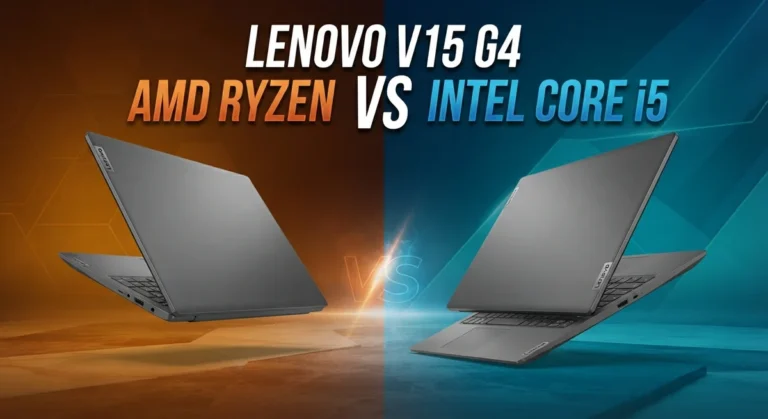
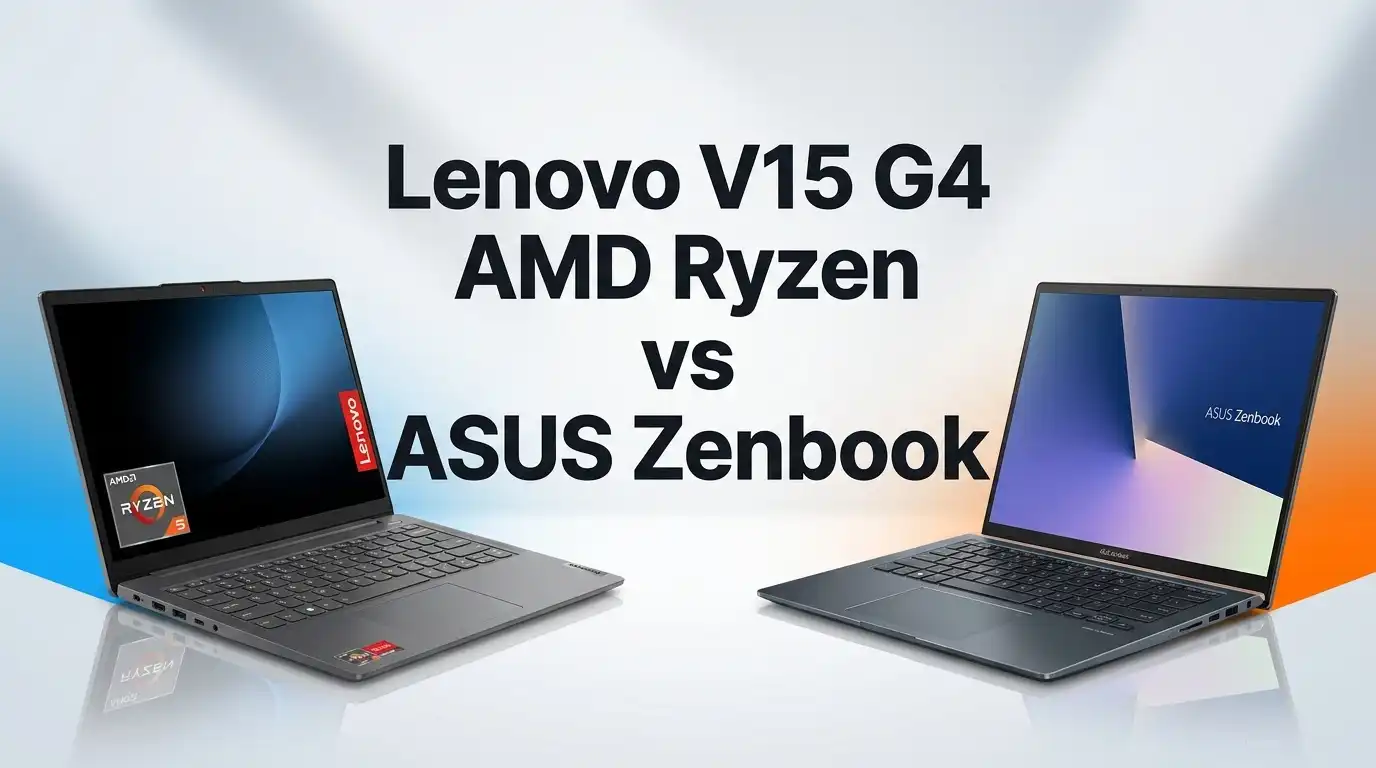
Choosing a new laptop can feel like a big decision. Today, we compare two very different machines: the Lenovo V15 G4 AMD Ryzen and the ASUS Zenbook.
These two laptops target different types of users. One focuses on simple, everyday tasks.
The other aims for premium performance and design.
The Lenovo V15 G4 runs on an AMD Ryzen 5 processor. It offers decent power for basic business tasks and productivity work.
The ASUS Zenbook brings a different experience entirely. It features an Intel Core Ultra 9 processor, a stunning OLED display, and premium build quality.
Quick Comparison: Lenovo V15 G4 Amd Ryzen vs ASUS Zenbook
| Feature | Lenovo V15 G4 Amd Ryzen | ASUS Zenbook |
|---|---|---|
| Processor | AMD Ryzen 5 7520U | Intel Core Ultra 9 185H |
| Graphics | AMD Radeon 610M | Intel Arc integrated GPU |
| Display | 15″ FHD TN panel | OLED high-res display |
| Build Material | Plastic chassis | Premium aluminum chassis |
| RAM | Non-upgradable RAM | 16GB+ upgradable RAM |
| AI Features | None | AI Boost NPU 11 TOPS |
| Battery Life | Basic, average life | All-day, some inconsistency |
| Portability | Standard, bulkier build | Thin and lightweight design |
Lenovo V15 G4 Amd Ryzen Review

Last update on 2026-08-09 / Affiliate links / Images from Amazon Product Advertising API Some of the links on this website are affiliate links, which means that at no additional cost to you, I earn a commission if you click through and make a purchase. I only recommend products and services that I believe will add value to my readers. Thank you for your support!
The Lenovo V15 G4 AMD Ryzen is a practical 15-inch laptop built for users who need solid performance without frills. It features an AMD Ryzen 5 7520U processor that handles everyday tasks like document editing, web browsing, and video calls with ease.
The display uses a TN panel with FHD resolution (1920×1080) and includes a low-blue light feature to reduce eye strain during long work sessions. Build quality leans toward plastic materials, which keeps the laptop lightweight but feels less premium than metal alternatives.
Real-world performance stays reliable for basic productivity work and light multitasking. The non-upgradable RAM means you choose your configuration upfront and stick with it long-term.
This machine suits entry-level business users, students, and anyone seeking a no-nonsense workhorse for straightforward computing needs.
Pros
- AMD Ryzen 5 7520U delivers smooth performance for everyday tasks and light productivity work
- Low-blue light display helps reduce eye fatigue during extended use
- Lightweight plastic design makes it easy to carry between locations
- Adequate processing power for business applications and web-based tools
Cons
- TN panel shows weak contrast and poor viewing angles compared to modern displays
- Non-upgradable RAM limits future customization and longevity
- Plastic build feels less durable than premium aluminum alternatives
ASUS Zenbook Review


Last update on 2026-08-09 / Affiliate links / Images from Amazon Product Advertising API Some of the links on this website are affiliate links, which means that at no additional cost to you, I earn a commission if you click through and make a purchase. I only recommend products and services that I believe will add value to my readers. Thank you for your support!
The ASUS Zenbook is a premium ultrabook designed for professionals and power users who demand both style and substance. It brings together cutting-edge performance, stunning visuals, and a sleek design that stands out in any workspace.
This machine features an Intel Core Ultra 9 185H processor with up to 5.1 GHz performance and 16 cores for smooth multitasking and demanding applications. The Intel AI Boost NPU (11 TOPS) accelerates AI-driven tasks, making it future-ready for emerging software and workflows.
The display is where the Zenbook truly shines—an OLED panel delivers vibrant colors, deep blacks, and exceptional contrast that content creators and visual professionals will appreciate. Combined with 16GB+ RAM and a premium aluminum chassis, this laptop feels solid and refined in hand.
Real-world performance handles video editing, coding, design work, and heavy multitasking without breaking a sweat. All-day battery life keeps you productive from morning meetings through evening work sessions, and the thin, lightweight design makes travel effortless.
Pros
- Stunning OLED display with vibrant colors and excellent contrast
- Powerful Intel Core Ultra 9 processor handles multitasking and creative work
- Premium aluminum build feels durable and premium
- All-day battery life keeps you working unplugged
Cons
- Speakers deliver underwhelming audio quality
- Trackpad feels less responsive than competitors
- Webcam quality lags behind the premium design
Head to Head: Key Differences
The Lenovo V15 G4 and ASUS Zenbook serve completely different laptop needs. Understanding their real-world differences helps you pick the right machine.
Build quality sets these laptops apart. The V15 uses plastic materials throughout, while the Zenbook features premium aluminum construction. If you handle your laptop daily, the Zenbook’s durability wins hands down.
Display technology creates a massive gap. The V15 relies on a TN panel that suffers from weak contrast and narrow viewing angles. The Zenbook’s OLED screen delivers vibrant colors, perfect blacks, and stunning clarity from any angle.
Processing power differs significantly. The V15’s AMD Ryzen 5 7520U handles basic tasks and light work smoothly. The Zenbook’s Intel Core Ultra 9 185H crushes demanding work like video editing, coding, and heavy multitasking with ease.
RAM flexibility matters for longevity. The V15 comes with non-upgradable RAM, so you’re stuck with your initial configuration forever. The Zenbook ships with 16GB or more and often allows upgrades down the road.
AI acceleration is a new advantage. The Zenbook includes Intel AI Boost NPU technology for faster AI tasks and creative workflows. The V15 lacks this feature entirely.
Battery life tells different stories. The Zenbook delivers all-day battery performance for professionals on the move. The V15 provides decent battery life for office work, though it won’t match the Zenbook’s endurance.
Weight and portability differ. The Zenbook’s thin, lightweight design makes it perfect for travel and constant movement. The V15 is heavier and bulkier, better suited for stationary use.
Choose the V15 for straightforward office tasks. Pick the Zenbook for professional work, creativity, and premium everyday computing.
Which One Should You Buy
The ASUS Zenbook takes the win in this comparison. It offers a better build, a stunning OLED display, and stronger performance with AI acceleration.
These upgrades help it handle multitasking and creative work with ease. It stands out as the more capable and well-rounded laptop.
The Lenovo V15 G4 AMD Ryzen still holds value for simpler needs. It works well for basic tasks without extra frills.
Best for each buyer
- Lenovo V15 G4 AMD Ryzen: Best for users who want a no-frills laptop for entry-level business tasks and basic productivity.
- ASUS Zenbook: Best for professionals and power users who need premium build quality, a stunning display, and high-end performance for multitasking and content creation.
Frequently Asked Questions
Which laptop is better for video editing and creative work?
The ASUS Zenbook wins here. Its Intel Core Ultra 9 processor has 16 cores and reaches 5.1 GHz, making it perfect for rendering videos and handling design software.
The OLED display shows colors accurately, which matters when editing photos or videos. The Lenovo V15 G4’s AMD Ryzen 5 processor works for lighter creative tasks but struggles with heavy editing projects.
Can I upgrade the RAM on these laptops?
No, the Lenovo V15 G4 has non-upgradable RAM. You choose your memory at purchase and cannot change it later.
The ASUS Zenbook typically comes with 16GB or more of RAM, which is sufficient for most users. If you plan to keep your laptop for years and want flexibility, the Zenbook is the better choice.
What’s the display quality difference?
The difference is significant. The Zenbook features an OLED display with vibrant colors, deep blacks, and excellent contrast.
The V15 G4 uses a TN panel with weak contrast and narrow viewing angles. If you spend hours looking at your screen, the Zenbook’s display reduces eye strain and looks noticeably better.
Which laptop is lighter and more portable?
The ASUS Zenbook is designed as a thin and lightweight ultrabook. It’s ideal for professionals who travel frequently or work in coffee shops.
The Lenovo V15 G4 is a standard 15 inch laptop that’s heavier and less portable than the Zenbook.
Does the Zenbook have better battery life?
The ASUS Zenbook delivers all day battery life for most users. However, battery performance varies depending on the specific model and how you use it.
The Lenovo V15 G4 provides decent battery life for basic tasks but doesn’t match the Zenbook’s endurance.

Hello everyone my name is Alenya and i am a gadget discovering Enthusiast 🐻🐻