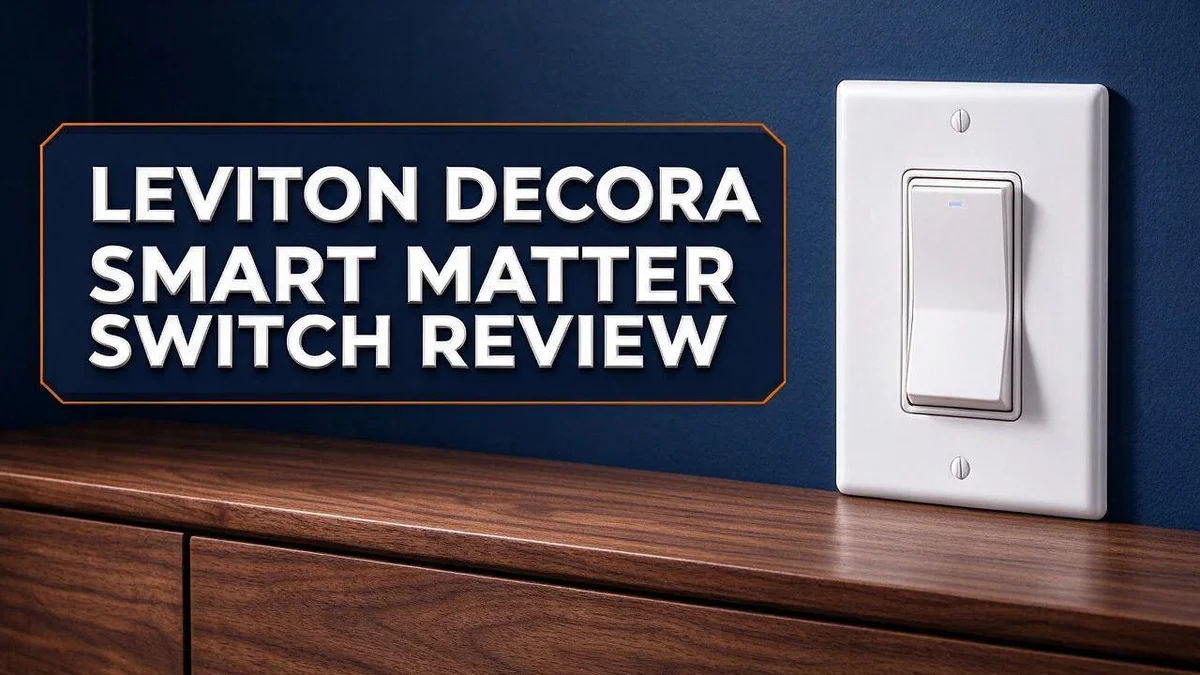
Leviton Decora Smart Matter Switch Review 2026: Worth Trying?
Tired of fumbling for light switches in the dark? Smart switches fix that problem fast. They let you turn lights on, off, or dim them from your phone or voice assistant.
Leviton’s Decora Smart line stands out for one key reason. The D26HD dimmer carries native Matter certification. That means it works with Apple Home and Google Home without extra fuss.
Not every home has a neutral wire behind the wall. Many older houses lack one. Leviton made a no neutral dimmer for exactly that situation. Need a three way setup? The D26HD 2RW model supports three way circuits.
In this review, we will look at setup, daily performance, and whether this switch fits your home. Let’s get started.
In a Nutshell
-
Works with Matter: This dimmer carries native Matter certification and pairs with Apple Home and Google. Matter is a shared standard, so it fits many smart home systems. You can use voice commands with those apps.
-
Fits homes without a neutral wire: Many older homes lack a neutral wire behind the wall. This Decora model is made for those spaces. You can add smart control without rewiring the whole room.
-
Handles three way setups: One version supports three way circuits. This helps when two switches control the same light. Your home setup stays simple.
-
Early feedback was mixed: An older 2018 review mentioned a small click noise. It covered an earlier model, and the firmware issues it noted have since been addressed.
-
Research gaps remain: We found no clear pros, official specs, or safety rating yet. Check the latest product details before you decide.
-
Other options exist: The Kasa KS225 Matter dimmer is another choice worth comparing. Look at features like setup ease and daily performance to find the best fit for your home.
Installation and Wiring Requirements

Last update on 2026-10-28 / Affiliate links / Images from Amazon Product Advertising API Some of the links on this website are affiliate links, which means that at no additional cost to you, I earn a commission if you click through and make a purchase. I only recommend products and services that I believe will add value to my readers. Thank you for your support!
Start with the power off. Before you touch any wire, switch off the breaker that feeds the light. Then use a voltage tester to confirm the wires carry no current. This step protects you from shock and takes only a minute.
Look at your wiring first. Remove the old switch from the wall box and take a clear photo of how the wires connect. Keep this photo handy. It helps you remember where each wire goes when you install the new switch.
Count your switches. If one light is controlled by two or more switches, your home uses a three way circuit. Setup changes in this case, so confirm your wiring matches the model you plan to use. A quick check now prevents confusion later.
Check the wall box. The new switch needs enough room inside the box. A crowded box makes it hard to fold the wires back in neatly. Make sure the wall plate sits flat against the wall once everything is in place.
Match the wire colors. Connect each wire to the matching terminal, as the manual explains. Attach the ground wire to the green screw. Tighten every screw firmly, but do not overtighten, since this can crack the plastic housing.
Restore power and test. Turn the breaker back on and flip the wall switch. The light should respond right away. If it flickers or stays off, shut the power off again and recheck your connections.
Finish the app setup. Once the switch powers up, open the app on your phone and follow the on screen prompts. Most steps take only a few minutes. Keep the phone close to the switch during pairing for the best connection.
Know when to call a pro. If your wires look frayed, damaged, or unusual, stop the job. The same goes for a box that lacks space or a setup you do not fully understand. A licensed electrician can handle these cases safely. Calling one costs little compared to the risk of a wiring mistake.
Smart Home Compatibility
Smart home compatibility decides whether a switch feels helpful or frustrating. A good match saves time every day. A poor match creates headaches.
Matter is the key idea here. It is a shared standard that helps devices from different brands work together. Your phone, speaker, and home app can control the same light.
This switch pairs with Apple Home and Google. That means you can ask a voice assistant to dim the lights. You can also build routines that run at sunset.
Before you buy, open the app you already use. Check that your home app supports Matter devices. Then confirm your lights appear in the device list.
Many Matter devices connect through your home network. Older systems may still need a separate bridge. Review your current gear before you shop.
Think about your whole house, not just one room. Shared lighting scenes work best when every switch uses the same ecosystem. Mixing brands can create gaps.
Dimmer control matters too. Some assistants let you set exact brightness levels. Others only allow simple on and off commands. Test those commands in your app before you commit to a full setup.
Voice control also depends on naming. Give each light a clear name, like kitchen ceiling. Short, specific names help assistants understand you on the first try.
Remote access is another useful angle. You can check lights from work or turn them off while traveling. A stable home internet connection makes this smoother.
Compatibility checks take only a few minutes. They prevent frustration later. If your system already runs on Apple Home or Google, this switch fits well. If you use another platform, confirm support first.
Plan your setup before installation day. List every app, hub, and voice assistant in your home. Write down which rooms need smart control. This simple list keeps your project organized. Clear notes also help if you ask for support later.
Dimming Performance and Control
Dimming is where a smart switch earns its keep. Good dimming makes a room feel warm and calm. This section looks at how the switch handles light control day to day.
Start with your bulbs. Dimmable LED bulbs vary a lot. Some flicker or buzz at low levels. Check the bulb label for dimmable support and buy a matched set when you can.
Test the range before you settle. Use the dimmer at its lowest and highest points. Watch for flicker, sudden jumps, or a bulb that will not turn fully off.
The physical switch and the app should match. Press the wall switch, then open the app and check the level. Both controls should show the same brightness. If they drift apart, note it and check the firmware.
Routines add real value. Set a morning scene at a soft level. Set an evening scene that dims lights at sunset. Routines run without you touching anything.
Voice control needs clear names. Name the light kitchen ceiling instead of light one. Clear names help assistants respond on the first try.
Remote control adds flexibility. Dim lights from work before guests arrive. Check that your home app runs on your phone and keeps the connection stable.
Mix dimmers with other devices carefully. A dimmer should not fight with a motion sensor or timer. Plan one owner for each light so the schedule stays simple.
Lighting should suit the moment. Bright light helps with cooking and homework. Soft light works better for movies and dinner. A dimmer lets you switch between both moods in seconds.
Keep a short testing checklist handy. Run each light through low, medium, and high levels. Note any buzzing, delay, or flicker. Fix problems early, before you close the wall box.
Many people find that softer settings feel easier on the eyes at night. Adjust the level until the room feels comfortable.
Top 3 Alternatives
Lutron Caseta Smart Dimmer

Last update on 2026-09-19 / Affiliate links / Images from Amazon Product Advertising API Some of the links on this website are affiliate links, which means that at no additional cost to you, I earn a commission if you click through and make a purchase. I only recommend products and services that I believe will add value to my readers. Thank you for your support!
Many homeowners choose this dimmer for its reliable connection. It works with a smart hub or a smart home app. Setup stays simple, and the dimmer fits most standard wall boxes.
It also supports voice control with popular assistants. You can set schedules so lights turn on before you wake up. Many people like the smooth dimming for bedrooms and hallways.
Kasa Smart Dimmer Switch


Last update on 2026-10-28 / Affiliate links / Images from Amazon Product Advertising API Some of the links on this website are affiliate links, which means that at no additional cost to you, I earn a commission if you click through and make a purchase. I only recommend products and services that I believe will add value to my readers. Thank you for your support!
This dimmer gives you plenty of control for the money. You can manage your lights from your phone, even when you are away from home. Most setups need a neutral wire, so check your wiring first.
The app lets you create routines and timers. Kids and guests can still use the wall switch as usual. Many users say the install process feels quick for a DIY project.
GE Enbrighten Smart Switch

Last update on 2026-10-28 / Affiliate links / Images from Amazon Product Advertising API Some of the links on this website are affiliate links, which means that at no additional cost to you, I earn a commission if you click through and make a purchase. I only recommend products and services that I believe will add value to my readers. Thank you for your support!
This switch suits people who want an easy start. It connects to your home network and links to major voice assistants. The design looks clean and matches most wall plates.
You can turn on away mode to make your home look occupied. The switch also handles simple daily scheduling well. Pick this option if you want a friendly, straightforward smart switch.
Daily Use, Noise, and Firmware Updates
Daily use shows the true character of any smart switch. You flip a wall switch many times each day, so small details matter. This section looks at sound, updates, and everyday reliability.
Noise is the first thing many people notice. An older review of a related Leviton smart switch mentioned a small click when the switch changed state. That report came from an older design, so your experience may differ.
Test the sound in your own home. Stand near the switch at night and turn the light on and off a few times. Compare the click with other switches in the house.
Firmware updates keep the switch current. Updates fix bugs and improve how the switch talks to your home app. The same older review mentioned firmware problems, and those issues have since been addressed.
Check for updates once a week. Open the device settings in your home app and look for a pending update. Install it when the switch sits close enough to your router to keep a strong signal.
Keep power steady during an update. Do not turn off the breaker or unplug anything while the install runs. Wait for the app to confirm that the update finished. A short pause prevents failed installs.
Know what still works without the app. In most setups, the physical switch still turns lights on and off. Family members and guests can use the wall switch with no phone needed.
Share access with your household. Add family members to the app so everyone can adjust lights. Clear rules help people avoid changing settings by accident.
Set a simple monthly check. Test the wall switch, the app, and your voice assistant once a month. Write down any odd behavior, such as a slow response or a flicker. These notes reveal patterns early.
A little attention keeps the switch working well. Regular updates and calm daily habits make the switch feel dependable. Most owners enjoy a quiet, steady experience over time.
Pros and Cons
Pros
- Native Matter certification helps it work with many smart home systems.
- It pairs directly with Apple Home and Google Home.
- A version is made for homes without a neutral wire.
- It supports 3-way circuits, so you can control one light from two switches.
- Dimming gives you exact brightness control from your phone or voice assistant.
Cons
- An older review of a related model mentioned a small click sound.
- Early firmware problems were reported, though later updates addressed them.
- Official specs are hard to find, so check the box before you buy.
- Model names look similar, so confirm you pick the right version for your wiring.
Who Should Buy It
This switch suits people who already use a smart home. If your phone and voice assistant control your lights, this switch fits right in.
It also works well for anyone who wants one clean setup across many rooms.
Shared rooms gain the most from this switch. Living rooms and hallways get used most. Several people can use the same switch or app. Everyone finds a light level that feels right.
People who want a no tools fix may prefer another option. This switch needs a wall install and basic wiring comfort. Renters who cannot change wall plates may prefer smart bulbs or plugs. Those options require no tools at all.
Buyers who care about safety should verify certifications first. Many shoppers want clear proof of safety ratings. Check the packaging and manual for certification marks before you buy. Ask the seller for documents too.
Comparison shoppers should look at a few options. The Kasa KS225 is another Matter dimmer worth comparing. Lay both features side by side to see which one fits your rooms and habits best.
Homes with several light types can keep one control point. Some rooms mix ceiling lights and wall sconces. A single smart switch can manage the main lights in each room.
People who rarely use apps may feel less comfortable. Some folks want simple wall switches and nothing more. This switch works best when you accept a small app setup. Some folks prefer that simplicity.
Ask yourself a few simple questions before you buy. Do you already own a smart speaker or phone system? Do you want to dim lights from across the room?
Do you feel okay with a wall upgrade? If yes, this switch may suit you well.
Think about the people who share your home. Guests may need a quick lesson on the switch. Write a short guide and tape it near the wall. Clear labels help too.
Final Verdict
Our final verdict is simple. This switch earns a spot on your shortlist. It fits well in a home that already runs on voice and app control.
Think of it as a foundation. Matter support means your setup can grow. New devices from different brands can join the same system later.
Ask one question before you buy. Does your home already use a voice assistant or app for lights? If yes, this switch will feel natural right away.
Keep expectations realistic. Research on this model is thin. Few reviewers have shared long term test results, so your own trial matters more than any score.
Start with a simple test week. Install the switch, add it to your app, and use it daily. Pay attention to how fast it responds when you press the wall plate.
Watch for responsiveness, not just features. A switch can have every feature and still feel slow. Quick response is what makes a smart switch feel natural to family members.
Involve the people who use the room. Partners, kids, and guests will judge it by ease, not specs. If they can use the wall switch without thinking, the install was a success.
Plan for the unexpected. Keep the original switch model number written down. If you ever need a replacement, the exact version matters for your wiring. Save the manual too.
Consider your future plans. Maybe you plan to add smart blinds or sensors soon. Matter helps those devices share one control hub.
Remember the daily details. Small wins add up over time. A light that always responds on the first press saves you from frustration.
Skip this switch if you want pure simplicity. Some people only want a light that turns on and off. A basic mechanical switch covers that need with fewer moving parts.
Our bottom line is clear. If you want Matter compatibility, dimming, and a tidy setup, this model delivers. Test it in one room first, then expand with confidence.
Frequently Asked Questions
Can I control this switch when I am away from home?
Yes, many smart switches let you use an app from anywhere. Make sure your phone has a strong internet connection. Then you can check on your lights while you travel.
Which bulbs work best with a dimmer?
Choose LED bulbs that say dimmable on the package. Some bulbs can flicker or hum when paired with a dimmer. Test one light first before you change the whole room.
What happens after a power outage?
Check the manual to see how the switch restarts. Many smart switches return to their last setting when power comes back on. You can always adjust the lights in your app if needed.
How can my family share control?
Add each person as a user in the app. This lets partners, kids, and guests turn lights on or off from their own phones. Everyone can use the switch without asking for help.
Should I check with my landlord first?
Yes, always ask before you install a new switch in a rental. Get written permission so you avoid problems later. Keep the original switch so you can restore it when you move out.

Hello everyone my name is Alenya and i am a gadget discovering Enthusiast 🐻🐻