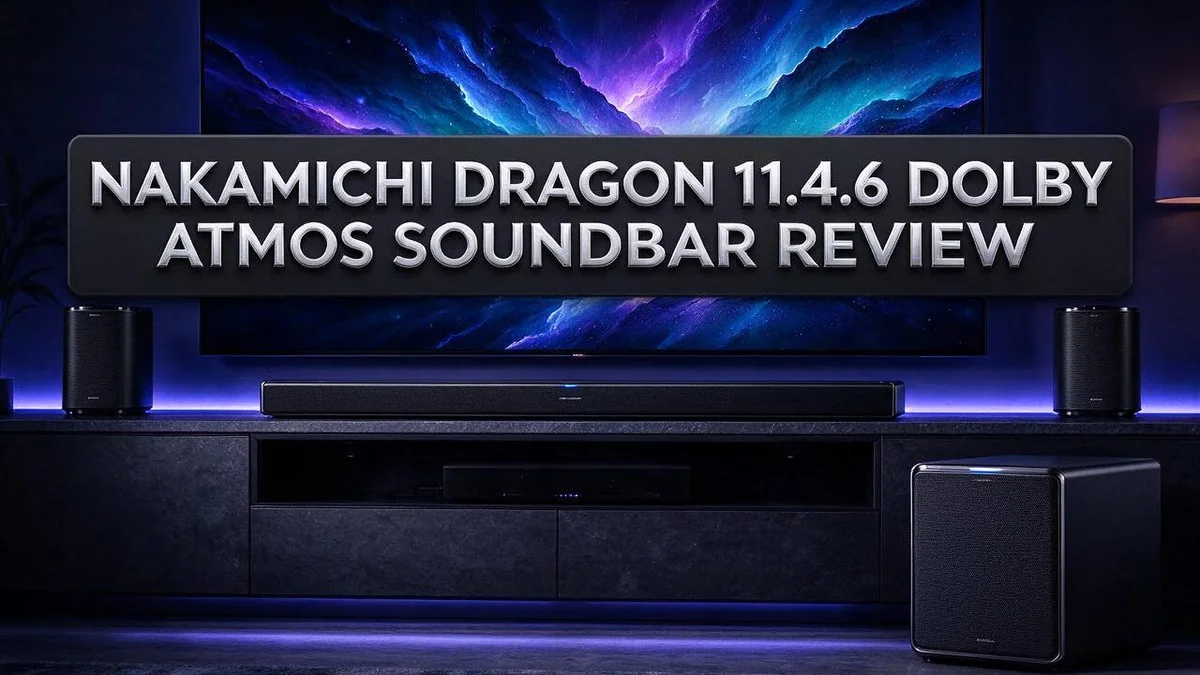
Nakamichi Dragon 11.4.6 Dolby Atmos Soundbar Review
Looking for a home theater that fills your room with sound? The Nakamichi Dragon 11.4.6 Dolby Atmos soundbar aims to do just that. It offers a very wide and immersive soundstage that wraps you in every scene.
Many people want cinema sound without a tangle of wires. This wireless design keeps your setup clean and simple. It also supports Dolby Atmos and DTS:X Pro for a full surround feel.
Setting it up takes less time than you might expect. One reviewer reports getting started in under 30 minutes. A 12 inch subwoofer adds deep, powerful bass that you can feel.
Reviewers also praise the spatial accuracy of Dolby Atmos. One review gave it a 9.5 out of 10 score. Another called the sound cinematic, with precise detail.
Is this soundbar the right fit for your living room? Keep reading to see what works well and who should consider it.
In a Nutshell
-
Wide and open soundstage: Owners describe a very broad sound field. Movie scenes feel bigger than the screen itself, so the room seems to fill with action.
-
Solid bass power: A 12 inch subwoofer adds deep low end. Explosions and rumbling scenes hit with real force.
-
Sound from every direction: The Omni Motion surrounds aim to spread audio all around the room. Effects can seem to move past you from many angles.
-
Clear format support: The soundbar works with both Dolby Atmos and DTS:X Pro. Your streaming shows and discs can use these formats.
-
Midrange and treble mixed feedback: One owner calls the mids and highs “OK,” so expect good, not perfect, detail in those ranges.
-
Check the exact model: Some sources mix the 11.4.6 setup with an 11.1.6 version. Confirm which configuration you are getting before you buy.
Design and Build

Last update on 2026-10-28 / Affiliate links / Images from Amazon Product Advertising API Some of the links on this website are affiliate links, which means that at no additional cost to you, I earn a commission if you click through and make a purchase. I only recommend products and services that I believe will add value to my readers. Thank you for your support!
The design of the Nakamichi Dragon centers on a full home theater layout. Many people want more than a single bar under the TV.
The system uses several parts that work together. The main soundbar handles front sound and dialogue.
Separate surround units add height and side sound. They help fill the room with audio from every angle.
Placement is the key to good results. Each unit should sit where it can reach your seating area without obstacles.
The subwoofer sits on the floor. It moves air across the room, so keep it out of corners where bass can sound boomy.
Wireless design brings a new benefit: flexibility. You can move the surround units to suit your furniture and room shape.
Room size matters. Larger living rooms give the full system space to breathe. Smaller rooms may need careful positioning to avoid crowded sound.
Start with the main bar first. Then add the surrounds and the subwoofer one at a time.
Test the sound after each step. This shows you how each unit changes the overall mix.
Power still needs planning. Each unit needs a nearby outlet, so map your outlets before you set up.
Think about sightlines too. Make sure the main bar does not block your view of the screen or the remote sensor.
Before you buy, measure your wall space and mark where each unit will go. This simple step saves time and helps you choose the right layout.
Good design balances sound and style. A clean layout keeps your room tidy and gives you a home cinema feel that lasts.
Soundstage and Dolby Atmos Immersion
Have you ever heard rain seem to fall right over your head? Dolby Atmos makes that effect possible. Sound objects move through three dimensions instead of just left and right.
Height is the new layer in this kind of system. Overhead sound adds a sense of space that flat stereo cannot match. Your brain reads these cues as a real environment.
Think about a helicopter scene. The sound can circle the room and rise above you. This movement helps you feel part of the action instead of just watching it.
Your seat matters a lot. Immersion works best when you sit near the center of the room. Sit too far to one side, and the sound field can feel uneven.
Movies are not the only test. Music mixed in Atmos can place instruments around you. A live concert recording may feel like you stand inside the crowd.
Content choice shapes the experience. Not every streaming title includes an Atmos mix. Check the label on your movie or game before you press play, so you know the sound is in the file.
Room shape also plays a role. Hard walls reflect sound, which can blur fine detail. Soft furniture, rugs, and curtains help keep overhead effects clean and focused.
Try a short test with a familiar action scene. Listen for footsteps moving behind you and sounds rising overhead. If the effects feel clear and well placed, your setup is working.
Bottom line: the immersion depends on setup, seating, and source. Play a known demo scene, then move around the room to check the spread. Small changes often bring big gains.
Bass and Subwoofer Performance
Deep bass changes how a movie feels. Explosions, engines, and thunder depend on low sound. This system gives those moments real weight and presence.
Reviewers often praise the bass for its strength. One YouTube reviewer describes the low end as powerful and precise. That mix means the bass hits hard without losing control.
Bass also improves music. Basslines in pop and hip hop sound fuller. Kick drums sound tight instead of muddy.
Low frequency effects need careful balance. Turning the subwoofer level too high can make dialogue hard to follow. Raise the level slowly while you watch a scene with lots of talking.
Your room shapes bass more than most people expect. Low sound often bounces off walls and collects in corners. Try moving the subwoofer a few feet and listen again.
Bass also adds emotion to a scene. A slow, low tone can build tension before a jump scare. A quiet room feels more intense when the low end stays steady.
Watch for bass that feels boomy. Boomy sound blurs fast beats and hides small details. A cleaner low end keeps each note clear and separate.
Shared homes call for extra thought. Strong bass can travel through floors and walls. Many owners lower the volume late at night to keep the peace.
Bass settings deserve a little patience. Play a familiar action scene and notice the rumble. Then play a quiet drama and check that voices stay clear.
Final thought: the subwoofer adds weight. It gives action films and music a physical punch. Spend a little time tuning it, and the bass will suit your space.
Top 3 Alternatives
Looking for a strong alternative to a premium soundbar? These three options offer great sound and easy setup. Each one brings something different to the table.
Sonos Arc


Last update on 2026-10-23 / Affiliate links / Images from Amazon Product Advertising API Some of the links on this website are affiliate links, which means that at no additional cost to you, I earn a commission if you click through and make a purchase. I only recommend products and services that I believe will add value to my readers. Thank you for your support!
Sonos Arc is a great choice for people who want clean sound in a sleek design. It supports Dolby Atmos, so movies feel wide and full. The setup is simple through the Sonos app.
Its compact size fits most living rooms. It also works well with other Sonos speakers, so you can grow your system later. Voice control works with popular assistants too.
Samsung HW-Q990C

Last update on 2026-10-28 / Affiliate links / Images from Amazon Product Advertising API Some of the links on this website are affiliate links, which means that at no additional cost to you, I earn a commission if you click through and make a purchase. I only recommend products and services that I believe will add value to my readers. Thank you for your support!
The Samsung HW-Q990C delivers big, powerful sound for large rooms. It includes wireless rear speakers and a subwoofer for a full surround experience.
Movie fans often enjoy its deep bass and clear dialogue. It pairs well with compatible Samsung TVs, so controls feel simple. This option suits home theaters.
Sony HT-A7000

Last update on 2026-10-28 / Affiliate links / Images from Amazon Product Advertising API Some of the links on this website are affiliate links, which means that at no additional cost to you, I earn a commission if you click through and make a purchase. I only recommend products and services that I believe will add value to my readers. Thank you for your support!
The Sony HT-A7000 brings immersive sound with speakers that fire upward. It supports Dolby Atmos and DTS:X, which create height effects above you.
Music and games sound lively and detailed. Its wireless subwoofer keeps cables tidy. Many buyers also like the clear voice mode for TV shows. Choose this model if you want rich sound with a clean setup.
Setup and Installation
Setup is quicker than many people expect. One reviewer finished the job in under 30 minutes. That reviewer tested an 11.1.6 model, not the 11.4.6 version. Sources mix these configurations, so check your box before you begin.
Start by opening the box and counting every piece. Lay the parts out on a table or rug. This simple step prevents a search for missing cables during setup.
Keep the original boxes nearby until the system works well. They help if you need to return a unit.
Use painter’s tape to mark each spot. Stick tape on the wall or floor where each speaker will sit. Step back and look at the marks from your couch. This gives you a visual guide before you mount anything.
Plan cable paths early. Hidden cords look cleaner and stay safer. Keep wires away from heat sources and out of spots where people step on them.
Label each cable before you connect it. Small tags help you track which wire goes where. This saves time if you move the system later.
Read the included manual once before you connect anything. Manuals often list recommended distances and pairing steps. Keep it handy for later questions.
Wireless units need a clear signal path. Keep them away from thick walls and large metal objects when possible. Good placement helps the wireless link stay stable.
Level and secure each bracket. Tighten every mounting screw firmly. Check each bracket with a level so the units sit straight and safe. Ask a friend to help lift heavier units. Two people make wall mounting safer and easier.
Give the system a final walkthrough before you relax. Look over every cable and bracket once more. Then write down your settings so you can find them again.
In short, a calm plan makes setup smooth. Take your time, and enjoy the cinematic result.
Value and Pricing
Before you decide, confirm the exact model you plan to buy. Some reviews describe an 11.4.6 layout, while others cover an 11.1.6 setup with a single subwoofer. Check the speaker count on the packaging.
The system includes a 12 inch subwoofer and supports both Dolby Atmos and DTS:X Pro. These features give it the room to handle large sound effects with control.
Techaeris gives the system a 9.5 out of 10 for Dolby Atmos spatial accuracy. That score shows how well sound moves around the room.
The midrange and treble get a more modest response. One AVS owner called them OK. If you watch many shows built around conversation, test voices carefully before you settle on this system.
The wireless home cinema design may appeal to people who dislike running long cables through their living space. Fewer cables can make the whole setup feel simpler.
Independent reviews carry most of the evidence here. The official site’s reviews page lists none, so read several sources and look for the same comments repeated across them.
Competitors were not named in the research. Compare the channel count, subwoofer size, and Atmos support against other systems you consider. Side by side checks reveal the real differences.
Use this simple checklist:
- Confirm the channel count on the box.
- Check the subwoofer size.
- Test dialogue clarity with a familiar movie.
- Confirm Atmos mixes exist in your favorite apps.
These steps show whether this system fits your room and viewing habits.
Pros and Cons
Pros
- Wide soundstage that fills the whole room
- Many speakers create a layered and immersive sound field
- Sound feels close and lifelike during busy movie scenes
- Detail stands out for listeners who enjoy careful sound
- Overhead speakers add a clear sense of height
Cons
- Reviews mix the 11.4.6 and 11.1.6 models
- The official site lists no reviews to compare
- Only a few sources cover this system in depth
- Many speakers mean more time spent on placement
Who Should Buy It
This system suits movie lovers who want a cinema feel at home. Action films, science fiction, and big event movies get the most from it. Viewers who stream Atmos titles will also hear the difference.
People who own a basic soundbar and want a real upgrade may find this a strong next step. Moving from one unit to a full speaker array changes how every scene feels.
Families who watch movies together often may enjoy the shared experience. Several people can sit in different seats and still catch the layered sound.
Listeners who want music first should look elsewhere. The system leans more to films and TV, so quiet album listening may feel less special.
Shoppers with a small room should measure first. Many speakers can crowd shelves and walls, so check your floor plan before you commit.
Sports fans who enjoy big crowd noise may also like the sound.
Apartment dwellers should think about volume and bass. A large subwoofer can carry bass through floors and walls. Keeping the volume at a moderate level helps you stay friendly with neighbors.
Owners of a TV that supports Atmos get the most from this system. Your source device must also send Atmos audio for the height speakers to work.
Home theater beginners may need a little time to learn the settings. Taking time pays off as the sound improves with each adjustment.
Those who like testing sound in different spots will enjoy the process. Moving a speaker a few feet can change the bass and clarity.
Overall, the best fit is a home that treats movie night as an event. Friends and family will notice the difference when they visit. Guests may notice the sound during a first movie.
Final Verdict
Our final verdict leans positive for movie fans. The Nakamichi Dragon brings a big cinema feel that many listeners enjoy. It suits viewers who watch films more than they listen to music.
Setup is less of a hurdle than you might think. One review reports a setup time under 30 minutes. Most people can finish the basic setup in one sitting. That quick start helps you enjoy your first movie night sooner.
The downsides are easy to weigh. Some listeners find the voice and high tones only acceptable. If shows with lots of talking matter most, play a favorite drama before you decide.
Treat this as a strong lead, not a guaranteed win. The research looks promising but still limited. Read fresh reviews and check the return policy before you buy.
Room shape matters as much as room size. Corners, windows, and hard walls all change how sound travels. Good placement keeps the sound balanced across the room.
Our bottom line is simple. The Nakamichi Dragon offers an immersive, cinematic experience for the right viewer. Choose it for movies, plan your layout, and enjoy the show.
Compare it with your current setup first. Think about what you hear today. If dialogue gets lost or action feels flat, this system may solve those problems.
Placement still shapes the final sound, even with a quick setup. Give yourself time to move speakers and listen again. Each adjustment can change how surround effects land. Patience pays off during this stage.
Use a favorite action scene as your test. Play a film you know well. Listen for clear dialogue, smooth sound moves, and deep bass hits.
Movie nights feel more like an event than a routine. The system rewards viewers who like to sit back and feel the action.
Frequently Asked Questions
Is the bass strong enough for action movies?
Yes, one reviewer praises the powerful bass. The 12 inch subwoofer helps fill the room with deep rumbles. Turn up a explosion scene during your own test to hear it.
Does a wireless design mean less cable clutter?
The system uses a wireless home cinema design. This can reduce the number of wires near your TV. Plan your power outlet spots first, because the speakers still need electricity.
Does the Dolby Atmos effect feel accurate?
Techaeris gave the system a 9.5 out of 10 for Dolby Atmos spatial accuracy. Atmos aims to place each sound in a specific spot around you. Listen for rain or jet noise to hear the effect clearly.
Can I use it for gaming?
The research does not cover gaming. Look for reviews from gamers before you decide. Movie and TV reviews alone may not show how the system handles fast game sounds.

Hello everyone my name is Alenya and i am a gadget discovering Enthusiast 🐻🐻