Entina Tina2S 3D Printer Review: Compact FDM Printer for Small Spaces
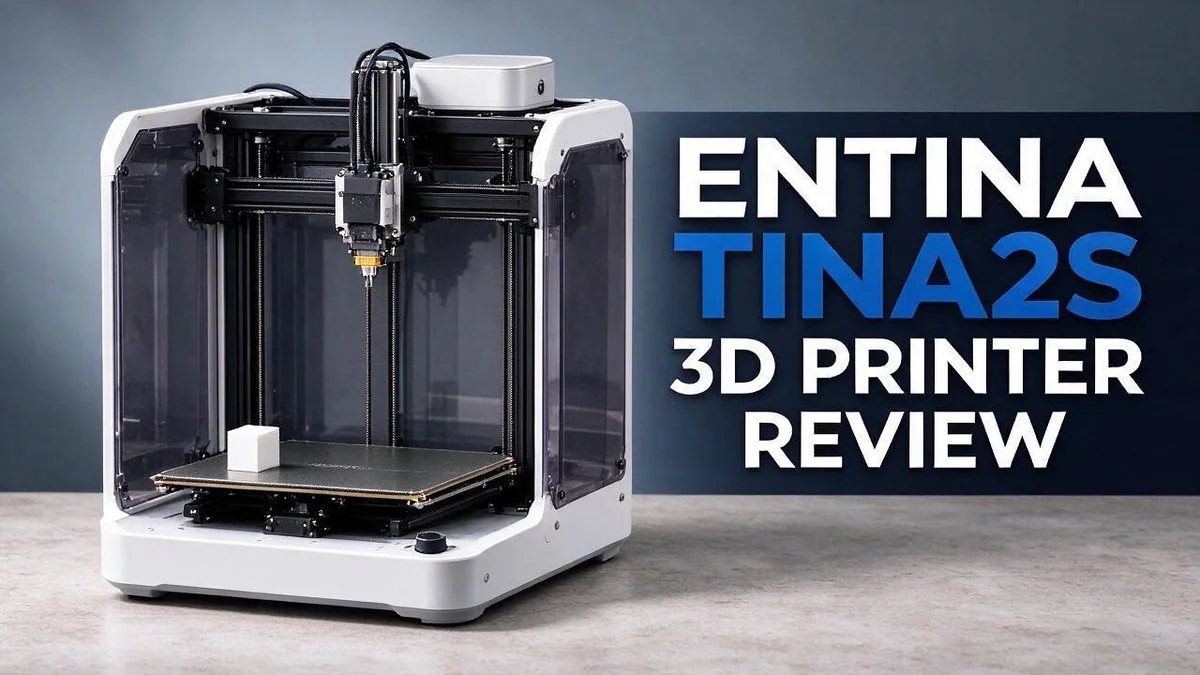
Are you looking for a small 3D printer that fits almost anywhere? The Entina Tina2S might be the answer you need. It is a compact FDM printer that keeps things simple.
Many 3D printing fans deal with prints that stick too hard or warp. This printer tackles that problem with a flexible, removable spring steel build plate. Your finished models pop off with less effort.
Cleaning up is quick, too. The platform is easy to wipe down between projects. A reviewer even called it very small and compact, which makes it a good pick for tight desk space.
In this guide, we will look at what the Tina2S does well. We will also compare it with popular rivals like the Bambu Lab A1 mini, Ender 3, and FlashForge. Let’s see if this little machine earns a spot on your workbench.
In a Nutshell
-
Printer type: The Tina2S uses FDM technology, the common style for home and hobby users. It melts plastic layer by layer to build each object.
-
Build plate design: A flexible spring steel plate bends slightly to release finished parts. You can pop models off with less force and less risk of damage.
-
Compact frame: Reviewers describe this machine as very small. That makes it a good pick for desks, dorms, and shared workspaces.
-
Rivals to compare: Many buyers weigh it against the Bambu Lab A1 mini, Ender 3, and FlashForge models. Each rival offers a different mix of size and features.
-
Missing details: Build volume, print speed, and supported materials are not confirmed in current research. Check the official specs before you decide.
-
Product identity: One source asks whether Tina2S and Asani are the same model. Confirm the exact name on the listing so you get the right machine.
Compact Design and Footprint

Last update on 2026-11-03 / Affiliate links / Images from Amazon Product Advertising API Some of the links on this website are affiliate links, which means that at no additional cost to you, I earn a commission if you click through and make a purchase. I only recommend products and services that I believe will add value to my readers. Thank you for your support!
Space matters when you pick a 3D printer. A machine that takes over a desk can get in the way of daily work. The Tina2S is designed to stay out of the way, so planning its spot early makes life easier.
Think about where the printer will live. A shelf, a corner of a desk, or a side table can all work well. Place it near a power outlet and leave room for the filament spool.
Smaller machines suit tight spaces. Apartments, dorm rooms, and shared home offices often have little room to spare. A compact printer can sit on a shelf and still stay ready for the next project.
Even a small printer needs airflow. Keep it away from walls, curtains, and piles of paper. Leave some clearance around the sides and top so heat can escape during long prints.
A light footprint also makes moving easy. You can shift the printer to clean the area or carry it to a classroom, library, or club meeting. Storing it between projects takes little effort.
A desk mat adds another layer of protection. It catches stray filament, loose tools, and small bits of debris. It also keeps the desk surface safe from heat and scratches.
Cable and filament routing deserve a bit of attention too. Keep the power cord and filament path clear of moving parts. Tidy cables prevent snags, and they keep the workspace looking neat.
Footprint is only part of the picture. The current research does not confirm the build volume, so the printable size remains unknown. Check the specifications before you buy so you know what objects you can make. A small body does not always mean a small build area, and you should confirm that detail yourself.
A small footprint makes the Tina2S easy to live with. Choose a calm, stable spot, set up a clear work area, and the printer can become a regular part of your routine.
Flexible Spring Steel Build Plate
Cooling comes first. Let the build plate cool before you bend it. Warm plastic can stick tighter, but cool parts often release with much less effort.
Bend the plate slowly from one edge. Use gentle pressure and keep your fingers away from the nozzle area. If the part resists, let the plate cool a little longer before you try again.
A plastic scraper helps when a stubborn corner refuses to lift. Pick plastic over metal, since metal tools can scratch the surface over time.
Protect the surface with care. Wipe the plate with isopropyl alcohol now and then to remove oils and dust. Fingerprints can weaken grip, so handle the plate by its edges.
Check the first layer after each cleaning or swap. A thin, even squish usually means the bed sits at the right height. Uneven lines often point to a level issue rather than the plate itself.
Keep a spare plate on hand if you print often. Surfaces wear down with repeated flexing and scraping. A spare lets you keep working while the first plate rests.
Match the surface to your filament. Some materials bond very strongly to steel. A glue stick or light coating can help you control release. Test a small print first to see how your settings behave.
Removable plates also make maintenance simple. You can take the plate to a sink or wipe it on a bench without moving the whole printer. This habit keeps prints consistent week after week.
Watch for hairline cracks or warping in the steel over time. A bent plate can cause uneven adhesion and failed prints. Replacing it early saves time and filament.
Think of the plate as a consumable part. Treat it with care, and it will support many successful prints. Small habits make a big difference over time.
Setup, Cleaning, and Everyday Use
Setting up the Tina2S is a simple job. Unpack the printer and remove all packing material first. Then place it on a stable surface before you power it on.
Next, check the spring steel plate and make sure it sits flat and secure. A loose plate can shift during a print and ruin the first layers. Take a moment to confirm this before you start.
Good first prints depend on a clean start. Load your filament with care and feed it smoothly into the extruder. A slow, steady feed keeps jams away during early tests.
Run a test print early. A small test model shows whether the machine works as expected. It also helps you learn how the printer sounds and behaves during normal use.
Everyday use goes smoother with a simple routine. Keep a short log of your settings for each material. Write down the temperature and bed notes so you can repeat good results later.
Filament storage matters as much as the printer. Keep spools sealed in a dry box with a desiccant pack. Moist filament can cause stringy or weak prints.
Plan your prints around your schedule. Start longer jobs when you can check on them. This habit prevents wasted material and surprise failures.
Keep the area around the printer clear. Dust and loose debris can slip into moving parts. A quick sweep each week keeps the machine running well.
Cleaning the outside of the body is easy. Use a soft, dry cloth on the frame and the top panel. Avoid spraying liquid near the electronics.
Think about the room too. Keep the printer away from curtains, paper piles, and heavy foot traffic. Many users also cover the machine between sessions to limit dust.
Finally, treat each print as a learning session. Note what went right and what went wrong. Over time, you will spot patterns and fix small issues fast.
Top 3 Alternatives
If the Entina Tina2S does not fit your needs, these three printers deserve a look. Each one serves a different kind of maker.
Creality Ender 3 V3

Last update on 2026-11-03 / Affiliate links / Images from Amazon Product Advertising API Some of the links on this website are affiliate links, which means that at no additional cost to you, I earn a commission if you click through and make a purchase. I only recommend products and services that I believe will add value to my readers. Thank you for your support!
The Creality Ender 3 V3 is a strong pick for beginners and tinkerers. It offers a large build area and a direct drive extruder that handles many common filaments well. Automatic bed leveling saves time during setup. Most people get their first prints running in a single afternoon. It also suits hobbyists who enjoy adjusting settings and adding upgrades over time.
Bambu Lab A1 Mini

Last update on 2026-11-03 / Affiliate links / Images from Amazon Product Advertising API Some of the links on this website are affiliate links, which means that at no additional cost to you, I earn a commission if you click through and make a purchase. I only recommend products and services that I believe will add value to my readers. Thank you for your support!
The Bambu Lab A1 Mini focuses on ease of use. It is compact, so it fits easily on a desk or shelf. Calibration runs on its own, which means fewer steps before the first print. Detail stays sharp for small parts, miniatures, and gadgets. It is a smart choice for people who want reliable results with minimal fuss.
Elegoo Neptune 4

Last update on 2026-11-03 / Affiliate links / Images from Amazon Product Advertising API Some of the links on this website are affiliate links, which means that at no additional cost to you, I earn a commission if you click through and make a purchase. I only recommend products and services that I believe will add value to my readers. Thank you for your support!
The Elegoo Neptune 4 balances size and speed. It provides a generous build volume for larger projects and prototypes. Auto bed leveling helps the first layer stick, which reduces failed prints. Many users praise its quick printing and helpful online community. It fits makers who want more room to create without a steep learning curve.
Specs and Print Capabilities
The Tina2S is a compact FDM printer. FDM stands for fused deposition modeling. The printer melts plastic filament and builds objects one thin layer at a time.
This method suits toys, prototypes, and simple household parts.
The build plate plays a key role in print quality. The research says the flexible spring steel plate helps reduce model warpage. Warpage happens when corners lift or curl during printing.
A stable first layer keeps the model flat and secure from start to finish.
Several key specs are still missing. The research does not list the build volume. It also leaves out print speed and supported materials.
These gaps matter most for larger models or fast production runs.
Start with your own projects. Make a short list of the three objects you plan to print most. Write down their height, width, and depth.
Note whether they need fine detail or strong structure. Then compare those needs with the machine’s capabilities once you confirm them.
Competitor comparisons can fill the gaps. Reviewers often pit the Tina2S against the Bambu Lab A1 mini. That machine serves as a direct comparison source.
The Ender 3 and FlashForge also appear in discussions about similar printers. Look at their build volume and material lists to get a sense of typical ranges.
Model naming needs a check. One source asks whether the Tina2S and the Asani are the same machine. That question remains unresolved.
Confirm the exact model name with the seller or manufacturer. Mixing up models can lead to wrong expectations about print size and performance. A quick look at the official listing helps too.
Print capability depends on the full picture. Strong plate adhesion helps with warpage. Unknown specs leave room for doubt.
Gather the missing numbers before you commit. Then you can judge whether this printer fits your creative goals.
Pros and Cons
Pros
- Its compact size fits easily on a small desk or shelf.
- The printer suits beginners who want a simple starting point for 3D printing.
- A flexible plate helps models stay put during printing.
- The platform wipes clean without much effort.
- Its small frame makes it a handy pick for quick, low-volume projects.
Cons
- The research does not list any documented drawbacks yet.
- Its small size may limit larger models.
- Speed and material options remain unknown.
- Confusion over whether the Tina2S and Asani are the same model makes it harder to confirm the exact product.
Who Should Buy It
Many people ask who this printer fits best. The answer depends on what you plan to make and where you plan to use it.
Teachers and students may find it useful in class. Its small footprint suits shared tables where space runs short. Teachers can also use it for simple demos without needing a large lab.
Hobbyists who enjoy small gifts can make keepsakes at home. Think of charms, name tags, or simple figurines. Each small project makes a fun weekend task.
Makers who hate wrestling with parts will appreciate the plate. The removable surface makes it easier to take finished pieces off.
Crafters who build props can test small pieces before a big event. Quick tests help them adjust shapes.
Gift givers who want personal touches can add custom details. Small names or shapes make a simple present feel special.
Parents with curious kids may enjoy watching a print take shape. Keep the machine in a visible spot so an adult can supervise. Watching builds interest in how things get made.
Owners of a larger printer might add this model as a second unit. It can handle quick test parts while the main machine runs longer jobs. Think of it as a helper rather than a main machine.
Shoppers who need speed or large builds should look closer. The research does not list speed or build volume. Compare it with the Bambu Lab A1 mini, Ender 3, or FlashForge before you decide.
Anyone unsure about the model name should check first. Some sources ask whether the Tina2S and Asani are the same product. Confirm the exact listing before you choose.
In short, this printer suits light personal projects. Match it to your needs, read the gaps carefully, and you will know if it fits you.
Value Compared to Rivals
When you compare the Tina2S with rivals, the main question is fit. Start by looking at which printer matches your needs.
The research names the Bambu Lab A1 mini as a direct comparison source. That makes it the most natural rival to test against. Place both printers side by side on your desk.
The Ender 3 also appears in the top competitor list. Many hobbyists know it well. It suits people who enjoy tweaking settings and fixing parts themselves.
The Tina2S takes a simpler path. Its design centers on an easy setup and a plate that helps prints come off cleanly. Someone who wants less tinkering may prefer this approach.
FlashForge rounds out the list of competitors. Many buyers recognize the brand name. Still, the research offers no direct feature comparison with the Tina2S, so no clear winner exists yet.
The compact footprint also sets the Tina2S apart from larger rivals. A small machine fits on a shelf, while bigger frames need more room. That difference matters in a small apartment.
The biggest gap is missing data. Without build volume, speed, or material details, a fair head to head test is hard. You cannot measure output per hour.
Ask yourself three questions before you compare.
Do you want a machine you can simply start, or one you can adjust? Do you need a large build area? Will most of your prints be small parts? Your answers point you to the right rival.
Check the full spec sheet of each rival first. Match build volume, speed, and material support against your project list. This simple step keeps your comparison fair and clear.
Think about where the printer will live. Measure your desk before you decide. Ask friends who own rivals for honest feedback too. Their real prints tell you more than marketing photos do.
Pick the printer that fits your daily work.
Final Verdict
Our final verdict is that the Tina2S works best as a small, easy entry point. The research supports that view. However, it leaves several gaps that you should close before you buy.
Start by confirming the model name. Check the seller listing and product photos. Make sure it matches the Tina2S and not the Asani. This one step saves a lot of hassle later.
Test the fit with a real project. Pick a print you already have in mind. Measure its height, width, and depth. If it fits comfortably in a small footprint, this printer can handle the job.
Set a simple test goal. Print one small object from start to finish. Note how long setup takes and how neat the finish looks. Those two results matter more than a spec list.
Plan for a learning curve of trial and error. Expect a few failed prints while you tune settings. Keep a notebook of temperatures, layer heights, and results. This habit turns mistakes into useful data.
Ask for real print samples. Sellers and reviewers can share photos of finished parts. Ask how long a typical piece takes to finish. Speed data is missing from the research, so real examples matter.
Compare the Tina2S with the Bambu Lab A1 mini using your own list. Write down what matters most to you. Is it setup ease, print size, or print speed? Then score each machine against that list.
Know when to wait. If you need large builds or fast output, a different machine may serve you better. Look for specs on build volume and speed before you decide. Waiting for clear data saves you from surprises.
Finally, treat this review as a starting point. The data is thin, so run a small test print before you rely on it. A short trial answers questions that no listing can.
Frequently Asked Questions
What does FDM mean for this printer?
FDM stands for fused deposition modeling. The printer melts plastic filament and lays it down layer by layer. This method suits small, simple parts well.
What does the spring steel build plate do?
The build plate is flexible and removable. It helps reduce warpage, which happens when the edges of a model lift or bend during printing. Flex the plate gently to release a finished part.
Does the Tina2S have any known downsides?
The research does not list any specific cons. That does not mean the printer is flawless. Read recent owner reviews and look for real complaints about noise, setup, or print quality.
How can a beginner keep track of progress?
Start a simple print log. Write down the settings, the filament type, and the result of each print. This habit helps you spot patterns and fix problems faster.

Hello everyone my name is Alenya and i am a gadget discovering Enthusiast 🐻🐻